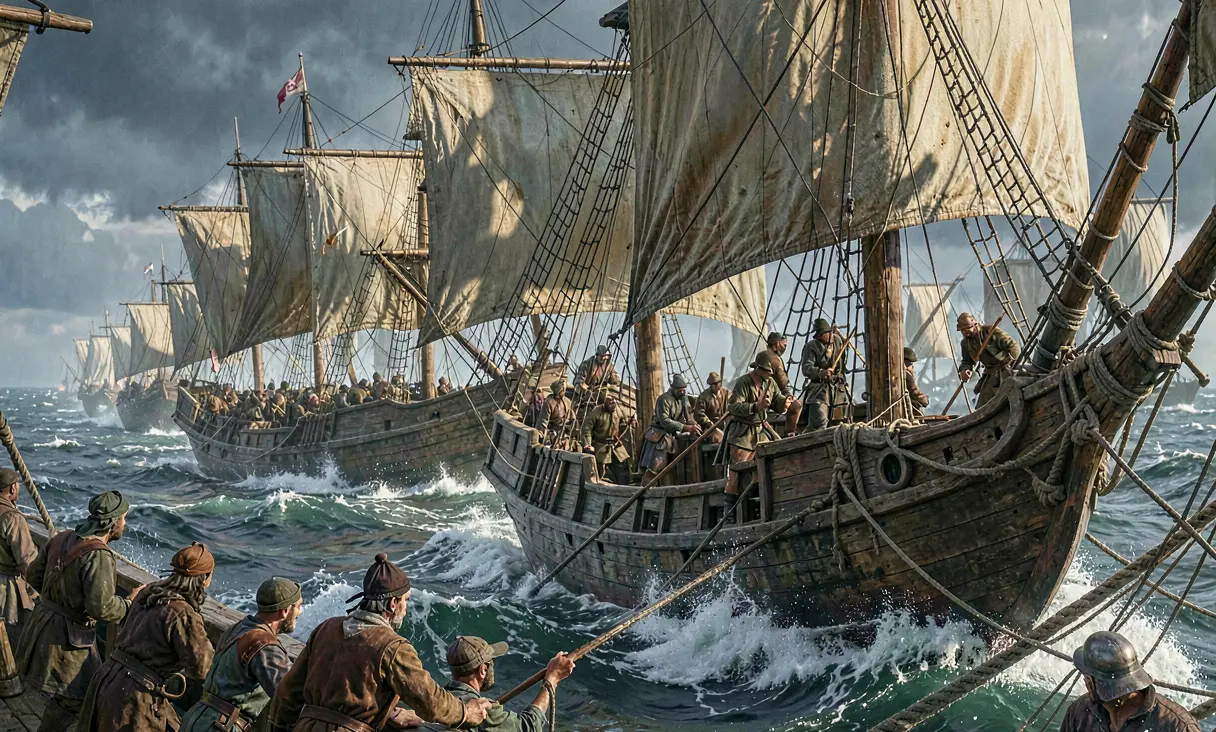
Rajendra Chola I's Expedition to Southeast Asia
Rajendra Chola I's 1025 CE naval raid shattered Srivijaya's trade monopoly, demonstrating unprecedented Indian maritime power and reshaping Southeast Asian geopolitics without permanent occupation.
The Maritime Ambition of the Chola Dynasty
By the early 11th century, the Chola Empire under Rajendra I had consolidated its dominance over southern India, transforming the Coromandel Coast into a hub of unparalleled maritime activity. While his father, Rajaraja I, had established the empire's territorial and naval foundations, Rajendra sought to project this power beyond the Indian subcontinent. The primary catalyst for overseas expansion was economic: the Srivijaya Empire, centered in Sumatra, controlled the vital Strait of Malacca, effectively monopolizing the lucrative trade routes connecting China, India, and the Middle East. This hegemony threatened Chola commercial interests, prompting a strategic decision to break the stranglehold on the spice and silk trades through direct military intervention.
The Target: Srivijaya and King Sangrama Vijayatunggavarman
The adversary was the formidable Srivijaya Empire, a thalassocracy that had ruled the Malay Archipelago for centuries. Its capital, likely located in Palembang on Sumatra's eastern coast, commanded the flow of goods passing through the region. The reigning monarch at the time was Sangrama Vijayatunggavarman, a ruler whose authority extended across much of the Malay Peninsula and western Indonesia. Unlike previous Indian powers that relied on diplomacy or limited trade missions, Rajendra I viewed Srivijaya not merely as a trading partner but as a geopolitical rival requiring a decisive naval strike to restore balance in the Indian Ocean.
The 1025 CE Naval Campaign
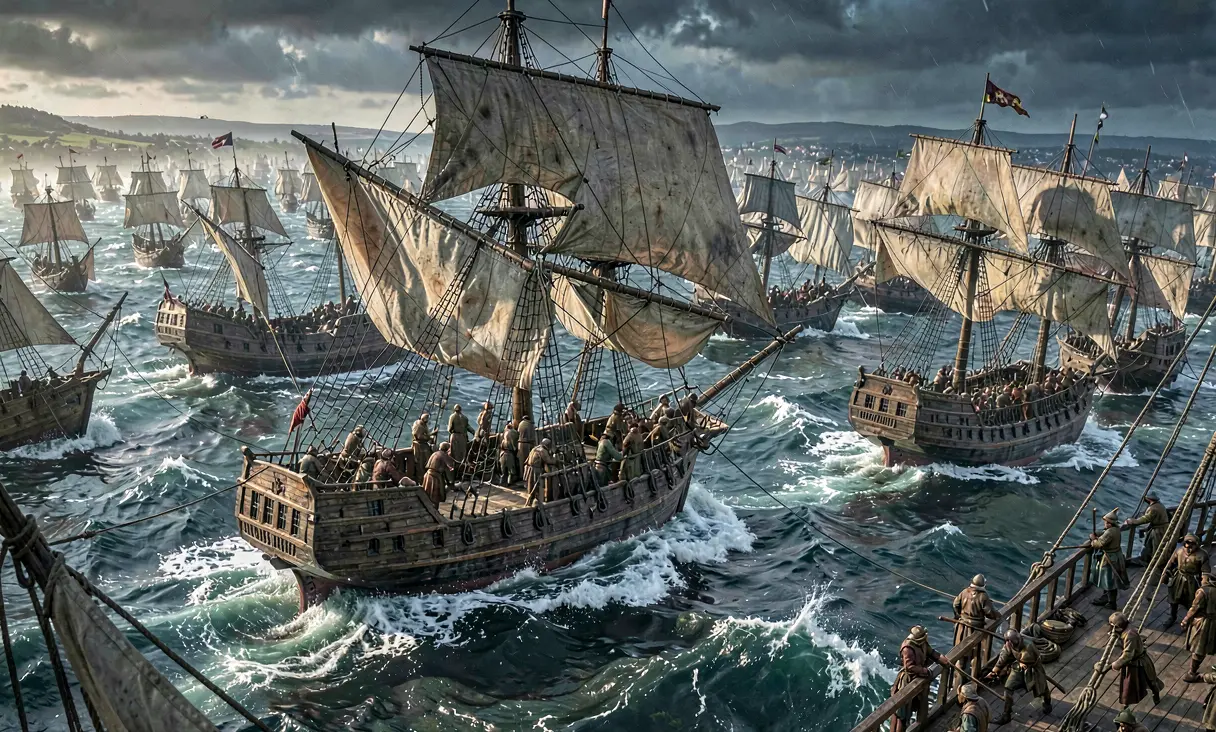
In approximately 1025 CE, Rajendra I launched a massive expeditionary force comprising hundreds of warships and thousands of soldiers. The fleet sailed from the port of Puhar (Kaveripattinam), navigating the Bay of Bengal with remarkable precision. The campaign was swift and devastating; Chola forces landed at key Srivijayan ports, including Kadaram (modern Kedah in Malaysia) and likely Palembang itself. Historical records, specifically the Thanjavur inscription, list thirteen conquered territories, ranging from the Malay Peninsula to islands in Sumatra and Java. The Cholas successfully defeated Sangrama Vijayatunggavarman, capturing him and seizing immense quantities of treasure, gold, and precious stones, effectively shattering the Srivijayan naval fleet.
Strategic Execution and Immediate Aftermath
The operation was a masterclass in amphibious warfare for its era. The Chola navy utilized superior shipbuilding techniques and disciplined infantry to overwhelm coastal defenses that had long been considered impregnable. However, the campaign was designed as a punitive raid rather than an occupation. Rajendra I did not establish a permanent administrative presence in Southeast Asia; instead, he withdrew his forces after securing victory and plunder, returning the captured king to India before eventually releasing him. This approach allowed the Cholas to demonstrate their reach without overextending their logistical lines across the vast ocean.
Disruption of Trade Monopolies
The immediate consequence of the expedition was the shattering of Srivijaya's monopoly on the Strait of Malacca. While Srivijaya eventually recovered its political structure, its dominance was permanently diminished, allowing other regional powers and independent trading ports to flourish. For the Chola Empire, the raid opened new avenues for direct trade with China and the Arab world, bypassing the need to pay tolls or submit to Srivijayan intermediaries. This shift revitalized South Indian commerce, leading to a surge in wealth that funded further temple construction and administrative reforms within India.
Cultural Legacy and Historical Significance
Beyond the military victory, the expedition catalyzed a profound cultural exchange between South India and Southeast Asia. The presence of Chola forces facilitated the spread of Tamil language, art, and administrative practices into the region. Temples built in the Chola architectural style began to appear in places like Kedah, and the worship of Hindu deities intensified among local elites who sought to align themselves with the prestige of the Chola court. This event remains a unique anomaly in Indian history, standing as the only instance where an ancient Indian dynasty projected sustained military force across the ocean to reshape the geopolitical landscape of another continent.
Rajendra Chola's raid established Indian naval dominance in the Bay of Bengal and intensified cultural ties between India and Southeast Asia.

Where it happened
Kedah (modern Malaysia) — see it on the interactive map →
Explore related history
 WarIslamic Conquest of the Sasanian Empire637 CE · Ctesiphon, Iraq (Persia)Arab Muslim forces defeat the Sasanian Empire at the Battle of al-Qadisiyyah, ending centuries of Persian rule.
 WarViking Siege of Paris885 CE · Paris, FranceViking raiders led by Sigfred besiege Paris for over a year, testing the defenses of West Francia.
 WarChola Conquest of Sri Lankac. 993 CE · Anuradhapura, Sri LankaRajaraja Chola launches a massive amphibious invasion of Sri Lanka, defeating the Sinhalese kingdom and annexing the island.
 WarRajendra Chola I's Ganges Expeditionc. 1025 CE · Bengal to Ganges Delta, IndiaRajendra Chola I leads a northern expedition reaching the Ganges River, defeating Pala kings and bringing holy water back to Thanjavur.
 WarChola Invasion of Srivijayac. 1025 CE · Palembang, Sumatra, IndonesiaRajendra Chola I launches a naval raid on the Srivijaya Empire, disrupting its control over the Strait of Malacca and securing trade routes.
 ExplorationChola Naval Expedition to Southeast Asia1025 CE · Java and Sumatra (Modern Indonesia)Chola fleet raids coastal cities across the archipelago.
Discussion
Loading…