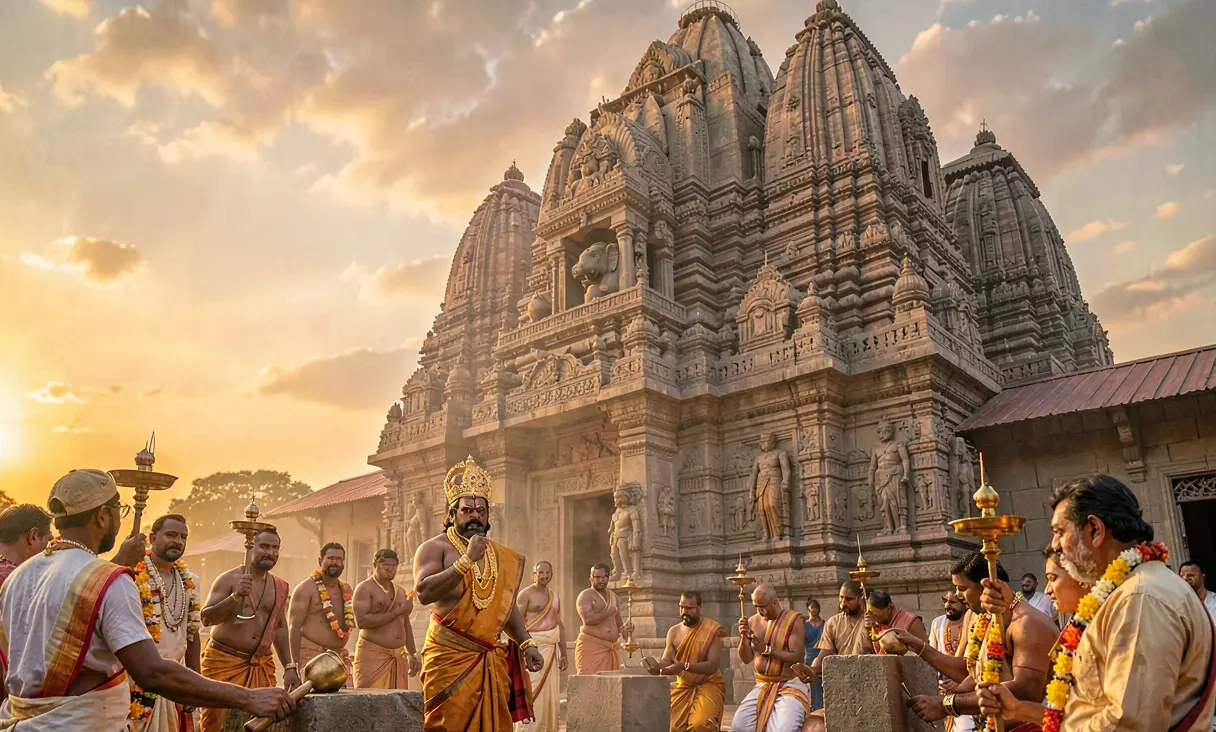
Completion of the Brihadeeswarar Temple
Completed in 1010 CE by Emperor Rajaraja I, this granite marvel redefined Dravidian architecture and cemented the Chola dynasty's cultural dominance through unprecedented engineering and artistic patr
The Chola Zenith and Imperial Ambition
By the turn of the 11th century, the Chola dynasty under Rajaraja I had transformed from a regional power into a maritime empire dominating the Indian Ocean. Having consolidated control over the Tamil heartland, conquered the Pandya and Chera kingdoms, and launched naval expeditions to Sri Lanka and the Srivijaya empire in Southeast Asia, Rajaraja sought a monument that would permanently etch his divine mandate onto the landscape of South India. The construction of the Brihadeeswarar Temple, also known as the Rajarajesvaram, was not merely an act of religious devotion but a calculated political statement intended to rival the grandeur of ancient imperial capitals. It represented the culmination of centuries of Dravidian architectural evolution, synthesizing military might with spiritual authority.
Engineering the Impossible: The Great Vimana
Completed around 1010 CE, the temple's defining feature is its towering vimana (sanctum tower), a structural marvel that rises to approximately 63 meters (207 feet). Unlike earlier structures that utilized corbelling techniques with smaller stones, this edifice was constructed entirely from massive granite blocks, some weighing over 80 tons. The engineering feat required the quarrying of stone from the distant Cauvery delta and its transportation via a specially constructed ramp system, as no mortar was used to bind the structure; instead, the stones were fitted together with such precision that even a knife blade cannot pass between them. The crowning element, the 25-ton monolithic capstone known as the kalasam, remains one of history's most perplexing engineering achievements, likely hauled up a four-kilometer-long ramp and placed atop the tower through sheer logistical ingenuity.
Rajaraja I: The Builder-King
The driving force behind this colossal project was Emperor Rajaraja Chola I, who reigned from 985 to 1014 CE. A patron of the arts and a shrewd administrator, he personally oversaw the temple's construction, which began in 1003 CE. Inscriptions found within the temple complex reveal his meticulous involvement, detailing the acquisition of land, the appointment of architects, and the allocation of resources. Rajaraja did not view himself merely as a donor but as the chief architect of the project, often referring to the temple as 'Rajarajesvaram' in his own honor. His vision extended beyond stone; he established a vast bureaucracy to manage the temple's economic affairs, ensuring it functioned as an autonomous economic hub that supported thousands of priests, dancers, musicians, and artisans.
A Sanctuary for Art and Culture
The completion of the Brihadeeswarar Temple marked a golden age for South Indian culture. Rajaraja designated the temple as a center for the performing arts, specifically codifying the classical dance form that would evolve into Bharatanatyam. The temple walls are adorned with intricate bas-reliefs depicting the 108 karanas (dance poses) described in the Natya Shastra, preserving a visual record of ancient choreography. Furthermore, the emperor endowed the temple with extensive lands and wealth to support a community of over 400 musicians and dancers who performed daily rituals. This institutionalization of the arts ensured that music, dance, and sculpture flourished under royal patronage, creating a cultural ecosystem that influenced the region for centuries.
The Dedication and Immediate Aftermath
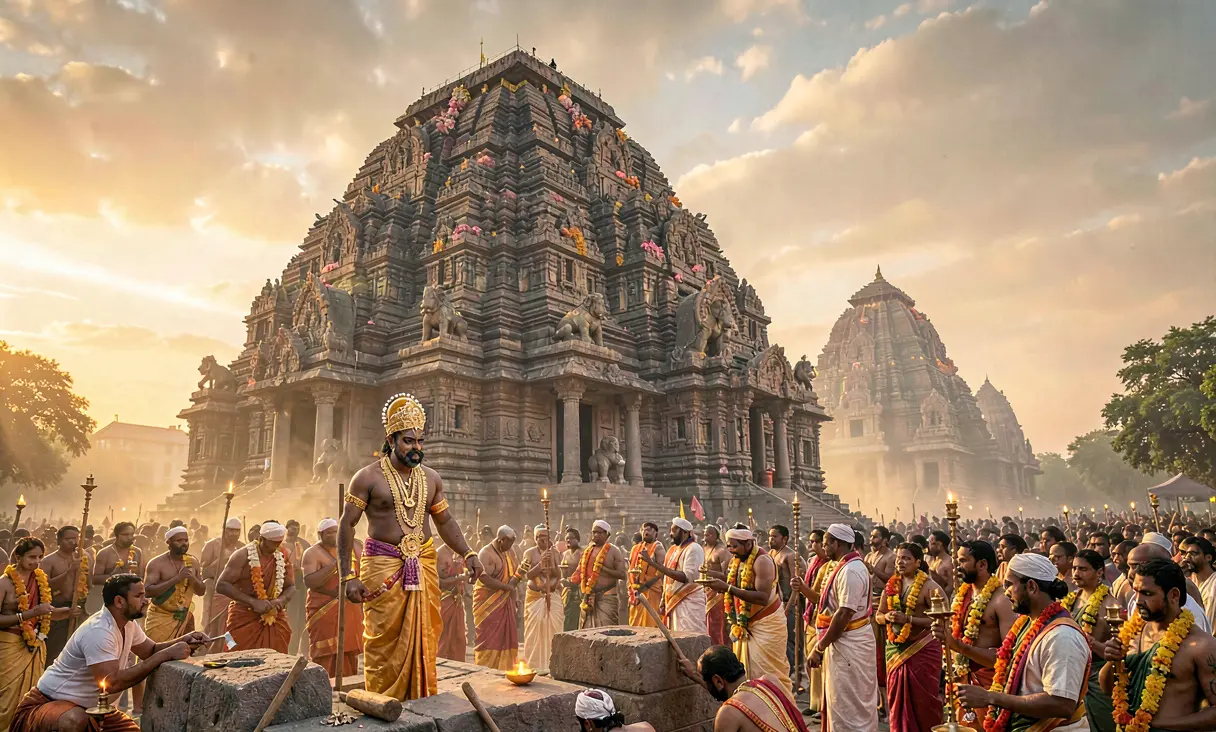
In 1010 CE, the temple was consecrated in a grand ceremony attended by dignitaries from across the empire and beyond. The dedication of the Shiva Lingam, named 'Rajarajesvaramudaiya Mahadevar', signified the apex of Chola power. Following the completion, the temple became the administrative and spiritual nucleus of Thanjavur, which served as the imperial capital. Inscriptions from this period detail the administration of justice, the collection of taxes, and the distribution of alms managed directly through the temple's treasury. The structure stood not only as a place of worship but as a functioning city within a city, complete with its own police force, granaries, and hospitals, effectively acting as the engine of the Chola economy.
Enduring Legacy and Global Significance
The Brihadeeswarar Temple stands today as one of the finest examples of Dravidian architecture and a testament to the technological sophistication of medieval India. Recognized as a UNESCO World Heritage Site in 1987, alongside the Great Living Chola Temples at Gangaikonda Cholapuram and Darasuram, it remains an active place of worship where daily rituals continue uninterrupted for over a millennium. Its influence extends globally, serving as a primary reference point for historians studying medieval engineering, urban planning, and religious art. The temple's survival through centuries of changing dynasties, invasions, and colonial rule underscores its resilience, preserving the aesthetic and spiritual legacy of the Chola Empire for the modern world.
The Brihadeeswarar Temple stands as a masterpiece of Dravidian architecture, reflecting the cultural and technological sophistication of the Chola Empire.
Where it happened
Thanjavur (modern Tamil Nadu/India) — see it on the interactive map →
Explore related history
 ArtCreation of Maya Polished Obsidian Mirrorsc. 600 CE · Guatemala (Maya Lowlands)Artisans craft polished obsidian mirrors for divination and ritual use.
 ArtBurial of the Sutton Hoo Shipc. 625 CE · Suffolk, EnglandAn Anglo-Saxon king is buried with a magnificent helmet and gold artifacts.
 ArtTang Dynasty Golden Age of Poetry and Culturec. 713 CE · Chang'an, ChinaThe Tang Dynasty reaches its cultural zenith in Chang'an, producing legendary poets like Li Bai and Du Fu.
 ArtConsecration of the Brihadeeswarar Templec. 1010 CE · Thanjavur, Tamil Nadu, IndiaRajaraja Chola I completes the colossal Brihadeeswarar Temple, an architectural marvel dedicated to Shiva that defines Dravidian style.
 literatureCreation of the Beowulf Manuscriptc. 1016 CE · England (likely Canterbury or Winchester)A single scribe transcribes the epic poem Beowulf onto parchment.
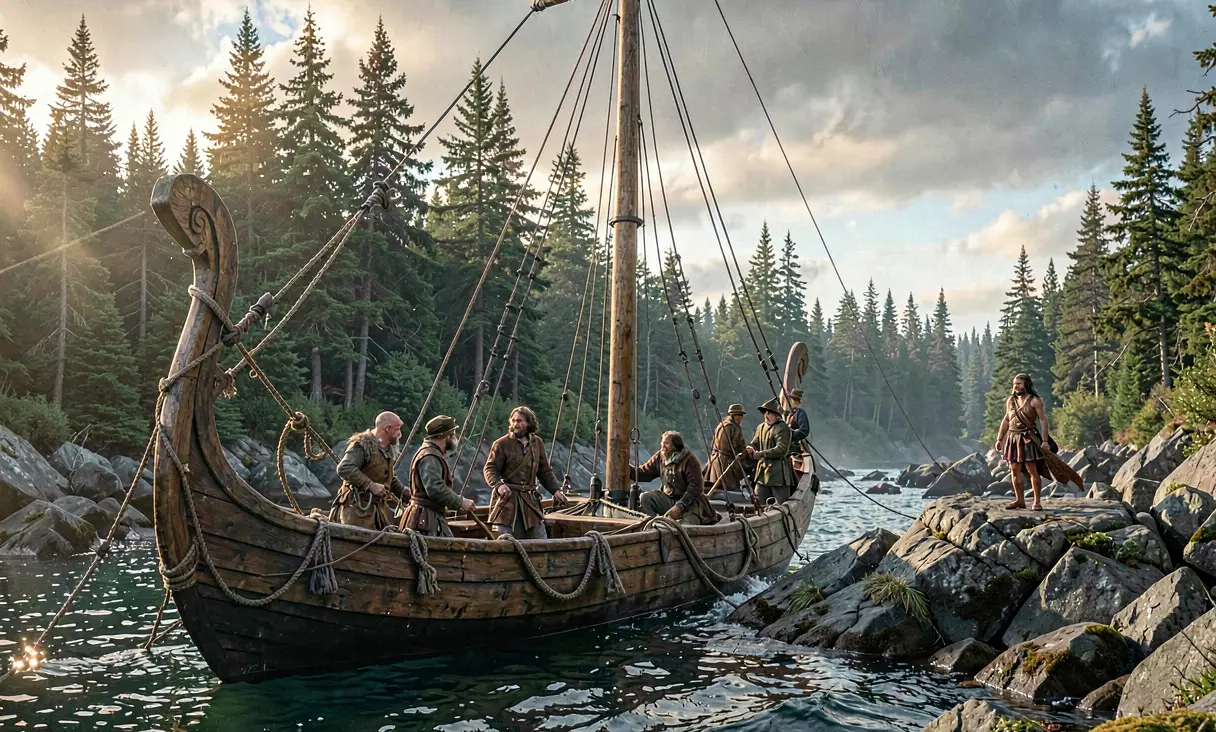 ExplorationLeif Erikson's Voyage to Vinlandc. 1000 CE · L'Anse aux Meadows, Newfoundland, CanadaLeif Erikson establishes a short-lived Norse settlement in North America, five centuries before Columbus.
Discussion
Loading…