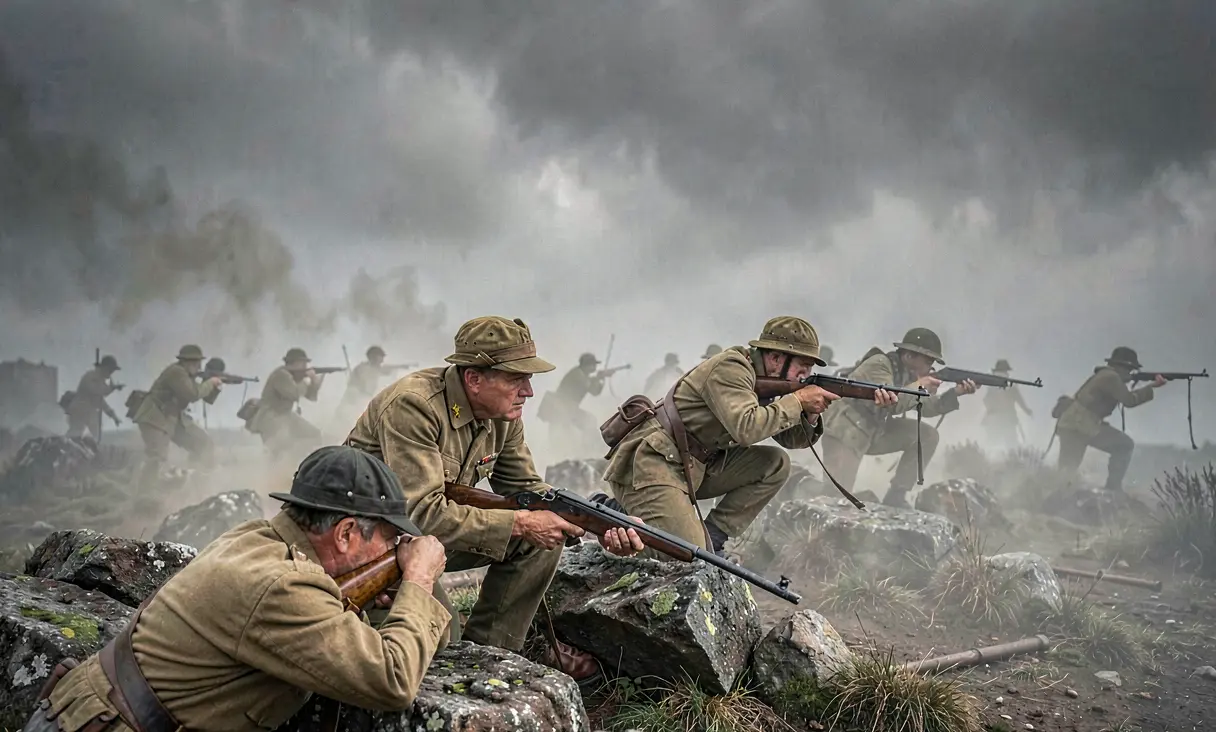
Battle of Spion Kop
The Battle of Spion Kop was a catastrophic British defeat in the Second Boer War where poor intelligence and foggy conditions led to over 1,700 casualties against entrenched Boer snipers, exposing fat
Strategic Stalemate and the Relief of Ladysmith
By early 1900, the Second Boer War had reached a critical juncture. The British Empire, having suffered a series of humiliating defeats during 'Black Week' in December 1899, launched a massive counter-offensive under the command of General Sir Redvers Buller to relieve the besieged town of Ladysmith in Natal. For months, Boer commandos had held the high ground surrounding the town, trapping over 10,000 British soldiers and civilians inside. The Tugela River formed a formidable natural barrier, and previous attempts by Buller to cross it at Colenso had ended in disaster. Desperate for a breakthrough, intelligence reports suggested that seizing Spion Kop, a prominent hill rising 1,700 feet above the river valley, would allow British artillery to dominate the Boer positions and force a retreat.
The Night Ascent and Tactical Confusion
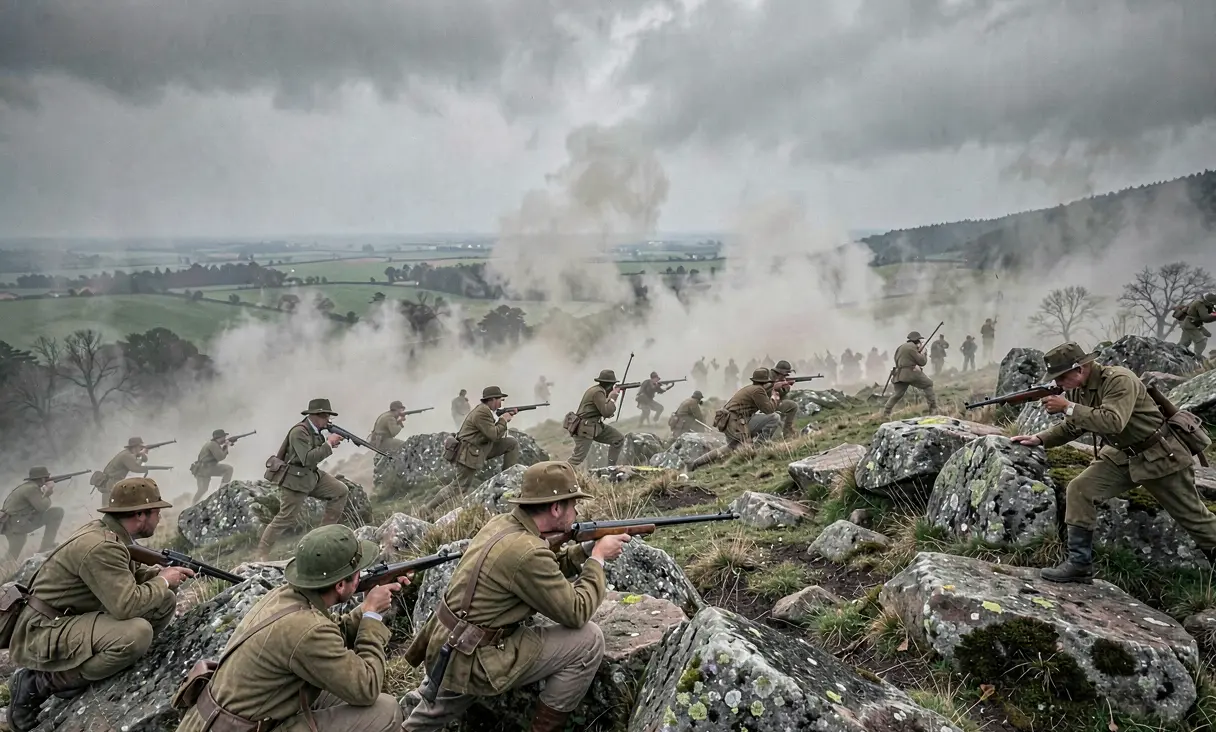
In the pre-dawn darkness of January 24, 1900, a mixed force of approximately 1,200 men from the Lancashire Fusiliers, Royal Irish Rifles, and Natal Carabineers began their ascent. Led by Major-General Edward Woodgate, who was acting under the direct but vague instructions of Buller's Chief of Staff, Colonel Arthur Wynne, the operation relied on speed and surprise. The fog that morning was thick, providing cover but also obscuring landmarks. By dawn, the British had secured the summit, only to discover a fatal error in their intelligence: Spion Kop was not a single peak but a long, narrow ridge with two distinct summits, and they were positioned on the lower one, exposed to enfilading fire from the higher Boer positions at Conical Hill and Twin Peaks.
The Slaughter in the Fog
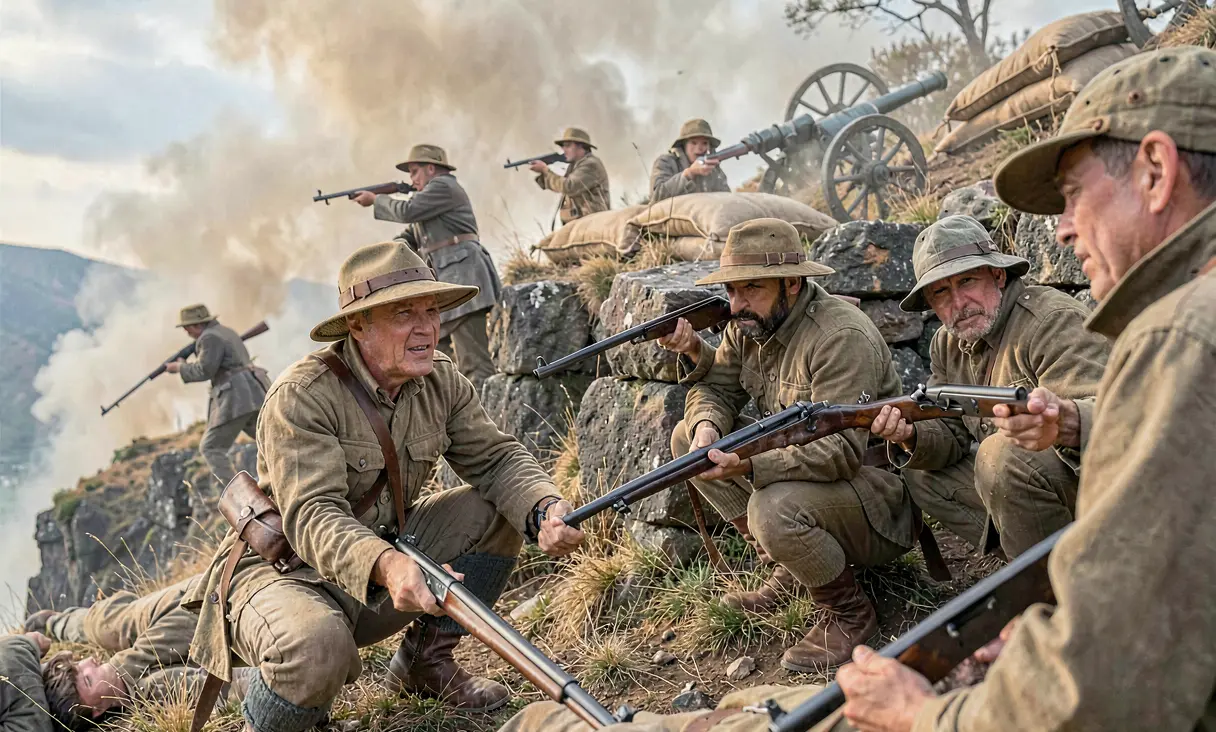
What followed was a day of chaotic slaughter. The Boers, under the command of General Louis Botha, quickly realized their mistake and poured accurate rifle fire onto the exposed British ridge. The terrain offered no cover; the summit was largely bare rock with shallow trenches that proved ineffective against high-velocity Mauser rounds. As the fog lifted, the British troops were pinned down in a killing zone where they could neither advance nor retreat. Casualties mounted rapidly among the officers and men alike. Major-General Woodgate was mortally wounded early in the engagement, leaving Colonel Wynne to take command, only for him to be killed shortly thereafter. The chain of command disintegrated as the fog rolled back in and out, creating a surreal and terrifying environment where visibility shifted from zero to clear line-of-sight fire.
The Tragic End of the Day
As night fell on January 24, the situation on Spion Kop had become untenable. The British forces were exhausted, their water supplies depleted, and their leadership decimated. Colonel Wynne's successor, Lieutenant-Colonel Alexander Thorneycroft, made the difficult decision to withdraw under the cover of darkness. In a final act of confusion, a message was sent down the hill instructing the troops to 'hold on,' but it arrived too late or was misinterpreted by different units, leading to further delays and casualties during the retreat. By morning, January 25, the summit was empty except for the dead and dying. The Boers, equally exhausted and low on ammunition, did not pursue aggressively, allowing the remnants of the British force to regroup at the riverbank.
Command Failures and Human Cost
The human cost of Spion Kop was staggering. The British suffered 1,750 casualties, including 38 officers killed or wounded, a loss rate that shocked the nation back home. Among the dead were many experienced soldiers who had been cut down by Boer snipers using superior concealment and marksmanship. In stark contrast, the Boers lost fewer than 350 men, a testament to their defensive positioning and effective use of the terrain. The defeat was not merely military but psychological; it exposed the inadequacy of traditional European linear tactics against a mobile, irregular enemy fighting from prepared positions. The failure of coordination between Buller's headquarters on the riverbank and the troops on the hill highlighted severe communication breakdowns that would plague British command structures throughout the war.
Legacy and Military Doctrine
The Battle of Spion Kop became a symbol of futile sacrifice and military incompetence, immortalized in literature by Rudyard Kipling's poem 'The Ballad of East and West' and later by Winston Churchill, who served as a war correspondent during the engagement. The battle forced a reevaluation of infantry tactics, accelerating the shift away from massed formations toward dispersed skirmishing lines and the increased importance of artillery support and trench warfare—lessons that would be tragically reinforced on a global scale just fourteen years later in World War I. While it did not end the war, Spion Kop delayed the relief of Ladysmith by weeks and cemented the reputation of the Boer commandos as formidable adversaries who could outmaneuver the world's greatest empire.
The Battle of Spion Kop highlighted the effectiveness of guerrilla tactics against imperial powers and became a symbol of Boer resilience during the Second Boer War.
Where it happened
Natal, South Africa — see it on the interactive map →
Explore related history
 WarAlgerian War of Independence BeginsNovember 1, 1954 · Algiers, AlgeriaThe National Liberation Front launches coordinated attacks marking the start of the Algerian War against France.
 WarMau Mau Uprising Begins in KenyaOctober 20, 1952 · Nairobi, KenyaThe Kikuyu-led Mau Mau rebellion begins against British colonial rule and white settler land ownership.
 WarTurkish War of Independence BeginsMay 19, 1919 · Samsun, TurkeyMustafa Kemal Atatürk lands in Samsun to organize resistance against Allied occupation and the Ottoman Sultanate.
 DisasterCatastrophic Flooding at Mohenjo-Daroc. 1900 BCE · Mohenjo-Daro, Sindh, PakistanDevastating floods from the Indus River repeatedly buried and destroyed layers of Mohenjo-Daro, signaling the decline of the urban phase.
 WarBattle of Adwa: Ethiopian Victory Over ItalyMarch 1, 1896 · Adwa, EthiopiaEmperor Menelik II decisively defeats Italian forces, securing Ethiopian sovereignty against colonial encroachment.
 WarStart of the Cuban War of IndependenceFebruary 24, 1895 · CubaJosé Martí and Máximo Gómez launch a coordinated uprising against Spanish colonial rule in Cuba.
Discussion
Loading…