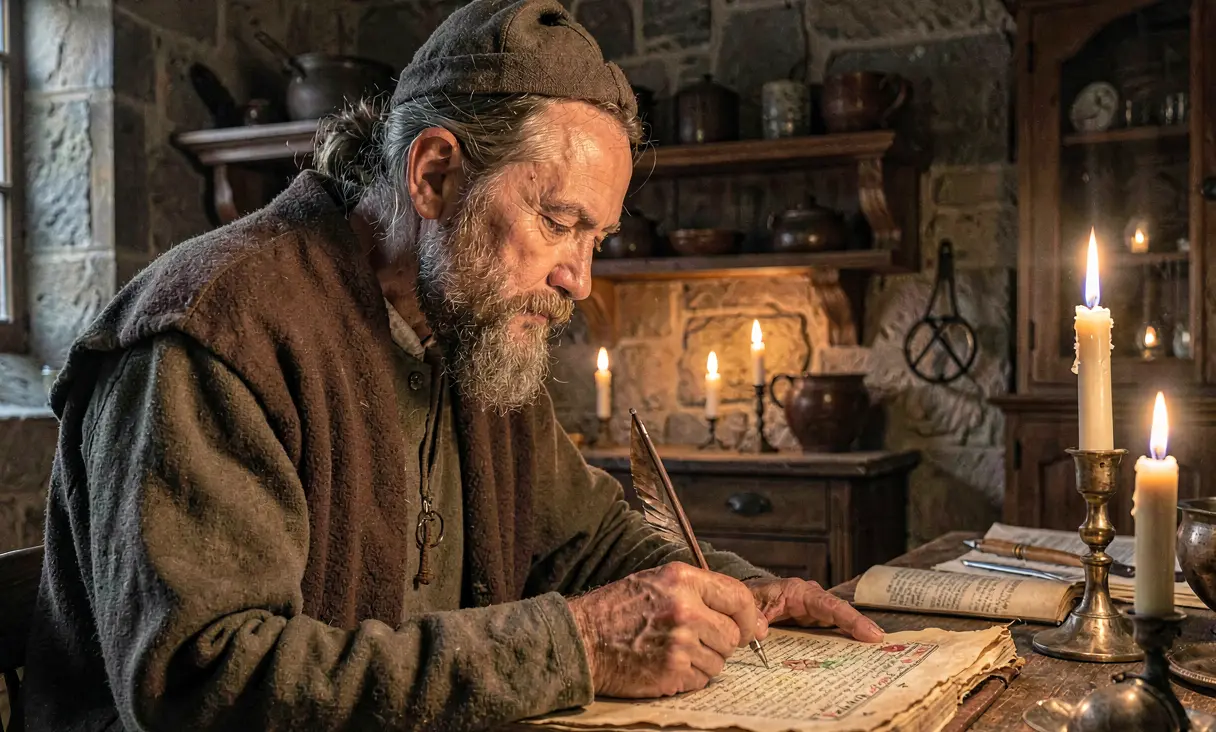
Creation of the Beowulf Manuscript
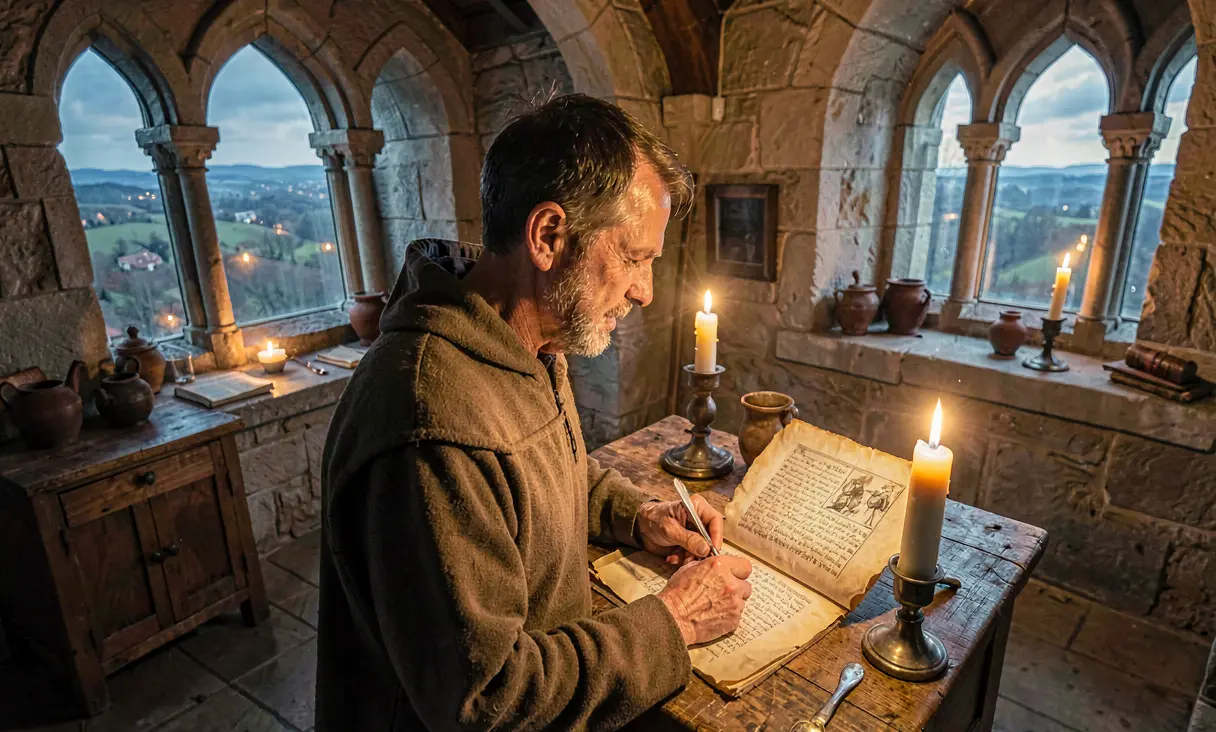
Copied circa 1016 CE by an anonymous scribe in England, this unique manuscript preserves the sole surviving text of Beowulf, bridging pagan Germanic heroism with Christian morality against all odds of
The Context of Anglo-Saxon Literary Culture
By the early eleventh century, England stood at a precarious intersection of political consolidation and cultural synthesis. The reign of Æthelred the Unready had given way to the Danish conquest under Cnut the Great, creating a unified North Sea empire that encompassed both Anglo-Saxon and Scandinavian traditions. In this milieu, monastic scriptoria in centers like Canterbury, Winchester, and possibly Christ Church Cathedral served as the intellectual engines of the realm. While Latin remained the language of liturgy and administration, the vernacular Old English had flourished under the earlier Benedictine Reform led by St. Æthelwold and St. Dunstan. It was within this sophisticated environment that scribes began to transcribe oral traditions into permanent written form, preserving a heroic past that might otherwise have vanished amidst the shifting tides of Viking invasions and dynastic changes.
The Scribe and the Codex
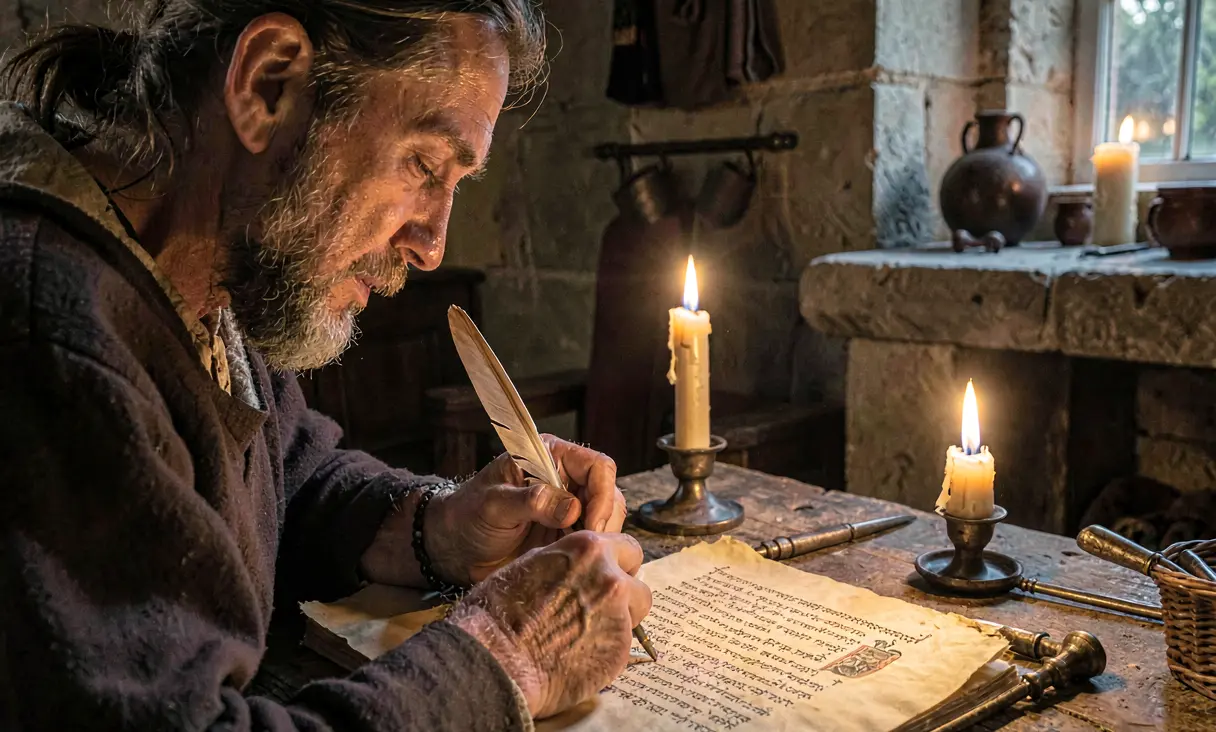
Circa 1016 CE, an anonymous scribe undertook the monumental task of copying a single, extensive poem onto parchment. This work, now known as the Nowell Codex (part of British Library MS Cotton Vitellius A.xv), represents the sole surviving manuscript of the epic *Beowulf*. Paleographic analysis suggests the hand belongs to a highly skilled professional, likely trained in one of the major scriptoria of southern England, with many scholars favoring Canterbury due to the specific letter forms and orthography. The scribe worked with remarkable consistency, though occasional errors and corrections reveal the human element of this transmission process. The manuscript also contains the prose text *Judith* on its opening leaves, suggesting it was part of a larger collection of heroic literature intended for a learned audience familiar with both pagan legend and Christian morality.
The Synthesis of Pagan Heroism and Christian Doctrine
The text copied by the scribe is a masterful blend of pre-Christian Germanic values and contemporary Christian theology. The poem recounts the deeds of Beowulf, a Geatish warrior who travels to Denmark to aid King Hrothgar by slaying the monster Grendel and his vengeful mother. Later in life, as king of the Geats, he faces a dragon that threatens his people, ultimately sacrificing himself in the battle. The narrative is steeped in the heroic code of *comitatus*—the bond between lord and retainer—and concepts of fate (*wyrd*) typical of Germanic tradition. Yet, the poet consistently frames these events through a Christian lens, attributing Grendel's lineage to the biblical Cain and portraying Beowulf as a Christ-like figure who dies for his people. This unique synthesis offers a rare window into how the Anglo-Saxons reconciled their ancestral heritage with their adopted faith.
Survival Through Fire and Neglect
The manuscript's journey from the early eleventh century to the present is as dramatic as the epic it contains. After its creation, the codex likely remained in a monastic library until the Dissolution of the Monasteries under Henry VIII in the 1530s, when it entered private hands. It was eventually acquired by Sir Robert Cotton, whose vast collection formed the basis of the British Library's holdings. In October 1731, a devastating fire broke out at Ashburnham House, where the Cotton library was housed. The Nowell Codex was severely damaged; its edges were charred and brittle, and some leaves crumbled into dust, resulting in the permanent loss of approximately thirty lines of text near the beginning and scattered words throughout. Despite this tragedy, the manuscript survived, though it required centuries of careful conservation to stabilize the fragile parchment.
Legacy and Modern Significance
The creation of the *Beowulf* manuscript in 1016 CE stands as a pivotal moment in the history of English literature, preserving the longest and most significant poem of the Old English period. Without this single copy, the rich tapestry of Anglo-Saxon poetry would be reduced to mere fragments, leaving modern scholars without their primary source for understanding early Germanic culture, language, and worldview. The text has influenced countless writers, from J.R.R. Tolkien to Seamus Heaney, and remains a cornerstone of academic study worldwide. Its survival against the odds of fire, dissolution, and time underscores its enduring value as a testament to human resilience and the power of storytelling. Today, it serves not only as a literary masterpiece but also as a crucial historical artifact that bridges the gap between the ancient world and the modern era.
Beowulf is the oldest surviving long poem in Old English and a foundational work of English literature.
Where it happened
England (likely Canterbury or Winchester) — see it on the interactive map →
Explore related history
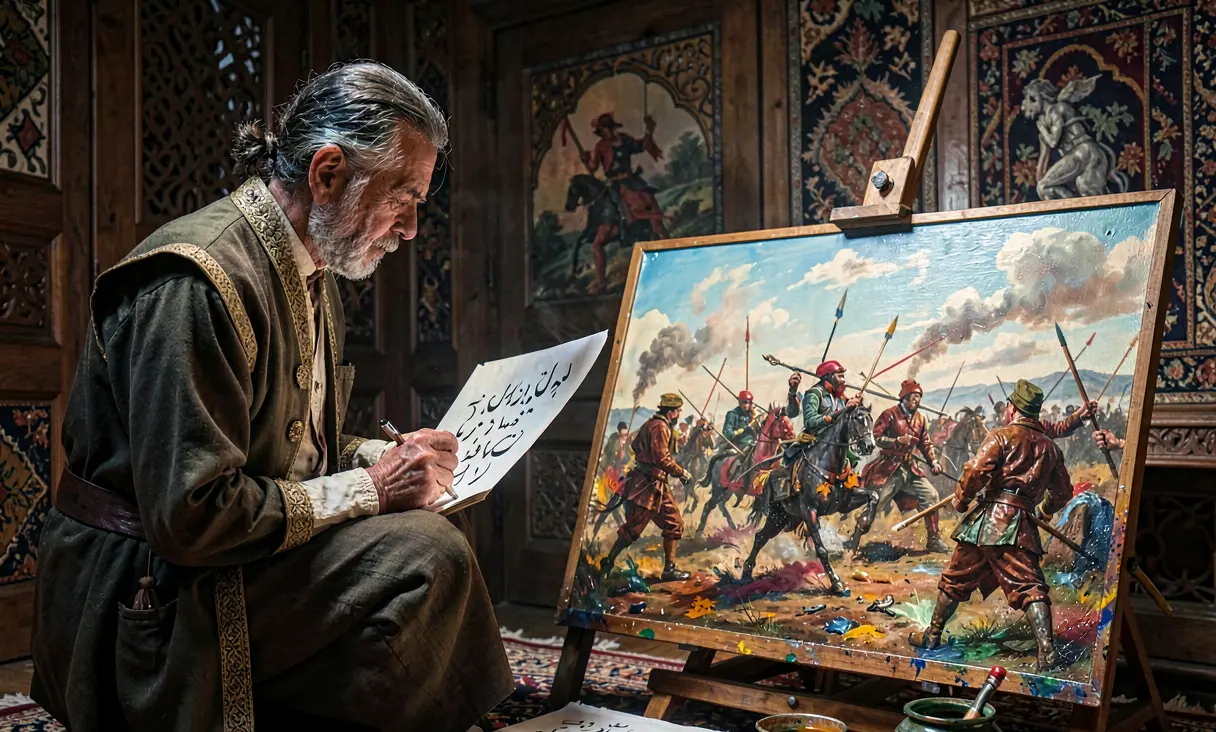 literatureProduction of the Shahnama Manuscriptc. 1330 CE · Tabriz, IranIllustrated copies of the Persian national epic are commissioned by the Ilkhanids.
 ArtConsecration of the Brihadeeswarar Templec. 1010 CE · Thanjavur, Tamil Nadu, IndiaRajaraja Chola I completes the colossal Brihadeeswarar Temple, an architectural marvel dedicated to Shiva that defines Dravidian style.
 ArtCompletion of the Brihadeeswarar Templec. 1010 CE · Thanjavur (modern Tamil Nadu/India)Rajaraja Chola I completes the magnificent Brihadeeswarar Temple, a marvel of Dravidian architecture and engineering.
 WarRajendra Chola I's Ganges Expeditionc. 1025 CE · Bengal to Ganges Delta, IndiaRajendra Chola I leads a northern expedition reaching the Ganges River, defeating Pala kings and bringing holy water back to Thanjavur.
Discussion
Loading…