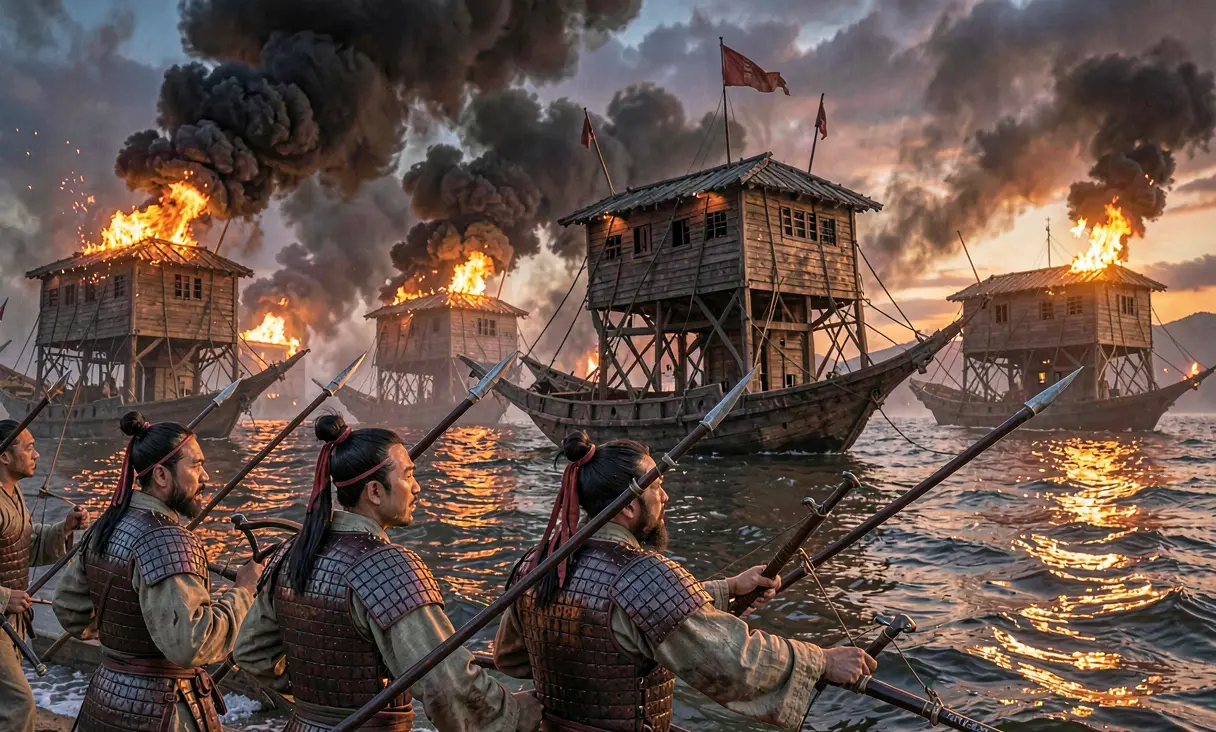
Battle of Red Cliffs
In 208 CE, allied forces at Red Cliffs used fire ships and favorable winds to shatter Cao Cao's massive navy, preventing northern unification and establishing the Three Kingdoms era.
The Quest for Unification
By the late Eastern Han Dynasty, central authority had crumbled, leaving China fractured among competing warlords. Cao Cao, having consolidated power in the north and defeated the Yuan clan, turned his gaze southward with an ambition to reunify the empire under a single rule. In 208 CE, following his victory at Jing Province where he forced Liu Cong's surrender, Cao Cao commanded a massive force, historically estimated between 200,000 and 300,000 troops, though modern historians suggest a more realistic combatant number of roughly 150,000. His objective was clear: to crush the remaining resistance in the south, specifically the warlord Sun Quan controlling the lower Yangtze and Liu Bei, who was retreating with his followers.
The Southern Alliance
Facing an overwhelming northern juggernaut, the southern powers recognized that survival depended on unity. Sun Quan, advised by his strategist Zhou Yu and the eloquent diplomat Lu Su, overcame internal factions favoring surrender to commit to war. Simultaneously, Liu Bei, though weakened and lacking a secure base, contributed veteran troops under the command of Guan Yu and Zhuge Liang's strategic counsel. The resulting coalition, numbering approximately 50,000 elite soldiers, positioned themselves at Chibi (Red Cliffs) on the southern bank of the Yangtze River. This alliance was fragile yet essential, born of desperation and a shared refusal to submit to Cao Cao's hegemony.
Strategic Stalemate and Deception
The initial naval encounters favored neither side decisively; the northern troops, largely unaccustomed to river warfare, suffered from seasickness and poor morale. To mitigate this, Cao Cao ordered his ships chained together with iron links to create a stable platform, a tactic intended to reduce swaying but which ultimately created a catastrophic vulnerability. Seizing on this weakness, Huang Gai, a veteran general of Sun Quan's forces, proposed a ruse. He feigned defection, sending a letter to Cao Cao claiming he wished to surrender with his fleet. Cao Cao, eager for a bloodless victory and trusting in the apparent disarray of the southern command, accepted the offer without suspicion.
The Fire Attack
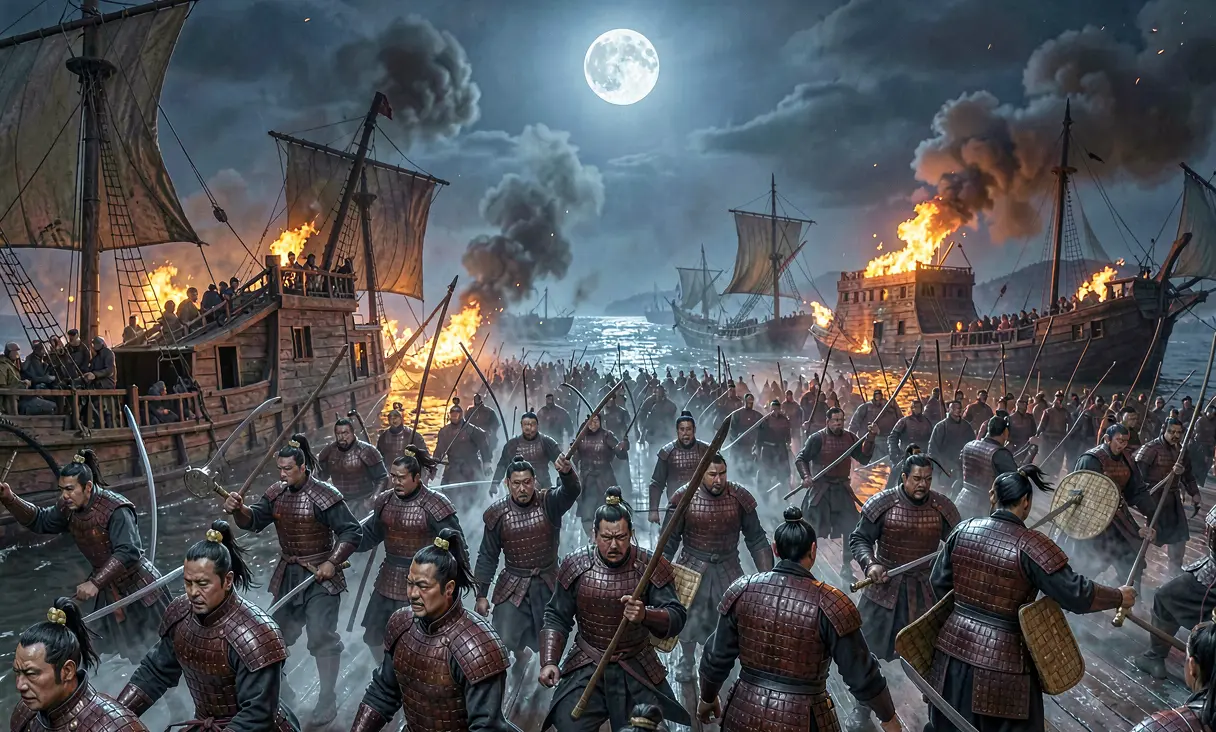
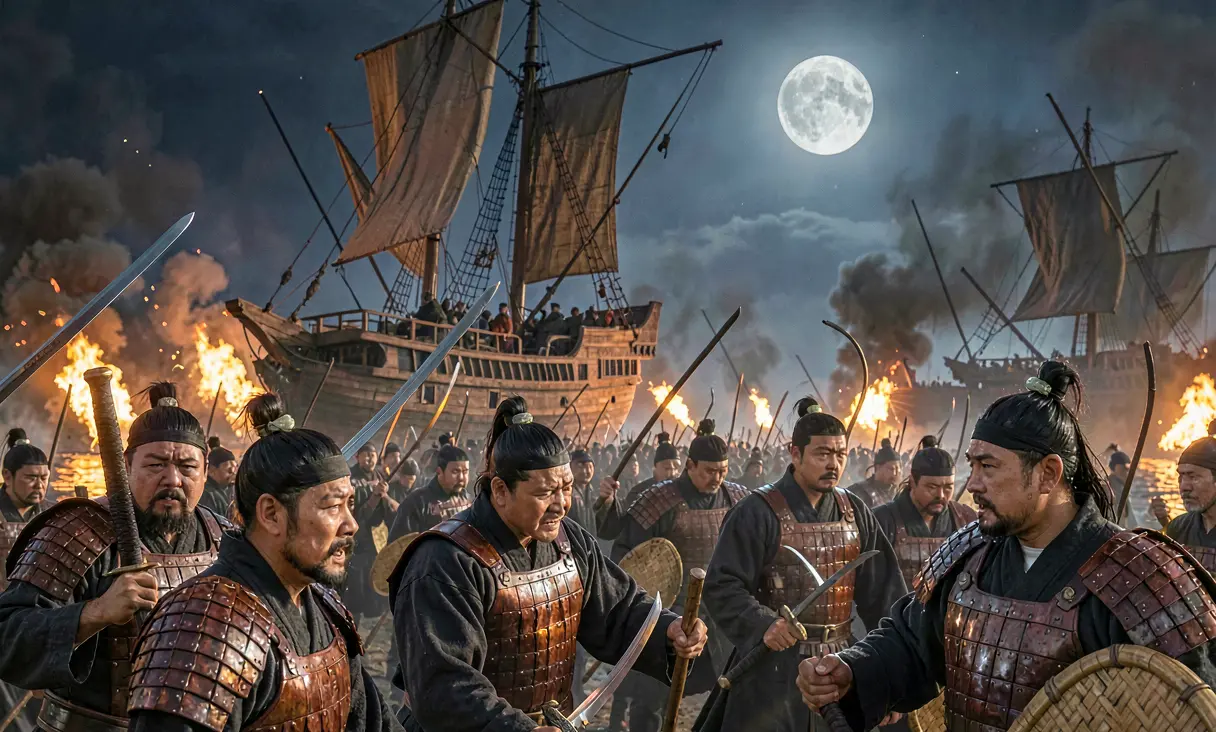
On a day when an unexpected southeast wind blew against the prevailing northwest flow—a meteorological anomaly crucial to the battle's outcome—Huang Gai led a vanguard of ten fire ships. These vessels were laden with dry reeds, oil, and sulfur, disguised under dark sails to approach the chained northern fleet. As they neared the enemy lines, Huang Gai's men set the ships ablaze and abandoned them in small boats. The wind drove the inferno directly into Cao Cao's tightly packed formation. The fire spread rapidly across the linked vessels, turning the river into a wall of flame. Panic ensued among the northern soldiers as ships burned and sank, while those on land were caught in the chaos.
The Northern Retreat
The destruction was total for Cao Cao's naval power. With his fleet decimated and his army in disarray, Cao Cao was forced to order a hasty retreat northward along the land route through Huarong Trail. The journey was arduous; plagued by disease, starvation, and relentless pursuit by Liu Bei's cavalry, the northern forces suffered further heavy casualties before reaching safety at Jiangling and eventually Yan'an. Estimates suggest that over half of Cao Cao's army perished or were captured during the campaign. This defeat effectively ended his immediate dream of unifying China, preserving the independence of the southern states.
Birth of the Three Kingdoms
The Battle of Red Cliffs marked a definitive turning point in Chinese history, cementing the tripartite division that would define the next six decades. Cao Cao retained control of the north but could no longer project power south of the Yangtze. Sun Quan solidified his rule over the Jiangdong region, laying the foundation for the Kingdom of Wu. Liu Bei, seizing the opportunity created by the victory, expanded his territory into Jing Province and later Sichuan, establishing the Shu Han kingdom. The battle prevented a premature reunification under Cao Wei and set the stage for the formal declaration of the Three Kingdoms era in 220 CE.
Enduring Legacy
Beyond its immediate geopolitical consequences, the Battle of Red Cliffs has become a cornerstone of Chinese military strategy and cultural identity. The tactics employed—specifically the use of fire ships, psychological deception, and the exploitation of environmental factors—are studied in military academies to this day. In literature, particularly Luo Guanzhong's historical novel 'Romance of the Three Kingdoms,' the battle is dramatized as a masterpiece of intellect over brute force, immortalizing figures like Zhuge Liang and Zhou Yu. It remains a potent symbol of how a smaller, unified coalition can overcome a superior adversary through ingenuity, influencing everything from modern business strategy to popular culture worldwide.
The victory ensured the survival of southern kingdoms, creating a lasting geopolitical divide between north and south China that influenced centuries of history.
Where it happened
Red Cliffs, Yangtze River, China — see it on the interactive map →
Explore related history
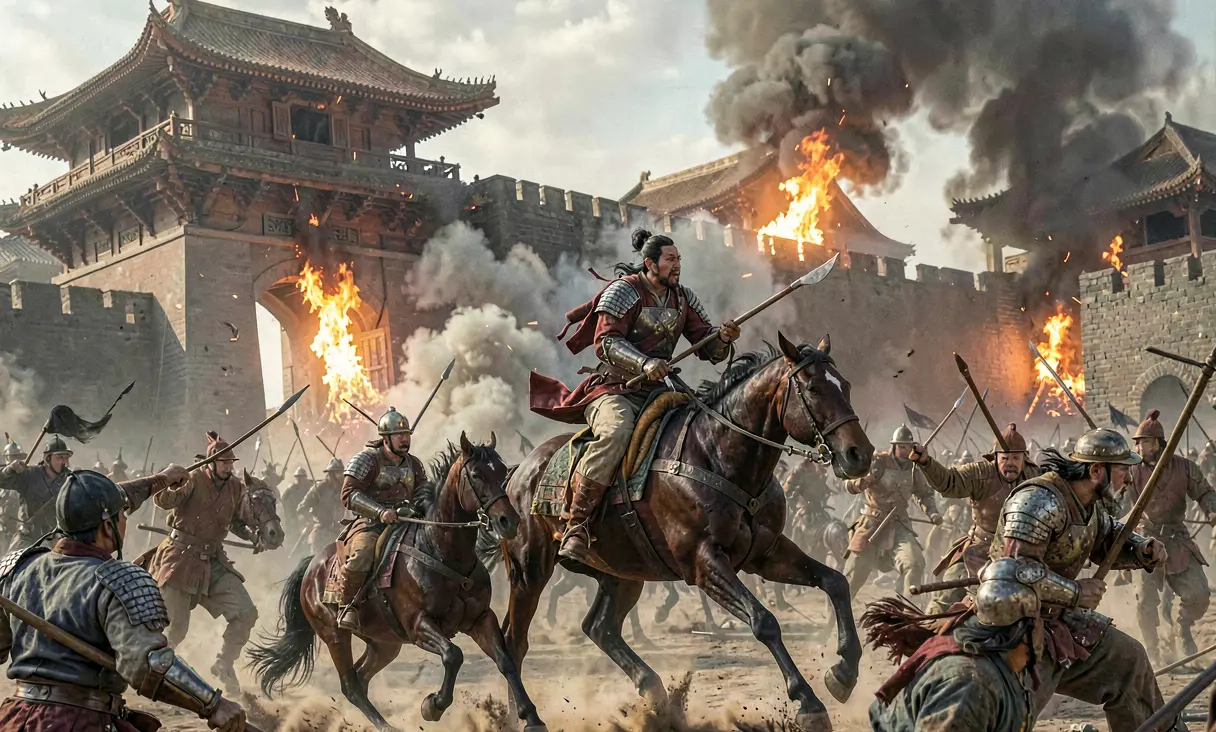 WarAn Lushan Rebellion Begins755 CE · Chang'an, ChinaGeneral An Lushan revolts against Emperor Xuanzong, devastating the Tang Dynasty and population.
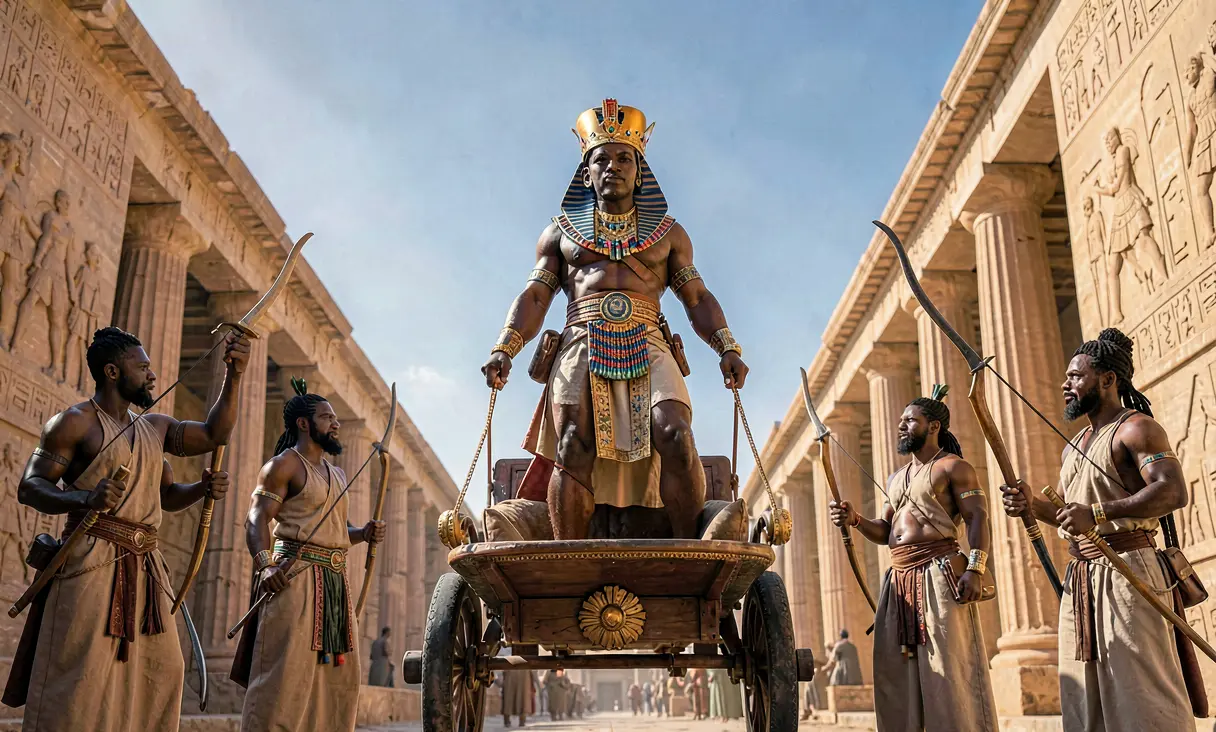 WarKushite Conquest of Egypt (25th Dynasty)c. 747 BCE · Thebes, EgyptKing Piye of Kush conquers Upper and Lower Egypt, establishing the first African-led dynasty in Egyptian history.
 WarKushite Conquest of Egypt Establishes 25th Dynastyc. 744 BCE · Napata, Nubia (Modern Sudan)King Piye of Kush conquers Upper Egypt, establishing the 25th Dynasty and restoring traditional Egyptian religious practices.
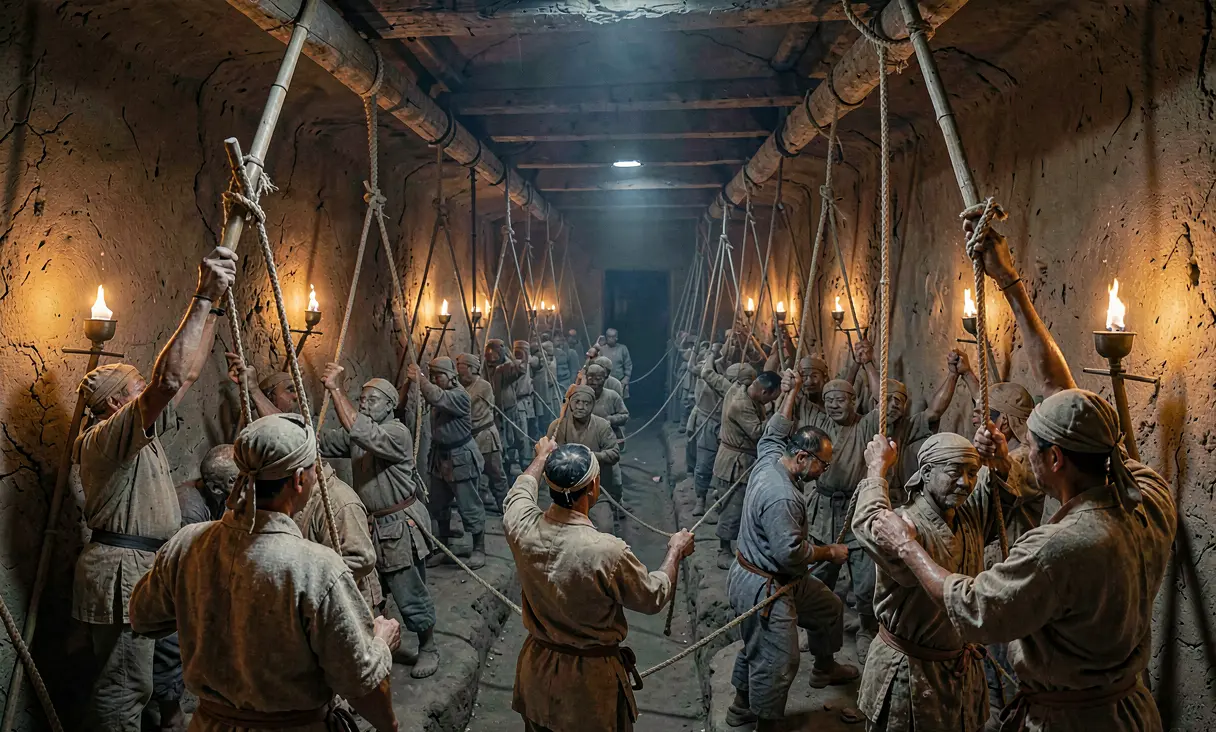 ArtBurial of Qin Shi Huang's Terracotta Armyc. 210 BCE · Xi'an, ChinaEmperor Qin Shi Huang is buried with a massive army of life-sized terracotta soldiers to guard him in the afterlife.
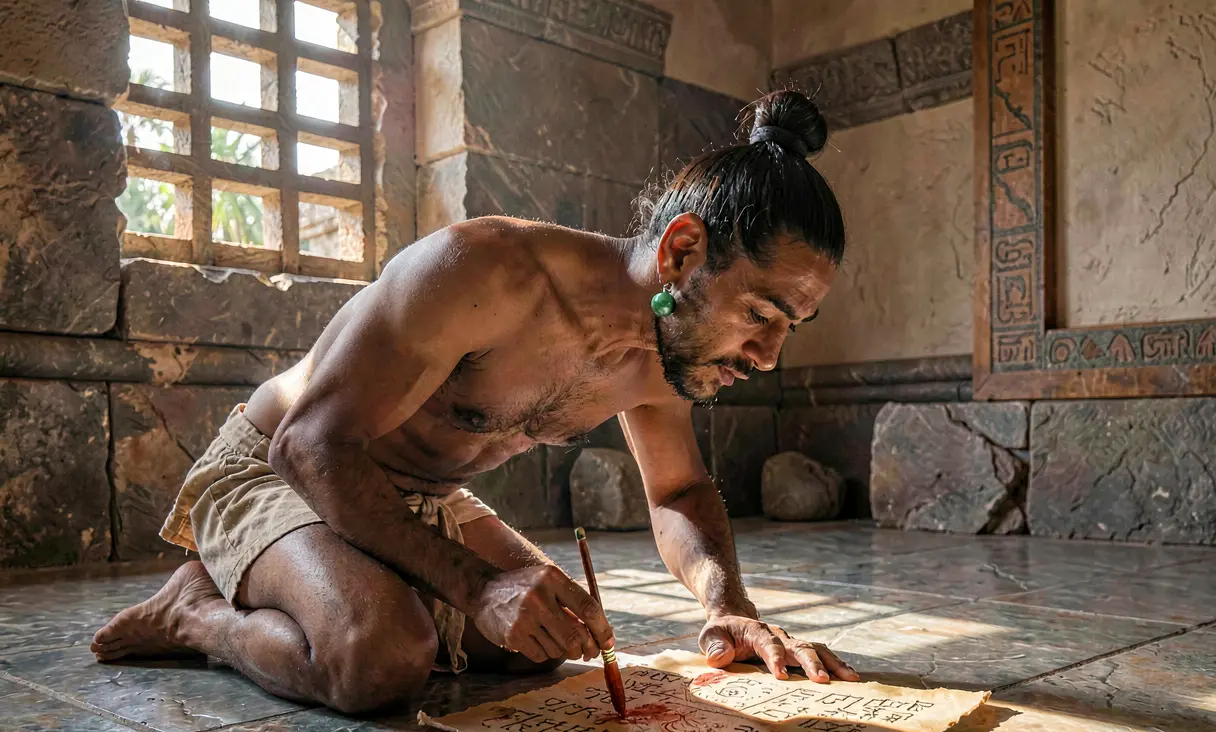 CivilizationCodices and Writing System of the Mayac. 200 BCE · El Mirador, GuatemalaThe Maya develop a complex logosyllabic writing system and astronomical calendars during the Preclassic period.
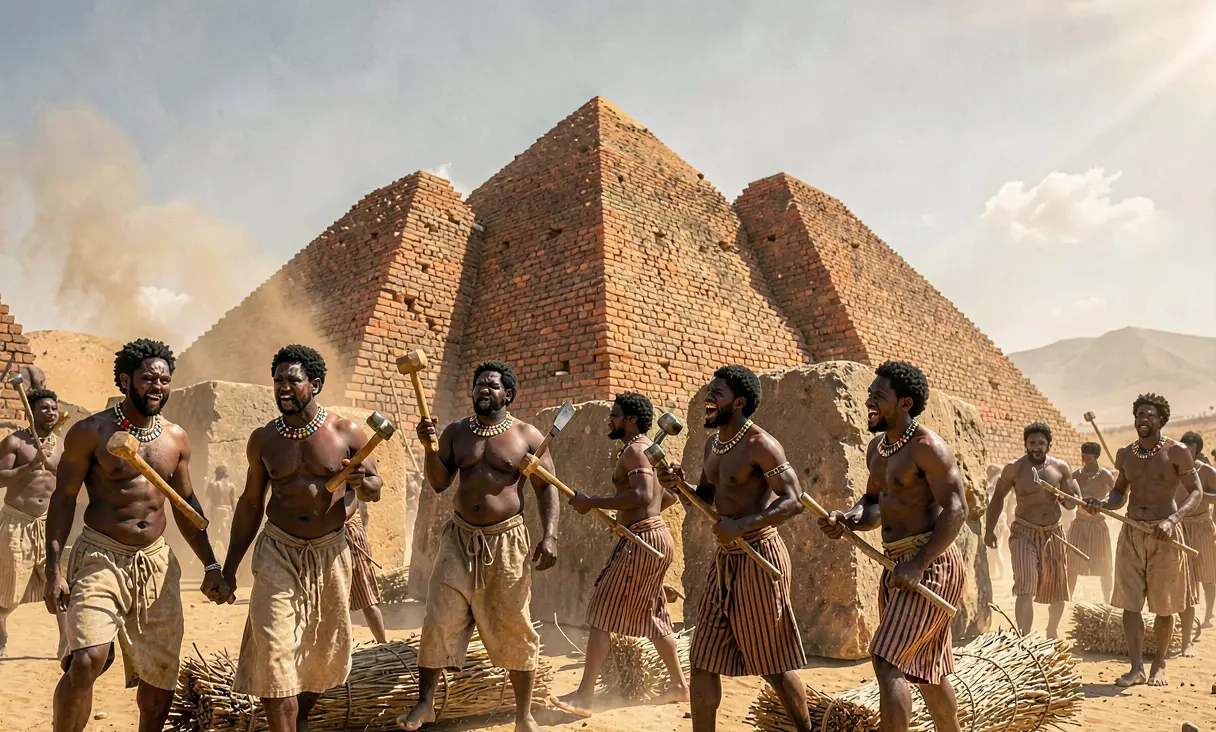 ArtPeak of Pyramid Construction in Meroec. 200 BCE · Meroe, SudanThe Kingdom of Kush reaches its architectural zenith with the construction of steep pyramids at Meroe.
Discussion
Loading…