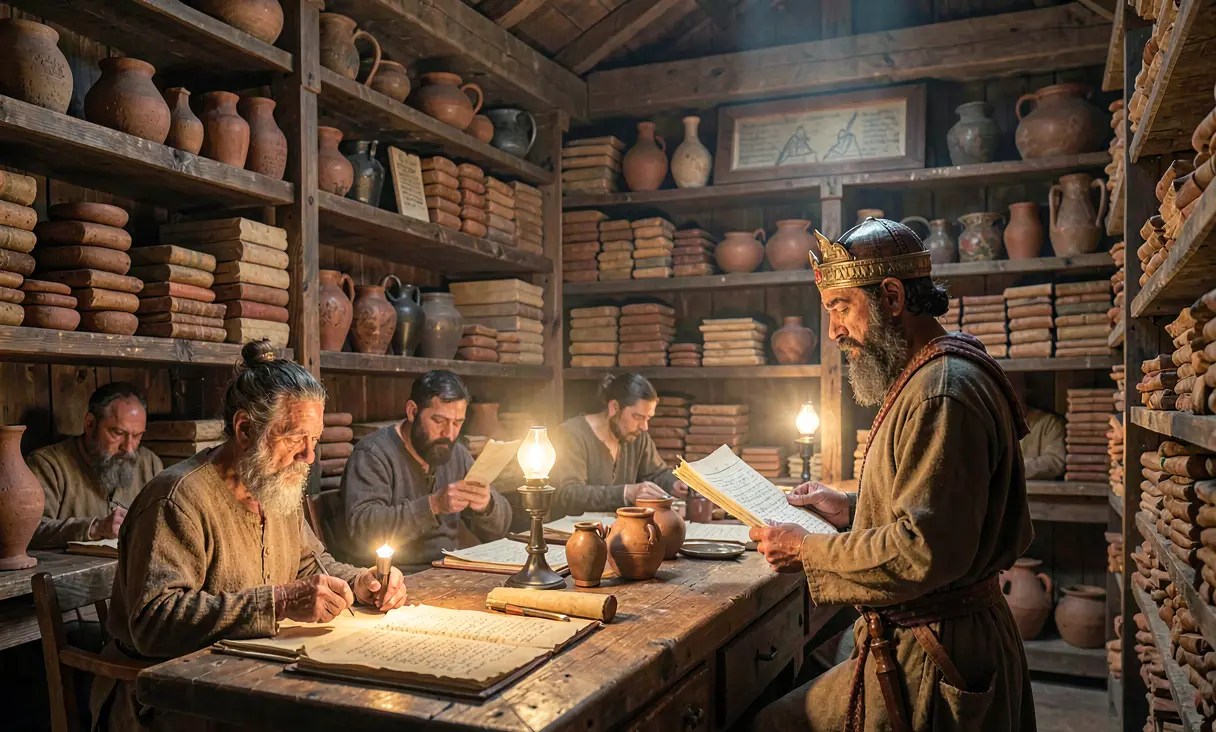
Compilation of Ashurbanipal's Royal Library
King Ashurbanipal's systematic collection of over 30,000 clay tablets in Nineveh preserved the Epic of Gilgamesh and vast Mesopotamian knowledge, serving as the primary source for modern understanding
The Scholar-King of Assyria
In the mid-7th century BCE, the Neo-Assyrian Empire stood at the zenith of its military and political power under King Ashurbanipal (r. 668–627 BCE). Unlike his predecessors, who were defined primarily by their martial conquests, Ashurbanipal cultivated a unique identity as a learned monarch. He famously boasted in royal inscriptions that he could read cuneiform signs of both the Sumerian and Akkadian languages, a skill rare even among the scribal elite. This intellectual curiosity was not merely performative; it drove a systematic state-sponsored initiative to centralize the vast intellectual heritage of Mesopotamia within his capital city, Nineveh.
A State-Sponsored Intellectual Campaign
Around 650 BCE, Ashurbanipal commissioned a massive logistical operation to gather knowledge from across the known world. Scribes were dispatched to temples and archives in Babylon, Nippur, Uruk, and other ancient centers of learning with explicit orders to copy or acquire cuneiform tablets. These texts covered an encyclopedic range of subjects: medical treatises detailing diagnoses and treatments, extensive omen collections for divination, astronomical logs, legal codes, and administrative records. The King's scribes did not simply hoard these documents; they meticulously copied them onto fresh clay, often adding colophons that identified the source text, the copyist, and the date of transcription.
The Architecture of Knowledge
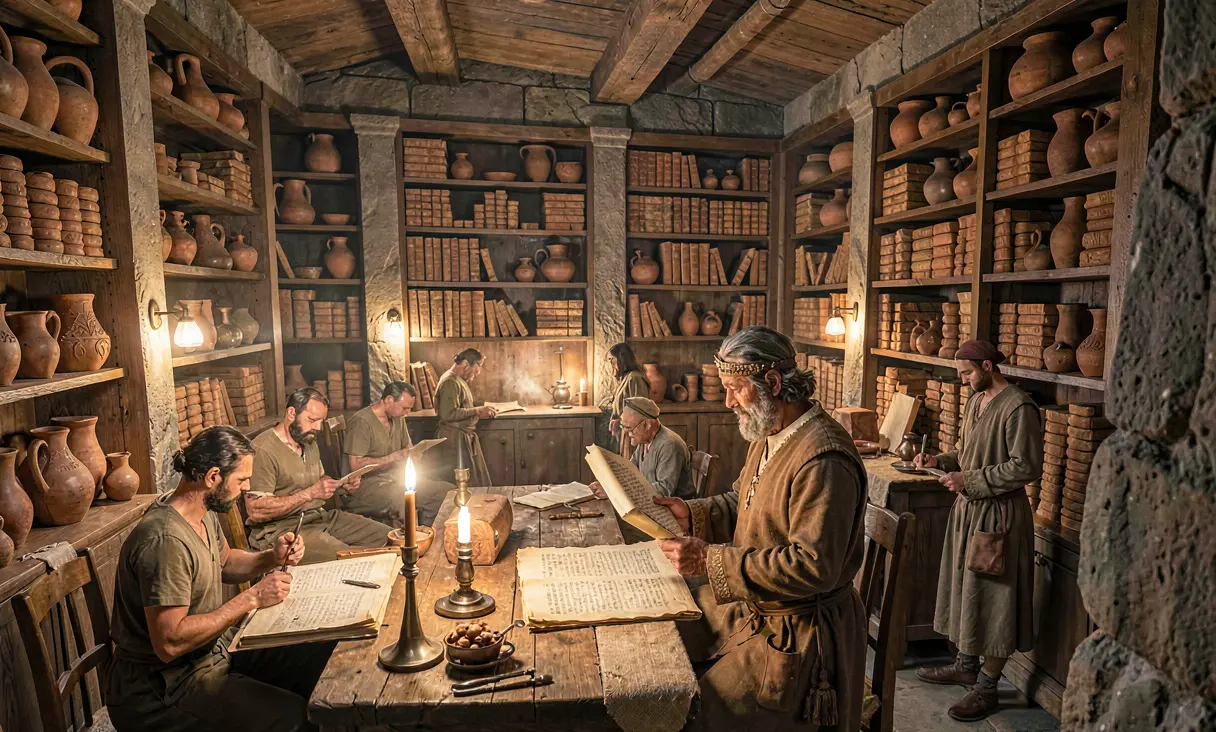
The resulting collection was housed in the North Palace at Nineveh, organized into distinct rooms based on subject matter. Archaeological excavations led by Austen Henry Layard in the 1840s and subsequent campaigns revealed over 30,000 clay tablets and fragments within these ruins. The library was not a random accumulation but a structured repository containing approximately 25 major genres of literature. Among the most significant finds were multiple versions of the "Epic of Gilgamesh," including the Standard Babylonian version attributed to the scribe Sin-leqi-unninni, which preserved the famous Flood narrative that would later influence Biblical traditions.
Preservation Amidst Destruction
The library's existence was tragically cut short by the collapse of the Assyrian Empire. In 612 BCE, a coalition of Medes and Babylonians besieged and sacked Nineveh, setting fire to the city's palaces. Paradoxically, this destruction ensured the survival of the library; the intense heat from the fires baked the unbaked clay tablets, hardening them into a durable ceramic state that could withstand millennia of decay. While the wooden shelves and organic materials perished, the baked clay survived buried under the rubble, waiting to be rediscovered by 19th-century archaeologists who would piece together the shattered fragments like a massive jigsaw puzzle.
The Rediscovery of Mesopotamia
When British and French excavators unearthed the library in the mid-1800s, they initially struggled to decipher the cuneiform script. The sheer volume of material provided the critical corpus needed for scholars like Henry Rawlinson and George Smith to crack the code, effectively birthing the field of Assyriology. Without Ashurbanipal's collection, modern understanding of Akkadian literature, religion, science, and daily life would be fragmentary at best. The discovery transformed the biblical and classical accounts of Mesopotamia from myth into documented history, providing the primary source material for reconstructing the civilization that preceded the Greeks and Romans.
A Legacy of Systematic Preservation
Ashurbanipal's Library represents one of the earliest examples in human history of a systematic effort to collect, categorize, and preserve the sum of human knowledge. It established a precedent for the concept of a universal library, where diverse intellectual traditions are gathered under one roof for study and reference. The texts recovered from Nineveh continue to inform our understanding of ancient medicine, astronomy, and literature, serving as a testament to the enduring power of written records. The library stands not just as an Assyrian achievement, but as a foundational pillar of global cultural heritage.
Ashurbanipal's Library is the most important source of written material from ancient Mesopotamia, saving countless texts from oblivion.

Where it happened
Nineveh (Mosul), Iraq — see it on the interactive map →
Explore related history
 ScienceEstablishment of the Babylonian Astronomical Observatoriesc. 747 BCE · Babylon, IraqBabylonian priests begin systematic nightly recording of planetary movements and eclipses.
 ScienceRefinement of the Maya Long Count Calendar Systemc. 361 BCE · Chiapa de Corzo, MexicoMaya scholars formalize the Long Count calendar for tracking deep historical time.
 ScienceFormal Adoption of Zero as a Placeholder in Maya Mathematicsc. 361 BCE · Chiapas, MexicoMaya mathematicians independently invent and use zero in their vigesimal numeral system.
 WarBattle of Baekgang: Silla-Tang Victory over Japan663 CE · Geum River Mouth, KoreaSilla and Tang China destroy the Japanese fleet, ending Baekje restoration efforts.
 PoliticsReign of Emperor Taizong and the Zhenguan Era626 CE · Chang'an, ChinaLi Shimin ascends the throne after the Xuanwu Gate Incident, ushering in a golden age of governance.
 TechnologyGrand Canal of China Connects North and South610 CE · Luoyang to Hangzhou, ChinaEmperor Yang completes the massive waterway linking the Yellow and Yangtze rivers for transport and grain.
Discussion
Loading…