
Congress of Tucumán Declares Argentine Independence
On July 9, 1816, delegates in Tucumán unanimously severed ties with Spain, establishing the sovereign United Provinces and igniting the final liberation of South America's Southern Cone.
Context of Crisis and Consolidation
By 1816, the United Provinces of the Río de la Plata faced an existential threat that threatened to unravel a decade of revolutionary struggle. Following the May Revolution of 1810, which had established a provisional junta in Buenos Aires, the region remained in a state of limbo; it was neither fully independent nor under effective Spanish control. The royalist forces in Upper Peru (modern-day Bolivia) and the Portuguese invasion from Brazil created a pincer movement that jeopardized the revolutionary cause. Furthermore, internal divisions between centralists and federalists, alongside the collapse of the 1813 Assembly's attempt to declare independence due to diplomatic caution regarding Spain and its allies, left the revolution vulnerable. The Congress of Tucumán was convened not merely as a political formality, but as a desperate necessity to unify the disparate provinces under a single sovereign identity before the Spanish reconquest could crush the rebellion.
The Gathering in San Miguel de Tucumán
In March 1816, deputies from thirteen provinces—representing Buenos Aires, Córdoba, Salta, Santiago del Estero, San Luis, Mendoza, San Juan, La Rioja, Catamarca, Jujuy, Santa Fe, and the Upper Peru territories of Potosí, Chuquisaca, and Tarija—convened in the modest town hall of San Miguel de Tucumán. The choice of location was strategic; situated far from the royalist advances in the north and the Portuguese threat in the east, it offered a secure sanctuary for deliberation. The atmosphere was tense and fraught with uncertainty. Many delegates feared that declaring independence would provoke immediate military retaliation from Spain, while others worried about alienating potential allies like Great Britain or Portugal. Despite these fears, the prevailing sentiment among the majority, led by figures who had witnessed the brutality of royalist repression, was that a formal break was the only path to survival and legitimacy on the international stage.
The Deliberations and Unanimous Vote
After months of intense debate regarding the form of government—monarchy versus republic—and the scope of sovereignty, the Congress finally reached a consensus on the question of independence. On July 9, 1816, in a session presided over by President of the Congress Francisco Narciso de Laprida, the deputies cast their votes. The decision was unanimous: all representatives signed the Act of Independence, severing all ties with the Spanish monarchy and declaring the United Provinces of South America free from foreign domination. The text explicitly stated that the provinces were no longer subject to the King of Spain or his successors, establishing a sovereign state based on the principles of popular sovereignty. This was not a symbolic gesture; it was a legal and political rupture that redefined the geopolitical map of the Southern Cone, effectively claiming the territories that would eventually become Argentina, Uruguay, Paraguay, and parts of Bolivia.
Key Architects of Sovereignty
The declaration was driven by a coalition of visionary leaders who balanced idealism with pragmatic statecraft. Francisco Narciso de Laprida, a lawyer from San Juan, served as the presiding officer and is often credited with the decisive speech that galvanized the assembly toward independence. Other pivotal figures included Bernardino Rivadavia, who would later become the first president of Argentina, and Manuel Belgrano, the creator of the national flag, whose military campaigns in the north had secured the region for the Congress to meet. The presence of deputies from Upper Peru, such as José Moldes and Pedro Medrano, highlighted the trans-Andean nature of the revolution, emphasizing that the new nation was envisioned as a broader entity encompassing the former Viceroyalty's territories before the fragmentation of the 1820s.
Immediate Aftermath and Diplomatic Realities
The immediate aftermath of July 9, 1816, was characterized by both triumph and severe military peril. While the declaration provided a crucial ideological boost to the patriot armies led by José de San Martín, it also invited intensified Spanish aggression. The royalist forces in Upper Peru continued their pressure, and the internal political landscape remained fractured as debates over the constitution and the form of government dragged on for years. Diplomatically, the new nation struggled for recognition; while the United States had recognized independence earlier, European powers remained hesitant to acknowledge a breakaway colony during the post-Napoleonic restoration era. Nevertheless, the Act of Independence provided the legal foundation upon which San Martín would plan his audacious crossing of the Andes to liberate Chile and Peru, turning the declaration into a military reality.
Legacy and Enduring Significance
The Congress of Tucumán stands as the foundational moment of Argentine statehood, marking the transition from a colonial rebellion to an independent nation. Its legacy extends beyond Argentina's borders; it was a catalyst for the broader liberation of South America, inspiring subsequent movements across the continent. Although the United Provinces eventually fragmented into separate nations, the principles enshrined in the 1816 Act—popular sovereignty, national unity, and resistance to tyranny—remain central to Argentine identity. Today, July 9 is celebrated as the National Day of Argentina, commemorating a decision made in a small hall that irrevocably altered the history of the Americas, proving that the will of a people could dismantle an empire.
The Act of Tucumán laid the legal and political foundation for the modern Argentine state and inspired further independence movements in the region.


Where it happened
San Miguel de Tucumán, Argentina — see it on the interactive map →
Explore related history
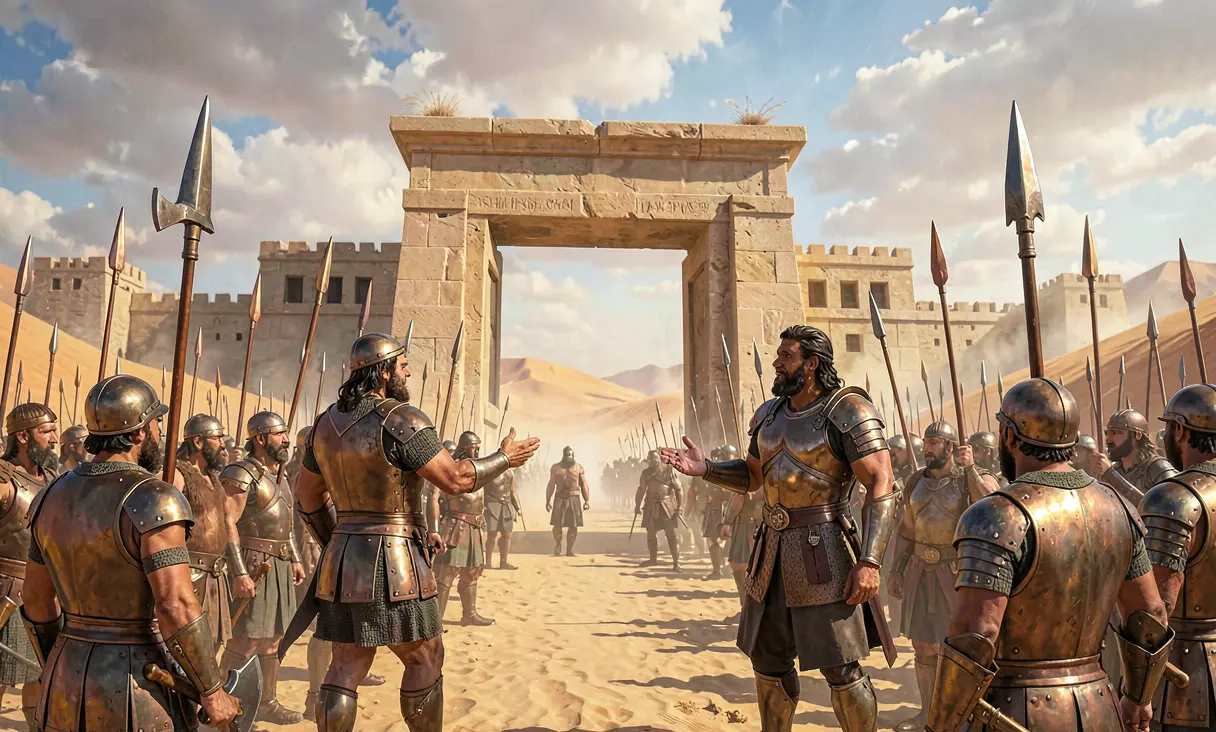 PoliticsSargon of Akkad Establishes the First Empirec. 2334 BCE · Akkad (Location uncertain, near Baghdad, Iraq)Sargon unifies Sumerian city-states to create the world's first multi-ethnic empire.
 PoliticsPromulgation of the Code of Ur-Nammuc. 2100 BCE · Ur, Southern Mesopotamia (Iraq)The earliest known surviving law code is established in the Sumerian city of Ur.
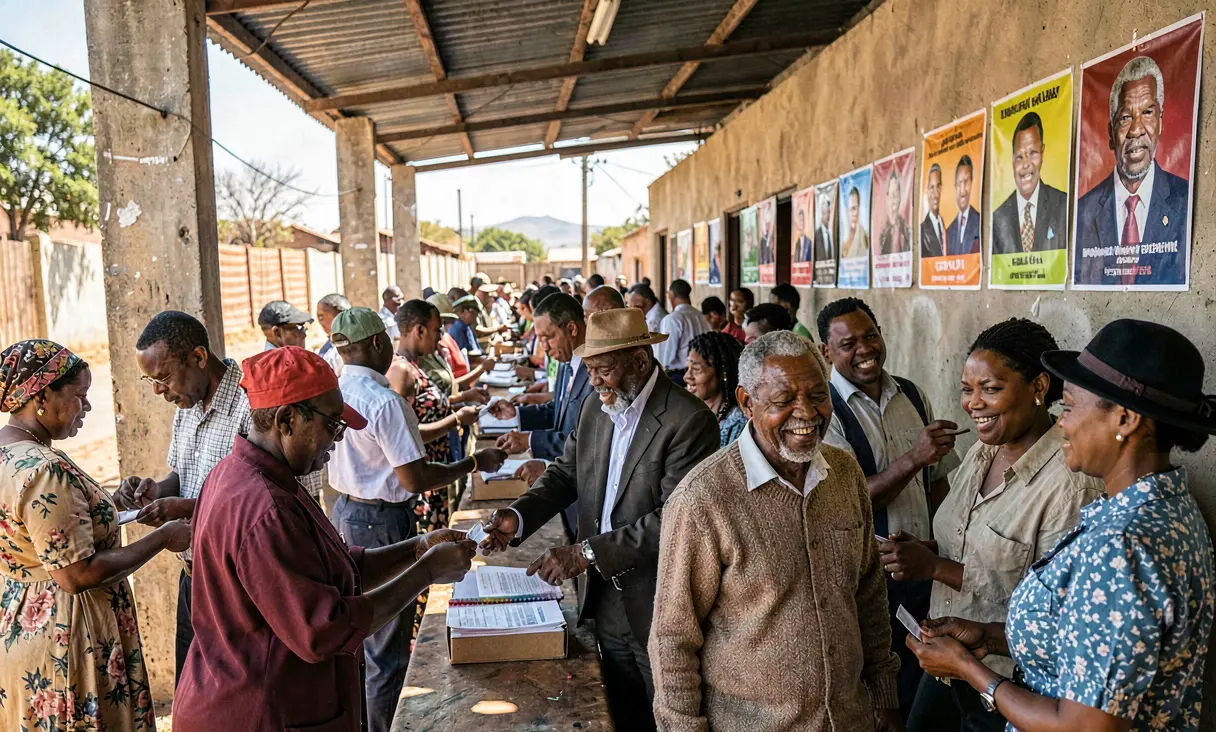 PoliticsNelson Mandela Elected President of South AfricaApril 27, 1994 · Cape Town, South AfricaSouth Africa holds its first democratic election, ending the apartheid regime and establishing a multiracial government.
 PoliticsShaka Zulu Unifies the Zulu Kingdomc. 1816 · Natal, Southern AfricaShaka Zulu establishes a centralized military state through innovative tactics and ruthless consolidation of Nguni clans.
 PoliticsUva-Wellassa Rebellion Against British RuleMarch 1817 · Kandy, Sri LankaSinhalese chieftains lead a widespread uprising against British colonial expansion in the central highlands.
 WarSimón Bolívar's Crossing of the AndesJune 1819 · Andes Mountains, Colombia/Venezuela BorderBolivar leads his army over the frozen Andes to launch a surprise attack on Spanish forces in New Granada.
Discussion
Loading…