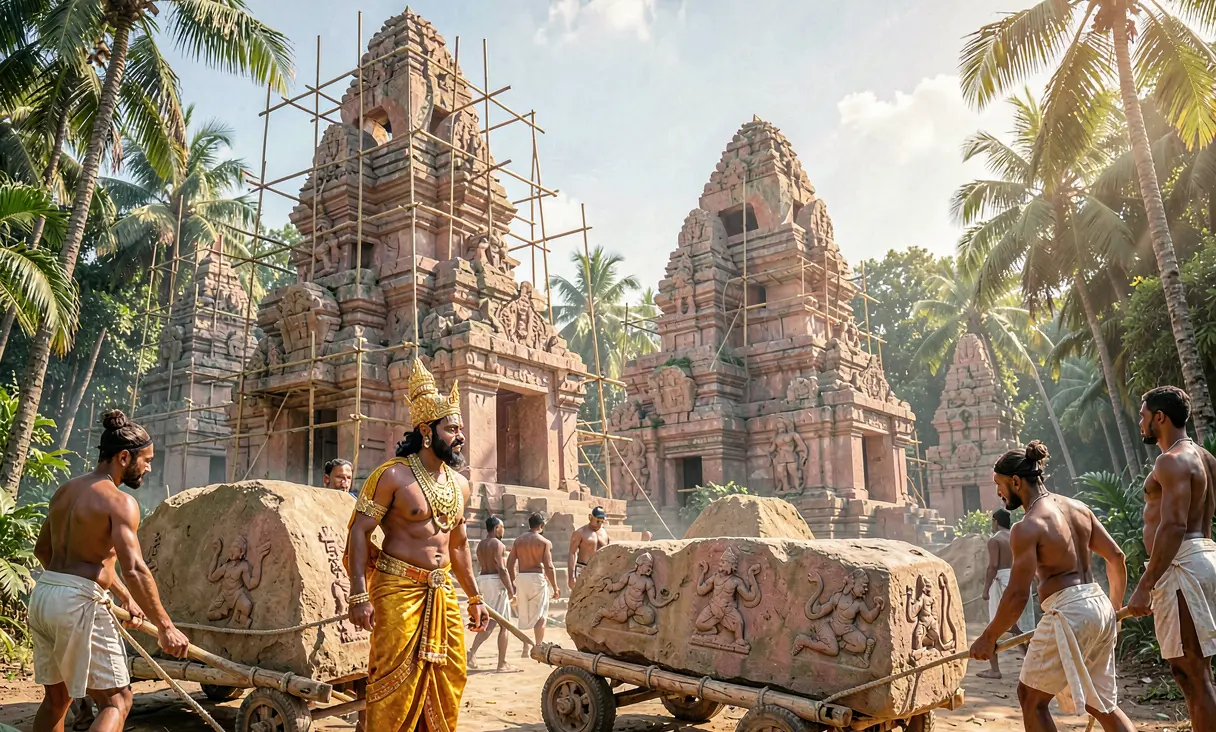
Construction of Angkor Wat Begins
Begun c. 1113 CE by King Suryavarman II, Angkor Wat stands as the world's largest religious monument, fusing Hindu cosmology with masterful hydraulic engineering and evolving into a Buddhist sanctuary
The Zenith of the Khmer Empire
By the early 12th century, the Khmer Empire had reached its territorial and cultural apex under the rule of King Suryavarman II. Ascending the throne around 1113 CE following a period of civil strife, Suryavarman sought to solidify his legitimacy not merely through military conquest but through an unprecedented display of divine kingship. In the Hindu cosmology adopted by the Khmer court, the monarch was viewed as a *devaraja*, or god-king, whose earthly domain mirrored the celestial order. To manifest this cosmic authority, the king commissioned a temple complex that would serve as his state temple and eventual mausoleum, designed to physically replicate Mount Meru, the five-peaked home of the gods in Hindu mythology.
Architectural Vision and Cosmic Alignment
Construction began shortly after 1113 CE on a site roughly six kilometers northwest of the existing capital, Angkor Thom. The architects, likely drawing from a synthesis of Indian Vastu Shastra principles and indigenous Khmer building traditions, conceived a structure of staggering scale: a central sanctuary rising 65 meters above the surrounding plain, encircled by three rectangular galleries and a massive moat measuring nearly 200 meters wide. Unlike previous temples oriented to the east, Angkor Wat was uniquely aligned to the west, a deviation scholars debate may have been intended for funerary rites or specific astronomical observations related to the setting sun. The design utilized sandstone quarried from the Kulen Hills, transported via an intricate network of canals and rafts, marking a shift from the earlier brick-and-laterite construction methods.
Engineering Marvels and Hydraulic Mastery
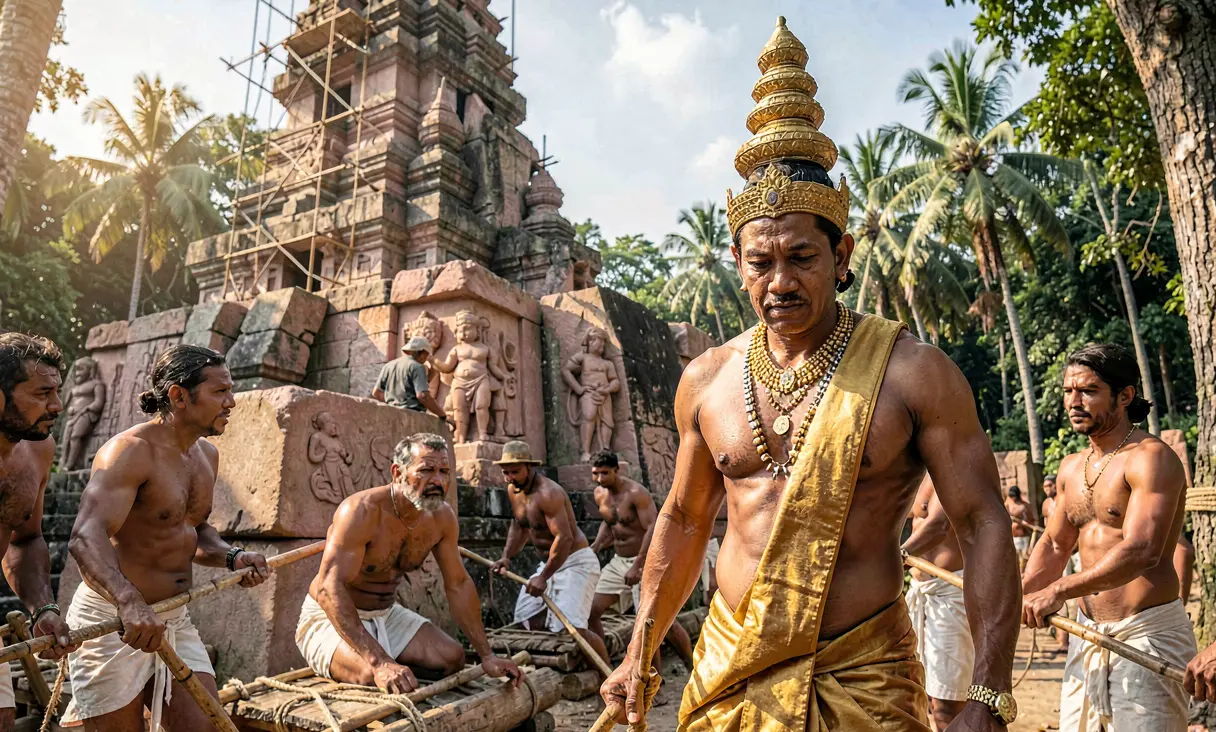
The creation of Angkor Wat was as much a feat of hydraulic engineering as it was of masonry. The temple's vast moat, serving both defensive and symbolic purposes, functioned as part of the broader Angkorian water management system that sustained the city's massive population. The site required precise leveling to ensure the structure remained stable on the alluvial plain, while the complex drainage systems prevented flooding during the monsoon seasons. Thousands of laborers, including conscripted workers and skilled artisans, were mobilized to quarry, transport, and carve millions of tons of sandstone. The precision of the joinery is such that no mortar was used; instead, stones were fitted together with such exactitude that a knife blade cannot be inserted between them.
Narrative in Stone: The Bas-Reliefs
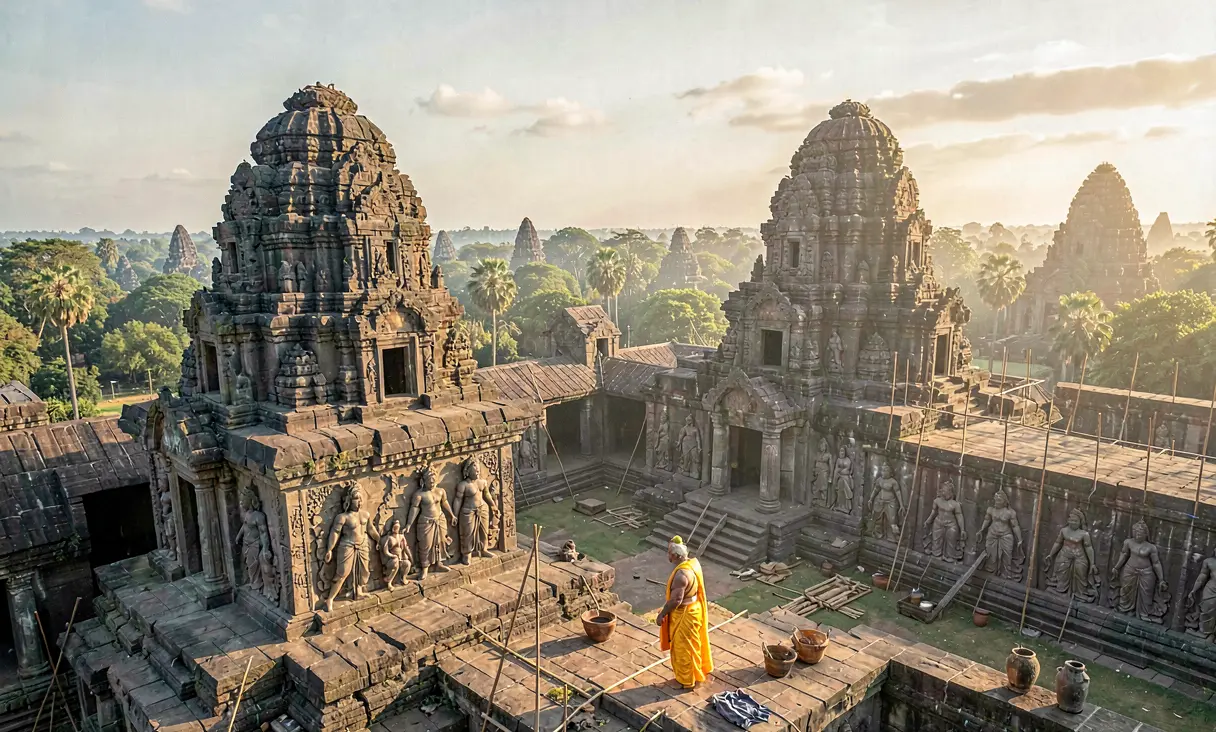
As the walls rose, artists began carving the extensive bas-reliefs that would cover over 12,000 square meters of gallery surface. These carvings were not merely decorative but served as a visual encyclopedia of Khmer cosmology and history. The outer galleries depict scenes from the Hindu epics, including the *Churning of the Ocean of Milk*, the Battle of Kurukshetra from the Mahabharata, and the Ramayana. Simultaneously, the walls featured processions of Suryavarman II's army and his court, effectively immortalizing the king's earthly power alongside his divine status. The artistic style, known as the Angkor Wat style, is characterized by a sense of movement, detailed ornamentation, and a harmonious balance between human figures and mythological elements.
Religious Transformation and Continuity
Although commissioned as a Vaishnavite Hindu temple dedicated to the god Vishnu, Angkor Wat's religious identity began to shift even before its completion. Following Suryavarman II's death around 1150 CE and the subsequent rise of Jayavarman VII in the late 12th century, the empire gradually transitioned toward Mahayana Buddhism. By the 13th century, the temple had been repurposed as a Buddhist site, with Buddha images installed in the sanctuaries and Hindu deities reinterpreted through a Buddhist lens. Despite this theological transformation, the architectural integrity remained intact, demonstrating the adaptability of the Khmer civilization and its capacity to absorb new religious influences without erasing its monumental past.
Enduring Legacy and Global Significance
While much of the surrounding Angkorian city was eventually reclaimed by the jungle, Angkor Wat survived largely intact due to its continuous use as a Buddhist monastery. Its rediscovery by the wider world in the 19th century, notably through the accounts of French naturalist Henri Mouhot, cemented its status as a symbol of Southeast Asian heritage and human achievement. Today, it stands not only as the largest religious monument in the world but also as a UNESCO World Heritage site and the centerpiece of Cambodia's national identity, appearing on the nation's flag. The construction of Angkor Wat represents a pinnacle of human creativity, blending theology, astronomy, and engineering into a singular, enduring testament to the power of the Khmer Empire.
It stands as the pinnacle of Khmer architecture and a symbol of Cambodian national identity.
Where it happened
Angkor, Cambodia — see it on the interactive map →
Explore related history
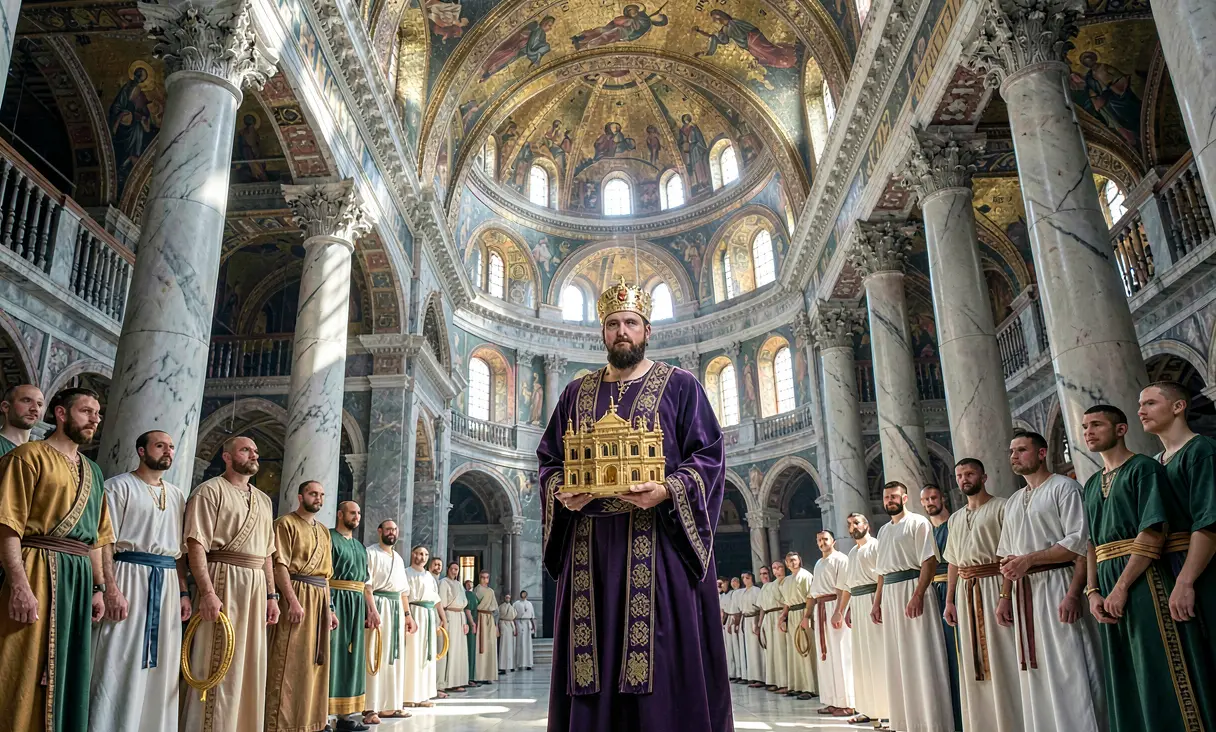 architectureCompletion of the Hagia Sophia537 CE · Constantinople (Istanbul), TurkeyEmperor Justinian completes the Hagia Sophia, a revolutionary cathedral that redefines architectural engineering and Byzantine art.
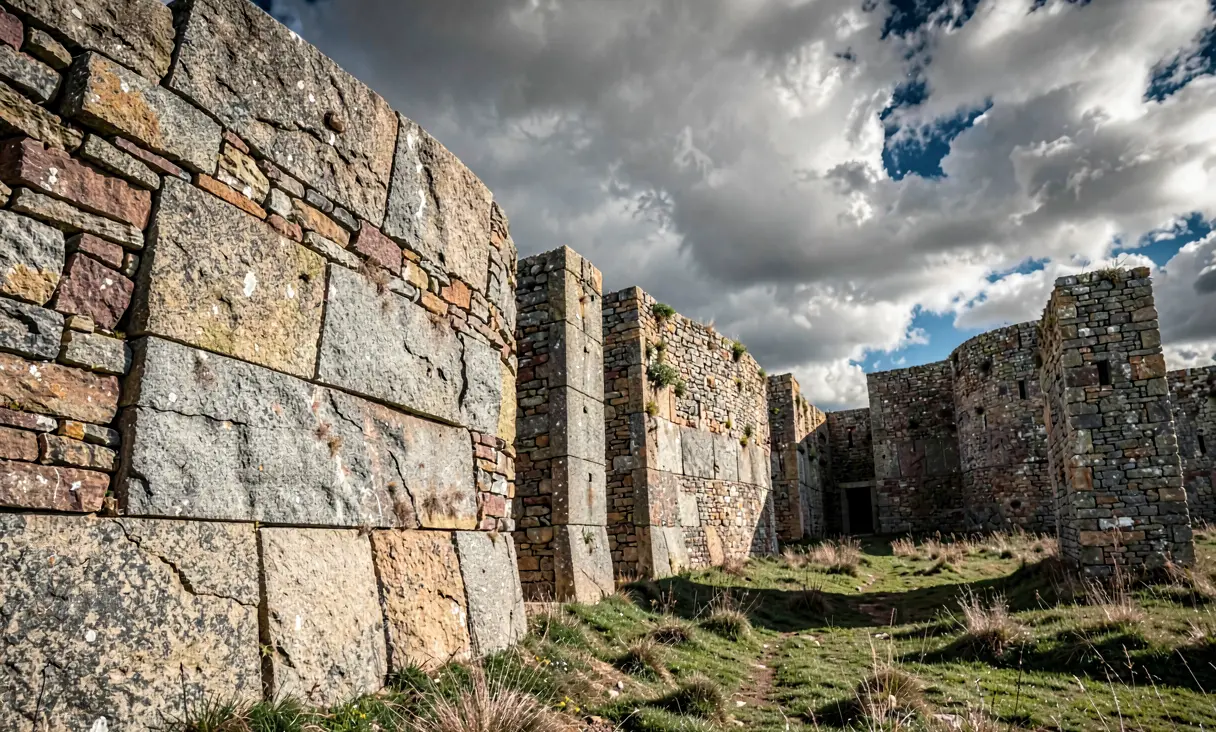 CivilizationConstruction of Great Zimbabwec. 1100 CE · Masvingo, ZimbabweShona people build the largest pre-colonial stone structure in Africa without mortar.
 ScienceComposition of the Mitakshara Law Codec. 1100 CE · Kalyan (modern Karnataka/India)Vijnaneshwara writes the Mitakshara, a seminal commentary on Hindu law that influences legal systems across India.
 tradePeak of the Maritime Silk Road under Song Dynastyc. 1127 CE · Hankou, ChinaThe Song Dynasty establishes a global maritime trade network connecting China to East Africa.
Discussion
Loading…