
Fall of Angkor Thom to Ayutthaya
In 1431, Ayutthayan forces sacked Angkor Thom, forcing the Khmer court to flee south and abandoning the great hydraulic capital, marking the definitive end of the Angkorian Empire's dominance in South
The Twilight of the Khmer Empire
By the early 15th century, the Angkorian civilization, which had dominated mainland Southeast Asia for five centuries, faced a convergence of internal decay and external pressure. The massive hydraulic network that sustained the capital's million inhabitants—comprising reservoirs like the West Baray and intricate canal systems—had likely fallen into disrepair due to climatic shifts and mismanagement, leading to agricultural failure and population decline. Simultaneously, the rising power of the Ayutthaya Kingdom (Siam) to the west had transformed from a tributary state into a formidable military rival. The Khmer court, under King Ponhea Yat, struggled to maintain control over a fracturing empire while defending against increasingly aggressive raids by Ayutthayan forces who coveted Angkor's wealth and strategic position.
The Siege of 1431
In 1431, the conflict culminated in a decisive siege of Angkor Thom, the fortified city that had served as the imperial capital since the reign of Jayavarman VII. Ayutthayan forces, led by King Borommaracha II (also known as Boroma Trailokanat), launched a coordinated assault that overwhelmed the Khmer defenses after months of encirclement. Historical chronicles suggest the siege lasted approximately seven months, during which the city's water supplies were cut and its walls breached. The Ayutthayan army, utilizing superior mobility and perhaps early gunpowder technology acquired through trade with China or local adaptation, systematically dismantled the outer fortifications, forcing a desperate defense within the inner sanctuary.
Key Figures: Borommaracha II and Ponhea Yat
The confrontation was defined by the strategic acumen of King Borommaracha II of Ayutthaya, who sought to permanently neutralize Angkor as a political rival. His campaign demonstrated a shift in Southeast Asian warfare from ritualized conflict to total conquest aimed at resource acquisition and territorial annexation. Opposing him was Khmer King Ponhea Yat, whose reign marked the final chapter of the classical Angkorian era. While records of his military tactics are sparse, his decision to abandon the capital rather than face annihilation suggests a pragmatic recognition that the city could no longer be defended or sustained. His flight signaled the end of the divine kingship (devaraja) centered at Angkor Thom.
The Breach and Looting
Upon breaching the defenses, Ayutthayan troops engaged in a systematic looting of the city that lasted for weeks. Temples were stripped of gold leaf, bronze statues, and precious stones; libraries containing palm-leaf manuscripts were burned or scattered. The great Bayon temple and the royal palace suffered significant damage, though the massive stone structures themselves proved too resilient to be completely razed. The population was decimated by violence, disease, and forced displacement, with thousands of artisans, priests, and commoners taken as captives to Ayutthaya. This depopulation effectively severed the social fabric required to maintain the city's religious and administrative functions.
The Great Abandonment
Following the sack, King Ponhea Yat made the momentous decision to relocate the Khmer capital southward. The court first moved to Chaktomuk (modern-day Phnom Penh) in 1434, seeking a more defensible position near the confluence of major rivers that facilitated trade and offered natural barriers against northern invasions. This migration was not merely political but existential; it marked the deliberate abandonment of the Angkorian heartland. The vast irrigation systems, once the engine of the empire's prosperity, were left to silt up and be reclaimed by the jungle. Without a centralized authority to manage the water gates and canals, the agricultural base collapsed further, ensuring that Angkor Thom would remain largely uninhabited for centuries.
Legacy: The End of an Era
The fall of Angkor Thom in 1431 is widely regarded by historians as the definitive end of the Angkorian period and the beginning of the post-Angkor era in Cambodian history. It precipitated a profound geopolitical shift, establishing Ayutthaya as the preeminent power in mainland Southeast Asia for the next two centuries. While the stone monuments of Angkor survived as silent witnesses to a lost golden age, the living civilization that built them migrated into a new political reality defined by riverine trade and constant warfare with Siam. The event serves as a stark historical example of how environmental fragility, combined with military overextension, can precipitate the collapse of even the most monumental civilizations.
It ended the golden age of Angkor and initiated a long period of political fragmentation for Cambodia.


Where it happened
Angkor Thom, Cambodia — see it on the interactive map →
Explore related history
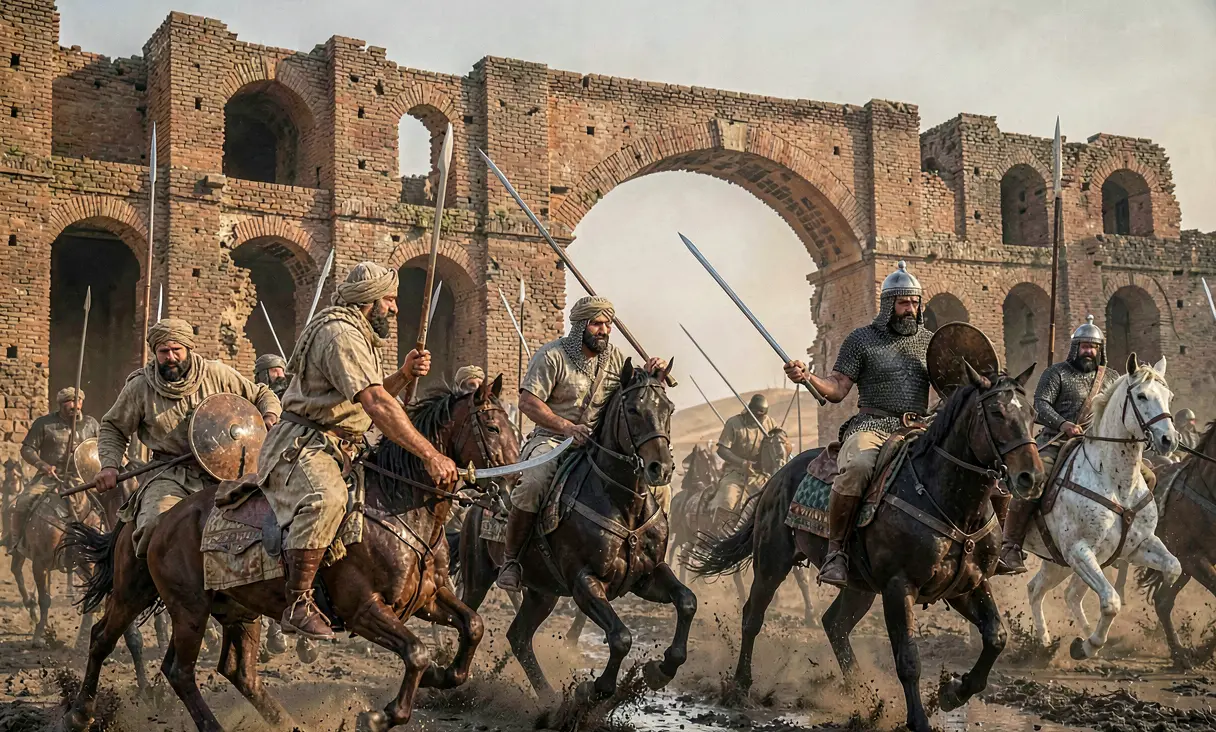 WarIslamic Conquest of the Sasanian Empire637 CE · Ctesiphon, Iraq (Persia)Arab Muslim forces defeat the Sasanian Empire at the Battle of al-Qadisiyyah, ending centuries of Persian rule.
 WarViking Siege of Paris885 CE · Paris, FranceViking raiders led by Sigfred besiege Paris for over a year, testing the defenses of West Francia.
 WarChola Conquest of Sri Lankac. 993 CE · Anuradhapura, Sri LankaRajaraja Chola launches a massive amphibious invasion of Sri Lanka, defeating the Sinhalese kingdom and annexing the island.
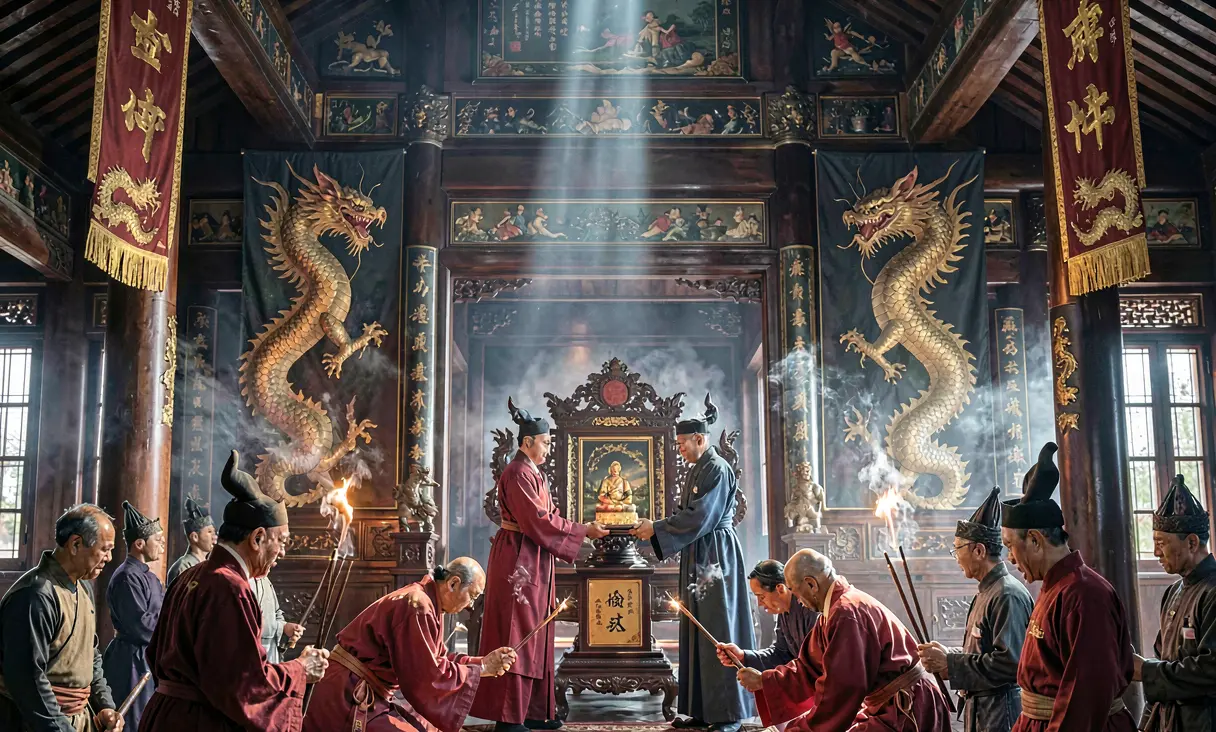 PoliticsLe Loi Crowned Emperor of Dai Viet1428 CE · Hanoi (Thang Long), VietnamLe Loi is crowned Le Thai To, founding the Later Le Dynasty.
 WarMing Occupation of Vietnam Ends1427 CE · Dong Da (Hanoi), VietnamLe Loi defeats the Ming army at Dong Da, ending occupation.
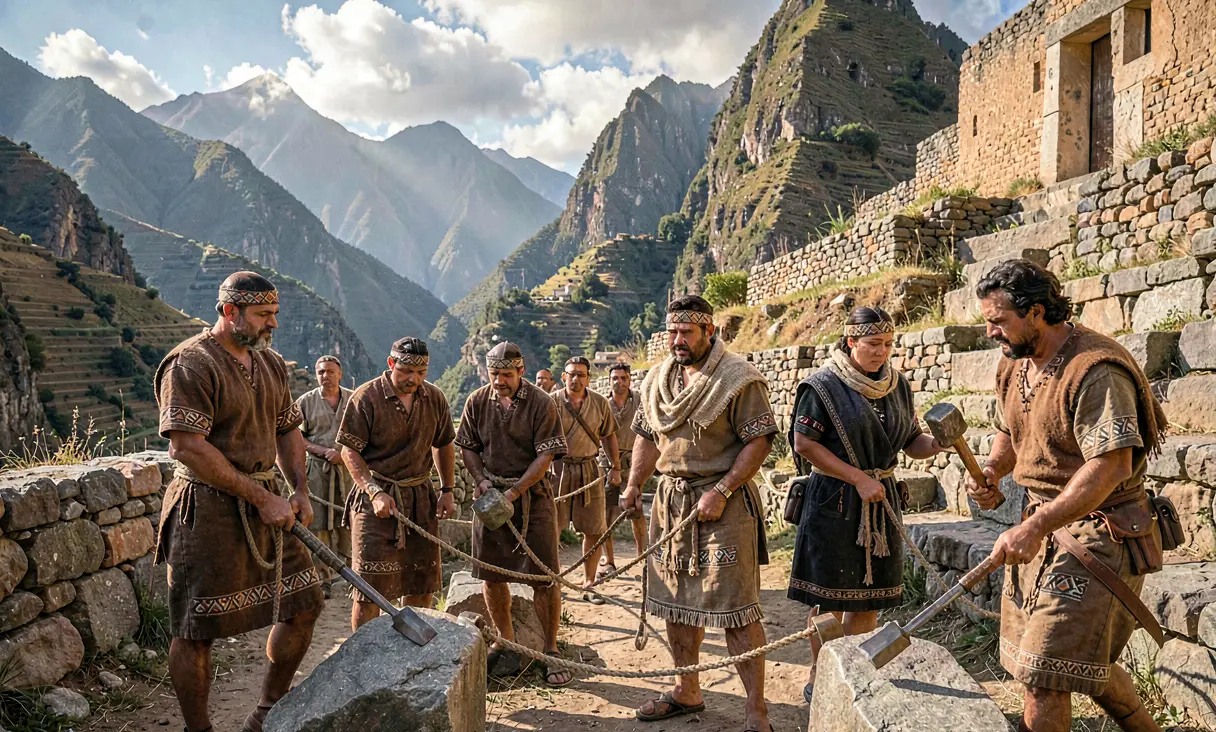 CivilizationConstruction of the Inca Road System (Qhapaq Ñan)c. 1438 CE · Cusco, Peru (Expansion Phase)Pachacuti initiates the expansion of the Qhapaq Ñan, a vast road network connecting the Inca Empire across the Andes.
Discussion
Loading…