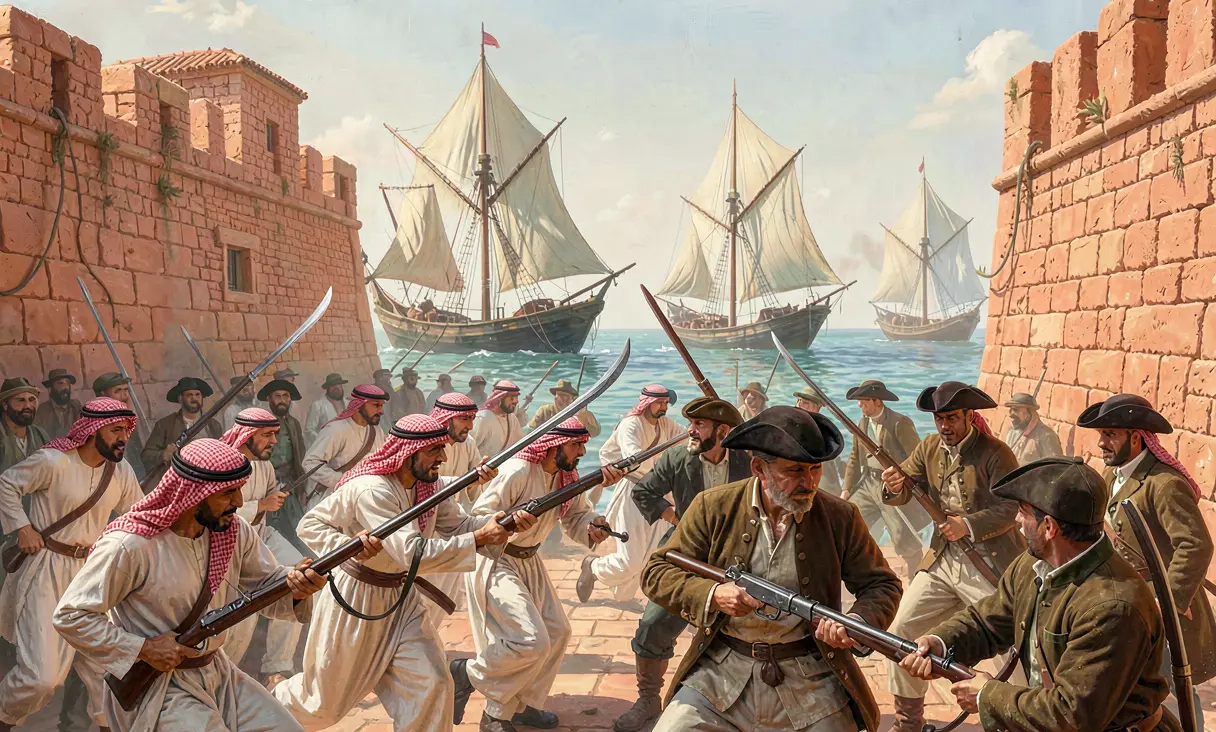
Omani Arabs Establish Control over Zanzibar
The 1698 Omani victory at Fort Jesus ended Portuguese rule, establishing Arab dominance over East African trade and transforming Zanzibar into a pivotal Indian Ocean commercial hub.
The Struggle for the Swahili Coast
By the late 17th century, the Indian Ocean trade network was a contested arena where European maritime powers clashed with established Arab and African commercial networks. The Portuguese, having seized control of key coastal strongholds like Mombasa since the early 1500s, imposed a stranglehold on commerce through the use of naval force and heavy taxation. Their presence, centered around the formidable Fort Jesus in Mombasa, was deeply resented by the local Swahili city-states and neighboring Omani sultans alike. The Portuguese policy of monopolizing trade and interfering in local succession disputes had turned former allies into bitter enemies, creating a volatile political landscape ripe for rebellion.
The Rise of the Al Busaid Dynasty
In Oman, the Yaruba dynasty had successfully unified the interior and expelled Portuguese influence from their own territories by 1650. Under the leadership of Imam Sultan bin Saif I, Oman emerged as a formidable naval power capable of challenging European dominance in the western Indian Ocean. The Imam recognized that the Portuguese foothold on the East African coast was not only an economic threat but also a strategic vulnerability that could be exploited to expand Omani influence southward. This ambition set the stage for a protracted military campaign aimed at dismantling the last major Portuguese stronghold in the region.
The Siege of Fort Jesus
The decisive conflict began in 1696 when an Omani fleet, commanded by Sayyif bin Sultan al-Yarubi, arrived off the coast of Mombasa. The siege of Fort Jesus was a grueling ordeal that lasted nearly three years, testing the endurance of both the besieging Omani forces and the trapped Portuguese garrison. Cut off from reinforcements and supplies, the Portuguese defenders faced starvation and disease within the stone walls of their fortress. Despite valiant attempts to break the blockade, the Portuguese position became untenable. On December 13, 1698, after a final assault, the fort fell to Omani forces, marking the effective end of Portuguese political control over the Swahili coast.
Consolidation and the Shift to Zanzibar
Following the fall of Mombasa, the Omani Arabs moved quickly to consolidate their gains along the East African coastline. While Mombasa remained a significant garrison town, the Omani rulers identified the island of Zanzibar as their preferred commercial capital due to its natural deep-water harbors and strategic location astride major monsoon trade routes. The new administration reorganized the coastal economy, shifting the focus from mere extraction to active participation in long-distance trade. Zanzibar began to transform into a bustling hub where Arab merchants, Swahili traders, and mainland African intermediaries converged to exchange ivory, gold, and slaves for Asian textiles and ceramics.
Economic Transformation and the Slave Trade
The Omani era ushered in a profound economic transformation characterized by the intensification of the Indian Ocean slave trade and the eventual introduction of plantation agriculture. While the clove plantations that would later define Zanzibar's economy were not established until the 19th century under Sultan Said bin Sultan, the foundations were laid during this initial period of Omani control. The integration of the Swahili coast into the broader Islamic economic sphere facilitated a surge in the movement of enslaved people from the African interior to serve as laborers on the coast and in markets across the Middle East and Asia, fundamentally altering the demographic and social fabric of the region.
Legacy of Omani Hegemony
The expulsion of the Portuguese in 1698 marked a definitive turning point in East African history, ending over a century of European hegemony on the coast. It established an Arab political and cultural dominance that would persist for two centuries, deeply embedding Islamic institutions, architecture, and language into Swahili society. This shift reoriented the region's economic dependencies away from Lisbon and toward Muscat, creating a unique Afro-Arab synthesis that defined the identity of Zanzibar and the broader Swahili world until the arrival of British colonial influence in the 19th century.
Ended Portuguese dominance in East Africa and established a new era of Arab-Omani commercial hegemony on the Swahili coast.
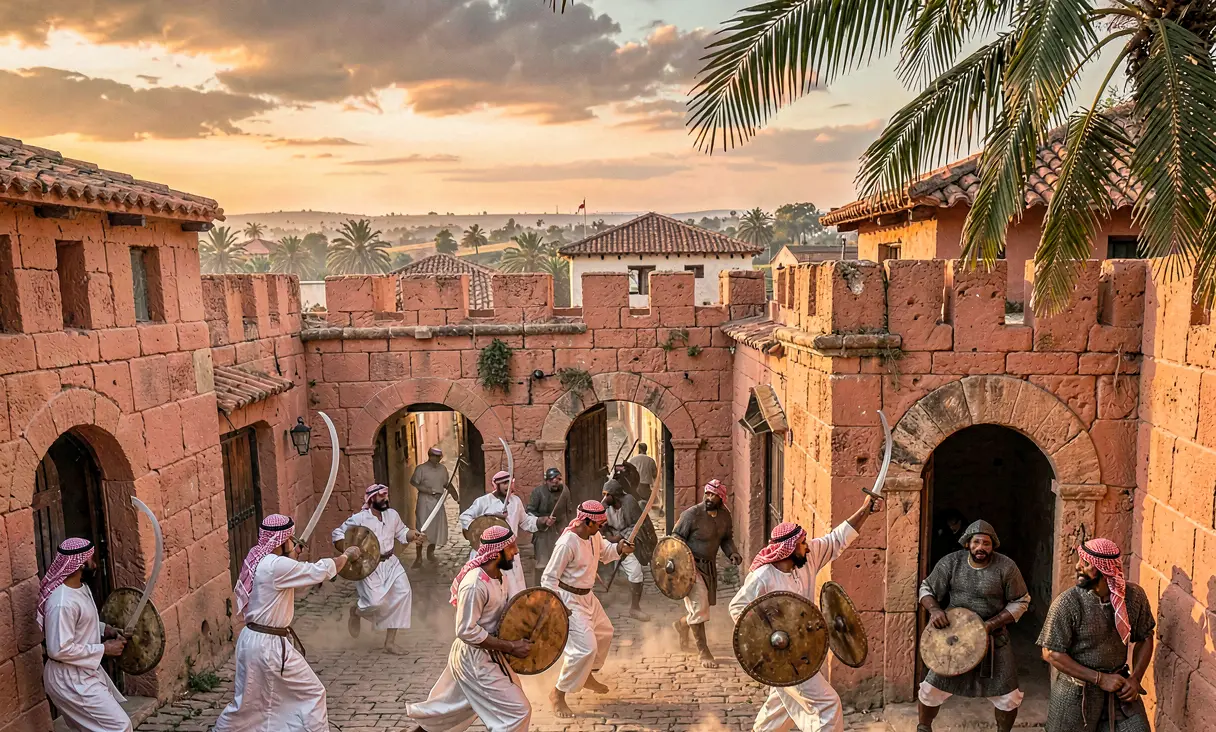

Where it happened
Zanzibar, Tanzania — see it on the interactive map →
Explore related history
 PoliticsSargon of Akkad Establishes the First Empirec. 2334 BCE · Akkad (Location uncertain, near Baghdad, Iraq)Sargon unifies Sumerian city-states to create the world's first multi-ethnic empire.
 PoliticsPromulgation of the Code of Ur-Nammuc. 2100 BCE · Ur, Southern Mesopotamia (Iraq)The earliest known surviving law code is established in the Sumerian city of Ur.
 PoliticsNelson Mandela Elected President of South AfricaApril 27, 1994 · Cape Town, South AfricaSouth Africa holds its first democratic election, ending the apartheid regime and establishing a multiracial government.
 DisasterRebuilding of the Palace at Knossos after Earthquakec. 1700 BCE · Knossos, Crete (Greece)Minoans rebuild the Palace of Knossos after a massive earthquake destroys the old structure.
 PoliticsCreation of the Code of Hammurabic. 1754 BCE · Babylon, Mesopotamia (Iraq)King Hammurabi compiles a comprehensive legal code on a massive diorite stele.
 WarFall of Ayutthaya to Burma1767 CE · Ayutthaya, ThailandBurmese forces sack and burn Ayutthaya, ending the kingdom after four centuries.
Discussion
Loading…