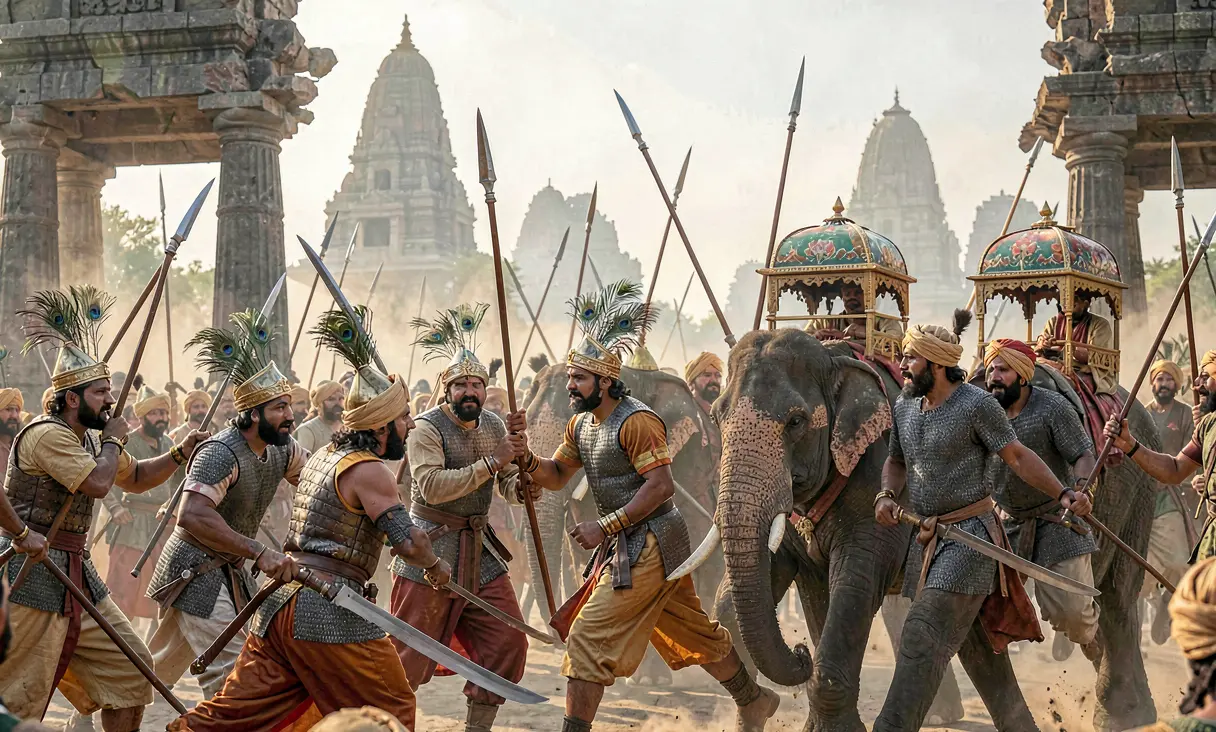
Battle of Talikota and Fall of Vijayanagara
The 1565 Battle of Talikota saw a Deccan Sultanate coalition defeat Vijayanagara through military betrayal, leading to the emperor's execution and the total destruction of the magnificent capital city
The Clash of Civilizations in the Deccan
By the mid-16th century, the Vijayanagara Empire stood as the last great Hindu bastion in southern India, a sprawling polity that had unified the peninsula under its banner for over two centuries. Its capital, Hampi, was a metropolis of unparalleled wealth and architectural grandeur, rivalling contemporary European cities in size and sophistication. However, to the north lay the fractured but formidable Deccan Sultanates—Bijapur, Golconda, Ahmadnagar, Bidar, and Berar—who had long chafed under Vijayanagara's hegemony. The tension was not merely territorial but deeply ideological; for decades, these Islamic sultanates viewed themselves as the vanguard of a regional jihad against the Hindu empire, while Vijayanagara positioned itself as the protector of Sanatana Dharma.
The Coalition and the Emperor
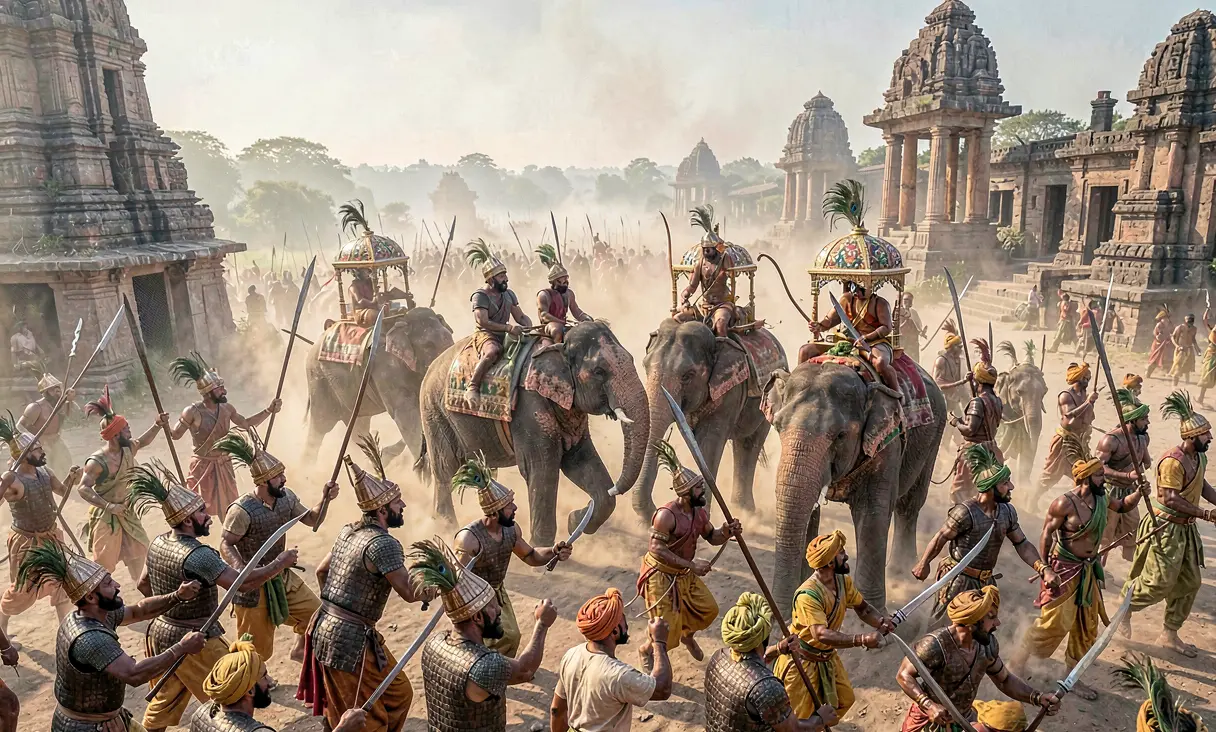
In early 1565, the five sultanates set aside their internal rivalries to form a unified coalition against the aging but ambitious regent Rama Raya. A master politician who had effectively ruled as the power behind the throne for decades, Rama Raya commanded an army estimated at over 300,000 men and nearly 2,000 war elephants. Opposing him was a combined force of approximately 150,000 to 200,000 soldiers from the Deccan Sultanates, though their cavalry was superior and their artillery more advanced. The stage was set at Talikota, near the banks of the Krishna River, where the two colossal forces prepared for a confrontation that would determine the fate of South Asian history.
The Betrayal at Talikota
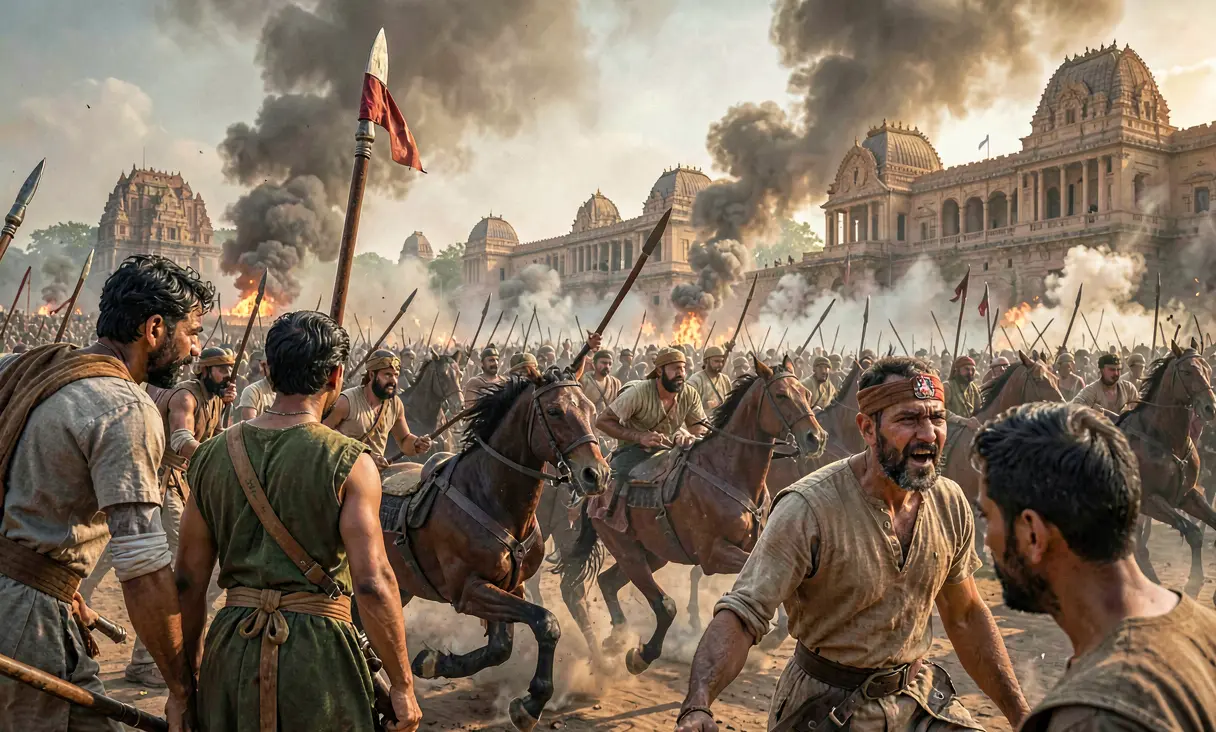
The battle commenced on January 23, 1565, with Rama Raya deploying his massive infantry and elephant corps to crush the Sultanate lines. Initially, the Vijayanagara forces held their ground, but the tide turned decisively due to a catastrophic internal betrayal. Two of Rama Raya's most trusted Muslim generals, Ali Khan and Jauhar Khan, commanded significant contingents within the imperial army. In the heat of combat, these commanders defected, switching sides and leading their troops against their former sovereign. This treachery caused a chain reaction of panic and disarray within the Vijayanagara ranks, shattering the cohesion of the empire's largest military formation.
The Fall of Rama Raya
Amidst the chaos, Rama Raya attempted to rally his forces but was unhorsed and captured by the Sultanate cavalry. The emperor was brought before Ali Adil Shah I of Bijapur and Hussain Nizam Shah I of Ahmadnagar. Despite his advanced age and previous diplomatic overtures, the sultans, viewing him as a symbol of Hindu resistance, ordered his immediate execution. Rama Raya was beheaded on the battlefield, an act that effectively decapitated the Vijayanagara command structure. Without their leader, the remaining imperial troops collapsed, leading to a rout that turned into a slaughter.
The Sack of Hampi
Following the victory at Talikota, the coalition forces marched south to the capital city of Vijayanagara. What followed was one of the most devastating acts of destruction in Indian history. Over a period of six months, the sultanates systematically razed the magnificent city. Temples were desecrated, palaces were dynamited with gunpowder, and libraries containing centuries of Sanskrit and Kannada literature were burned. The great stone structures that had defined the landscape were reduced to ruins, and the population was either massacred or scattered into exile. Hampi, once a thriving hub of commerce and culture, was abandoned within weeks, leaving only its skeletal monuments to stand as silent witnesses.
Legacy and Historical Shift
The Battle of Talikota marked the definitive end of the Sangama dynasty and the golden age of the Vijayanagara Empire. While a successor state persisted in Penukonda and later Chandragiri, it never regained the empire's former power or territorial extent. The victory shifted the balance of power decisively toward the Deccan Sultanates, accelerating the Islamization of the region's political landscape and paving the way for future Mughal expansion into the south. The event remains a poignant symbol in Indian historiography, representing both the resilience of Hindu culture in the face of adversity and the fragility of political unity when internal divisions are exploited by external foes.
The Battle of Talikota ended the greatest Hindu empire in India's history, leading to the fragmentation of South Indian politics.
Where it happened
Talikota, Karnataka, India — see it on the interactive map →
Explore related history
 WarBabur's Victory at Panipat and Founding of Mughalsc. 1526 CE · Panipat (modern Haryana/India)Babur defeats the Lodi Sultanate at the First Battle of Panipat, establishing the Mughal Empire in India.
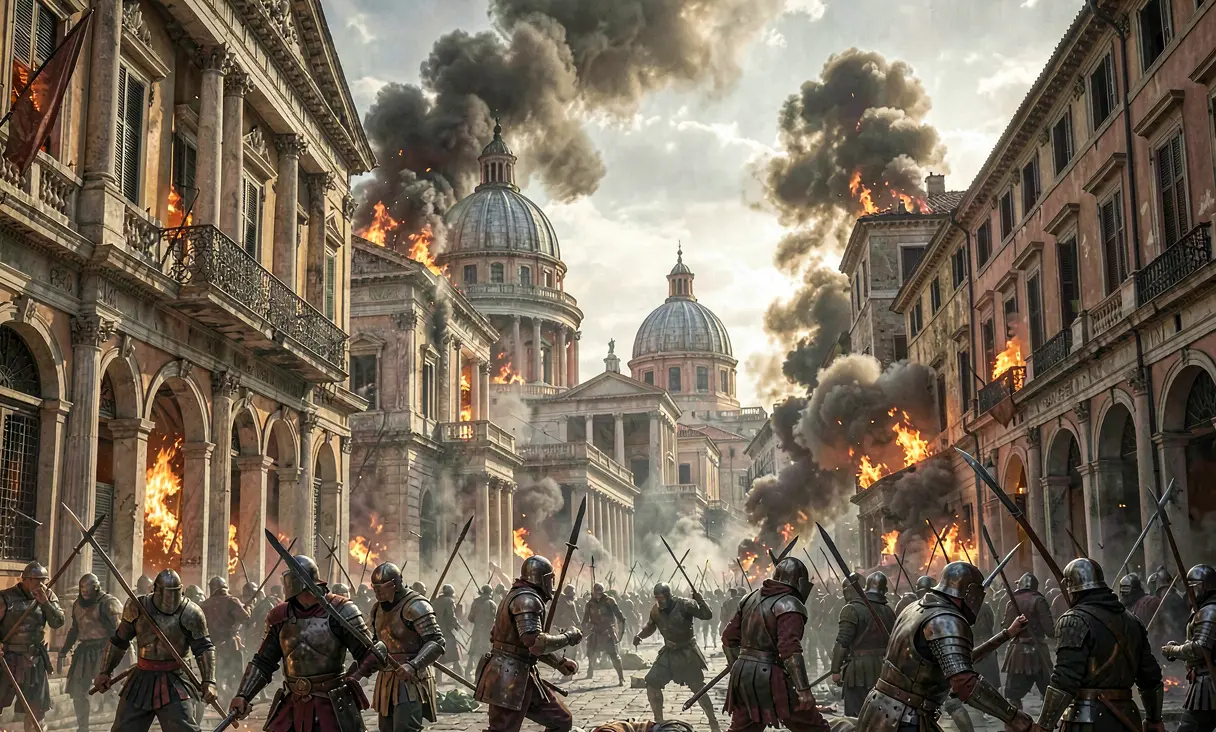 WarSack of RomeMay 6, 1527 · Rome, ItalyMutinous troops of Charles V brutally loot Rome, ending the High Renaissance.
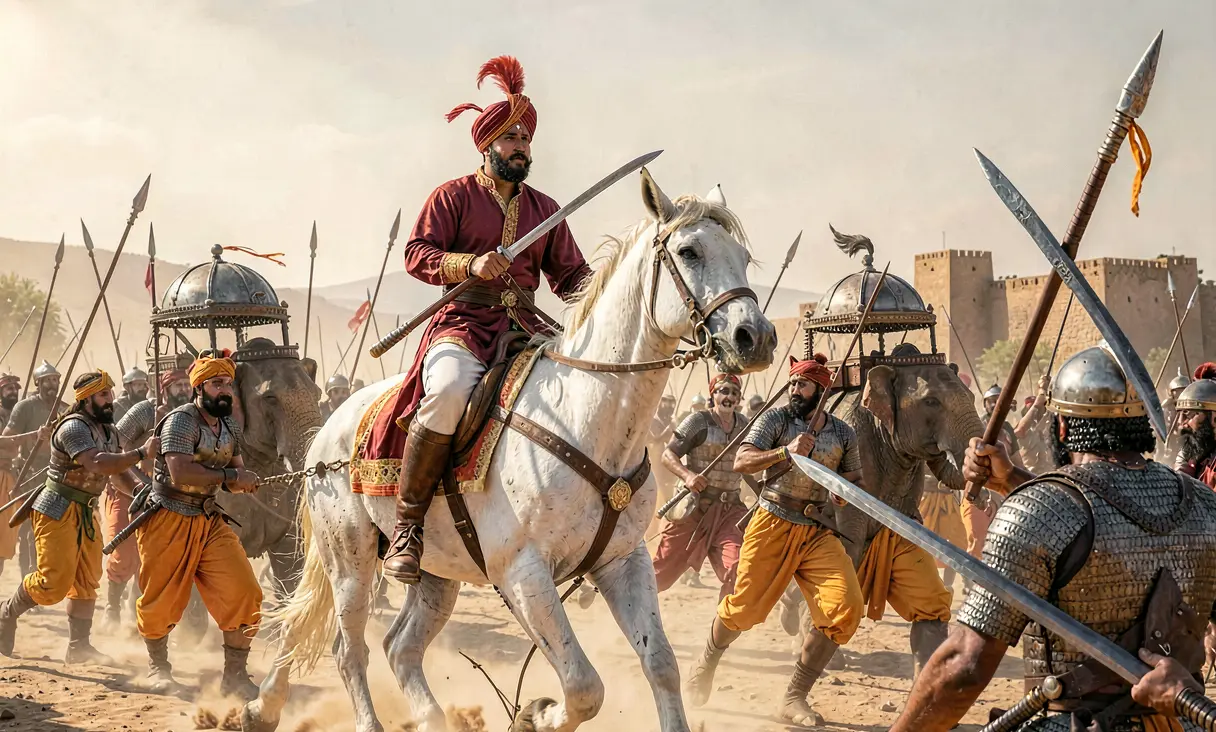 WarBabur's Victory at Khanwac. 1527 CE · Khanwa, Rajasthan, IndiaBabur defeats the Rajput confederacy led by Rana Sanga, consolidating Mughal rule over North India.
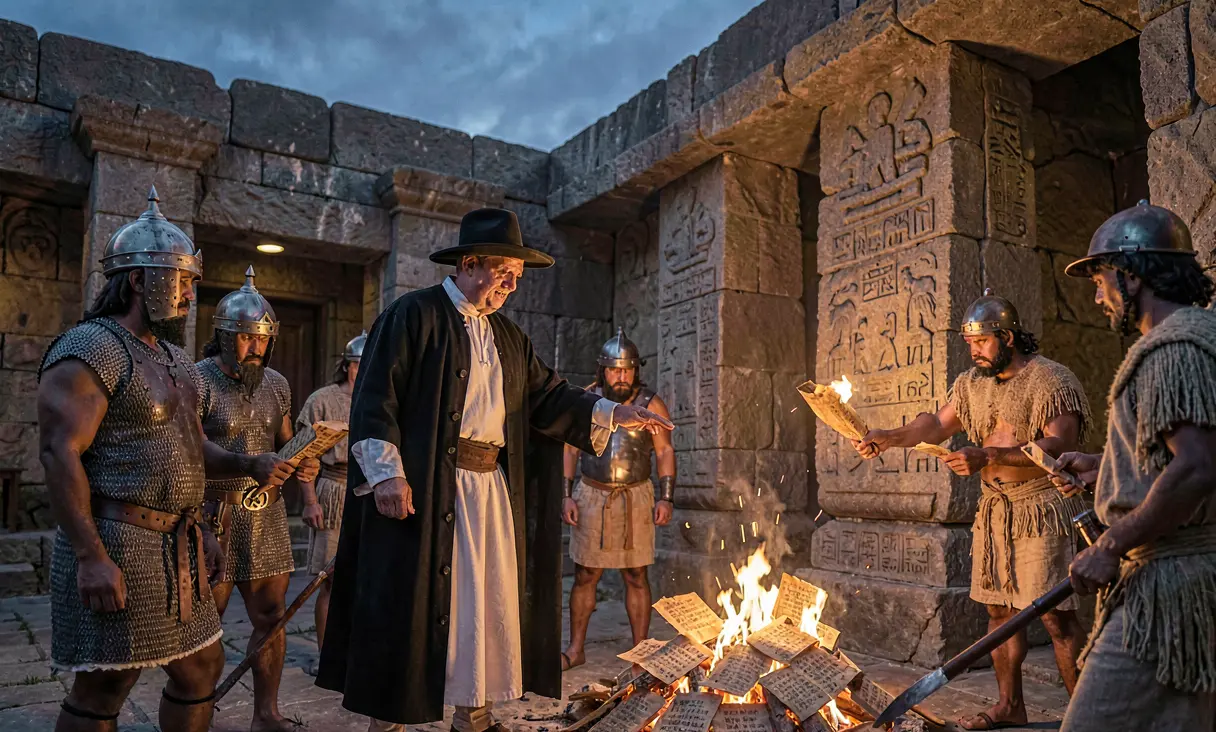 DisasterBurning of Maya Codices by Bishop LandaJuly 1562 CE · Mani, Yucatan, MexicoSpanish Bishop Diego de Landa orders the destruction of most surviving Maya written records in a campaign against idolatry.
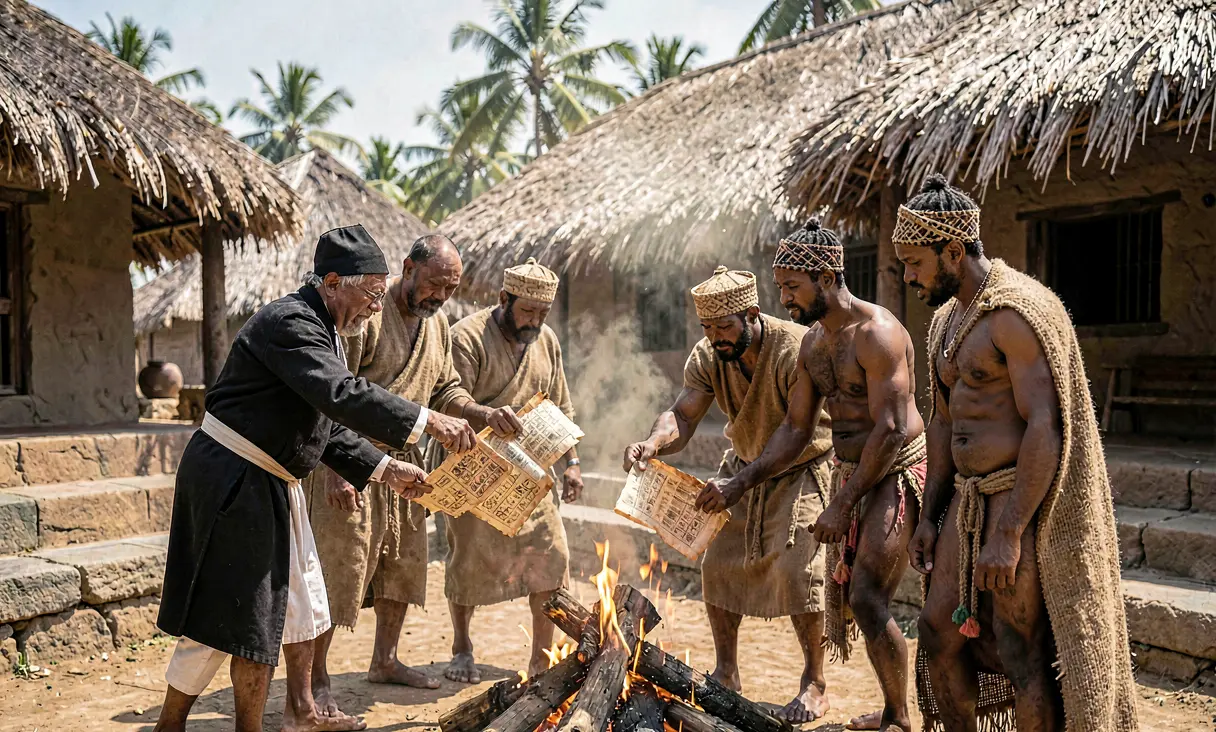 DisasterDestruction of Maya Codices by Bishop LandaJuly 12, 1562 · Maní, Yucatán, MexicoSpanish friars burn nearly all surviving Maya books in a purge of idolatry.
 PoliticsFounding of Fatehpur Sikric. 1571 CE · Fatehpur Sikri, Uttar Pradesh, IndiaAkbar establishes Fatehpur Sikri as the new capital of the Mughal Empire to honor his spiritual guide and centralize administration.
Discussion
Loading…