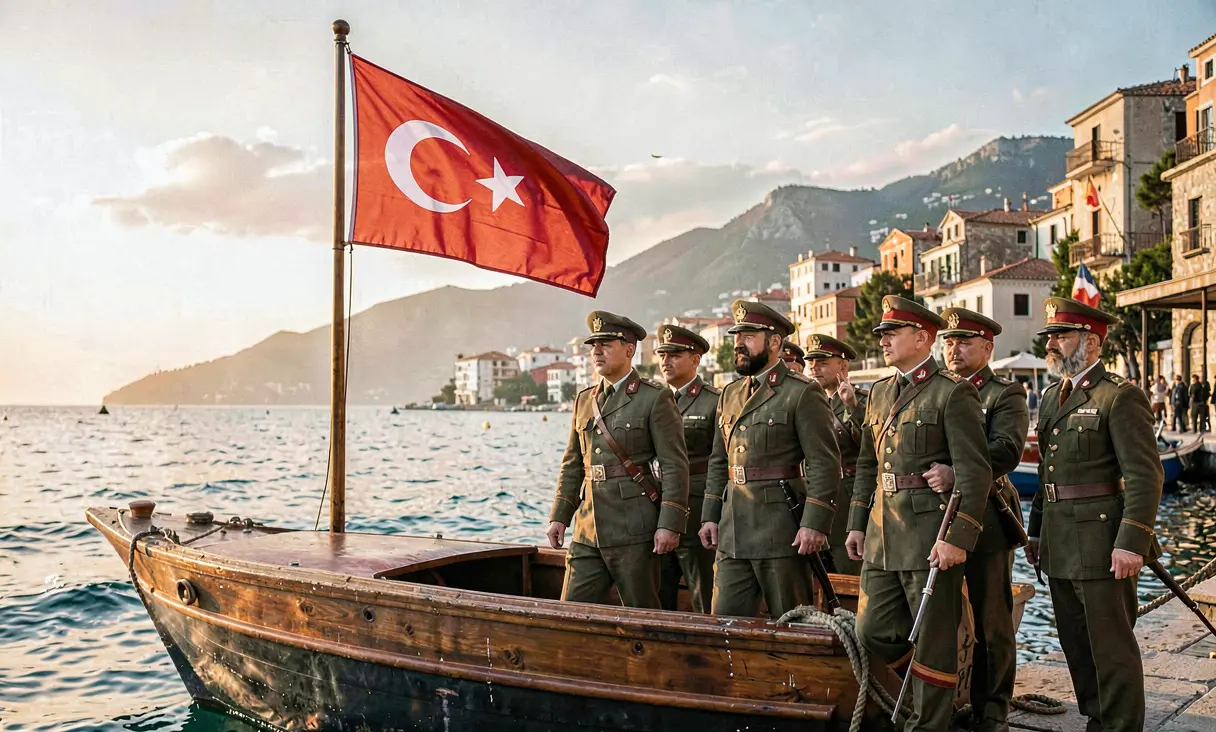
Turkish War of Independence Begins
Mustafa Kemal Atatürk's landing at Samsun ignited a successful war that overturned Allied partition plans, abolished the Ottoman Sultanate, and founded the sovereign Republic of Turkey in 1923.
The Fractured Empire and the Occupation
By the spring of 1919, the Ottoman Empire lay in ruins following its defeat in World War I. The armistice of Mudros had effectively dissolved the empire's military capacity, leaving Anatolia vulnerable to a hasty partition by the Allied powers. While the British, French, and Italians occupied strategic coastal zones and resource-rich regions, Greece was granted permission by the British Prime Minister David Lloyd George to land troops in Smyrna (modern-day İzmir) on May 15, 1919. This occupation, marked by violence against the local Turkish population, signaled that the Treaty of Sèvres would carve up Anatolia itself, reducing the Ottoman state to a rump territory around Istanbul. The political atmosphere was one of despair and resignation within the Ottoman government in Constantinople, which appeared willing to acquiesce to Allied demands.
The Landing at Samsun
Amidst this chaos, Major General Mustafa Kemal Pasha arrived in Samsun on May 19, 1919, aboard the British destroyer HMS Marmaris. Officially appointed by Sultan Mehmed VI as the Ninth Army Inspector with the mandate to restore order and disarm remaining Ottoman units, Kemal possessed a far more radical vision. He utilized his official authority not to suppress resistance but to organize it. Upon landing, he immediately established contact with local nationalist groups and began circulating telegrams calling for national unity. His presence in Samsun marked the transition from passive acceptance of foreign domination to active, organized military and political resistance, igniting the spark that would become the Turkish War of Independence.
From Congresses to a New Parliament
Kemal's strategy relied on legitimizing the nationalist movement through representative assemblies. In July 1919, he convened the Erzurum Congress, which demanded the integrity of the nation's borders and the right to self-determination. This was followed by the Sivas Congress in September, where delegates from across Anatolia united under a single platform, rejecting the authority of the Sultan's government in Istanbul and forming the Association for the Defense of Rights of Anatolia and Rumelia. By April 1920, these efforts culminated in the opening of the Grand National Assembly (GNA) in Ankara. The GNA declared itself the sole legitimate representative of the Turkish people, effectively creating a rival government to the Sultanate and setting the stage for a total war against foreign occupiers.
The Military Campaigns
The conflict evolved into a brutal multi-front war. The primary theater was the west, where Greek forces advanced deep into Anatolia with Allied support. Under the supreme command of Mustafa Kemal (later promoted to Field Marshal), Turkish national forces achieved a decisive victory at the Battle of Sakarya in September 1921, halting the Greek advance. This was followed by the Great Offensive in August 1922, which shattered the Greek lines and led to the recapture of Smyrna in early September. Simultaneously, the Nationalists fought French forces in the south, securing a peace treaty that recognized Turkish sovereignty over Cilicia, and repelled British influence in the Straits region.
The Treaty of Lausanne and Sovereignty
The military victories forced the Allies to the negotiating table. The resulting Treaty of Lausanne, signed on July 24, 1923, officially replaced the punitive Treaty of Sèvres. It recognized the borders of the modern Turkish state, abolished foreign capitulations, and secured full independence for Turkey. On November 1, 1922, the GNA had already abolished the Sultanate, ending over six centuries of Ottoman rule. The final act came on October 29, 1923, when the Assembly proclaimed the Republic of Turkey with Mustafa Kemal Atatürk as its first President, cementing the transformation from a multi-ethnic empire to a sovereign nation-state.
Legacy and Global Impact
The Turkish War of Independence stands as a seminal event in the history of decolonization and national self-determination. It was one of the first successful anti-imperialist movements in the 20th century to completely overturn a post-war settlement imposed by major powers. The movement inspired nationalist struggles across the Middle East, Asia, and Africa, demonstrating that military resistance combined with diplomatic maneuvering could restore sovereignty. Furthermore, the radical social reforms enacted by Atatürk following the war—ranging from the adoption of the Latin alphabet to women's suffrage—created a unique model for modernization in a Muslim-majority society, leaving an enduring legacy on the geopolitical landscape of the region.
This conflict established the modern Republic of Turkey and abolished the centuries-old Ottoman Empire, reshaping the Middle East's political map.

Where it happened
Samsun, Turkey — see it on the interactive map →
Explore related history
 WarAlgerian War of Independence BeginsNovember 1, 1954 · Algiers, AlgeriaThe National Liberation Front launches coordinated attacks marking the start of the Algerian War against France.
 WarMau Mau Uprising Begins in KenyaOctober 20, 1952 · Nairobi, KenyaThe Kikuyu-led Mau Mau rebellion begins against British colonial rule and white settler land ownership.
 WarEaster Rising in IrelandApril 24, 1916 · Dublin, IrelandIrish republicans launch an armed insurrection against British rule in Dublin during Easter Week.
 PoliticsKorean March First MovementMarch 1, 1919 · Seoul, Korea (under Japanese rule)Mass non-violent protests erupt across Korea demanding independence from Japanese colonial rule.
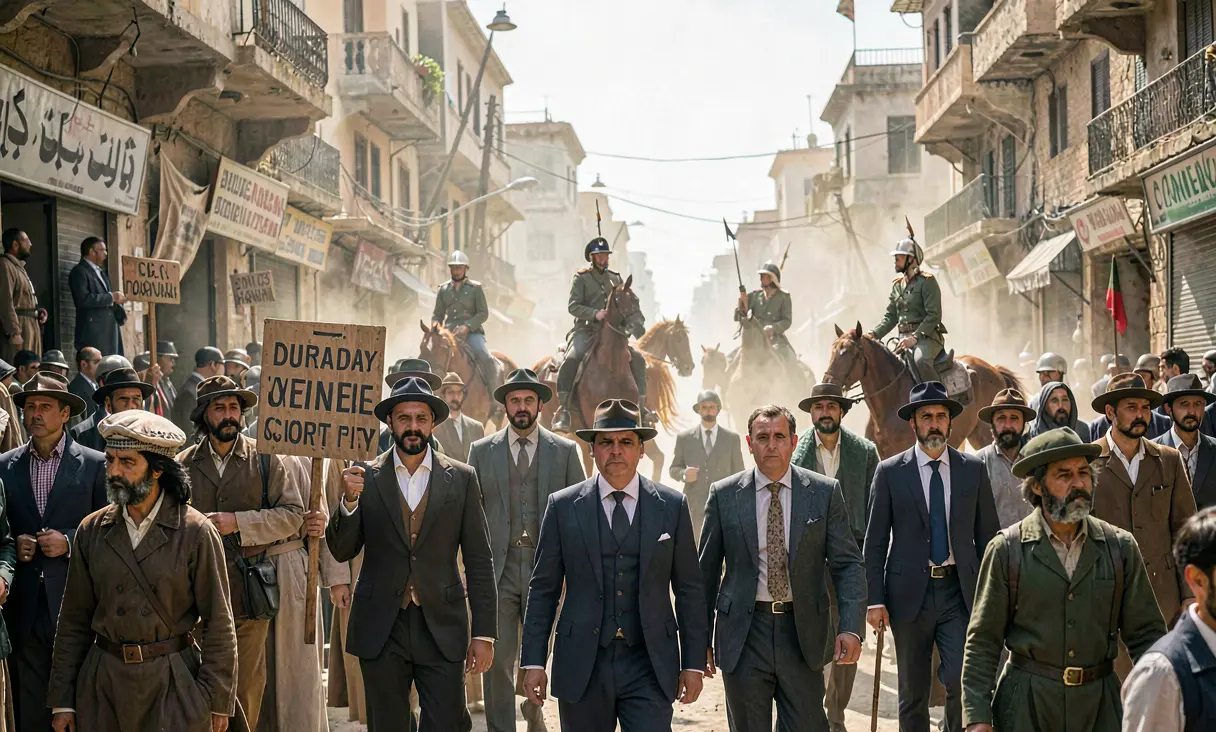 PoliticsEgyptian Revolution of 1919March 8, 1919 · Cairo, EgyptMass protests erupt in Egypt demanding an end to British protectorate and full independence.
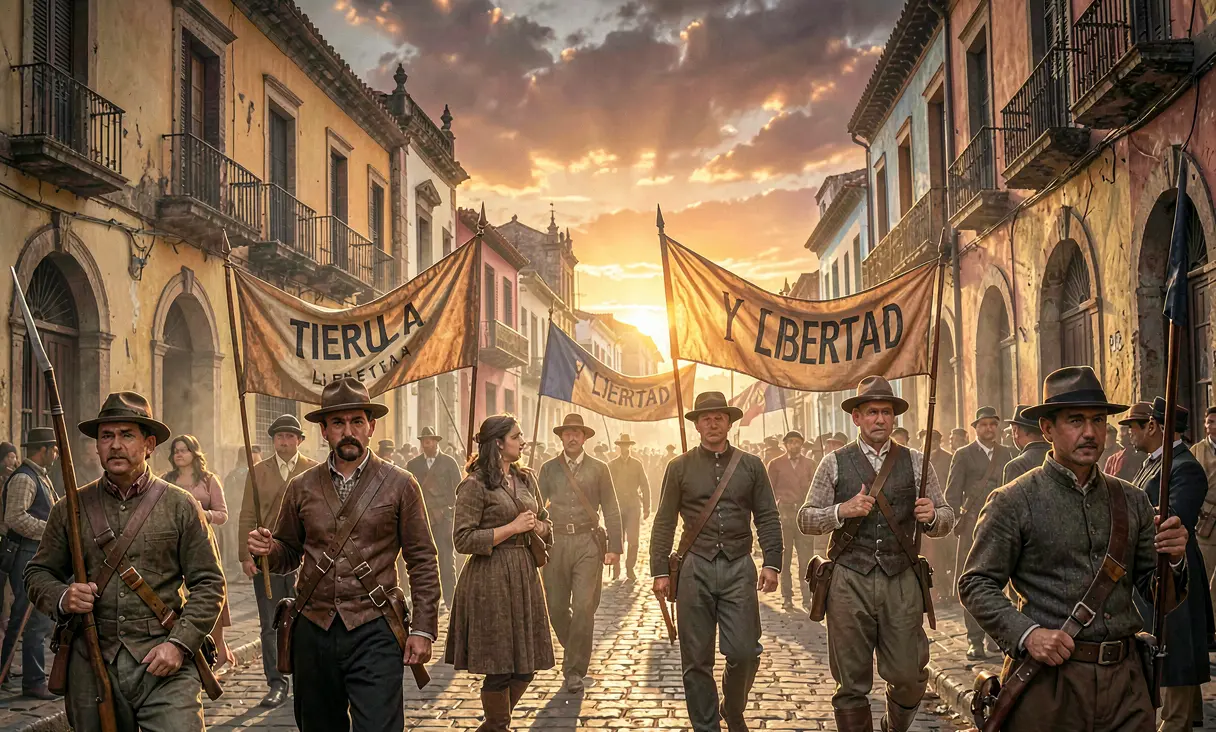 WarMexican Revolution BeginsNovember 20, 1910 · Mexico City, MexicoFrancisco I. Madero issues a call to arms against the dictatorship of Porfirio Díaz.
Discussion
Loading…