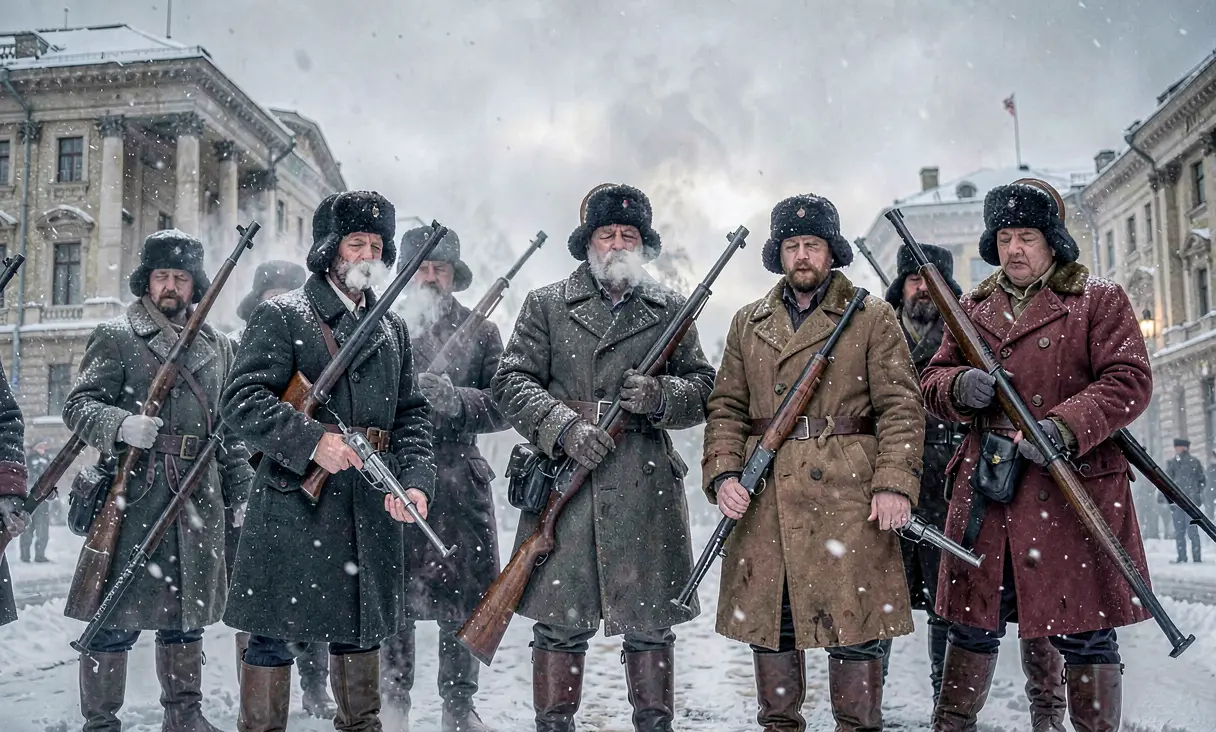
October Revolution
The Bolshevik seizure of power in Petrograd birthed the Soviet Union, igniting a century-long global ideological conflict that reshaped modern geopolitics.
Context and Instability
By late 1917, the Russian Empire lay fractured under the weight of World War I. The February Revolution had forced Tsar Nicholas II’s abdication, establishing a fragile dual power structure between the liberal Provisional Government and the radical Petrograd Soviet. While the government promised democracy, it refused to withdraw from the war or redistribute land, alienating soldiers and peasants alike. Hyperinflation and food scarcity paralyzed Petrograd, creating a volatile environment where revolutionary parties could mobilize disenfranchised masses against the status quo.
Bolshevik Ascendancy
Vladimir Lenin’s return in April 1917 marked a turning point. His April Theses rejected cooperation with bourgeois liberals, demanding immediate peace and state power for the Soviets. Initially isolated within his own party, Lenin gained influence as the Provisional Government faltered following the disastrous June Offensive and the right-wing Kornilov Affair. Leon Trotsky, appointed chairman of the Petrograd Soviet’s Military Revolutionary Committee, meticulously organized Red Guards and sympathetic army units to prepare for an armed insurrection when the moment arrived.
The Insurrection Begins
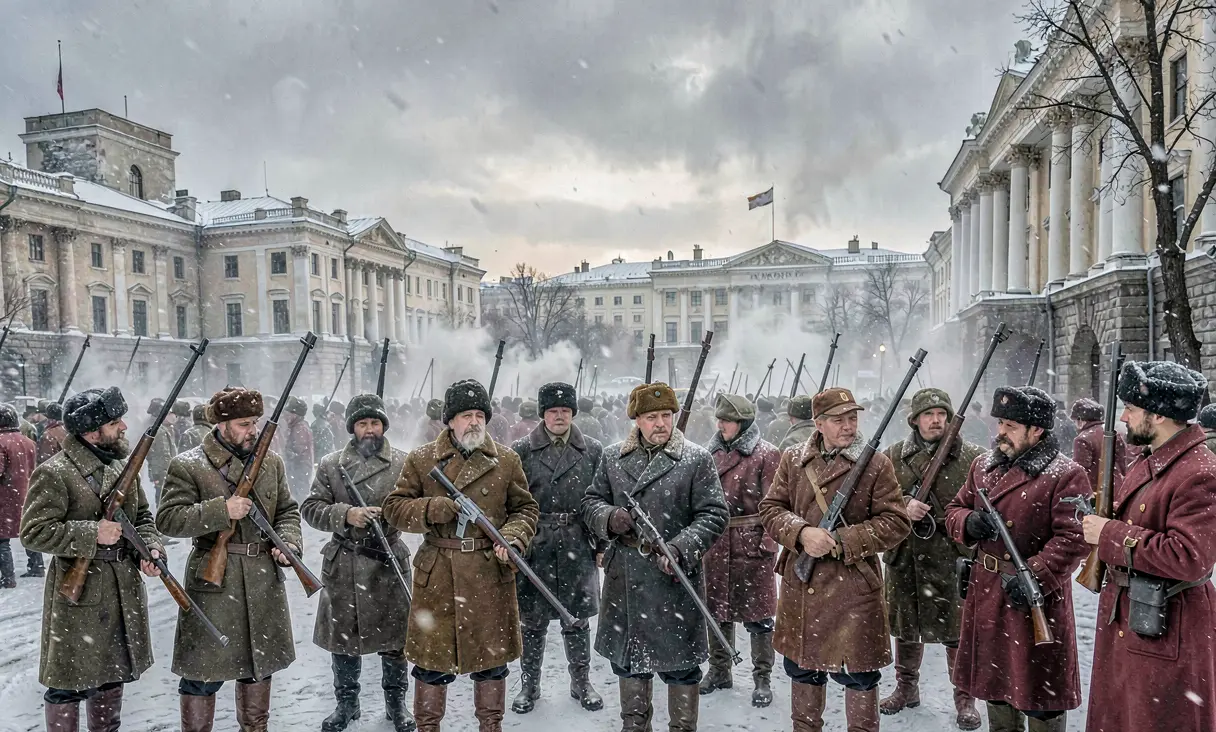
The uprising began on October 24 according to the Julian calendar then in use (November 6 Gregorian). Bolshevik forces moved swiftly to occupy railway stations, post offices, and banks with negligible resistance from loyalist troops. Alexander Kerensky, the Prime Minister, fled the capital in disguise to summon reinforcements from the Northern Front, leaving the Winter Palace isolated. Meanwhile, the Second All-Russian Congress of Soviets convened at the Smolny Institute, positioning itself as the legitimate successor to state authority rather than a mere conspiratorial group.
Storming the Winter Palace
The assault on the Winter Palace on the night of October 25 (November 7) has been mythologized as a bloody battle, though historical records indicate it was largely bloodless. At 9:40 PM, the cruiser Aurora fired a blank shot from the Neva River to signal the attack. Red Guards and sailors entered the palace, arresting the remaining ministers of the Provisional Government who were trapped inside. Kerensky escaped to Pskov but failed to rally troops, effectively ending organized resistance in the capital without significant urban combat. The Congress then elected a new government, the Council of People’s Commissars, with Lenin as Chairman and Trotsky as Foreign Affairs. This administrative shift cemented Bolshevik control over the state apparatus within hours of the palace capture, signaling that the revolution was not merely military but political in nature.
Immediate Governance
Legitimacy was secured through the Congress of Soviets, which ratified Lenin’s leadership and passed two foundational decrees. The Decree on Peace proposed immediate negotiations for peace without annexations or indemnities, while the Decree on Land abolished private property to satisfy peasant demands. However, moderate socialists like the Mensheviks and Socialist Revolutionaries walked out in protest, accusing the Bolsheviks of a coup. This political rupture deepened divisions that would soon ignite the Russian Civil War between Red and White factions.
Consolidation and Statehood
The revolution birthed the Russian Soviet Federative Socialist Republic (RSFSR), which formally became the Union of Soviet Socialist Republics in 1922 after winning the civil war. The new state withdrew from World War I via the Treaty of Brest-Litovsk, ceding vast territories to Germany but securing its survival. This consolidation allowed the Bolsheviks to industrialize rapidly under Stalin’s Five-Year Plans, transforming a agrarian society into an industrial superpower capable of challenging Western dominance in the subsequent decades.
Global Legacy
Globally, the October Revolution shattered the assumption that capitalism was the inevitable endpoint of history. It inspired communist parties from China to Cuba and prompted Western democracies to implement welfare reforms to counter socialist appeal. The resulting ideological bipolarity defined the Cold War, influencing proxy conflicts across Asia, Africa, and Latin America until the Soviet Union’s collapse in 1991. It also fueled anti-colonial movements in Asia and Africa, offering an alternative model to Western imperialism. Its legacy remains a pivotal reference point for debates on state power, economic equality, and revolutionary change.
It established the first socialist state, sparking a global ideological conflict that shaped the 20th century.
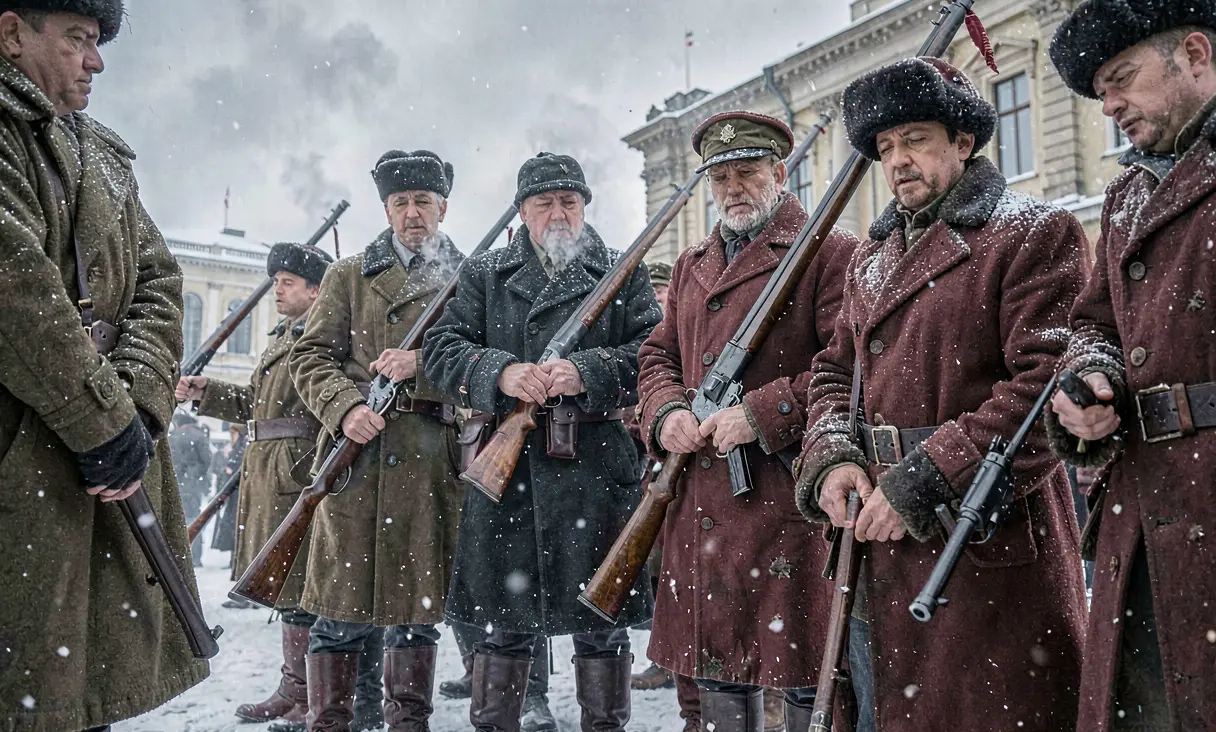
Where it happened
Petrograd (St. Petersburg), Russia — see it on the interactive map →
Explore related history
 PoliticsTreaty of Versailles SignedJune 28, 1919 · Versailles, FrancePeace treaty ends WWI but imposes harsh terms on Germany, sowing seeds for WWII.
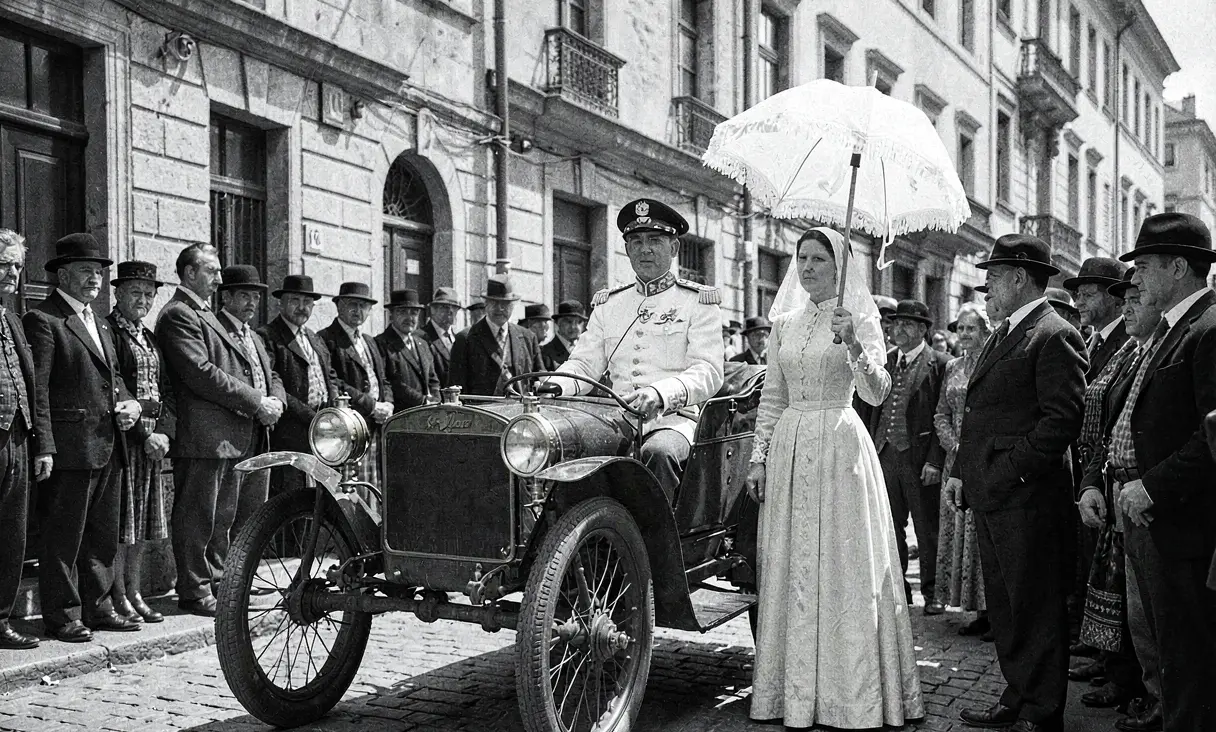 WarOutbreak of World War IJuly 28, 1914 CE · Sarajevo, BosniaAssassination of Archduke Franz Ferdinand triggers a global conflict involving major powers.
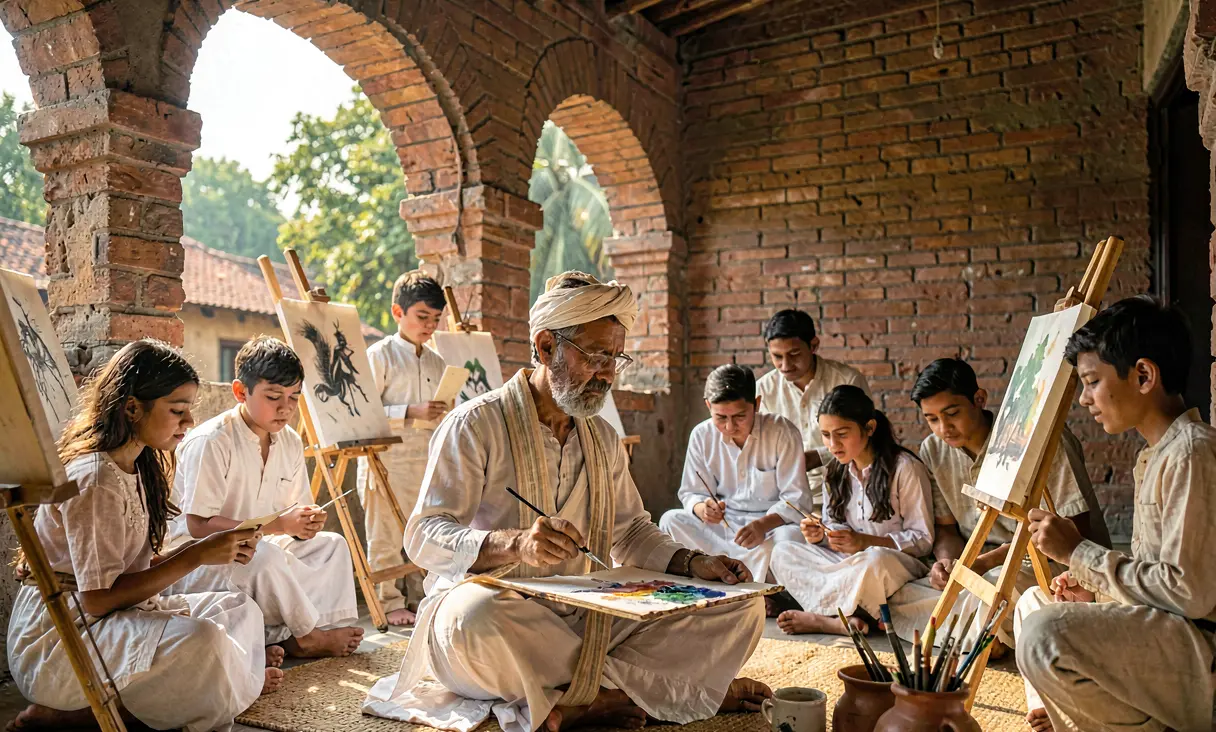 ArtFounding of the Bengal School of Artc. 1905 CE · Calcutta (Kolkata), IndiaAbanindranath Tagore pioneers a new indigenous Indian art style.
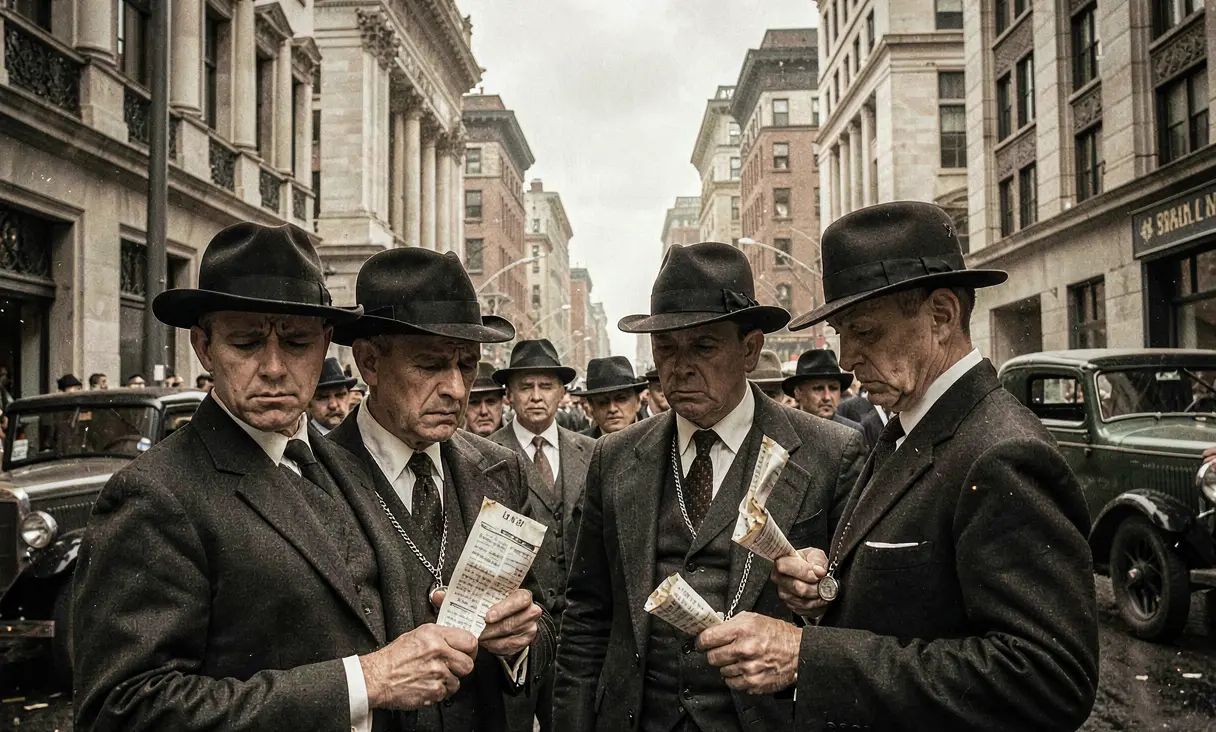 DisasterWall Street Crash and Great DepressionOctober 29, 1929 · New York City, USAStock market crash triggers the worst global economic depression in history.
Discussion
Loading…