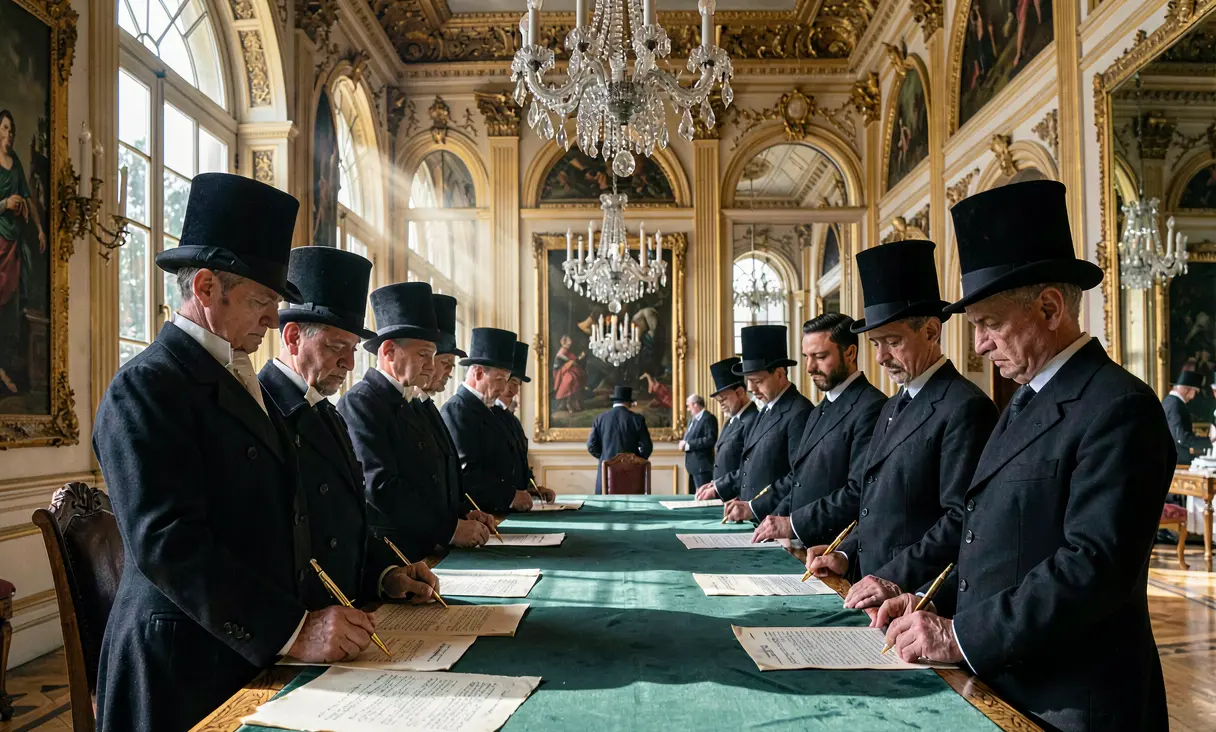
Treaty of Versailles Signed
Signed in 1919 to end WWI, this treaty imposed crushing reparations and territorial losses on Germany, fueling nationalist resentment that directly enabled the rise of Nazism and World War II.
The Shadow of the Great War
By early 1919, the world was reeling from the catastrophic conclusion of World War I, a conflict that had claimed an estimated 20 million lives and shattered the old European order. The Armistice of November 11, 1918, had merely paused the fighting; the definitive legal settlement required a peace conference to redraw the map of Europe and Asia. Representatives from thirty-two nations converged on Paris, but the true architects of the new world were the 'Big Four': U.S. President Woodrow Wilson, British Prime Minister David Lloyd George, French Premier Georges Clemenceau, and Italian Prime Minister Vittorio Orlando. Their mission was fraught with contradiction: to punish Germany sufficiently to prevent future aggression while attempting to build a durable framework for international cooperation.
Negotiations in the Hall of Mirrors
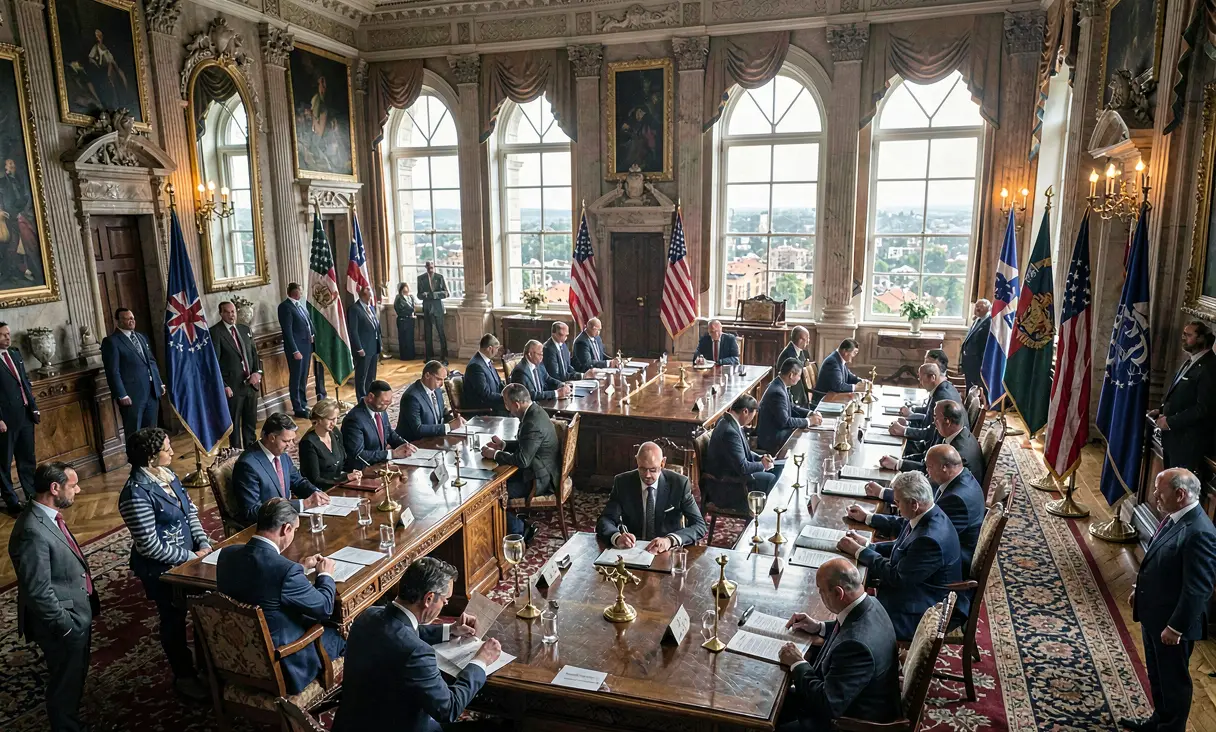
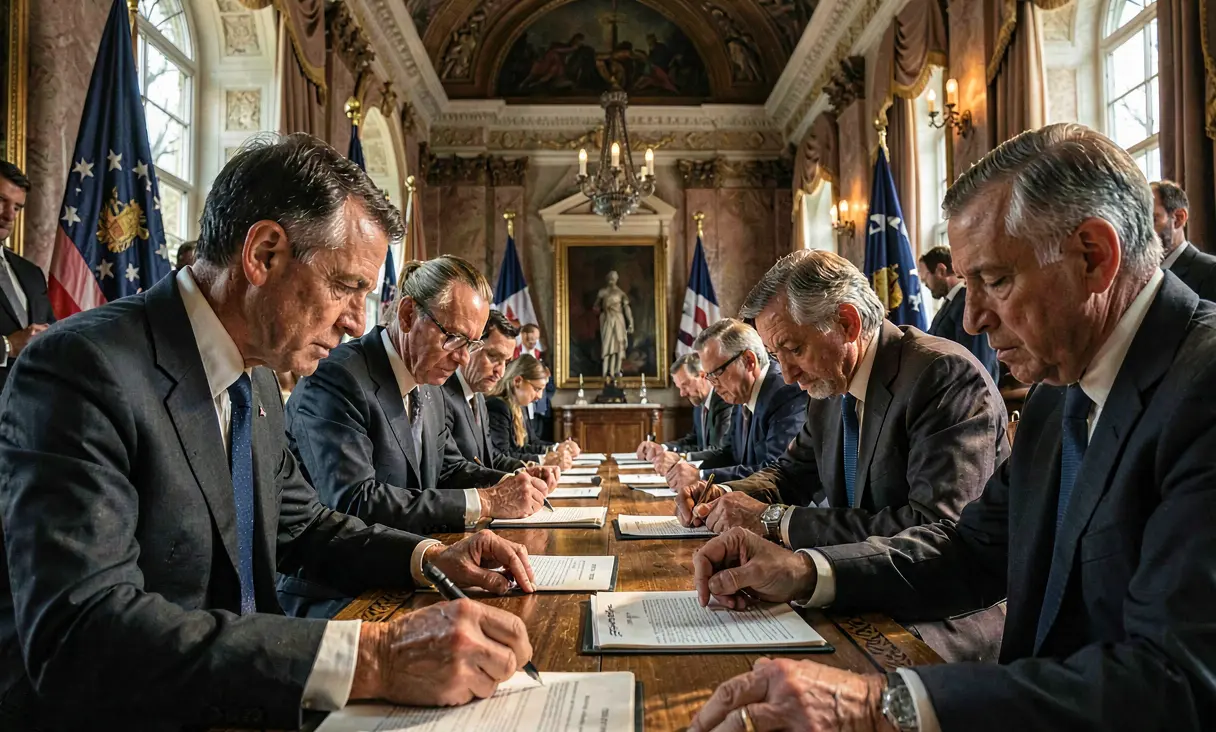
The diplomatic marathon lasted from January 18, 1919, until June 28, culminating in a ceremony designed to maximize symbolic impact. The choice of venue was deliberate and deeply personal for France; the signing took place in the Hall of Mirrors at the Palace of Versailles, the very room where the German Empire had been proclaimed in 1871 following the Franco-Prussian War. On that humid June morning, under the gaze of French diplomats and Allied military officials, German representatives, led by Foreign Minister Hermann Müller and Transport Minister Johannes Bell, were presented with the final text. They faced a stark ultimatum: sign or face an immediate resumption of hostilities. With no viable alternative, they signed at 5:12 PM, officially ending the state of war between Germany and the Allied powers.
The Anatomy of the Treaty
The Treaty of Versailles was a complex document comprising 440 articles that fundamentally dismantled the German Empire. Article 231, the infamous 'War Guilt Clause,' forced Germany to accept sole responsibility for causing the war, serving as the legal basis for massive financial reparations eventually set at 132 billion gold marks in 1921. Territorially, Germany lost approximately 13% of its European territory and all its overseas colonies; Alsace-Lorraine returned to France, the Saar Basin was placed under League of Nations control, and the Polish Corridor was carved out to grant Poland access to the sea, splitting East Prussia from the rest of Germany. Militarily, the treaty reduced the German army to a mere 100,000 volunteers, banned conscription, prohibited an air force and submarines, and demilitarized the Rhineland.
The League of Nations and Wilson's Vision
Amidst the punitive measures lay the treaty's most idealistic component: Part I established the Covenant of the League of Nations. Championed by Woodrow Wilson, this international body was intended to resolve future disputes through diplomacy rather than warfare, embodying his Fourteen Points. However, the League was immediately compromised by the absence of key powers; the United States Senate refused to ratify the treaty, preventing America from joining, while Germany and Russia were initially excluded. The League's structure relied heavily on the moral authority of its members and lacked an independent military force to enforce its resolutions, a structural weakness that would plague it throughout the interwar period.
Immediate Aftermath and German Humiliation
The signing triggered immediate political turmoil within Germany. The Weimar Republic, born in the chaos of defeat, was branded by its critics as the 'November Criminals' for accepting the harsh terms. The economic burden of reparations, combined with the loss of resource-rich industrial regions like the Ruhr and Silesia, destabilized the German economy, leading to hyperinflation by 1923 that wiped out the savings of the middle class. Politically, the treaty became a potent tool for nationalist agitators who argued that Germany had not been defeated on the battlefield but stabbed in the back by internal traitors. This narrative of national humiliation permeated German society, eroding faith in democratic institutions and creating fertile ground for extremist movements.
Legacy and the Seeds of Conflict
Historians widely regard the Treaty of Versailles as a pivotal turning point that failed to secure lasting peace. While it successfully dismantled four empires and redrew national boundaries based on self-determination in some areas, its punitive nature toward Germany proved unsustainable. The resentment it engendered was systematically exploited by Adolf Hitler and the Nazi Party, who promised to overturn the 'shackles of Versailles.' When Germany began rearming in the 1930s and remilitarized the Rhineland in 1936 with little effective opposition from Britain or France, the treaty's enforcement mechanisms had already collapsed. Ultimately, the peace settlement of 1919 is often cited as a primary catalyst for World War II, illustrating the dangers of imposing a 'victor's justice' that ignores the long-term stability of the defeated nation.
It ended WWI but its punitive terms against Germany are widely seen as a primary cause of WWII.
Where it happened
Versailles, France — see it on the interactive map →
Explore related history
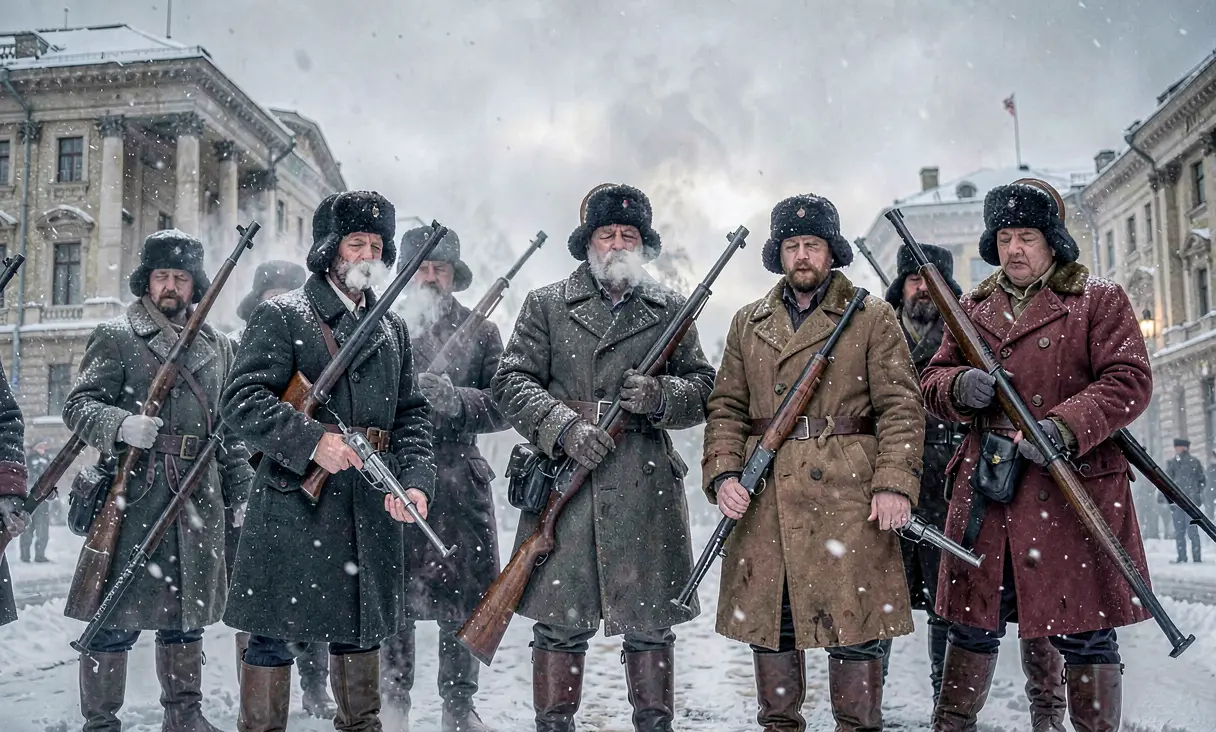 PoliticsOctober RevolutionNovember 7, 1917 · Petrograd (St. Petersburg), RussiaBolsheviks overthrow the Provisional Government, creating the first socialist state.
 WarOutbreak of World War IJuly 28, 1914 CE · Sarajevo, BosniaAssassination of Archduke Franz Ferdinand triggers a global conflict involving major powers.
 DisasterWall Street Crash and Great DepressionOctober 29, 1929 · New York City, USAStock market crash triggers the worst global economic depression in history.
 ArtFounding of the Bengal School of Artc. 1905 CE · Calcutta (Kolkata), IndiaAbanindranath Tagore pioneers a new indigenous Indian art style.
Discussion
Loading…