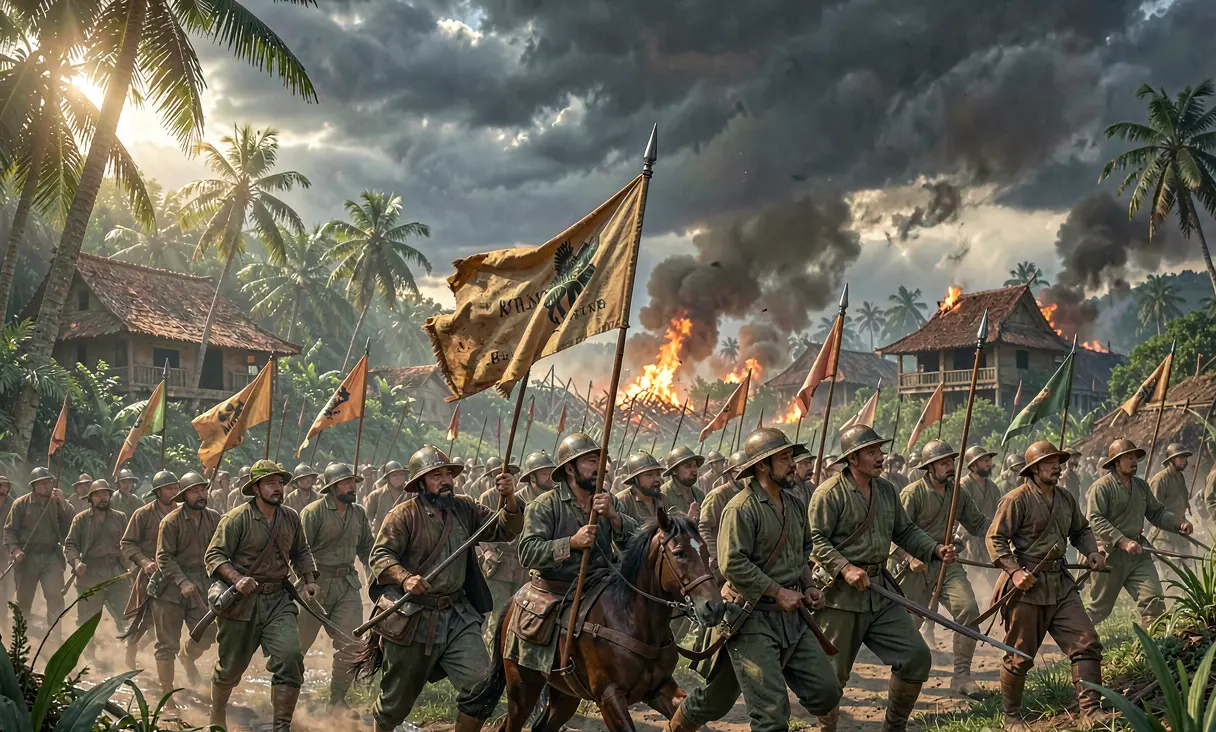
Tay Son Rebellion Overthrows Le Dynasty
The Tây Sơn Rebellion unified a fractured Vietnam and repelled Chinese invaders in 1789 under Emperor Quang Trung, though the dynasty collapsed shortly after his death to the Nguyen family.
Fractured Foundations of the Le Dynasty
By the mid-18th century, Vietnam was effectively partitioned, with the nominal Le emperors in Hanoi holding only symbolic power while real authority rested with the Trịnh lords in the north and the Nguyễn lords in the south. This period, known as the Later Le Dynasty's decline, was characterized by rampant corruption, heavy taxation, and severe social stratification that devastated the peasantry. In the central highlands of Bình Định province, specifically in the village of Tây Sơn, a confluence of economic distress and ethnic tension created a powder keg. The local population, comprising both ethnic Vietnamese and indigenous groups like the Jarai and Champa, suffered under oppressive land policies enforced by the Nguyễn lords, setting the stage for a radical uprising.
The Rise of the Tây Sơn Brothers
In 1771, three brothers—Nguyễn Nhạc, Nguyễn Huệ (later Emperor Quang Trung), and Nguyễn Lữ—emerged as the leaders of a rebellion that would reshape Southeast Asian history. Originally merchants who had turned to banditry due to economic hardship, they quickly organized a militia under the banner of 'Tây Sơn,' leveraging their knowledge of local terrain and popular grievances against the ruling elite. Unlike previous revolts that sought merely to replace one warlord with another, the Tây Sơn movement adopted a populist platform, promising land redistribution and an end to feudal exploitation. Their charismatic leadership and military acumen allowed them to rapidly expand their control from the central highlands into the lowland provinces of the Nguyễn domain.
The Unification Campaigns
The rebellion's momentum was meteoric. By 1774, Tây Sơn forces had captured Huế, effectively ending Nguyễn rule in the south, though a remnant faction fled further south under Lord Nguyễn Ánh. In 1786, the brothers turned their attention northward; Nguyễn Huệ led a lightning campaign that swept through central Vietnam and seized Hanoi, toppling the Trịnh lords and forcing the last Le emperor to abdicate. This marked the first time in centuries that Vietnam was unified under a single military command, albeit temporarily divided among the three brothers. The speed of their conquests stunned contemporary observers and demonstrated a level of strategic coordination unseen in Vietnamese warfare for generations.
The Battle of Ngọc Hồi-Đống Đa
The crowning achievement of the Tây Sơn dynasty occurred during the Lunar New Year of 1789, when the Qing Empire of China intervened to restore the deposed Le emperor. A massive Qing force of approximately 200,000 troops crossed the border and occupied Hanoi. In a masterstroke of military deception and speed, Emperor Quang Trung (Nguyễn Huệ) launched a surprise counter-offensive on New Year's Eve. Utilizing innovative tactics that included elephant corps and rapid night marches, his forces decimated the Qing army in just five days at the decisive Battle of Ngọc Hồi-Đống Đa. The victory not only expelled foreign invaders but also cemented Quang Trung's reputation as one of Vietnam's greatest military geniuses.
Reforms and Internal Strife
Despite their military brilliance, the Tây Sơn regime was plagued by internal fragmentation. After the death of Nguyễn Nhạc in 1793, tensions between the brothers' factions escalated into open civil war. Quang Trung attempted to modernize the state through sweeping reforms: he promoted a national script (Chữ Nôm) over Classical Chinese, reformed the tax system to favor peasants, and established diplomatic ties with France to counterbalance regional threats. However, his sudden death in 1792 at age 40 left the dynasty vulnerable. His young successor, Nguyễn Quang Toản, lacked the charisma and authority of his father, leading to a rapid collapse of central control as Nguyễn Ánh, supported by French advisors, began a systematic reconquest.
Legacy of the Short-Lived Dynasty
By 1802, Nguyễn Ánh had captured Hanoi, declared himself Emperor Gia Long, and founded the Nguyen Dynasty, which would rule Vietnam until 1945. The Tây Sơn rebellion lasted only three decades as a unified state, yet its impact was profound. It shattered the rigid feudal hierarchy of the Le era, temporarily empowered the peasantry through land reforms, and successfully defended national sovereignty against Chinese expansionism. While later historiography under the Nguyen Dynasty often demonized the Tây Sơn as rebels, modern Vietnamese history recognizes them as pivotal unifiers who laid the groundwork for the modern nation-state, preserving Vietnam's independence during a critical period of regional upheaval.
The Tay Son Rebellion dismantled the old feudal order and briefly unified Vietnam under a new peasant-led regime, challenging both domestic and foreign powers.

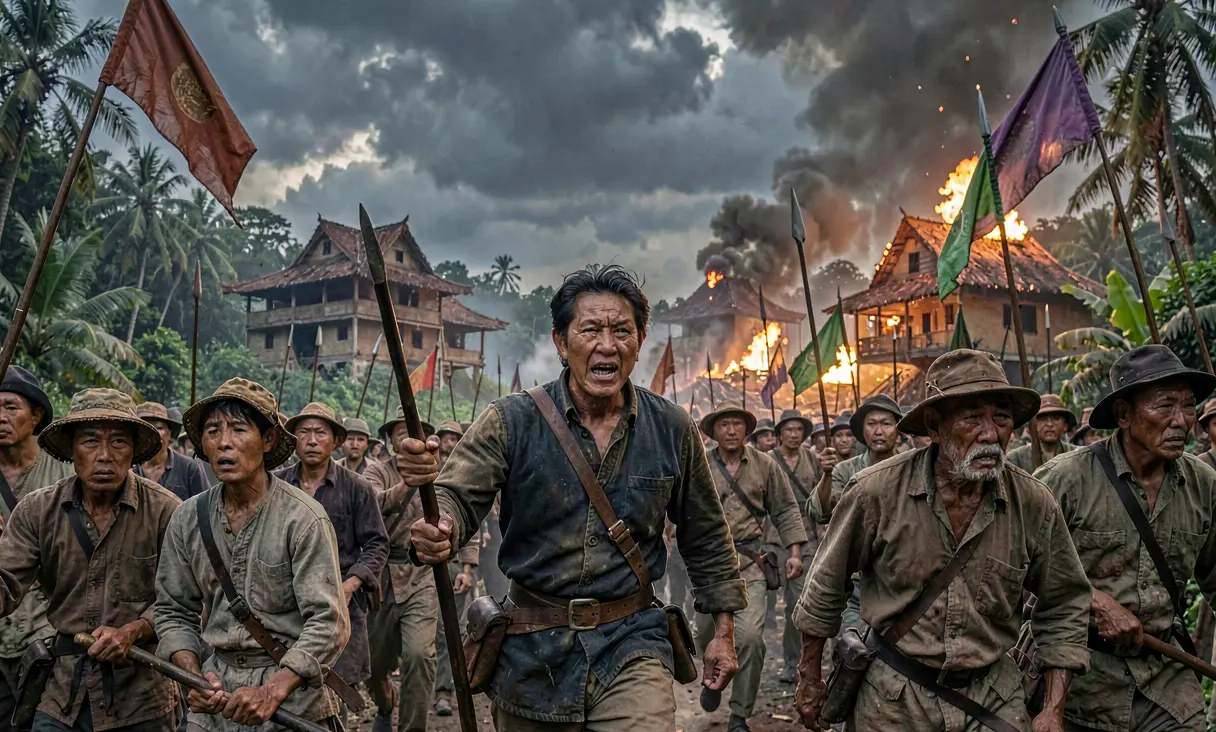
Where it happened
Tay Son, Vietnam — see it on the interactive map →
Explore related history
 WarAlgerian War of Independence BeginsNovember 1, 1954 · Algiers, AlgeriaThe National Liberation Front launches coordinated attacks marking the start of the Algerian War against France.
 WarMau Mau Uprising Begins in KenyaOctober 20, 1952 · Nairobi, KenyaThe Kikuyu-led Mau Mau rebellion begins against British colonial rule and white settler land ownership.
 WarTurkish War of Independence BeginsMay 19, 1919 · Samsun, TurkeyMustafa Kemal Atatürk lands in Samsun to organize resistance against Allied occupation and the Ottoman Sultanate.
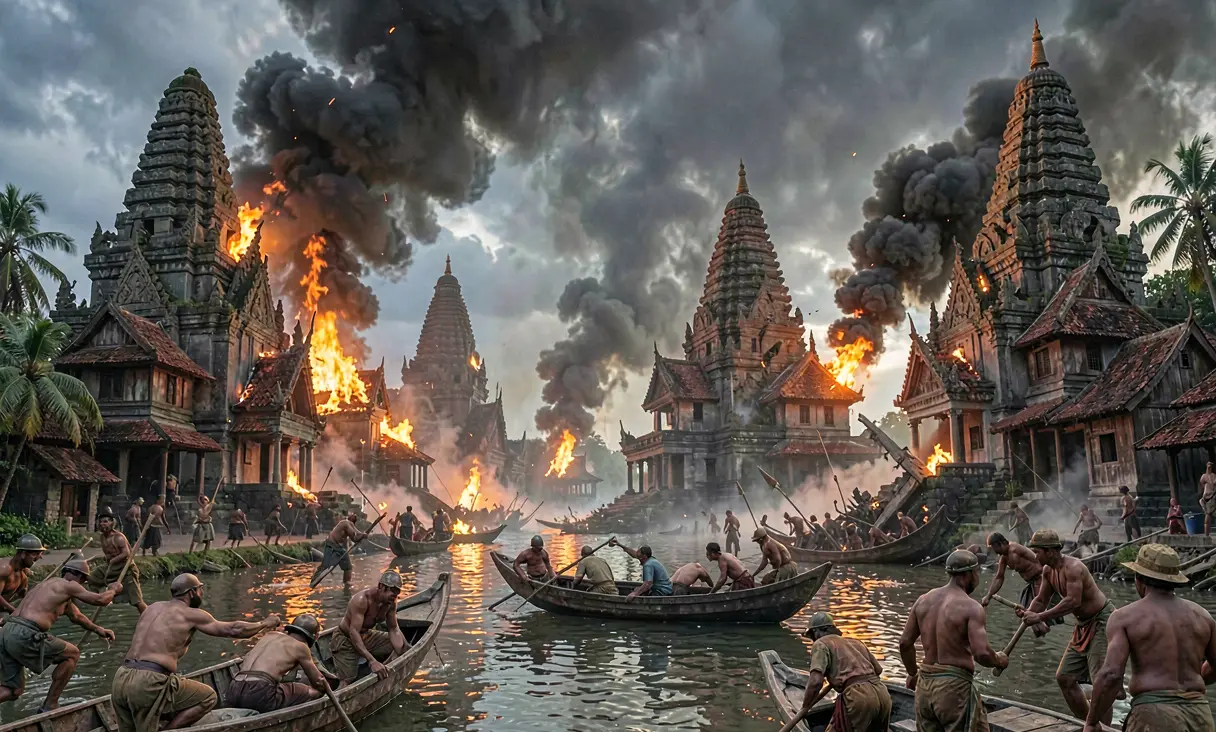 WarFall of Ayutthaya to Burma1767 CE · Ayutthaya, ThailandBurmese forces sack and burn Ayutthaya, ending the kingdom after four centuries.
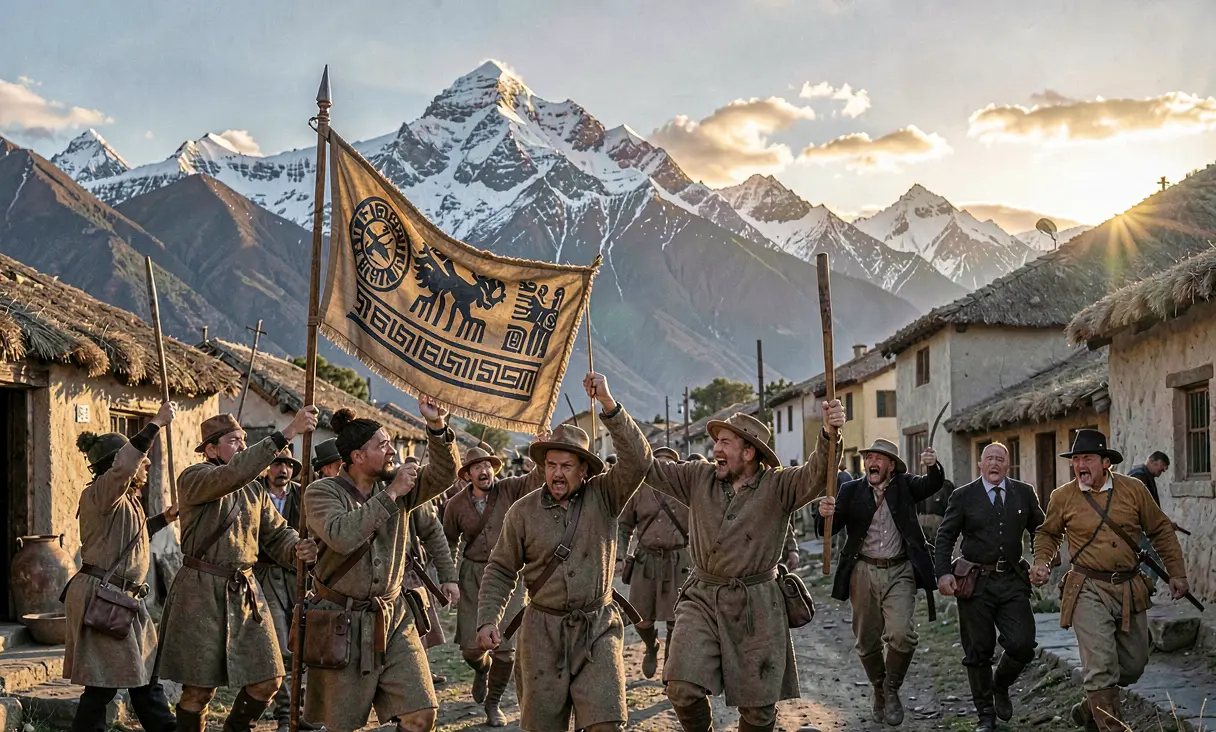 PoliticsTúpac Amaru II Rebellion BeginsNovember 4, 1780 · Tungasuca, Viceroyalty of PeruJosé Gabriel Condorcanqui leads a massive indigenous uprising against Spanish colonial rule in the Andes.
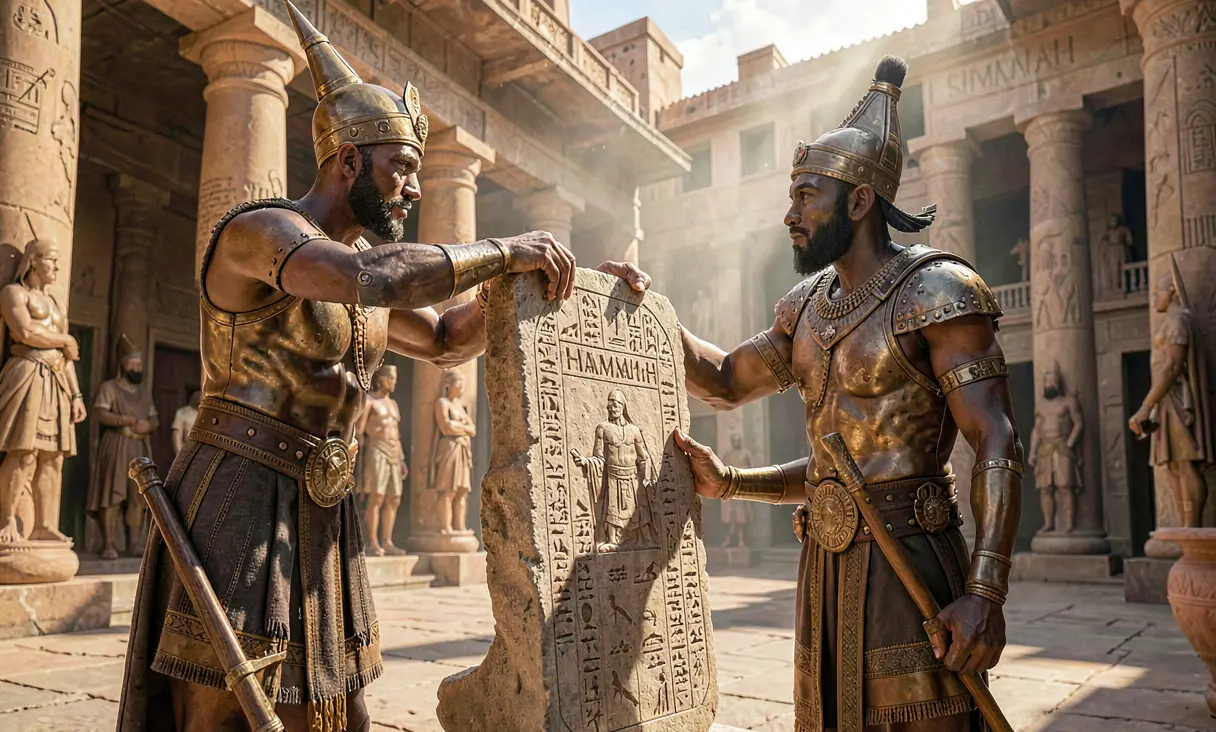 PoliticsCreation of the Code of Hammurabic. 1754 BCE · Babylon, Mesopotamia (Iraq)King Hammurabi compiles a comprehensive legal code on a massive diorite stele.
Discussion
Loading…