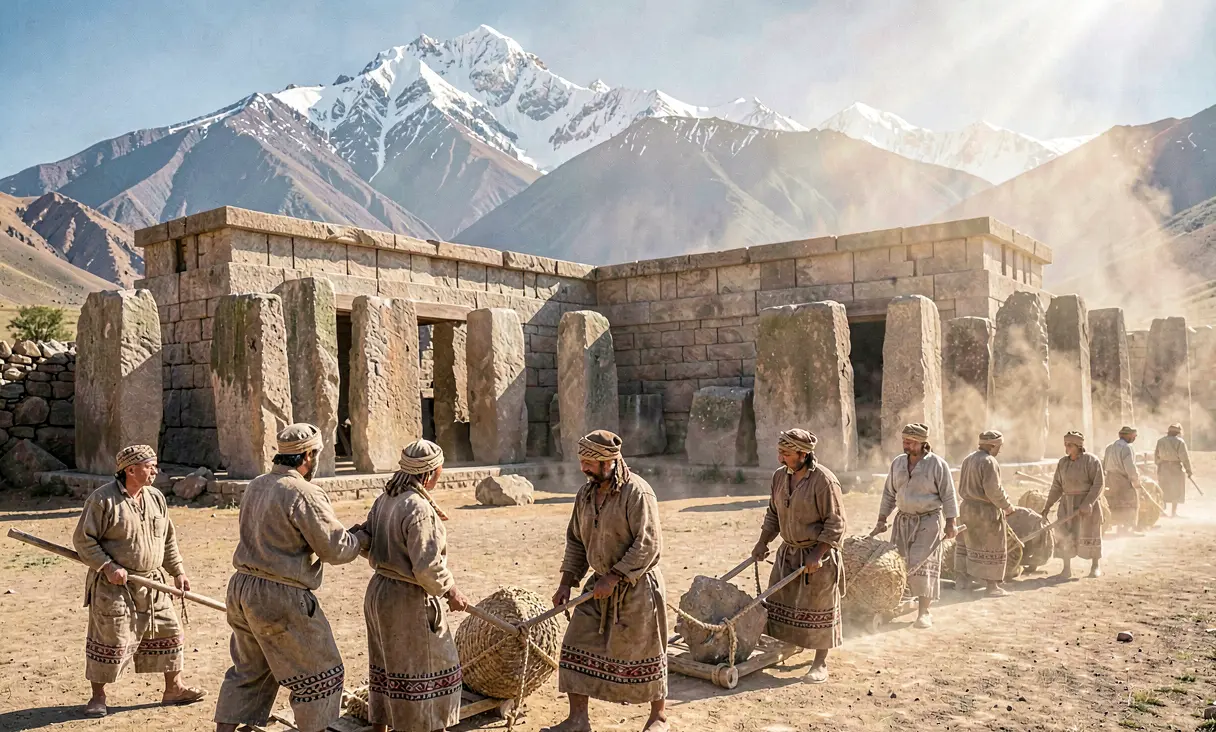
Construction of Kalasasaya Temple at Tiwanaku
Built c. 500 CE, the Kalasasaya temple unified Andean society through precise astronomical alignments that dictated agricultural cycles and solidified Tiwanaku's status as a spiritual capital.
The Andean Crucible
By the mid-first millennium CE, the high-altitude plateau of the southern Andes was undergoing a profound transformation. Tiwanaku, situated near the southern shore of Lake Titicaca at an elevation of 3,840 meters, had evolved from a local settlement into the spiritual and political nucleus of a burgeoning civilization. The construction of the Kalasasaya temple around 500 CE marked the zenith of this urban expansion, representing a deliberate architectural assertion of cosmic order amidst the volatile Andean environment. Unlike earlier structures that utilized adobe or rough stone, this era saw the mastery of massive ashlar masonry, utilizing locally sourced sandstone and the harder, darker andesite for ceremonial focal points.
Architectural Geometry and Astronomical Precision
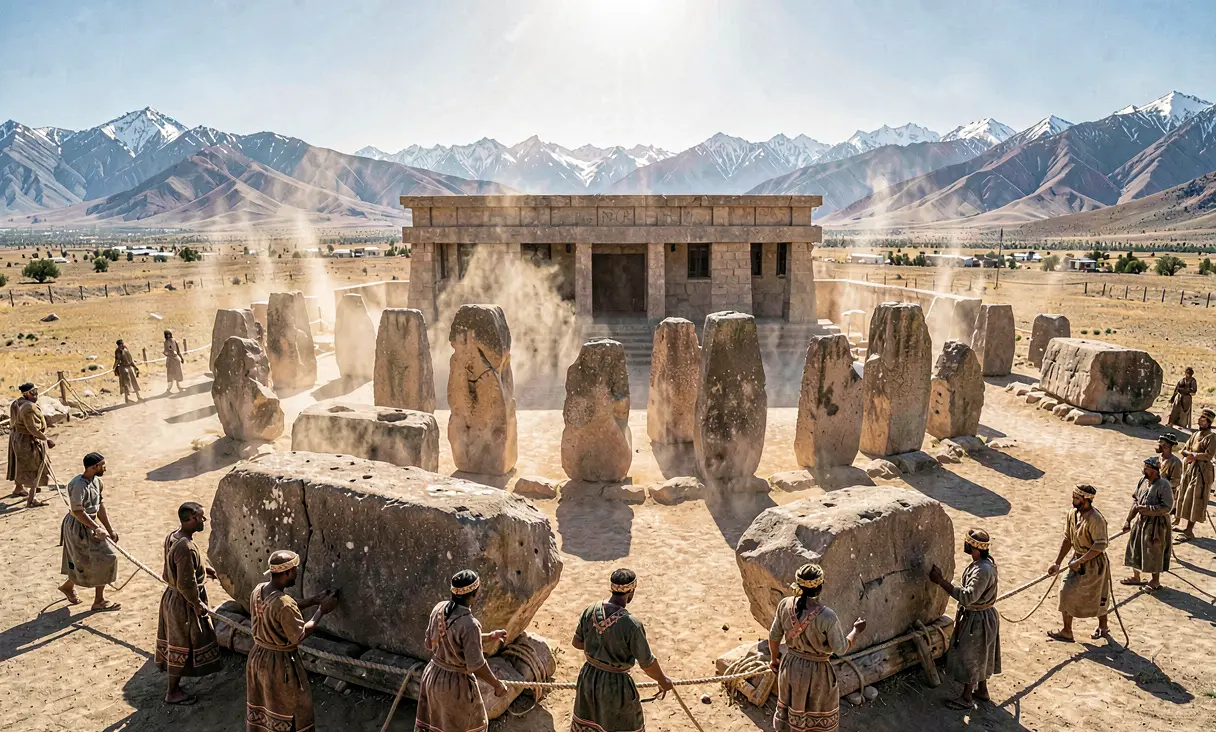
The Kalasasaya was not merely a temple but a sophisticated astronomical observatory designed to synchronize human ritual with celestial mechanics. The structure consists of a massive rectangular courtyard, measuring approximately 130 by 120 meters, enclosed by a low wall punctuated by alternating monolithic pillars and carved stone blocks. This unique arrangement created a rhythmic visual corridor that functioned as a calendar. The eastern wall was specifically engineered so that the rising sun would align with distinct pillars during the solstices and equinoxes. At the June winter solstice, the sun rises behind a specific pillar, while at the September equinox, it aligns perfectly through the central gateway, allowing priests to determine the precise dates for planting quinoa and potatoes in the harsh altiplano climate.
The Gateway of the Sun
Embedded within the northern wall of the Kalasasaya complex stands the most iconic artifact of Tiwanaku culture: the Gateway of the Sun. Carved from a single, monolithic block of andesite weighing an estimated ten tons, this lintel is a masterpiece of pre-Columbian iconography. The facade features a central figure identified by scholars as the Staff God (often associated with Viracocha), flanked by forty-eight winged attendants arranged in three rows. Twelve of these figures are depicted with human heads, while thirty-six bear condor heads, symbolizing the fusion of terrestrial and celestial realms. Above the deity's head is a solar calendar ring containing twenty-four glyphs, likely representing days or months, which further cements the site's function as a timekeeping mechanism for the state religion.
Ritual Function and Societal Cohesion
The construction of the Kalasasaya facilitated the consolidation of Tiwanaku's influence across the Andes. As a pilgrimage center, it drew elites and commoners from vast distances to participate in state-sponsored rituals that reinforced social hierarchy and agricultural cycles. The temple served as the stage for ceremonies involving the consumption of psychoactive substances, such as the San Pedro cactus, which were believed to induce visions necessary for communicating with deities. By controlling the calendar through the observatory's precise alignments, the priestly class maintained a monopoly on agricultural timing, thereby securing their political power and ensuring the economic stability of the region during periods of climatic fluctuation.
Engineering Feats and Labor Organization
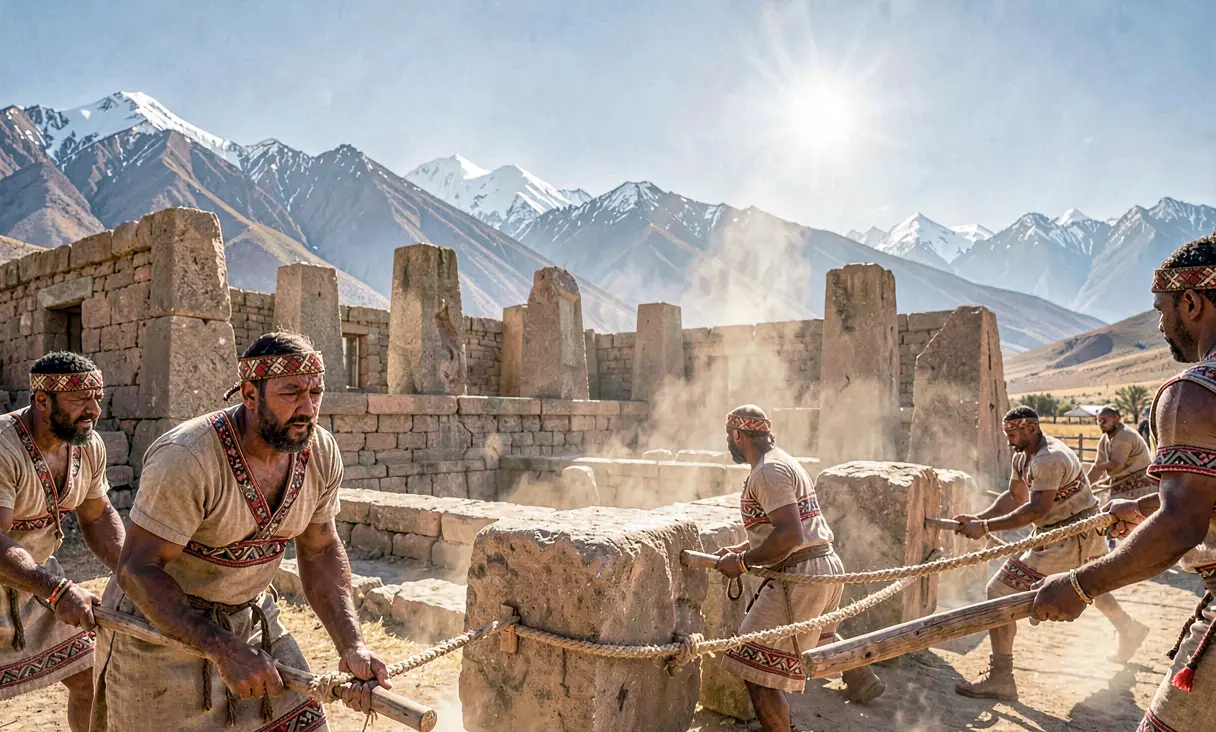
The realization of the Kalasasaya required an unprecedented mobilization of labor and engineering skill. The transportation of massive stone blocks, some weighing over 10 tons, from quarries located kilometers away across difficult terrain suggests a highly organized corvée labor system or a tribute economy. Archaeological evidence indicates that Tiwanaku artisans employed advanced techniques for cutting and fitting stones without mortar, utilizing copper chisels and abrasive sands to achieve joints so tight that not even a blade of grass could pass between them. This construction phase reflects the peak of Tiwanaku's administrative capacity, capable of directing thousands of workers in a coordinated effort to reshape the landscape according to cosmological principles.
Legacy and Enduring Mystery
Although the Tiwanaku state eventually collapsed around 1000 CE due to prolonged droughts and internal strife, the Kalasasaya temple remained a sacred site for centuries. The architectural style and religious iconography established here influenced subsequent Andean cultures, including the Inca Empire, who revered the ruins as the dwelling place of ancient gods. Today, the site stands as a UNESCO World Heritage site, offering a tangible link to one of the Americas' most sophisticated pre-Columbian civilizations. The precision of its astronomical alignments continues to astound modern archaeoastronomers, proving that Tiwanaku's builders possessed a deep understanding of celestial cycles that rivaled contemporary civilizations in Europe and Asia.
The temple demonstrates advanced astronomical knowledge and religious integration in Tiwanaku society.
Where it happened
Tiwanaku, Bolivia — see it on the interactive map →
Explore related history
 ReligionConstruction of the Temple of Kukulcán at Chichén Itzác. 800 CE · Chichén Itzá, MexicoThe iconic pyramid dedicated to the feathered serpent god is built during the Puuc-Toltec fusion period.
 ReligionBuddha Attains Enlightenmentc. 528 BCE · Bodh Gaya, IndiaSiddhartha Gautama achieves nirvana under the Bodhi tree founding Buddhism.
 ReligionParinirvana of the Buddhac. 483 BCE · Kushinagar (modern Uttar Pradesh/India)Siddhartha Gautama passes away, entering final Nirvana and leaving his disciples with the Dharma to guide them.
 TechnologyMeroitic Iron Smelting Industry Flourishesc. 500 BCE · Meroe, SudanMeroe develops a massive iron smelting industry using abundant fuel and advanced furnace technology.
 TechnologyConstruction of the Great Cloaca Maxima in Romec. 500 BCE · Rome, ItalyEarly Romans build the massive Cloaca Maxima sewer system to drain marshes and manage waste.
 TechnologyDevelopment of the Polynesian Star Compass Systemc. 500 BCE · Society Islands, French PolynesiaPolynesian navigators memorize star paths to traverse the Pacific without instruments.
Discussion
Loading…