Foundation of Lamu as a Swahili City-State
Around 1300 CE, Lamu emerged as a wealthy, independent Swahili city-state, blending African and Islamic cultures to become a pivotal hub of Indian Ocean trade and scholarship.
The Rise of the Swahili Coast
By the late 13th century, the East African coast had transformed into a vibrant corridor of global commerce, linking the agricultural hinterlands of Africa with the maritime networks of the Indian Ocean. The monsoon winds dictated the rhythm of life, bringing Arab and Persian merchants to trade for gold, ivory, and timber while exporting ceramics, glassware, and cloth. Amidst this bustling exchange, the island of Lamu, situated just north of the Tana River delta in modern-day Kenya, emerged from obscurity. Unlike earlier settlements that were transient trading posts, Lamu began to coalesce into a permanent, fortified urban center around 1300 CE, driven by the need for a secure harbor and a stable political entity capable of managing complex long-distance trade.
Strategic Consolidation c. 1300
The formalization of Lamu as a distinct city-state around 1300 CE was not merely an act of settlement but a strategic consolidation of power. Archaeological evidence, including stratified layers of imported Chinese porcelain and Persian glazed ware found in the oldest quarters of Lamu Town, suggests that by this time, the island had already established itself as a primary node in the Indian Ocean trade network. The city-state leveraged its natural deep-water harbor to control the flow of goods moving between the interior of East Africa and the wider Islamic world. This period marked the transition from scattered coastal villages to a centralized polity with defined leadership, capable of negotiating treaties with neighboring states like Pate and Mombasa while maintaining autonomy from external empires.
Architectural Synthesis and Urban Planning
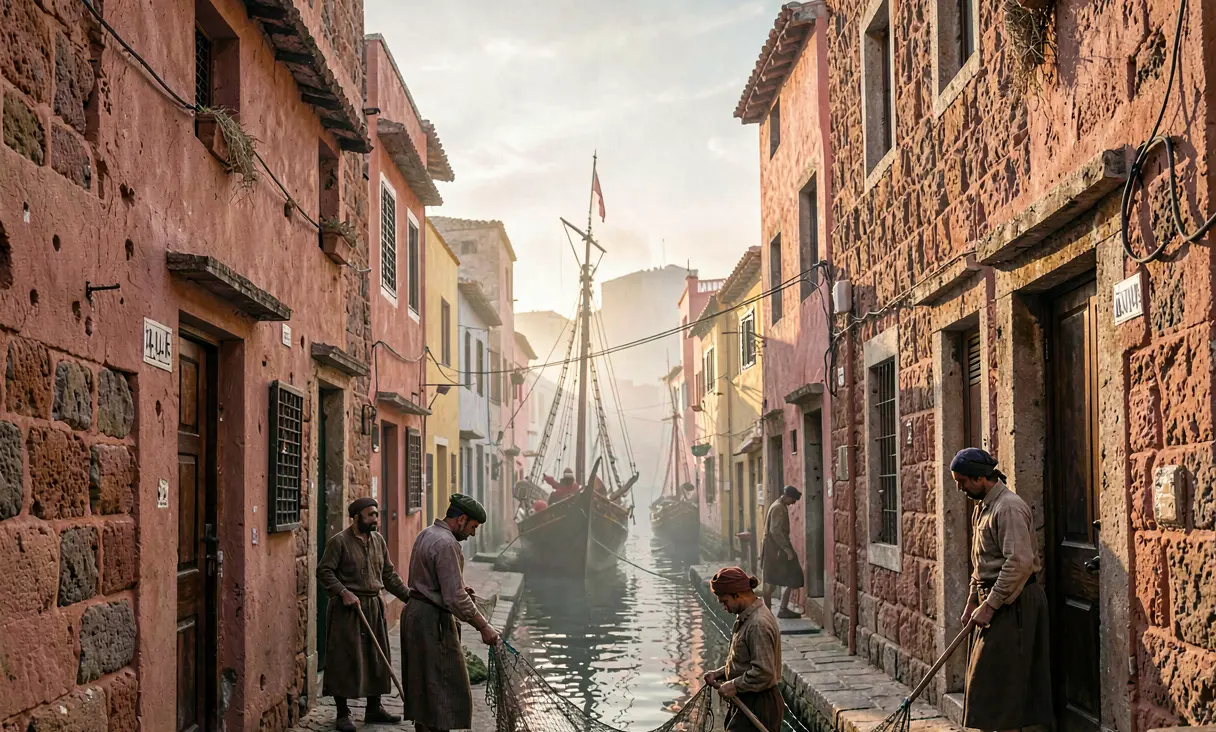
The physical manifestation of Lamu's new status was its distinctive architecture, a unique synthesis of Bantu building traditions and Islamic design principles. As the city expanded in the 14th century, merchants constructed multi-story dwellings using coral rag stone and lime mortar, materials abundant on the island. These structures featured flat roofs, internal courtyards for privacy, and intricately carved wooden doors that served as status symbols, often bearing geometric patterns or Quranic inscriptions. The layout of the city itself reflected its cosmopolitan nature; narrow, winding streets were designed to provide shade and defense, while the central mosque became the spiritual and social heart of the community, anchoring a society deeply rooted in Islamic law and culture.
The Engine of Commerce
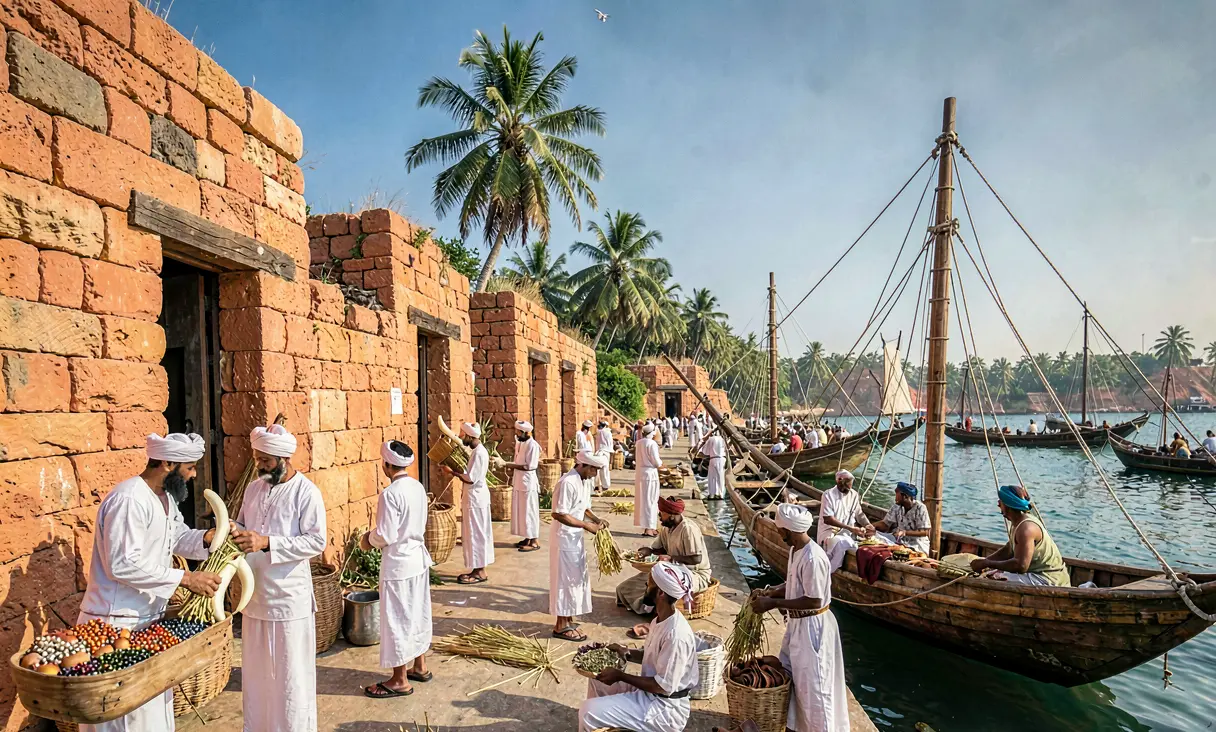
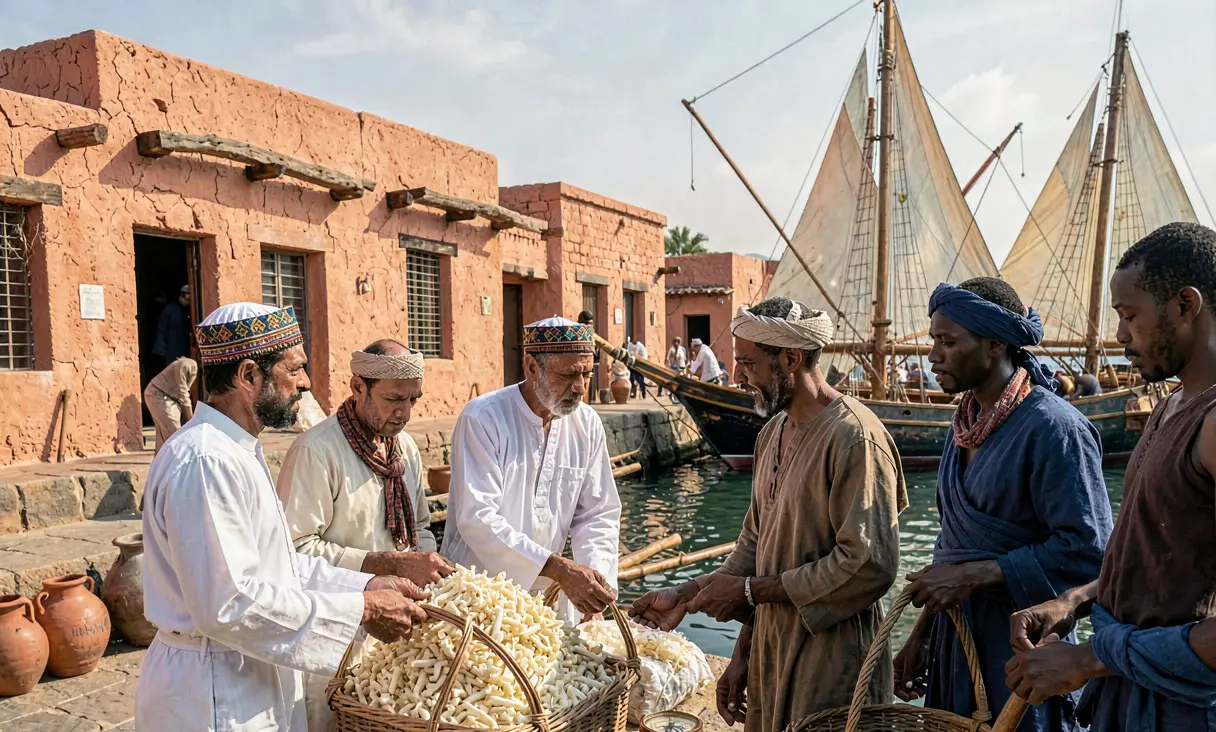
Lamu's prosperity was fueled by its role as an intermediary between the African interior and international markets. Caravans from the Great Lakes region and the Congo basin brought gold, ivory, rhinoceros horn, and slaves to the coast, where they were exchanged for Indian cottons, Chinese silks, and Persian ceramics. The city-state's merchants, often referred to as the WaLamu, became skilled diplomats and navigators, mastering the monsoon schedules that governed the dhow trade. This economic engine allowed Lamu to accumulate significant wealth, which was reinvested into the city's infrastructure and its reputation as a center of learning. Unlike some rival states that relied solely on piracy or tribute, Lamu thrived through organized commerce and the fair adjudication of disputes under Sharia law.
A Center of Islamic Scholarship
Beyond its commercial might, Lamu rapidly evolved into a beacon of Islamic scholarship and Swahili culture. By the 14th century, the city hosted a vibrant community of scholars, poets, and jurists who contributed to the development of Swahili as a written language using Arabic script (Ajami). The city's mosques became centers of education where theology, astronomy, and law were taught, attracting students from across the coast. This intellectual flourishing helped solidify Lamu's identity as a distinct Swahili city-state, one that was African in origin but fully integrated into the Dar al-Islam. The cultural output of this era laid the groundwork for the rich literary traditions that would define Swahili literature for centuries.
Enduring Legacy and Historical Significance
The foundation of Lamu around 1300 CE established a political and cultural model that would endure for six centuries. While the city faced challenges from Portuguese incursions in the 16th century and shifting trade routes, its core identity remained intact, preserving its unique architecture and social structures longer than many other Swahili towns. Today, Lamu Old Town stands as a UNESCO World Heritage Site, serving as the best-preserved example of a traditional Swahili settlement. The event of its founding represents a pivotal moment in African history, demonstrating the capacity for indigenous African societies to engage with global systems on their own terms, creating a sophisticated civilization that blended local traditions with international influences.
Created a lasting cultural and commercial hub that defined Swahili coastal civilization for centuries.
Where it happened
Lamu, Kenya — see it on the interactive map →
Explore related history
 CivilizationEmergence of Norte Chico Urban Centersc. 3000 BCE · Caral-Supe Valley, PeruThe Norte Chico civilization establishes the oldest known cities in the Americas.
 CivilizationUrban Planning of Mohenjo-daroc. 2600 BCE · Mohenjo-daro, PakistanThe Indus Valley Civilization constructs Mohenjo-daro with advanced grid systems and the world's first known urban sanitation.
 CivilizationUrbanization of Harappa and Mohenjo-daroc. 2600 BCE · Harappa and Mohenjo-daro, Indus Valley (modern Pakistan)The mature Harappan phase begins, establishing the first large-scale urban centers in South Asia with advanced grid planning.
 ArtEstablishment of Lapita Pottery Traditionc. 1300 BCE · New Britain, Papua New GuineaLapita potters develop distinctive dentate-stamped decoration techniques that define their culture.
 DisasterHunting and Extinction of the Moa in New Zealandc. 1300 to 1450 CE · South Island, New ZealandIntensive hunting by Māori leads to the rapid extinction of the giant flightless moa birds.
 PoliticsRaden Wijaya Founding of Majapahit Empire1293 CE · Trowulan, Java, IndonesiaRaden Wijaya defeats the Mongol invaders and establishes the Majapahit Empire in East Java.
Discussion
Loading…