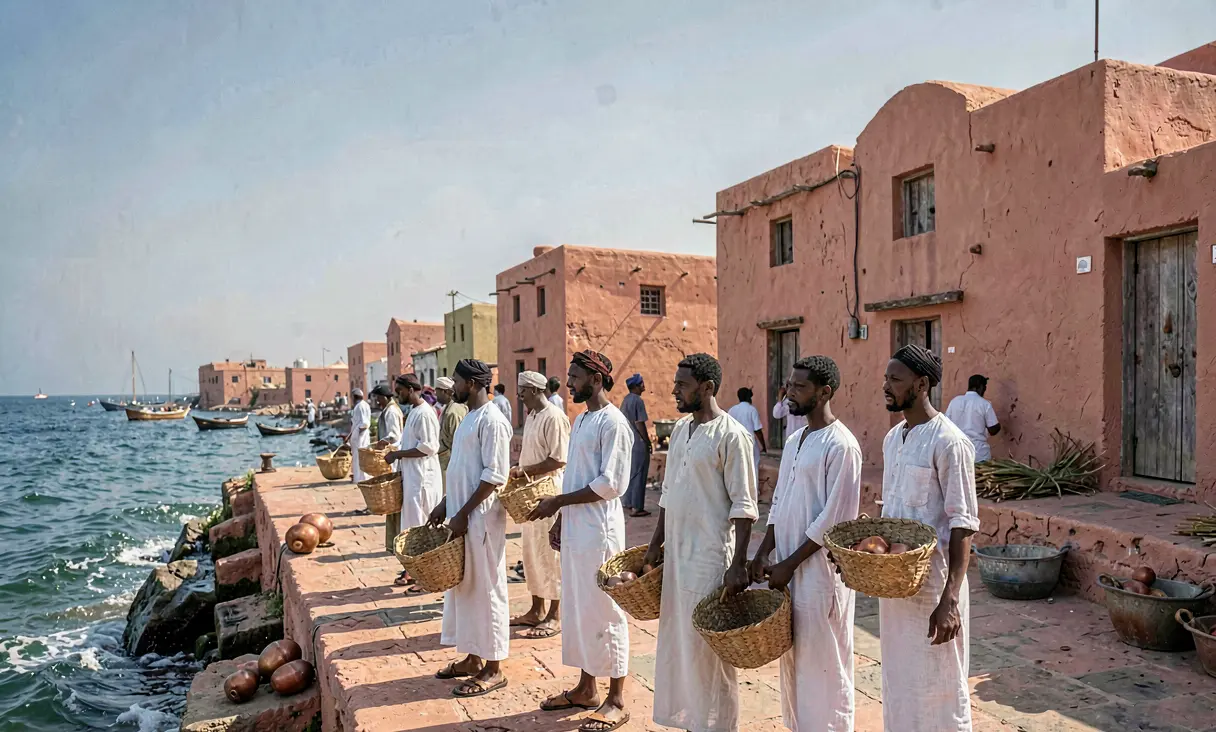
Establishment of the Kilwa Sultanate
The establishment of the Kilwa Sultanate around 1200 CE unified the Swahili coast under a powerful monarchy that monopolized Indian Ocean gold trade and fostered global diplomatic ties.
Context of the Swahili Coast
By the late 12th century, the East African coast was a mosaic of independent city-states, including Mombasa, Zanzibar, and Pemba, engaged in a vibrant Indian Ocean trade network. These settlements relied on the monsoon winds to connect with merchants from Arabia, Persia, India, and eventually China, exchanging ivory, gold, and slaves for ceramics, textiles, and glassware. While these city-states shared a common Bantu-Swahili culture and Islamic faith, political power was fragmented, often contested by local clan rivalries or external incursions from the interior.
The Rise of the Al-Mansur Dynasty
Around 1200 CE, a pivotal shift occurred when the Al-Mansur family, likely of Persian Shirazi origin according to local chronicles like the Kilwa Chronicle, seized control of Kilwa Kisiwani. Ali ibn al-Hassan, often cited as the founder, is said to have purchased the island from its indigenous Bantu inhabitants and established a hereditary sultanate. This transition marked the end of the earlier, more fluid leadership structures and introduced a centralized monarchy that would dominate the region for centuries. The dynasty's claim to Persian lineage served to legitimize their rule in the eyes of the cosmopolitan trading elite.
Consolidation and Economic Monopoly
The early Al-Mansur sultans aggressively expanded Kilwa's influence, not merely through military conquest but by securing critical trade routes. They established a hegemony over the gold fields of Great Zimbabwe in the interior, channeling this precious metal through Kilwa to the coast. By controlling the ports of Sofala and other neighboring settlements, the sultanate effectively created a monopoly on the gold and ivory trade that flowed into the Indian Ocean economy. This economic dominance allowed the rulers to amass unprecedented wealth, distinguishing Kilwa from its rivals.
Architectural Manifestations of Power
The zenith of this power is physically immortalized in the monumental stone architecture constructed during the 13th and 14th centuries. The Great Mosque of Kilwa, originally built in the 10th century but significantly expanded under the Al-Mansur rulers around 1200 CE with a new apse and dome, became one of the finest examples of Swahili architecture. Furthermore, Sultan al-Hasan ibn Sulaiman commissioned Husuni Kubwa, a sprawling palace complex featuring a swimming pool, reception halls, and intricate coral stone carvings. These structures were not merely residences but potent symbols of sovereignty and divine favor.
Diplomatic Reach and Global Connections
Kilwa's influence extended far beyond the African mainland, evidenced by its active participation in international diplomacy. The sultans maintained formal relations with the Song and later Yuan dynasties of China, as well as with rulers in India and the Middle East. Chinese records from this period mention Kilwa (referred to as 'Gilan') sending embassies bearing ivory and rhinoceros horn, while receiving porcelain and silk in return. This diplomatic engagement integrated Kilwa into a global economic system, elevating it from a regional port to a recognized player on the world stage.
Legacy and Historical Significance
The establishment of the Kilwa Sultanate around 1200 CE set the standard for Swahili city-state governance, creating a model of centralized Islamic monarchy that persisted until the Portuguese arrival in the late 15th century. It demonstrated the capacity of African polities to harness global trade networks for local development and state-building. The architectural ruins at Kilwa Kisiwani remain a UNESCO World Heritage site today, serving as a testament to a golden age when East Africa was a central hub of commerce, culture, and political innovation in the medieval world.
Created a powerful centralized state that dominated Indian Ocean trade and set standards for Swahili urban culture.
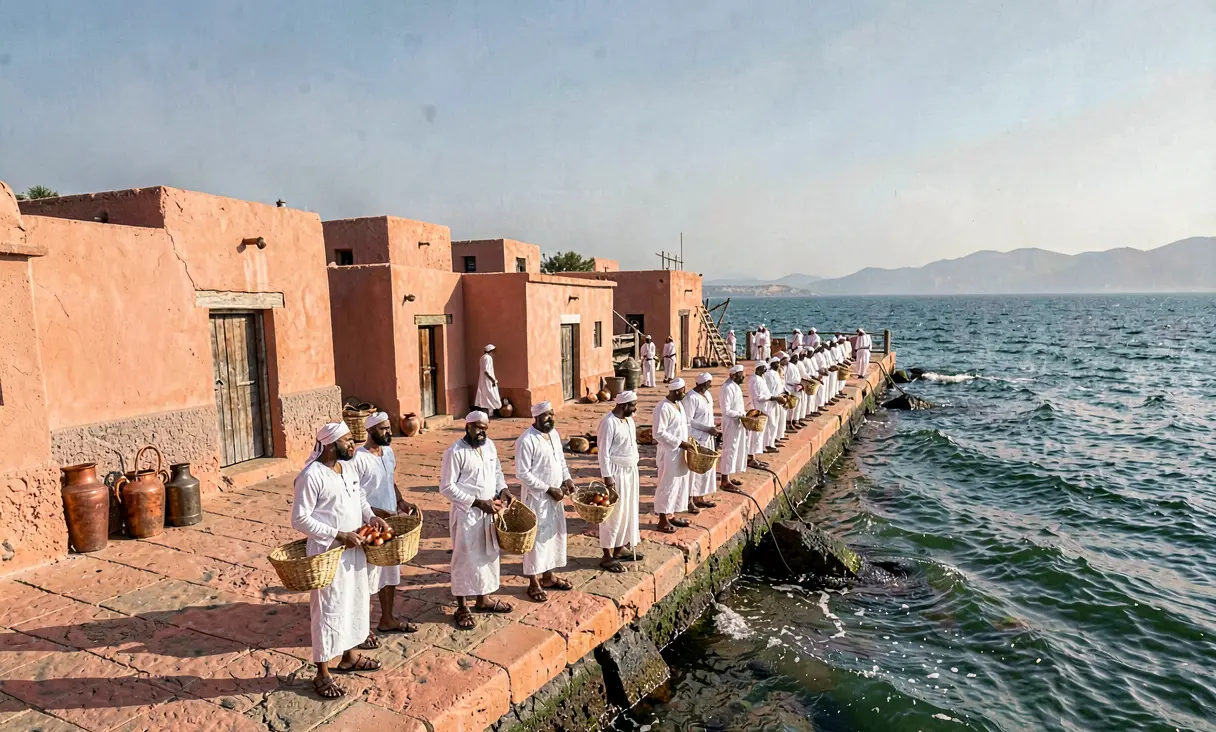
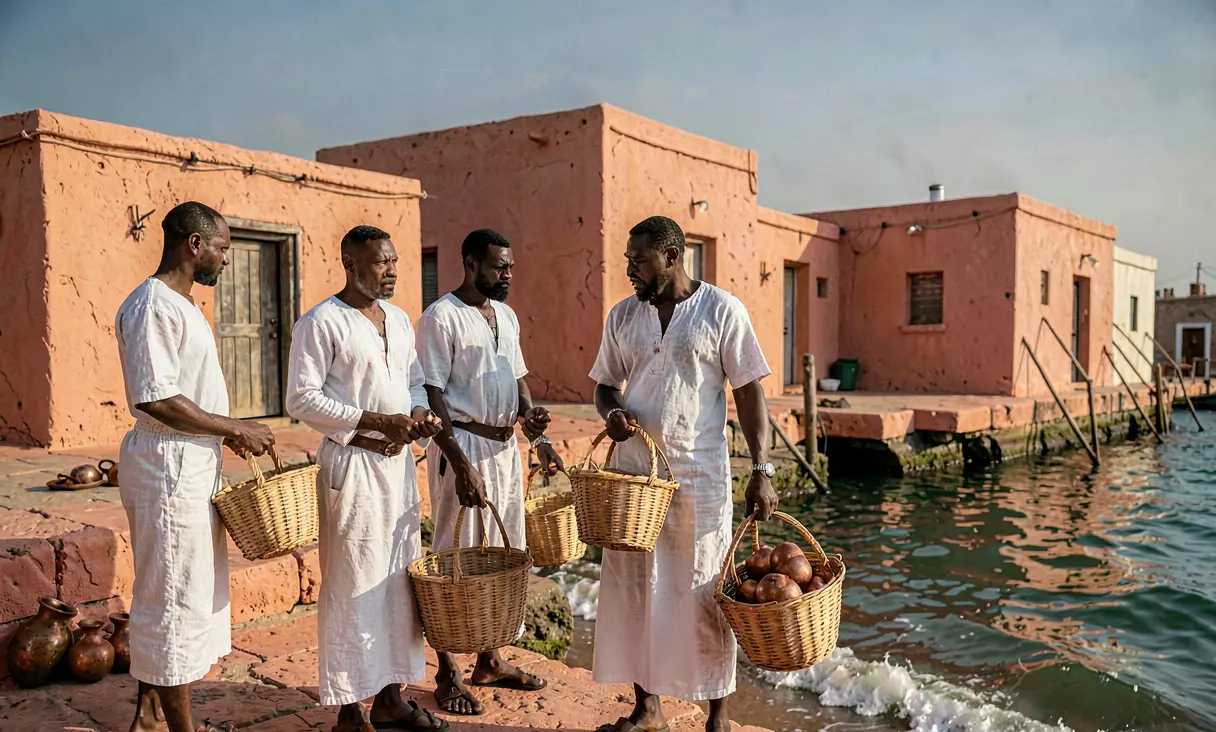
Where it happened
Kilwa Kisiwani, Tanzania — see it on the interactive map →
Explore related history
 PoliticsSargon of Akkad Establishes the First Empirec. 2334 BCE · Akkad (Location uncertain, near Baghdad, Iraq)Sargon unifies Sumerian city-states to create the world's first multi-ethnic empire.
 PoliticsPromulgation of the Code of Ur-Nammuc. 2100 BCE · Ur, Southern Mesopotamia (Iraq)The earliest known surviving law code is established in the Sumerian city of Ur.
 PoliticsNelson Mandela Elected President of South AfricaApril 27, 1994 · Cape Town, South AfricaSouth Africa holds its first democratic election, ending the apartheid regime and establishing a multiracial government.
 ReligionZoroaster Preaches Dualistic Monotheismc. 1200 BCE · Greater Khorasan, Iran/Afghanistan border regionThe prophet Zoroaster establishes a dualistic faith emphasizing the cosmic struggle between good and evil in ancient Persia.
 CivilizationConstruction and Peak of Great Zimbabwec. 1200 CE · Great Zimbabwe, ZimbabweThe Great Zimbabwe complex reaches its zenith as a major trading hub connecting the interior to the Swahili coast.
 TechnologyConstruction of the Benin Walls Beginsc. 1200 CE · Benin City, NigeriaMassive earthwork fortifications begin to encircle Benin City, creating one of the world's largest pre-modern structures.
Discussion
Loading…