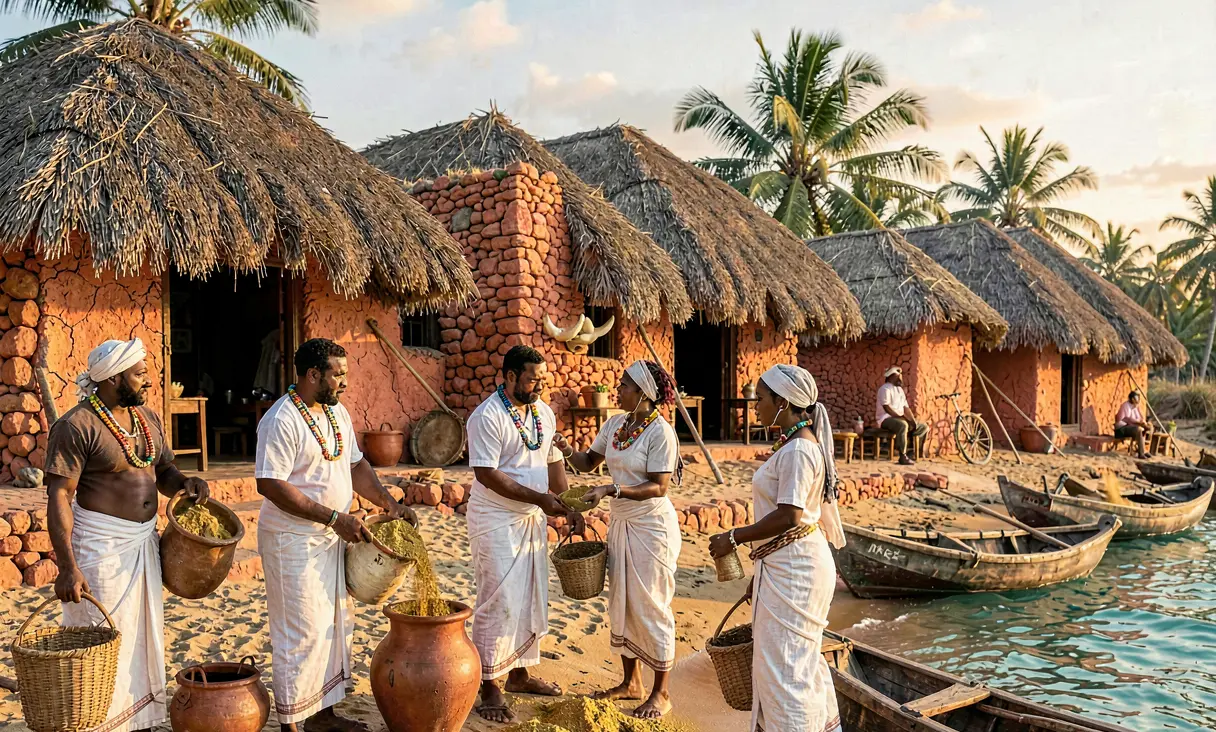
Foundation of Kilwa Kisiwani as a Major Trade Hub
Founded circa 900 CE, Kilwa Kisiwani leveraged its strategic island location to monopolize the gold trade from Great Zimbabwe, evolving into a wealthy, stone-built sultanate that dominated medieval In
The Strategic Crucible of the Swahili Coast
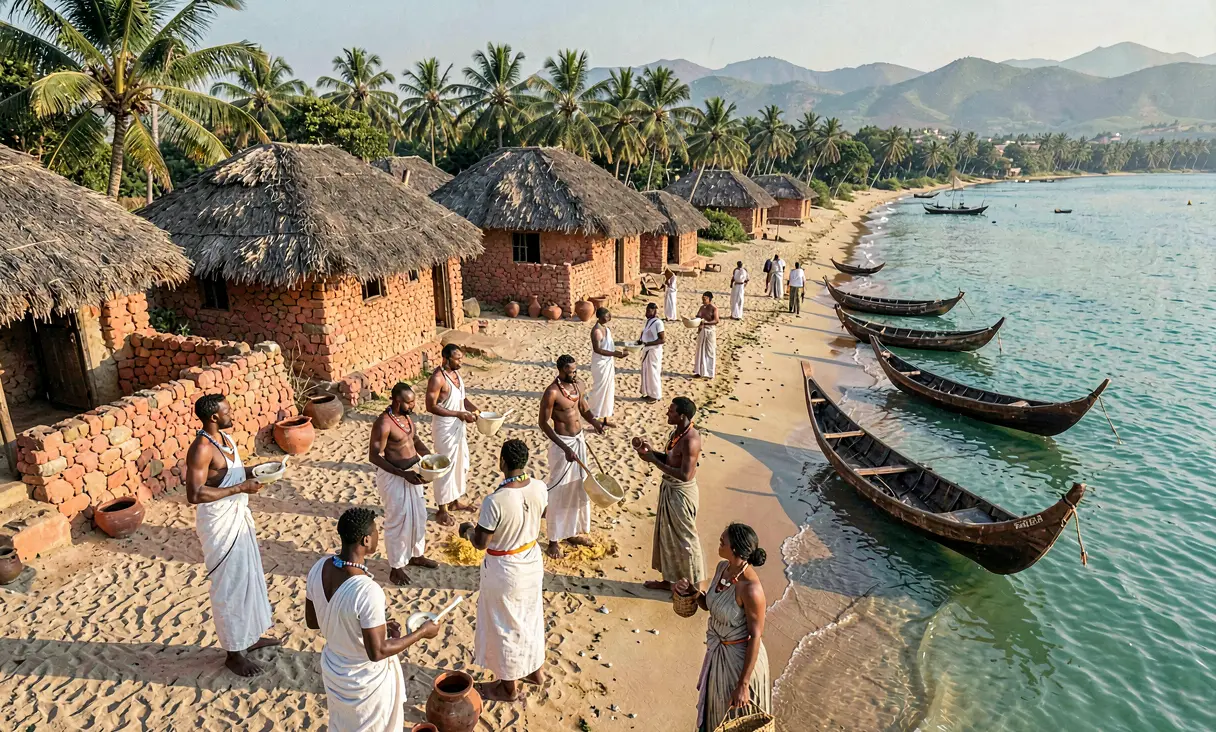
By the late 9th century, the East African coast was undergoing a profound transformation as local Bantu-speaking communities increasingly integrated into the Indian Ocean trade network. While settlements like Mombasa and Zanzibar held early prominence, the geography of Kilwa Kisiwani offered an unparalleled advantage. Situated on a small coral island roughly 250 kilometers south of Dar es Salaam, Kilwa possessed a natural harbor that provided safe anchorage for dhows navigating the treacherous monsoon winds. Unlike its northern counterparts, which were often fragmented by local rivalries or exposed to direct mainland incursions, Kilwa's insular nature allowed for centralized control and rapid urbanization.
The Ali ibn al-Hasan Narrative and Founding
According to the 16th-century chronicle known as the *Kilwa Chronicle*, the city's formal establishment is attributed to Ali ibn al-Hasan, a prince from Shiraz in Persia. The narrative recounts that he fled political strife in his homeland around 900 CE with seven ships and settled on Kilwa Kisiwani, purchasing the island from its Bantu inhabitants for a piece of cloth—a symbolic act often interpreted as a diplomatic agreement rather than a literal transaction. While modern historians debate the veracity of this specific Persian origin story, viewing it perhaps as a later legitimization of ruling elites seeking to distance themselves from local traditions, archaeological evidence confirms a distinct shift in material culture and urban planning at this precise juncture, marking the arrival of new political and religious influences.
Monopolizing the Gold of Sofala
The true engine of Kilwa's ascent was its aggressive domination of the gold trade flowing from the interior. By securing control over the port of Sofala, located further south on the mainland, Kilwa effectively placed a stranglehold on the export of gold mined by the emerging Great Zimbabwe civilization and other Shona-speaking polities. This strategic monopoly allowed Kilwa to act as the primary intermediary between the African interior and the global markets of Arabia, India, and China. The city did not merely facilitate trade; it extracted value, taxing caravans and controlling the flow of currency that would eventually fund an architectural renaissance unmatched in sub-Saharan Africa at the time.
Architectural Ascendancy and Urban Fabric
The wealth generated from this trade monopoly manifested physically in the construction of monumental stone architecture, a departure from the wattle-and-daub structures common elsewhere. Utilizing locally sourced coral rag bound with lime mortar, Kilwa's rulers began erecting grand mosques and palaces that defined the city's skyline. The Great Mosque of Kilwa, initially constructed in the 10th century and expanded significantly by the 12th, became a testament to this prosperity, featuring a vaulted ceiling supported by massive coral columns. Simultaneously, the Husuni Kubwa palace complex, though built slightly later under Sultan al-Hasan ibn Sulayman, reflected the enduring legacy of this foundational era's wealth, showcasing intricate niches and a layout that blended Islamic design with local climatic adaptations.
The Rise of the Mahdali Dynasty
Following the initial settlement, Kilwa was ruled by a succession of dynasties that solidified its status as an independent sultanate. The early Mahdali dynasty, which rose to power in the 12th century but traced its ideological roots to the founding era, transformed Kilwa from a trading post into a sovereign empire. These rulers minted their own copper and silver coins, a rare occurrence in sub-Saharan Africa, inscribed with Arabic script that proclaimed their authority and Islamic faith. This numismatic evidence, alongside the city's expansionist policies, demonstrates how the foundations laid around 900 CE evolved into a sophisticated state apparatus capable of projecting power across the southern Swahili coast.
A Cosmopolitan Crossroads
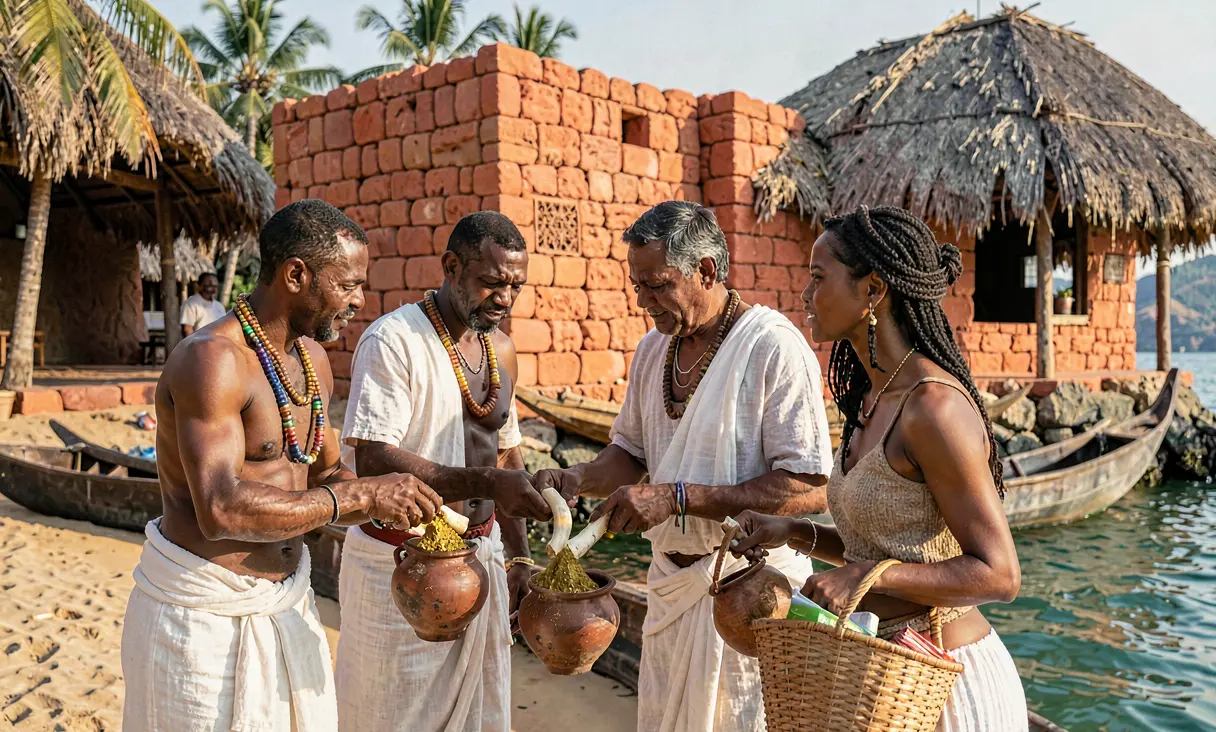
Kilwa Kisiwani became a vibrant cosmopolitan hub where diverse cultures converged. The city's population was a tapestry of Bantu Africans, Persian and Arab merchants, Indian traders, and even Chinese visitors attracted by the gold trade. This interaction fostered the development of Swahili culture, characterized by the fusion of Bantu grammatical structures with a significant Arabic lexicon. The daily life in Kilwa reflected this synthesis: Islamic law governed commerce and social hierarchy, while local customs persisted in domestic spheres. Archaeological finds, including Chinese porcelain shards from the Song Dynasty and Persian glassware, attest to the city's deep integration into the global economy of the medieval world.
Legacy of a Medieval Metropolis
The foundation of Kilwa Kisiwani around 900 CE set in motion a trajectory that would make it the wealthiest and most powerful city-state on the East African coast for centuries. Its model of urbanization, economic monopoly, and stone architecture influenced neighboring settlements from Mozambique to Kenya. Although its power waned with the arrival of the Portuguese in the late 15th century, the ruins of Kilwa stand today as a UNESCO World Heritage site, preserving the memory of a sophisticated African empire that once commanded the Indian Ocean's southern trade routes. The city remains a poignant symbol of Africa's active and central role in pre-colonial global history.
Established the economic foundation for the Swahili civilization and linked African interior resources to global markets.
Where it happened
Kilwa Kisiwani, Tanzania — see it on the interactive map →
Explore related history
 ExplorationLapita Expansion into the Bismarck Archipelagoc. 1500 BCE · Bismarck Archipelago, Papua New GuineaLapita people migrate from Island Melanesia into the Bismarck Archipelago, establishing distinct pottery traditions.
 ExplorationEnd of Zheng He's Voyages and Ming Isolationism1433 CE · East Africa / China CoastThe Ming Dynasty halts the great naval expeditions and restricts maritime trade.
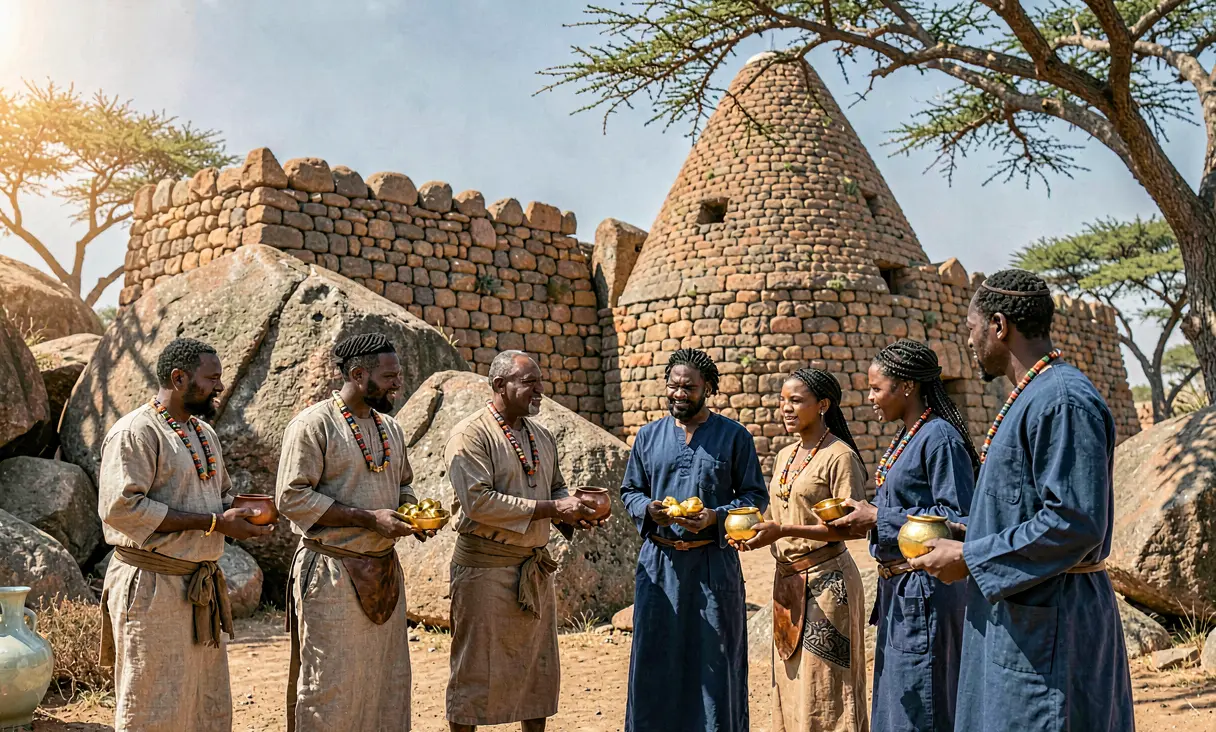 ExplorationGreat Zimbabwe Dominates Gold Trade with Kilwac. 1400 CE · Great Zimbabwe, ZimbabweArchaeological evidence confirms extensive gold trade between Great Zimbabwe and Swahili coastal cities.
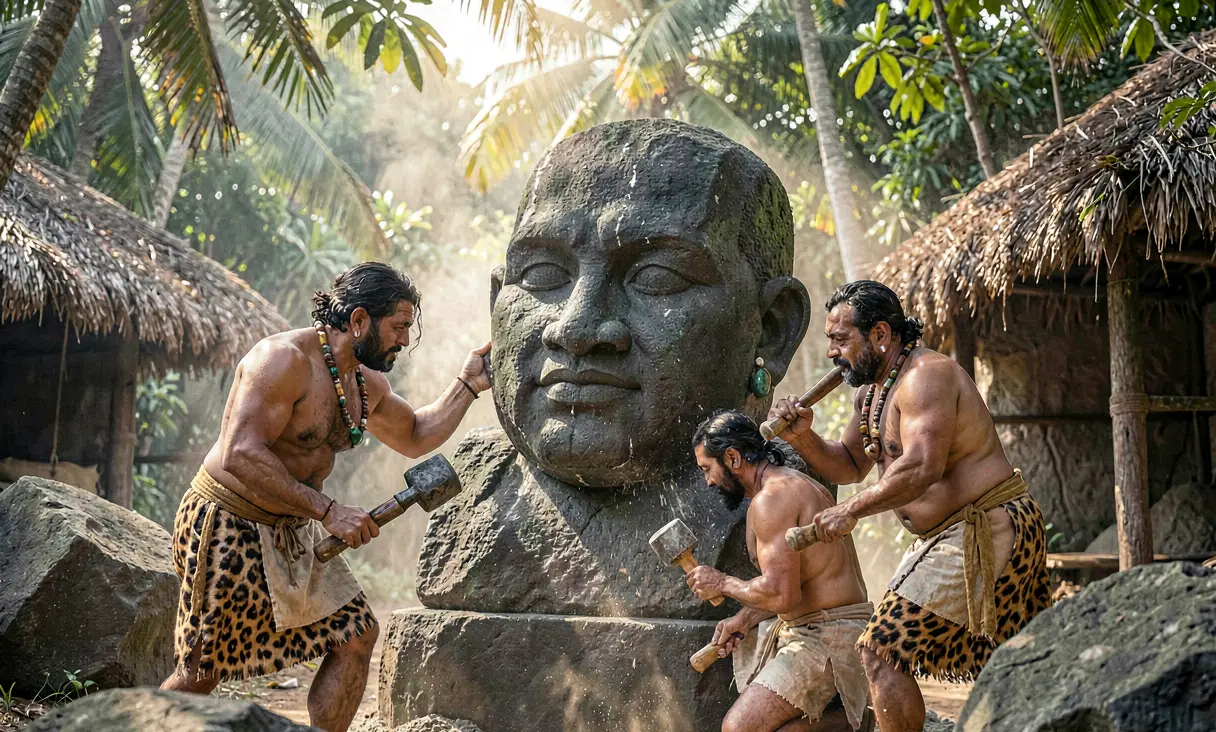 ArtCarving of Olmec Colossal Headsc. 900 BCE · San Lorenzo Tenochtitlan, MexicoThe Olmec civilization carves massive basalt heads depicting rulers, establishing the first major complex society in Mesoamerica.
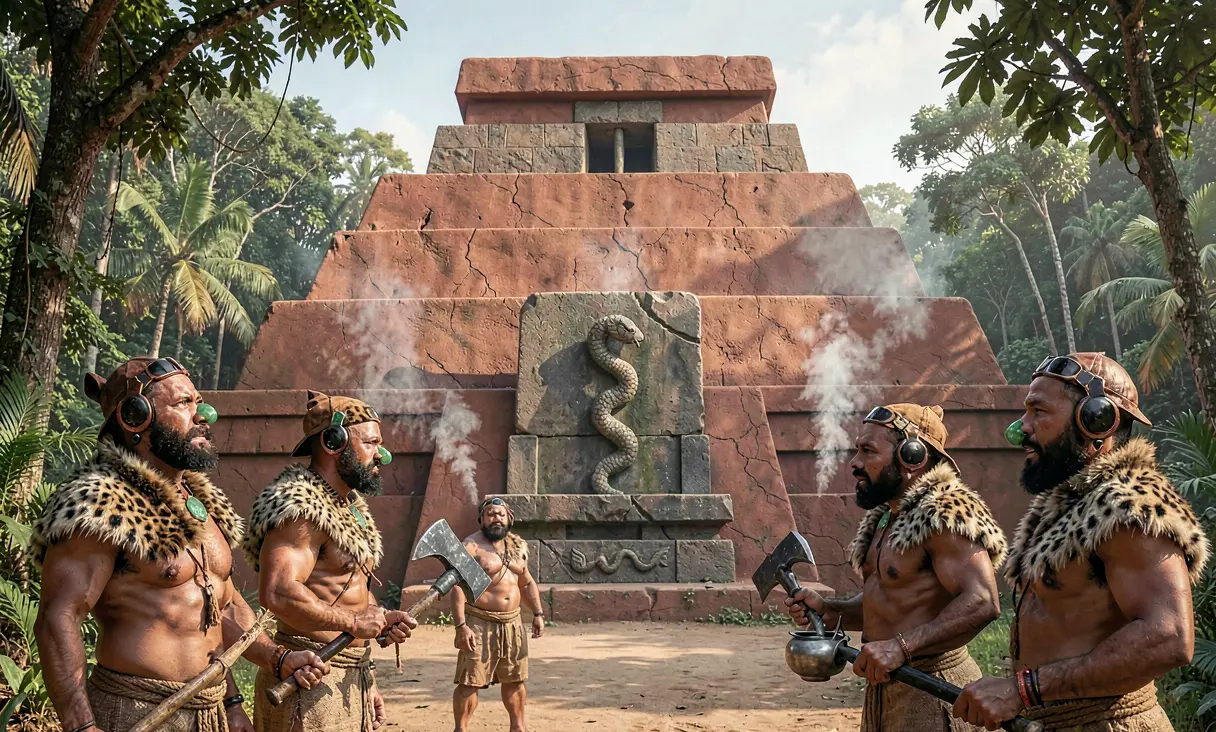 CivilizationConsecration of La Venta's Great Pyramidc. 900 BCE · La Venta, Tabasco, MexicoThe first major pyramid in Mesoamerica is completed at La Venta.
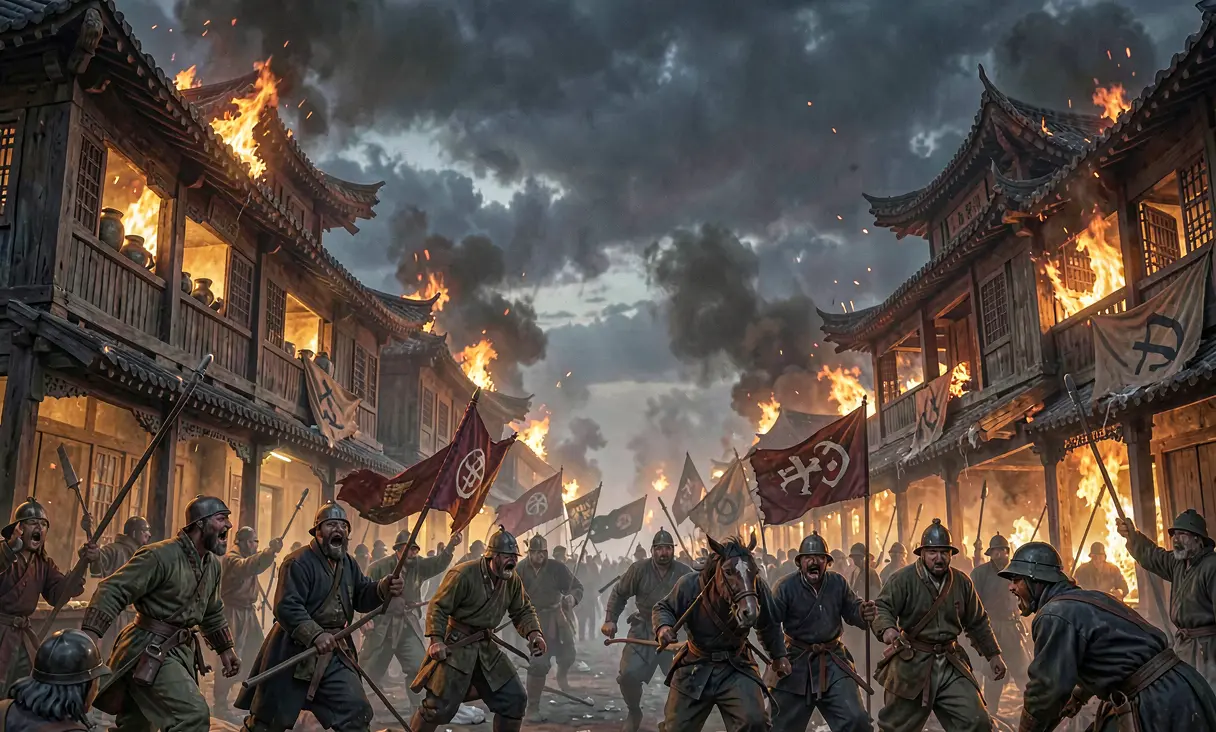 WarHuang Chao Rebellion and Fall of Tang874 CE · Shandong Province, ChinaHuang Chao leads a massive peasant uprising that sacks Chang'an and destroys Tang authority.
Discussion
Loading…