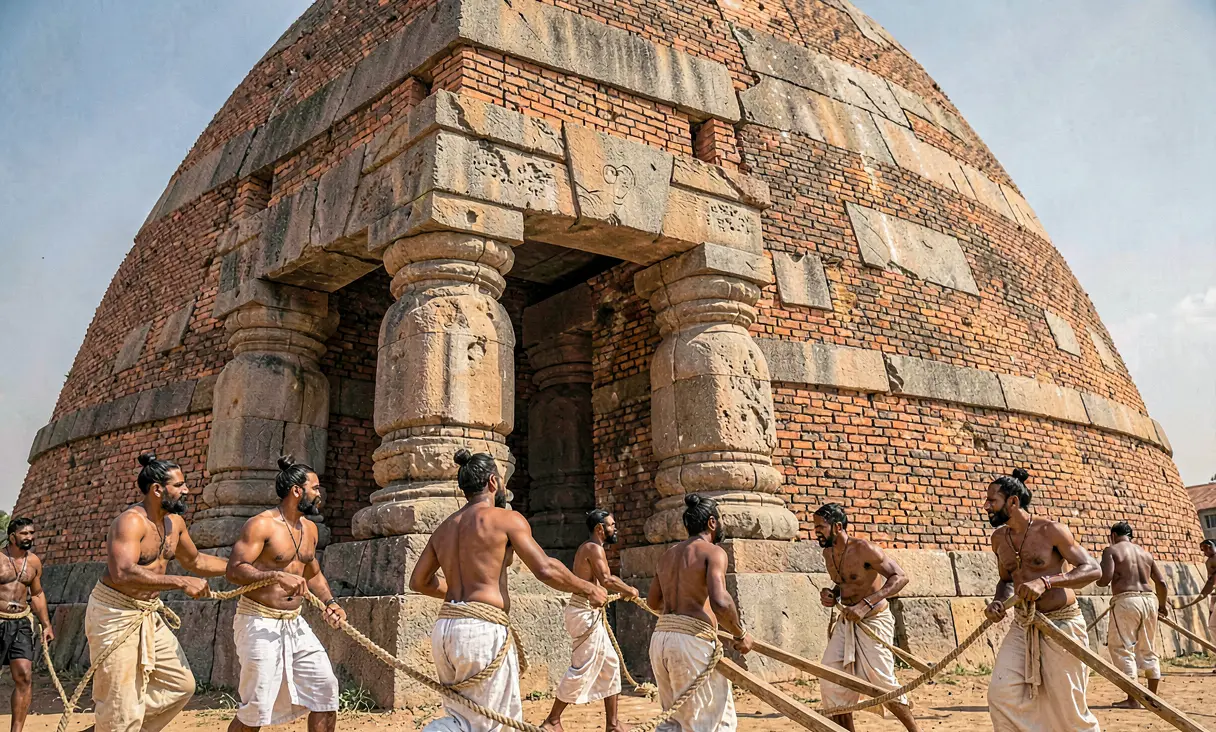
Expansion of the Great Stupa at Sanchi
Under Shunga patronage around 150 BCE, the Great Stupa at Sanchi was encased in stone and expanded, establishing the foundational architecture and narrative art style that defined Buddhist pilgrimage
The Ashokan Foundation and Shunga Ambition
The origins of the Great Stupa at Sanchi trace back to the reign of Emperor Ashoka in the mid-3rd century BCE. Historical tradition, supported by epigraphic evidence such as the Lion Capital inscription found nearby, credits Ashoka with commissioning an original brick structure roughly half the size of its current form. For nearly a century, this modest monument served as a focal point for early Buddhist devotion in central India. However, by the mid-2nd century BCE, the political landscape had shifted dramatically following the decline of the Mauryan Empire and the rise of the Shunga dynasty in Magadha. Despite the Shungas' generally orthodox Hindu leanings, their patronage extended to Buddhism, reflecting a complex religious syncretism that characterized the era.
The Great Expansion: From Brick to Stone
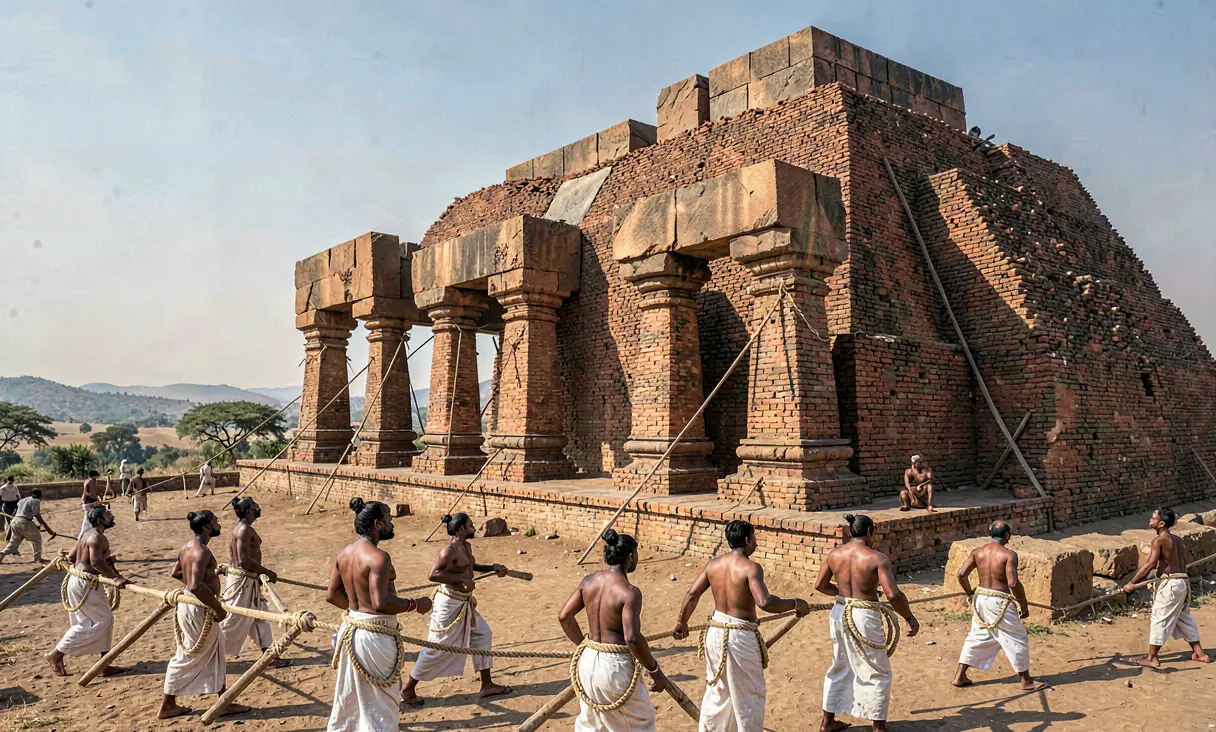
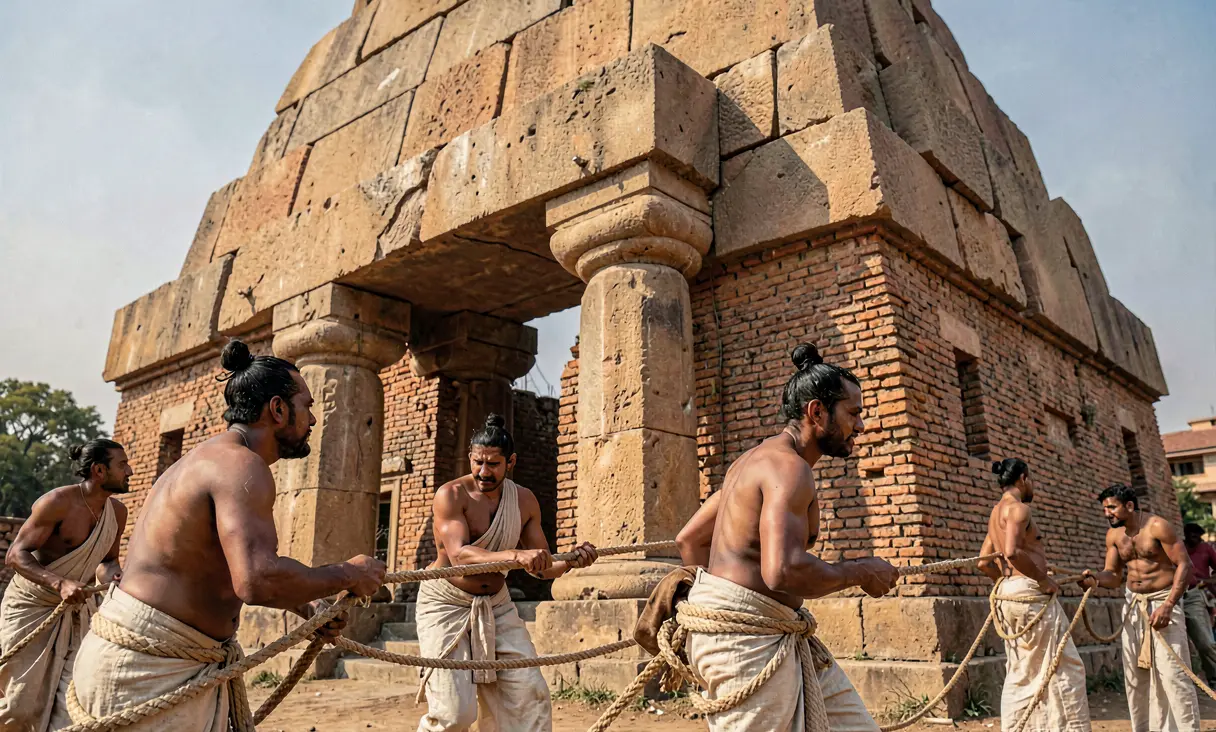
Around 150 BCE, under the auspices of the Shunga kings, the most transformative phase in Sanchi's architectural history commenced. The original hemispherical brick core was encased in a massive shell of dressed sandstone and laterite masonry, effectively doubling its diameter to approximately 36 meters (120 feet) and raising its height significantly. This engineering feat required sophisticated logistics, including the quarrying, transport, and precise fitting of thousands of stone blocks without mortar, relying instead on iron clamps and gravity for stability. The expansion transformed a local shrine into a monumental symbol of cosmic order, with the addition of a double circumambulatory path (pradakshina-patha) that allowed pilgrims to perform ritual walks around the sanctified relic chamber.
Architectural Innovation and the Rise of Narrative Art
The Shunga period marked a decisive shift in Indian religious art, moving away from aniconic symbolism toward complex narrative reliefs. While the iconic four gateways (toranas) that frame the stupa were primarily completed under the later Satavahana patronage in the 1st century BCE, their conceptual foundations and initial construction began during this Shunga expansion. The stupa's new stone envelope provided a canvas for intricate carvings depicting floral motifs, auspicious symbols like the wheel of dharma, and early scenes from the Jataka tales (stories of the Buddha's past lives). This period established the visual vocabulary of Buddhist art in India, synthesizing indigenous tribal traditions with Hellenistic influences that had permeated the subcontinent following Alexander's campaigns.
Patronage Dynamics and Religious Synthesis
The expansion was not merely a royal decree but a collaborative effort involving the merchant guilds, monastic communities (Sangha), and local chieftains. Inscriptions from the site reveal that donations came from diverse social strata, including merchants, artisans, and even women, indicating a broad-based devotion that transcended rigid caste boundaries. The Shunga kings, while promoting Brahmanical rituals, pragmatically supported Buddhist institutions to maintain political stability in a region teeming with competing religious ideologies. This era saw the solidification of Sanchi as a premier pilgrimage destination, drawing devotees from across the Gangetic plains and beyond, facilitated by improved trade routes that connected central India to the Deccan.
The Enduring Legacy of Stone
The transition from perishable brick to durable stone ensured the survival of Sanchi through centuries of political upheaval and natural decay. Unlike many contemporary wooden or mud-brick structures that vanished, the Great Stupa's stone casing withstood the ravages of time, preserving a continuous record of Buddhist architectural evolution. The techniques developed during this Shunga expansion set the standard for subsequent stupas across Asia, influencing structures from Sri Lanka to Southeast Asia. The site remained active well into the Gupta period and beyond, serving as a living testament to the resilience of the faith it housed.
Historical Significance in World Art
The Great Stupa's expansion represents a pivotal moment in the history of global art and religion. It marks the transition from abstract representation to the humanization of the divine, paving the way for the anthropomorphic depictions of the Buddha that would emerge in the Gandhara and Mathura schools. The narrative complexity found in the early reliefs at Sanchi provided a template for storytelling through stone that influenced religious art across the Silk Road. Today, as a UNESCO World Heritage Site, it stands not only as an architectural marvel but as a critical archive of India's cultural synthesis during a dynamic period of history.
This transformation established the canonical form of the Buddhist stupa and preserved early Buddhist iconography that survived millennia.
Where it happened
Sanchi, Madhya Pradesh, India — see it on the interactive map →
Explore related history
 ReligionConstruction of the Temple of Kukulcán at Chichén Itzác. 800 CE · Chichén Itzá, MexicoThe iconic pyramid dedicated to the feathered serpent god is built during the Puuc-Toltec fusion period.
 ReligionBuddha Attains Enlightenmentc. 528 BCE · Bodh Gaya, IndiaSiddhartha Gautama achieves nirvana under the Bodhi tree founding Buddhism.
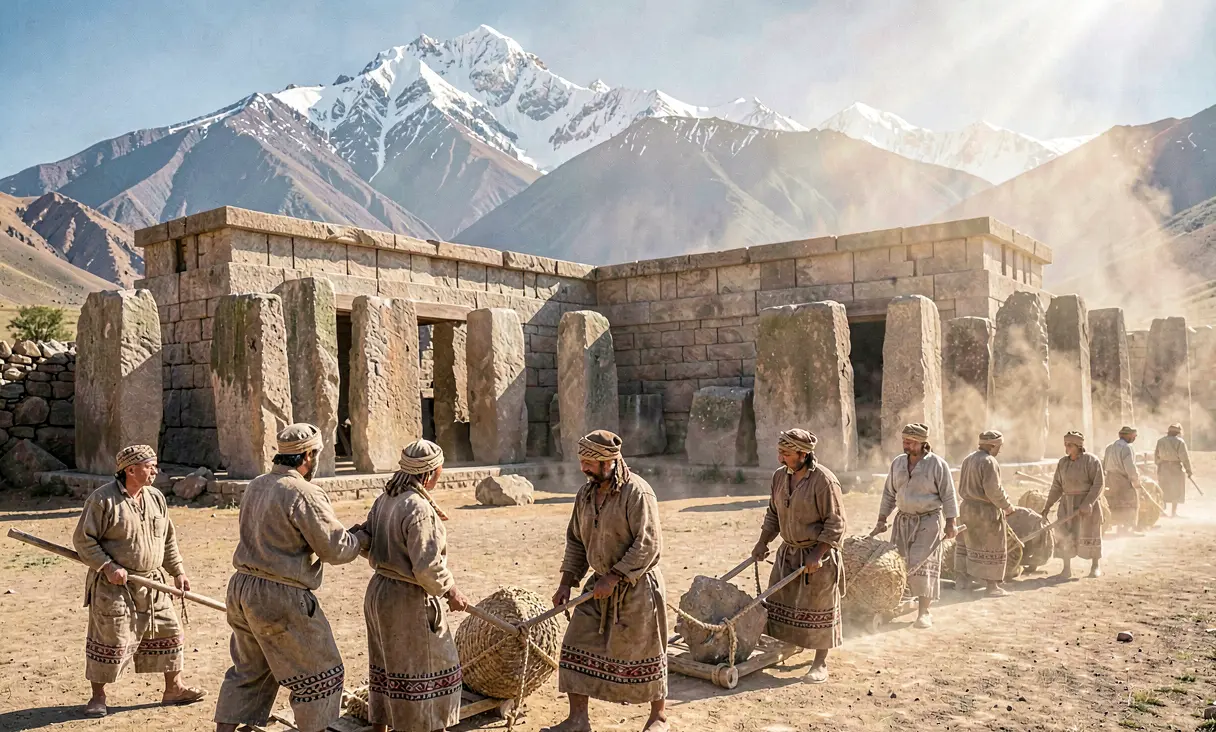 ReligionConstruction of Kalasasaya Temple at Tiwanakuc. 500 CE · Tiwanaku, BoliviaThe Kalasasaya temple is built with monolithic stones for solar observance.
 TechnologyConstruction of the Antikythera Mechanismc. 150 BCE · Antikythera Island, GreeceGreek engineers craft the world's first known analog computer for astronomical calculations.
 WarRoman Destruction of Carthage146 BCE · Carthage, TunisiaRome completely destroys Carthage at the end of the Third Punic War, ending its rivalry and enslaving its population.
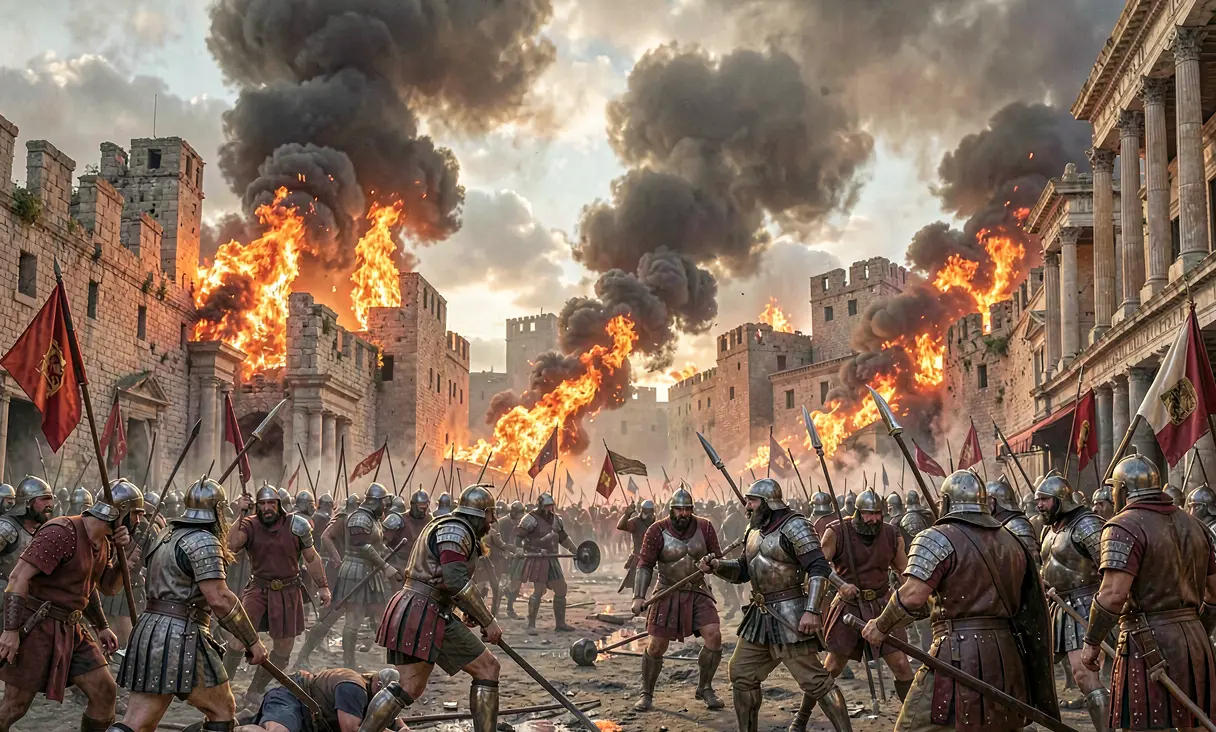 WarDestruction of Carthage by Romec. 146 BCE · Carthage (Tunis), TunisiaRome systematically destroys Carthage, ending the Punic Wars and erasing its civilization.
Discussion
Loading…