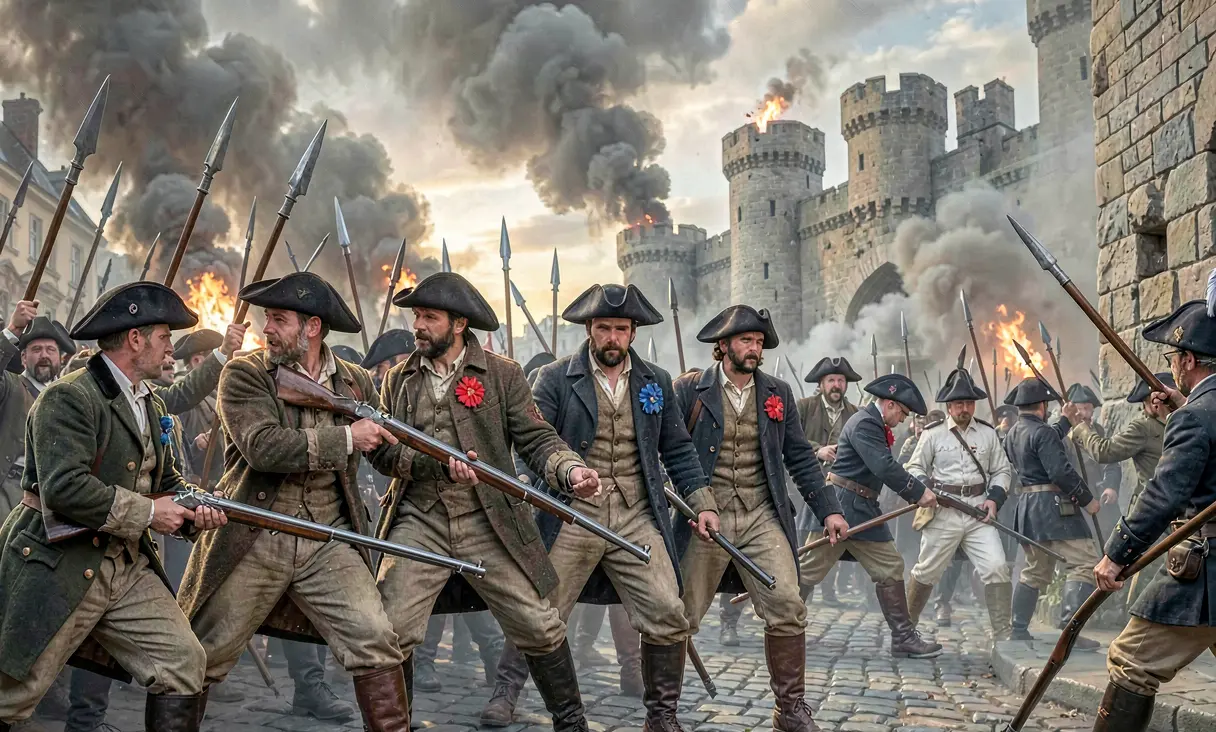
Storming of the Bastille
The storming of the Bastille on July 14, 1789, shattered royal authority in France, igniting the French Revolution and becoming an enduring global symbol of liberty over tyranny.
Context of Unrest
By the summer of 1789, France was teetering on the brink of collapse. A catastrophic harvest in 1788 had driven bread prices to astronomical levels, sparking widespread hunger and desperation among the Parisian populace. Simultaneously, King Louis XVI's financial crisis forced him to convene the Estates-General for the first time since 1614, igniting a political struggle over representation that quickly radicalized the Third Estate. As the National Assembly formed in June, rumors circulated that the King, advised by conservative courtiers, was amassing royal troops—specifically Swiss and German mercenaries—to dissolve the assembly and restore absolute control. The atmosphere in Paris grew electric with fear; the city's militia, the newly formed National Guard under the Marquis de Lafayette, sought to secure arms to defend the revolution against a potential royal coup.
The Search for Gunpowder
On July 12 and 13, crowds roamed Paris in search of weapons. They successfully seized muskets from the Invalides but found themselves without gunpowder to fire them. Intelligence suggested that a significant stockpile was stored within the Bastille, a medieval fortress-prison on the eastern edge of the city that had long served as a symbol of royal tyranny and arbitrary imprisonment. Although the Bastille held only seven prisoners at the time—four forgers, two mentally ill individuals, and one aristocrat accused of attempted murder—the structure's strategic value lay in its cannons and vast stores of gunpowder. The crowd, now swelling to thousands, demanded entry from the governor, Bernard-René de Launay, who initially feigned neutrality but secretly prepared the fortress for a siege.
The Siege Begins
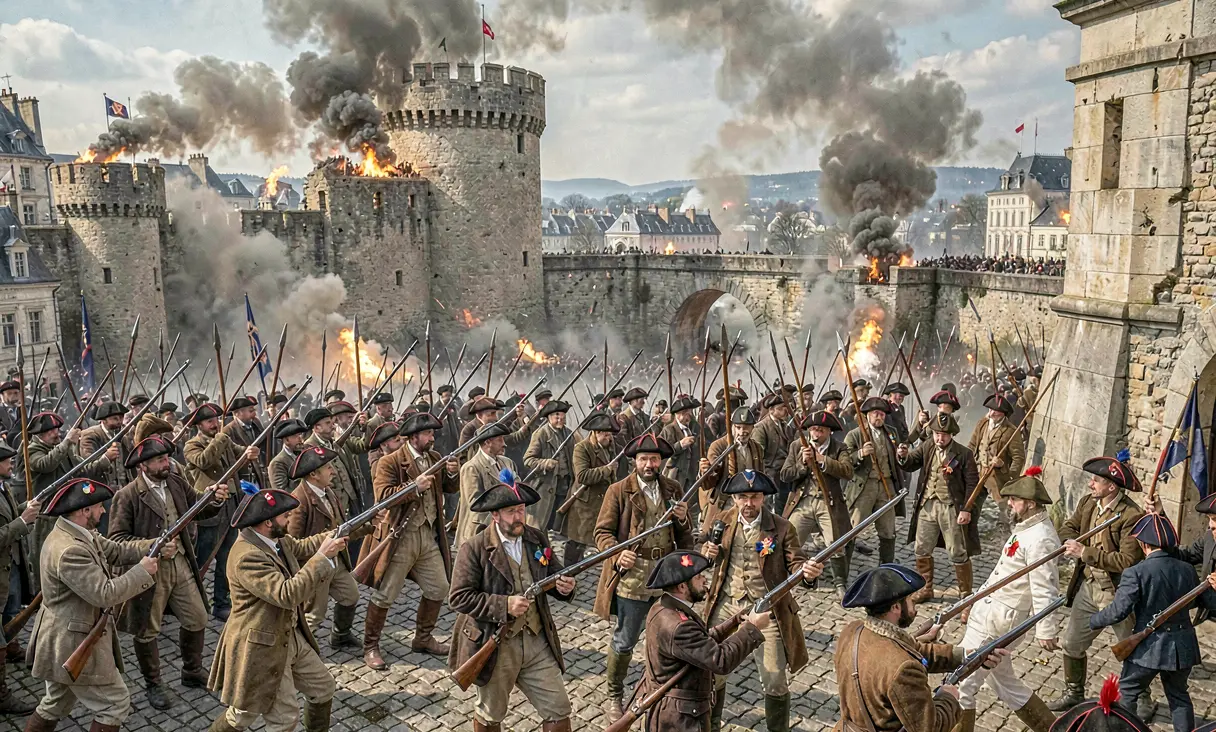
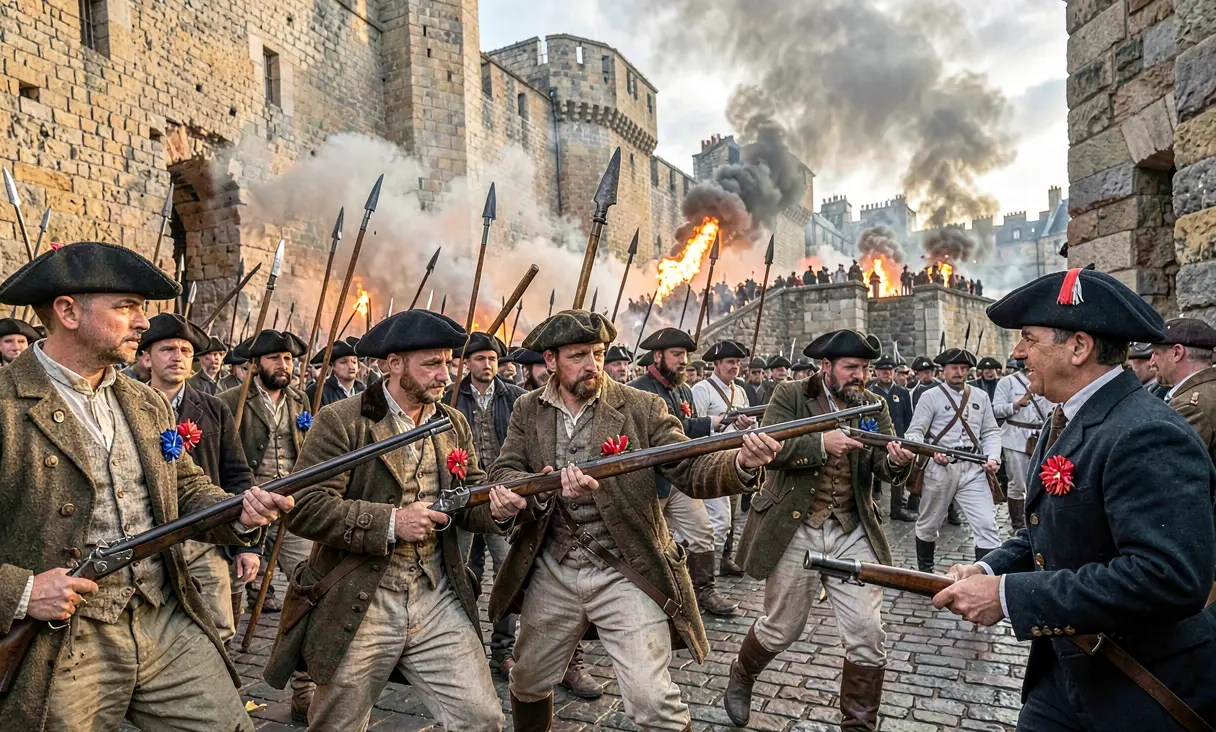
The assault commenced on the morning of July 14. A delegation of citizens entered the outer courtyard to negotiate with de Launay, but tensions flared when royal troops fired upon the crowd from the ramparts. In response, the insurgents, joined by defecting soldiers from the French Guards regiment who brought artillery, surrounded the fortress. The fighting was chaotic and brutal; for hours, the revolutionaries exchanged fire with the garrison of roughly 82 invalides and 32 Swiss mercenaries. De Launay, realizing his position was untenable and fearing a massacre if he held out too long, attempted to parley again. However, the crowd, emboldened by their growing numbers and the arrival of heavy cannons from the Invalides, breached the first gate and stormed the inner courtyard.
The Fall of the Fortress
By mid-afternoon, de Launay surrendered to prevent further bloodshed. He was dragged into the streets by the mob, beaten, and ultimately beheaded; his head was impaled on a pike and paraded through Paris. The insurgents then systematically dismantled the fortress over the following weeks, selling its stones as souvenirs of liberty. While the political significance was immediate, the human cost was stark: 98 attackers and one defender were killed during the assault. The event marked the first major violent confrontation between the people of France and the monarchy's forces, transforming a localized riot into a national turning point that shattered the illusion of royal invincibility.
Immediate Aftermath
The fall of the Bastille triggered a wave of panic known as the 'Great Fear' across rural France, where peasants rose up to burn feudal records and attack chateaux. In Paris, King Louis XVI was forced to recognize the National Assembly and recall his finance minister, Jacques Necker, whom he had dismissed days prior. The King personally visited Paris on July 17, wearing the tricolor cockade of the revolution, a symbolic gesture acknowledging the new political reality. The monarchy's authority effectively crumbled; the Bastille's destruction signaled that power now resided with the people and their representatives, setting the stage for the abolition of feudalism in August and the drafting of the Declaration of the Rights of Man and of the Citizen.
Legacy and Symbolism
The Storming of the Bastille transcended its immediate military outcome to become the defining mythos of modern democracy. It marked the end of the Ancien Régime and the birth of a new political era where sovereignty was derived from the nation rather than divine right. July 14 is now celebrated as France's national holiday, Bastille Day, commemorating not just the prison's fall but the unity of the French people. Globally, the event inspired revolutionary movements throughout Europe and the Americas, establishing a precedent for popular insurrection against tyranny that would echo through centuries of political upheaval.
It marked the symbolic beginning of the French Revolution and the overthrow of absolute monarchy in France.
Where it happened
Paris, France — see it on the interactive map →
Explore related history
 PoliticsFounding of Fatehpur Sikric. 1571 CE · Fatehpur Sikri, Uttar Pradesh, IndiaAkbar establishes Fatehpur Sikri as the new capital of the Mughal Empire to honor his spiritual guide and centralize administration.
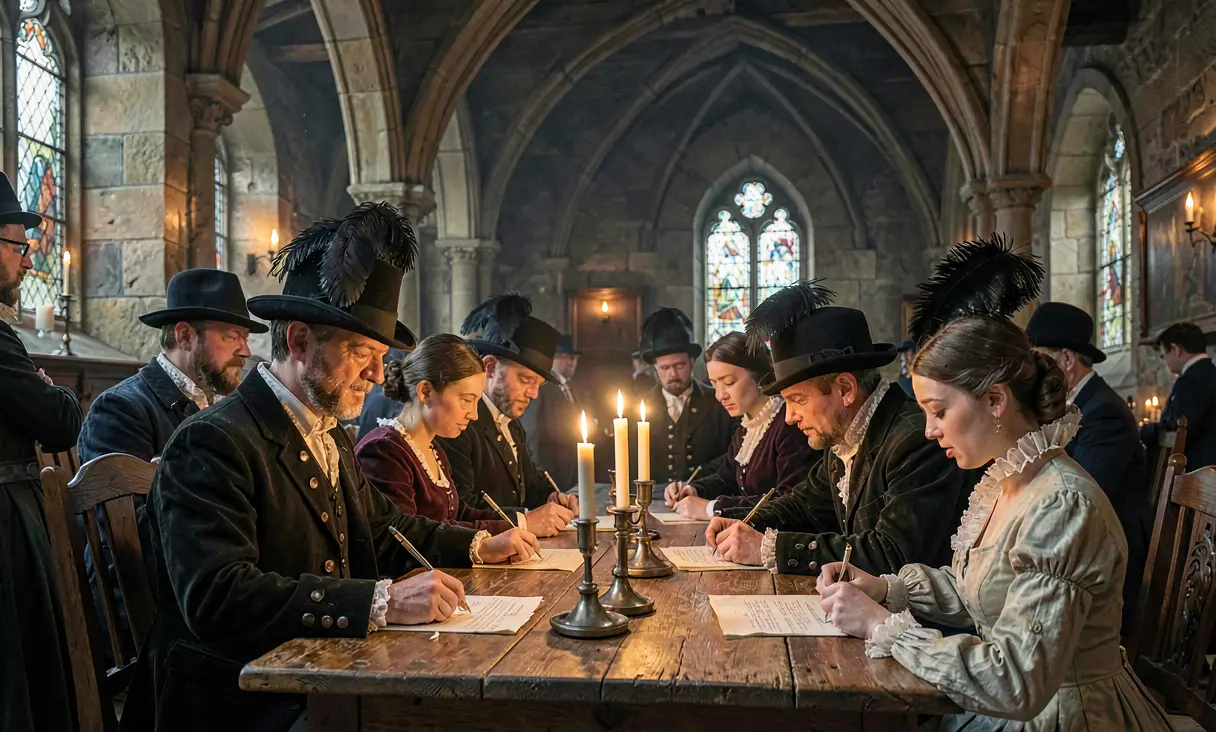 PoliticsPeace of WestphaliaOctober 24, 1648 · Münster and Osnabrück, GermanyTreaties end the Thirty Years' War, establishing state sovereignty.
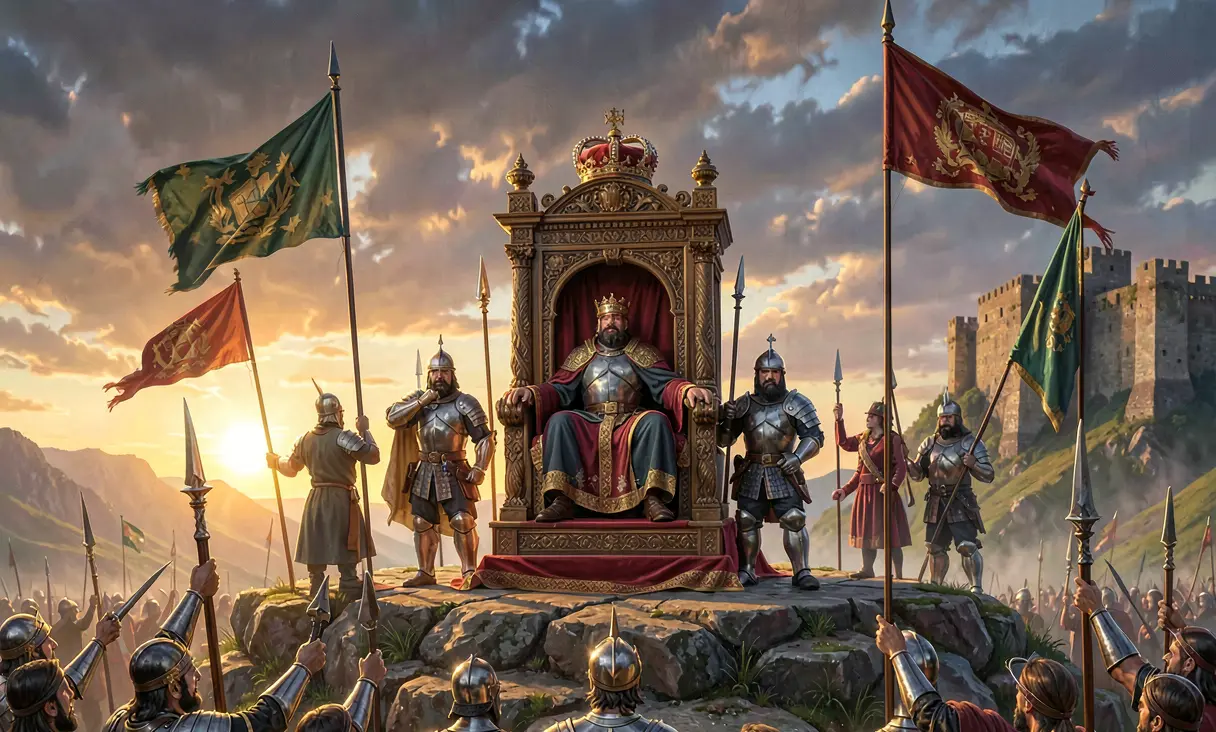 PoliticsShivaji Maharaj Coronation and Maratha Empirec. 1674 CE · Raigad Fort (modern Maharashtra/India)Chhatrapati Shivaji is crowned as the sovereign ruler of the Marathas, establishing an independent Hindu kingdom against Mughal dominance.
 PoliticsHaitian Revolution BeginsAugust 22, 1791 · Saint-Domingue (Haiti)Enslaved people revolt in Saint-Domingue, leading to the first black republic.
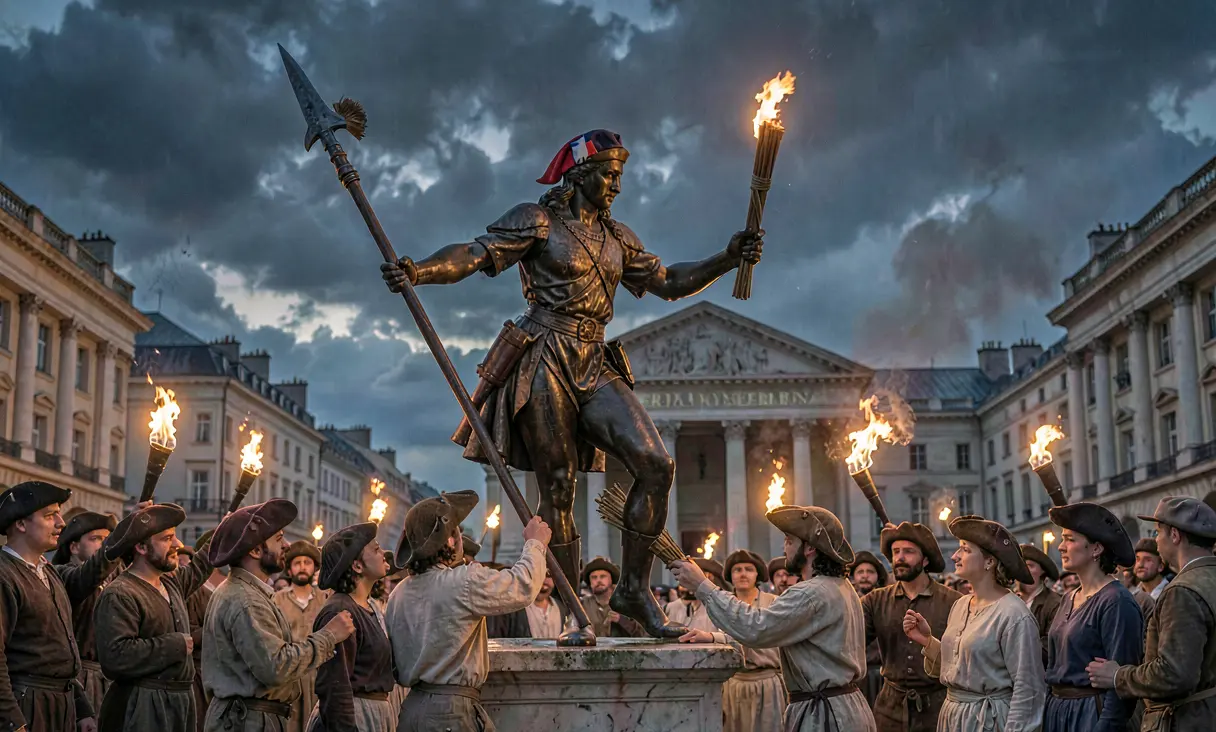 PoliticsAdoption of Marianne as French Symbolc. 1792 CE · Paris, FranceThe Republic adopts a female allegory representing Liberty and Reason.
 TechnologyExpansion of Transatlantic Cotton Tradec. 1793 CE · Savannah, Georgia, USAEli Whitney's cotton gin revolutionizes production and fuels global textile manufacturing.
Discussion
Loading…