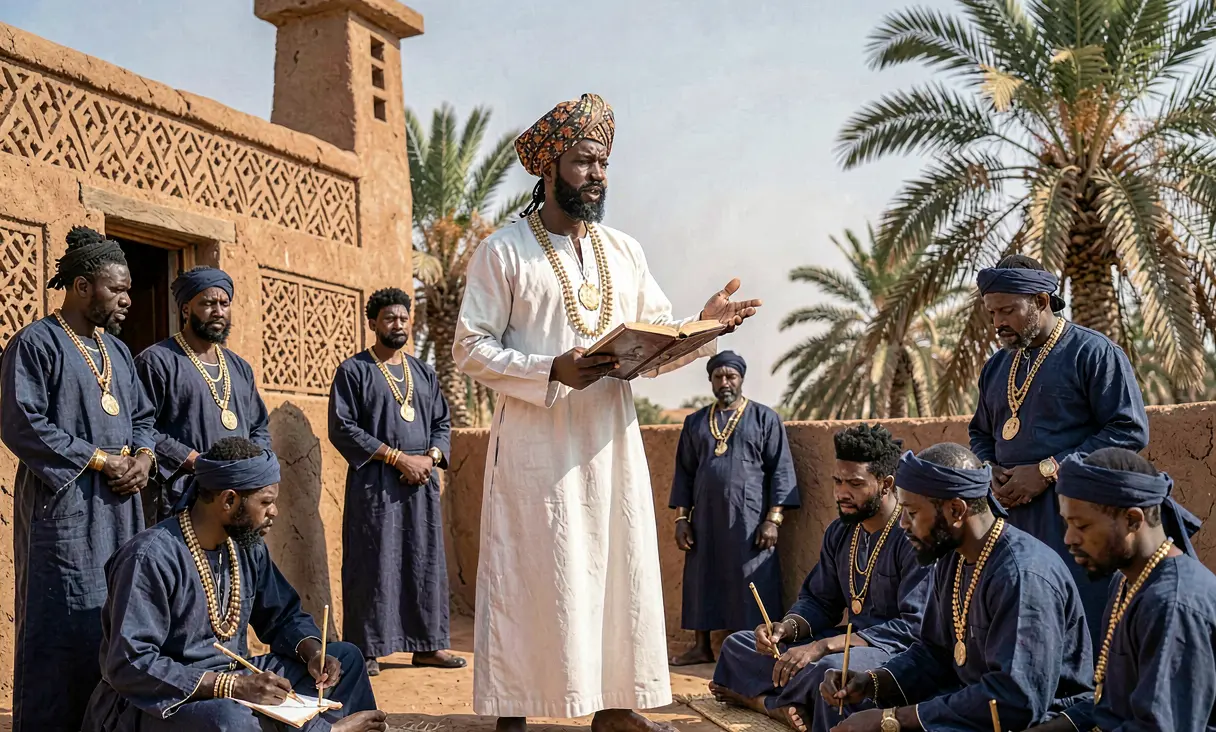
Askia Muhammad Establishes Legal Reforms in Songhai
In 1493, Askia Muhammad transformed the Songhai Empire by instituting Sharia law, standardizing trade, and forging global Islamic ties, creating West Africa's most sophisticated pre-colonial state.
The Rise of the Askia Dynasty
By the early 16th century, the Songhai Empire had emerged as the dominant power in West Africa, yet its political legitimacy remained fragile following the decline of the Sunni dynasty. In 1493 CE, General Muhammad Ture, a seasoned military commander under the late Sunni Ali Ber, orchestrated a coup against the weak and ineffective ruler Sunni Baru. Ascending to the throne as Askia Muhammad I, he founded the Askia Dynasty, marking a pivotal shift from the pragmatic, syncretic rule of his predecessors to a state explicitly grounded in Islamic orthodoxy. This transition was not merely a change of leadership but a fundamental reimagining of the empire's identity, aligning Gao with the broader Islamic world and setting the stage for a golden age of administration and culture.
Institutionalizing Sharia Law
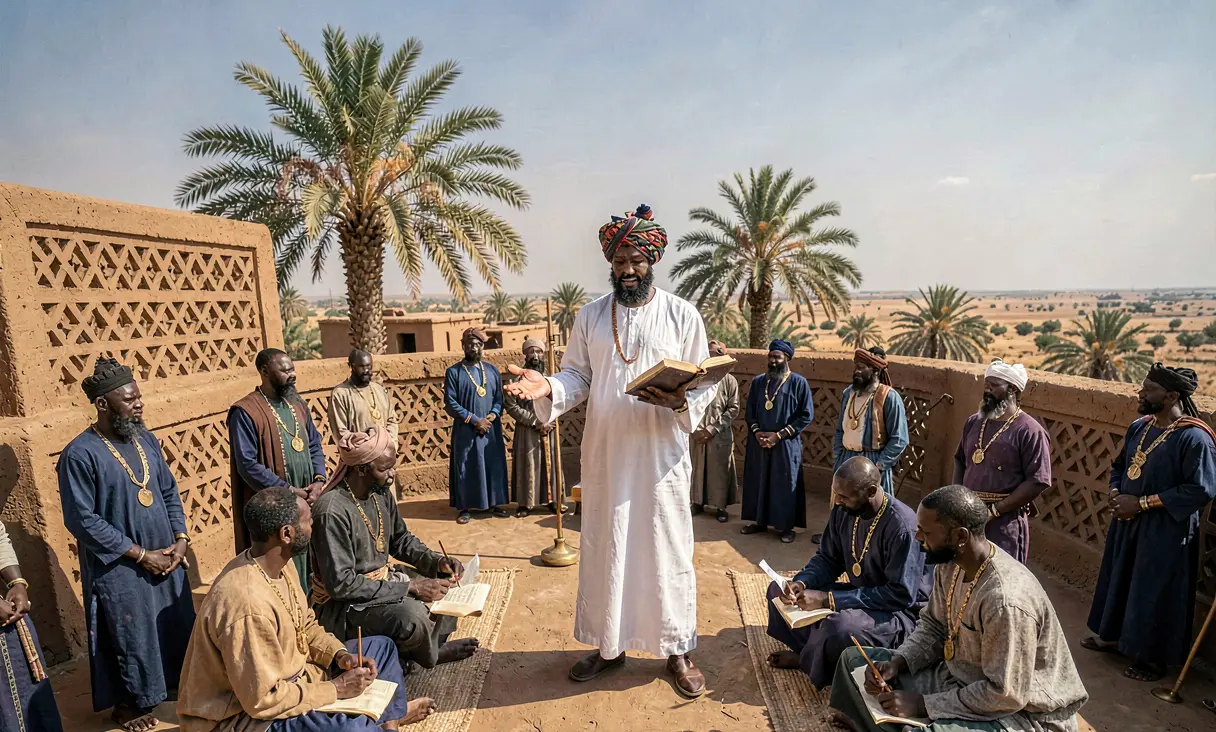
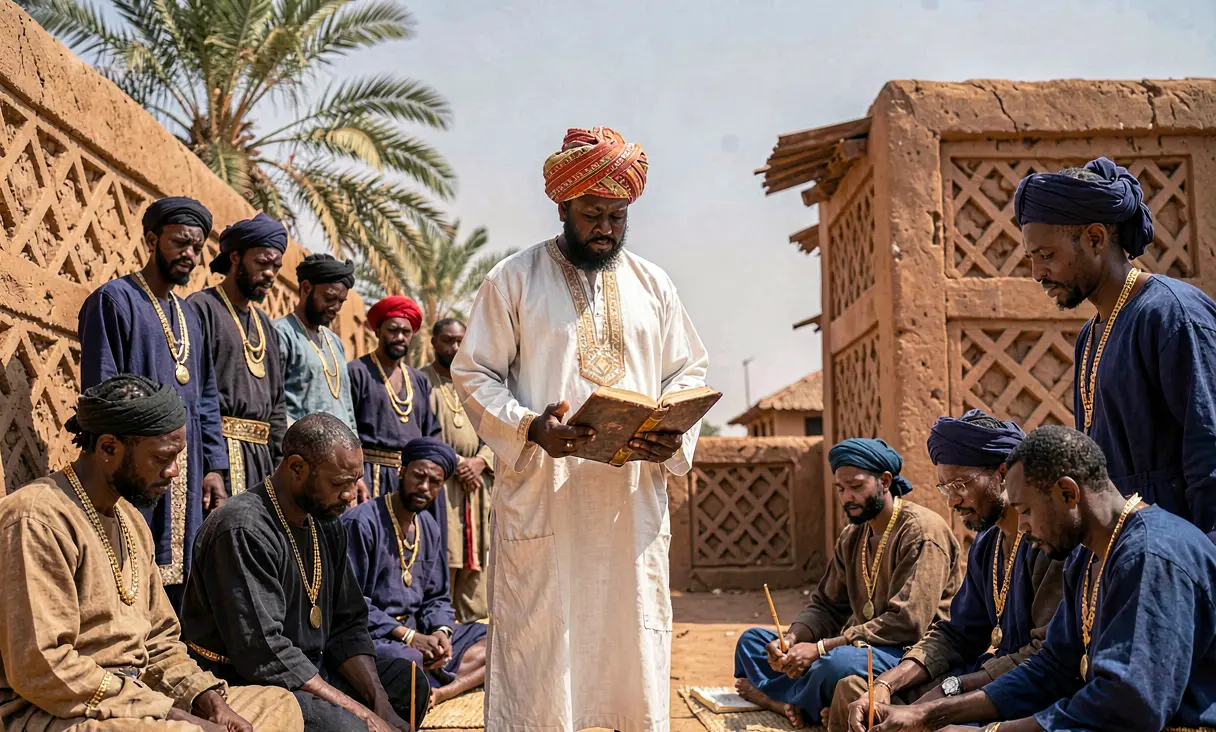
Askia Muhammad's most enduring contribution was the systematic codification and enforcement of Sharia law across his vast territories. Recognizing that a unified legal framework was essential for governing a multi-ethnic empire, he appointed qualified qadis (judges) in major cities such as Timbuktu, Gao, and Djenné, creating a centralized judicial hierarchy that operated independently of local tribal customs. These judges were tasked with adjudicating disputes ranging from commercial contracts to criminal offenses according to the Maliki school of Islamic jurisprudence, which was predominant in West Africa. This legal standardization curbed the arbitrary power of regional governors and provided a predictable environment for commerce, effectively transforming the empire into a rule-of-law state rather than a collection of tribute-paying vassals.
Administrative and Economic Standardization
Beyond the courtroom, Askia Muhammad revolutionized the empire's bureaucracy and economy. He established specialized ministries for agriculture, military affairs, and treasury management, staffed by a meritocratic class of scholars and administrators rather than solely relying on hereditary nobility. To facilitate the trans-Saharan trade that fueled Songhai's wealth, he standardized weights and measures across all marketplaces, eliminating the confusion and fraud that had previously plagued merchants traveling between Gao and North Africa. This economic integration was bolstered by a sophisticated tax system that ensured steady revenue for the state while protecting the rights of traders. The result was an unprecedented surge in commercial activity, with Timbuktu becoming a bustling hub where gold, salt, ivory, and manuscripts flowed freely under the protection of imperial law.
The Pilgrimage and Diplomatic Realignment
In 1497 CE, just four years after seizing power, Askia Muhammad undertook a monumental pilgrimage to Mecca, traveling with an entourage estimated at 500 soldiers and 100,000 attendants carrying vast quantities of gold. This journey served as a powerful diplomatic statement, legitimizing his rule in the eyes of the Islamic world and securing recognition from the Mamluk Sultanate in Cairo and the Ottoman Empire. During his stay, he engaged with scholars and jurists, bringing back to West Africa renowned intellectuals like al-Maghili, who would serve as his chief advisor on religious matters. This pilgrimage cemented Songhai's status as a major Islamic power, fostering cultural exchanges that enriched the intellectual life of Timbuktu and integrated the empire into global networks of scholarship and diplomacy.
Military Reorganization and Defense
Understanding that legal reforms required military backing, Askia Muhammad reorganized the Songhai army into a professional standing force. He created distinct units for cavalry, infantry, and riverine naval forces, utilizing the Niger River as a strategic highway for rapid deployment. The cavalry was equipped with iron armor and swords, while the navy patrolled the river to protect trade routes from piracy and rebellion. This military professionalism allowed Askia to maintain internal stability against rival factions and deter external threats from the Mossi kingdoms and other regional powers. The combination of a disciplined army and a unified legal code created a formidable state apparatus that could project power effectively across the Sahel.
Legacy of the Golden Age
The reforms initiated by Askia Muhammad I established the Songhai Empire as the largest and most sophisticated state in African history at its zenith. His administration created a stable political environment that allowed Timbuktu to flourish as a center of learning, housing libraries with thousands of manuscripts on astronomy, law, and theology. Although the empire would eventually fall to Moroccan forces in 1591 due to technological disparities and internal strife, the administrative models developed under Askia influenced subsequent West African states for centuries. His reign demonstrated that a pre-colonial African state could achieve high levels of bureaucratic complexity, legal uniformity, and international integration, challenging Eurocentric narratives about African governance.
Transformed Songhai into a legally unified Islamic state that became a model for West African governance.
Where it happened
Gao, Mali — see it on the interactive map →
Explore related history
 PoliticsSargon of Akkad Establishes the First Empirec. 2334 BCE · Akkad (Location uncertain, near Baghdad, Iraq)Sargon unifies Sumerian city-states to create the world's first multi-ethnic empire.
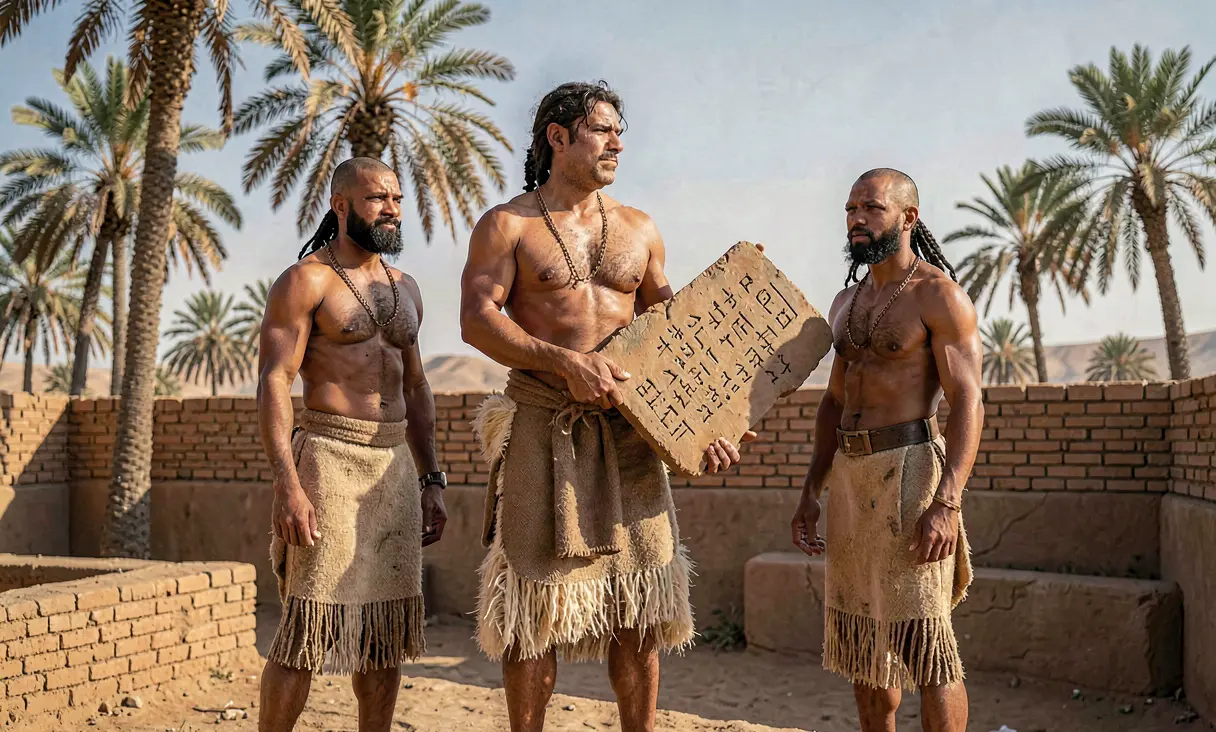 PoliticsPromulgation of the Code of Ur-Nammuc. 2100 BCE · Ur, Southern Mesopotamia (Iraq)The earliest known surviving law code is established in the Sumerian city of Ur.
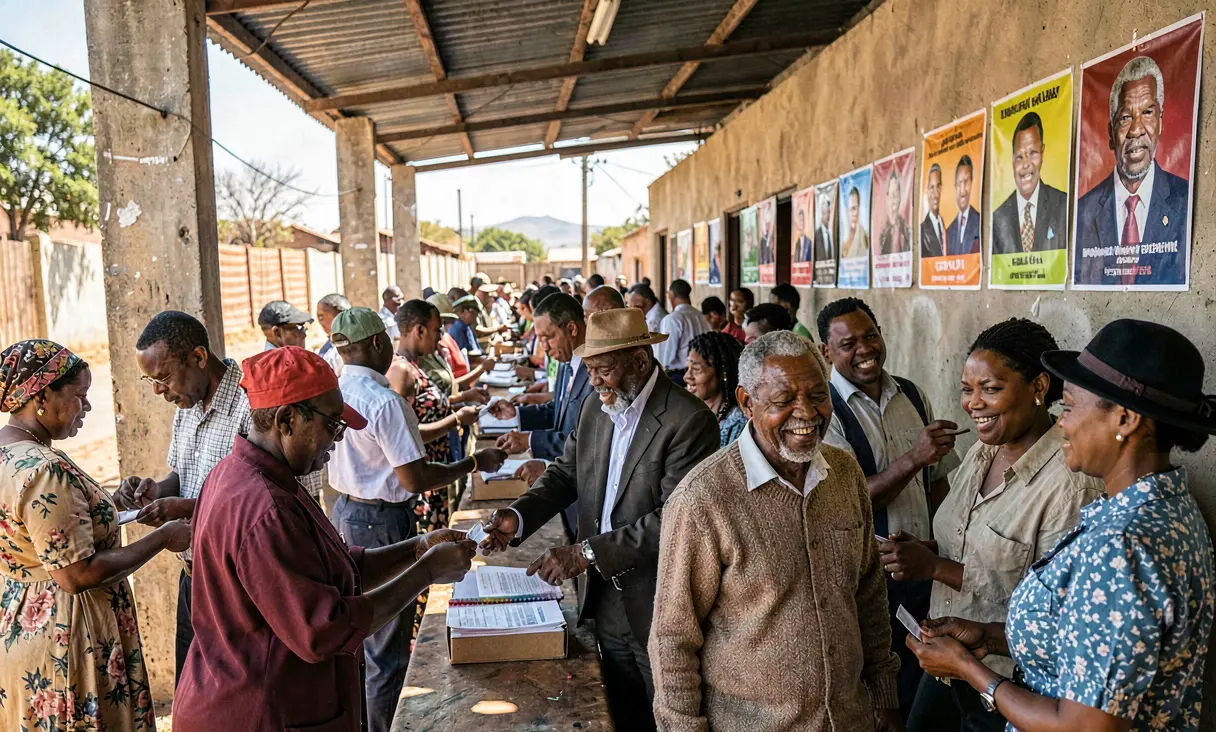 PoliticsNelson Mandela Elected President of South AfricaApril 27, 1994 · Cape Town, South AfricaSouth Africa holds its first democratic election, ending the apartheid regime and establishing a multiracial government.
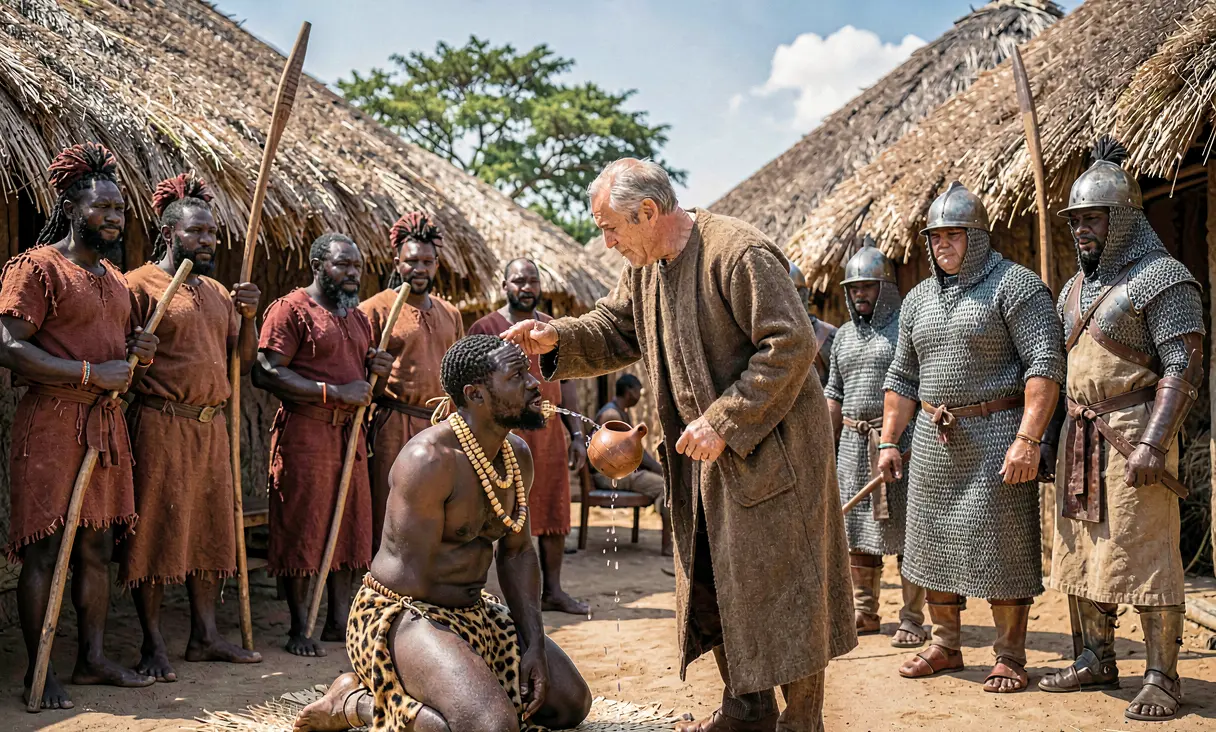 ReligionKing Nzinga a Nkuwu Baptized as João I of Kongo1491 CE · Mbanza Kongo, AngolaKing Nzinga a Nkuwu converts to Catholicism, initiating a complex fusion of Christian and traditional Kongo beliefs.
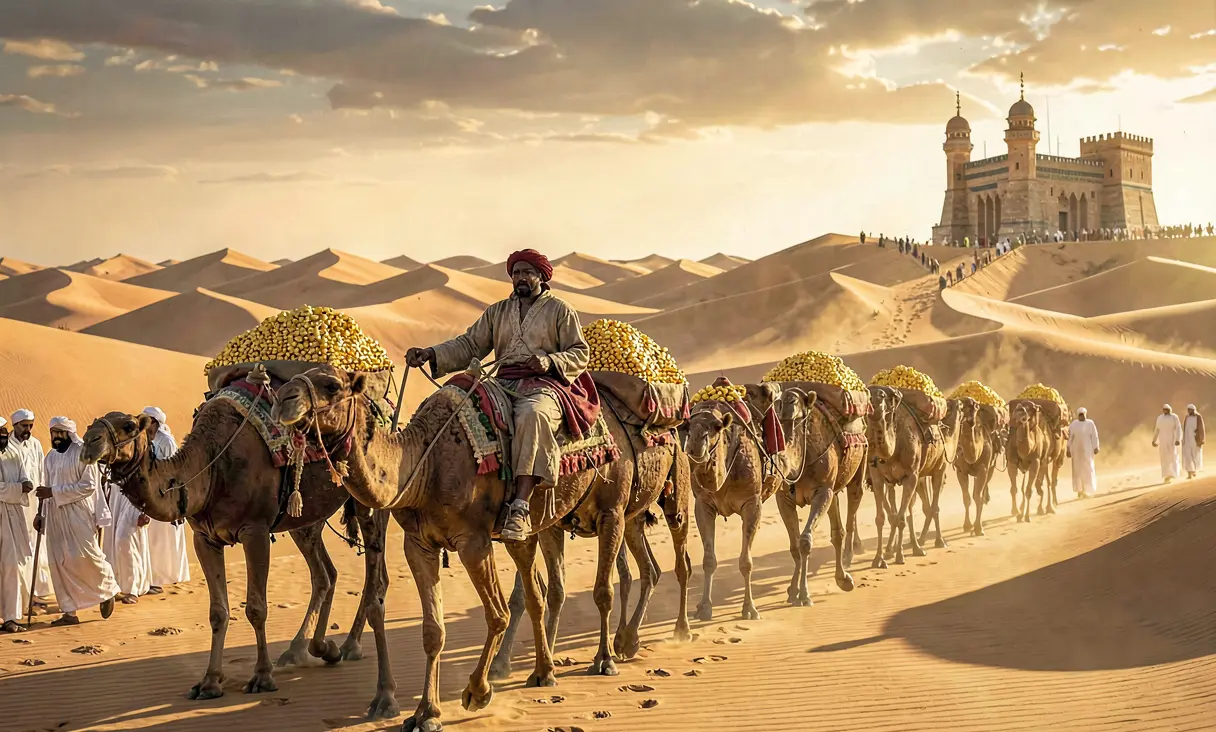 ReligionAskia Muhammad's Pilgrimage to Meccac. 1497 CE · Mecca (via Gao)Askia Muhammad undertakes a lavish pilgrimage to Mecca, strengthening ties with the Islamic world.
 ReligionRededication of the Templo Mayor by Ahuitzotlc. 1487 CE · Tenochtitlan, Mexico City, MexicoSacrificial ceremonies attend the expansion of Tenochtitlan's main temple.
Discussion
Loading…