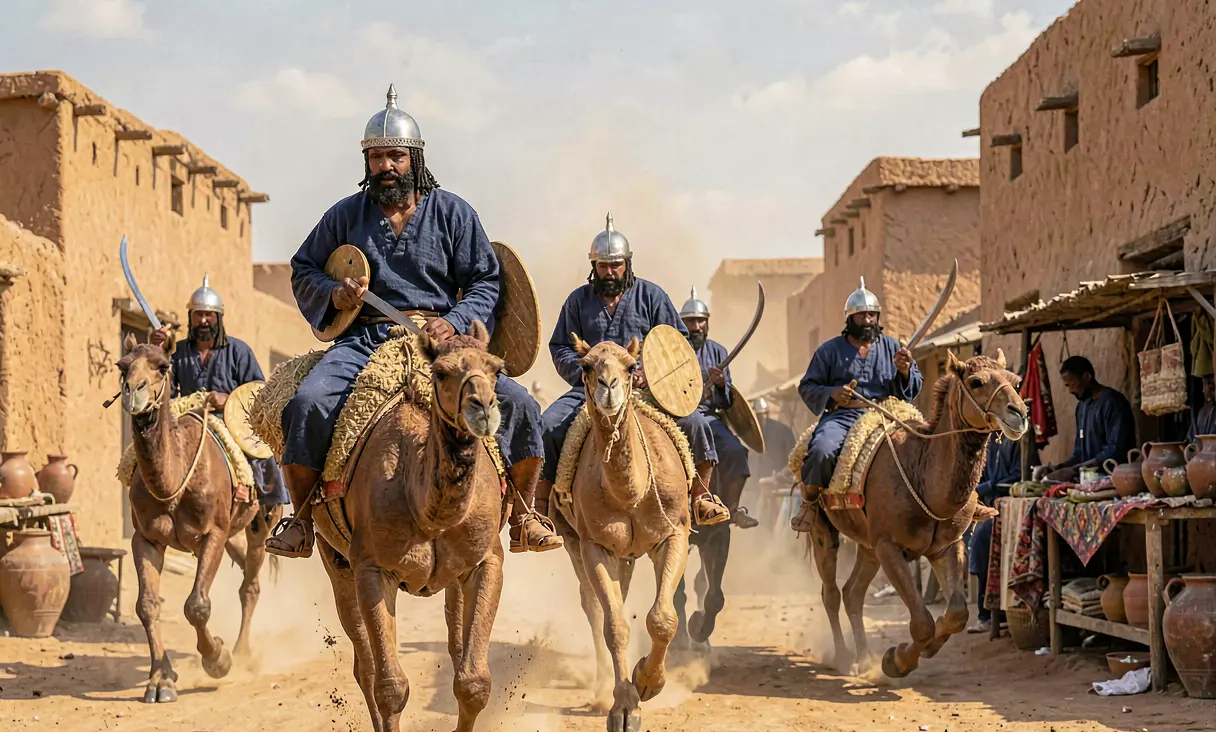
Sunni Ali Seizes Gao and Expands Songhai Empire
Sunni Ali transformed a regional kingdom into West Africa’s largest empire by 1473, securing trans-Saharan trade routes through military mastery of the Niger River.
The Decline of Mali and Rise of Songhai
By the mid-15th century, the once-mighty Mali Empire was fracturing under internal succession disputes and external pressures. Its vassal state, Songhai, centered on the city of Gao along the Niger River, sought to fill the power vacuum left by Mali's waning influence. While earlier Songhai rulers had maintained nominal allegiance to Mali, they increasingly acted with autonomy. The strategic location of Gao allowed control over critical trade routes connecting North Africa and the Sahel, making it a coveted prize for regional powers including the Tuareg confederations and Malian remnants.
Ascension of Sunni Ali Ber
In 1464 CE, Sunni Ali Ber ascended to the throne of Songhai, initiating a reign that would last until his death in 1492. Unlike his predecessors, who ruled as kings of a localized kingdom, Sunni Ali envisioned an empire spanning the Niger Bend. He immediately faced threats from Tuareg raiders who had encroached upon Songhai territories and Malian forces attempting to reassert dominance over Gao. Sunni Ali's leadership style was characterized by ruthless pragmatism; he prioritized military strength and logistical control over religious orthodoxy, earning him both loyalty among warriors and criticism from the scholarly class in Timbuktu.
Consolidation of the Niger Bend
Sunni Ali's first objective was to secure Gao and its immediate hinterlands against Tuareg incursions. By stabilizing his capital, he created a launchpad for broader campaigns. He recognized that controlling the river itself was more vital than holding static fortifications. To achieve this, he developed a formidable river navy consisting of large canoes capable of transporting troops and supplies swiftly along the Niger. This innovation allowed him to project power far beyond traditional land-based limits, enabling rapid strikes against enemy strongholds while maintaining supply lines essential for prolonged sieges.
Conquest of Timbuktu and Djenné
The pivotal moment in Sunni Ali's expansion occurred in 1468 when he captured Timbuktu from the Tuareg rulers. The city was a renowned center of Islamic scholarship, yet Sunni Ali treated its scholars with suspicion due to their political opposition. Five years later, in 1473, his forces besieged and conquered Djenné, another wealthy trading hub that had resisted Songhai authority for decades. These victories effectively dismantled the remaining influence of the Mali Empire in the region, transforming the Niger Bend into a unified economic zone under Songhai hegemony.
Military Innovation and Administration
Sunni Ali's success relied on a dual military system combining heavy cavalry with his river fleet. The cavalry secured land routes across the Sahel, while the navy dominated waterways, ensuring no rival could challenge Songhai control of commerce. He integrated diverse ethnic groups into his administration, often appointing loyal commanders from conquered territories rather than relying solely on his own kin. This pragmatic approach facilitated the absorption of new lands but also created a complex social hierarchy where loyalty was purchased through military service and tribute rather than shared ethnicity.
Legacy of the First Empire
Upon Sunni Ali's death in 1492, he left behind the largest empire West Africa had seen since ancient Ghana. His conquests established the geographic boundaries that his successor, Askia Muhammad, would later refine and legitimize through Islamic reform. While Sunni Ali was often vilified by Timbuktu chroniclers for his syncretic religious practices, modern historians recognize him as a master strategist who fundamentally altered the political landscape of the Sahel. His reign marked the definitive end of Mali's regional dominance and ushered in the golden age of the Songhai Empire.
Transformed the Songhai state into the largest empire in African history at that time, controlling critical trans-Saharan trade nodes.
Where it happened
Gao, Mali — see it on the interactive map →
Explore related history
 WarAlgerian War of Independence BeginsNovember 1, 1954 · Algiers, AlgeriaThe National Liberation Front launches coordinated attacks marking the start of the Algerian War against France.
 WarMau Mau Uprising Begins in KenyaOctober 20, 1952 · Nairobi, KenyaThe Kikuyu-led Mau Mau rebellion begins against British colonial rule and white settler land ownership.
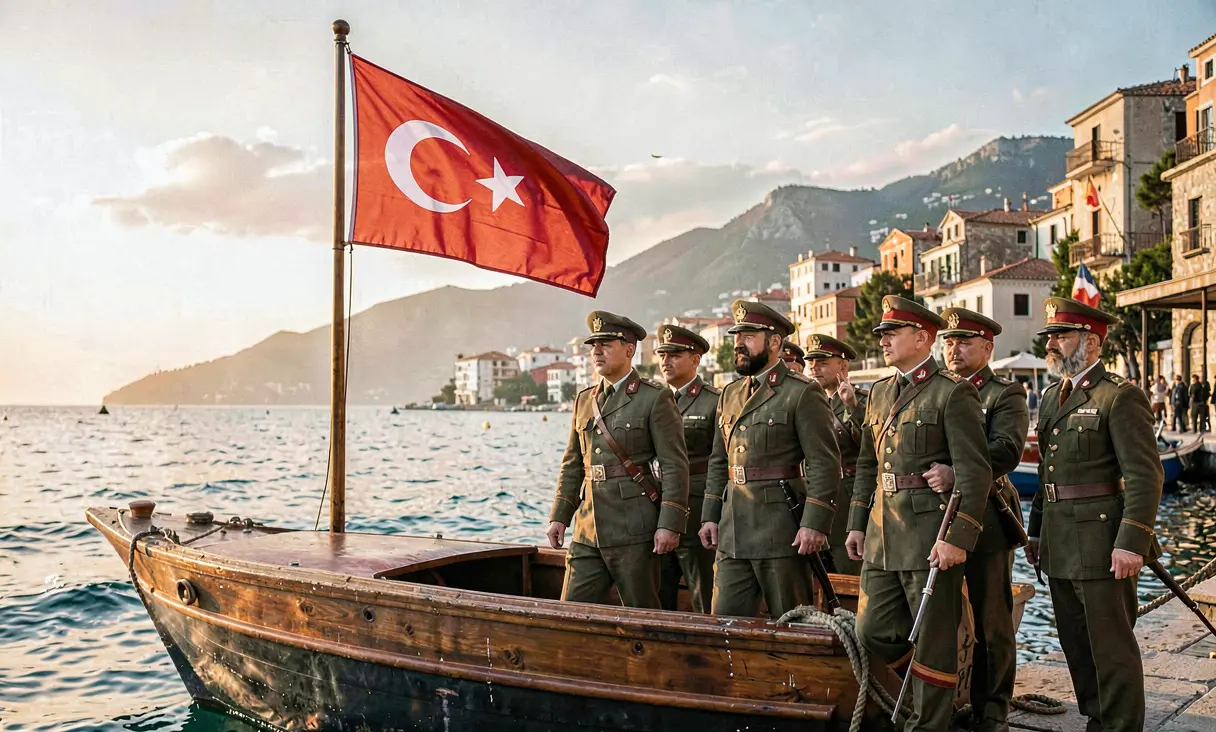 WarTurkish War of Independence BeginsMay 19, 1919 · Samsun, TurkeyMustafa Kemal Atatürk lands in Samsun to organize resistance against Allied occupation and the Ottoman Sultanate.
 WarDai Viet Annexation of Champa1471 CE · Vijaya (Quang Ngai), VietnamLe Thanh Tong destroys the Champa capital, ending its independence and absorbing its territory.
 ArtCreation of the Benin Bronzes under Oba Ewuarec. 1450 CE · Benin City, NigeriaOba Ewuare commissions the famous bronze and ivory plaques documenting court life and military victories.
 ScienceSankore Madrasah Becomes a Center of Learning in Timbuktuc. 1450 CE · Timbuktu, MaliThe Sankore Madrasah emerges as a premier university for Islamic scholarship in West Africa.
Discussion
Loading…