Askia Muhammad's Pilgrimage to Mecca
Askia Muhammad's 1497 Hajj transformed Songhai into a recognized Islamic caliphate, infusing West Africa with scholarly prestige and cementing its status as a global power through unprecedented diplom
The Rise of Songhai and the Quest for Legitimacy
By the late 15th century, the Songhai Empire had eclipsed its predecessor, Mali, as the dominant power in West Africa. Askia Muhammad I, formerly known as Muhammad Ture, seized the throne in 1493 after overthrowing the aging Sonni Baru, a ruler whose rejection of orthodox Islamic practices had alienated the empire's religious elite and trading partners. To consolidate his rule and secure the loyalty of the vast territories stretching from the Niger Bend to the Atlantic coast, Askia needed more than military might; he required spiritual legitimacy recognized by the heartlands of Islam. The Hajj, or pilgrimage to Mecca, served as the ultimate credential for a Muslim ruler, offering a direct line of authority to the Caliphate and a platform to demonstrate that West Africa was not merely a periphery but a central pillar of the Islamic world.
The Grand Caravan Departs Gao
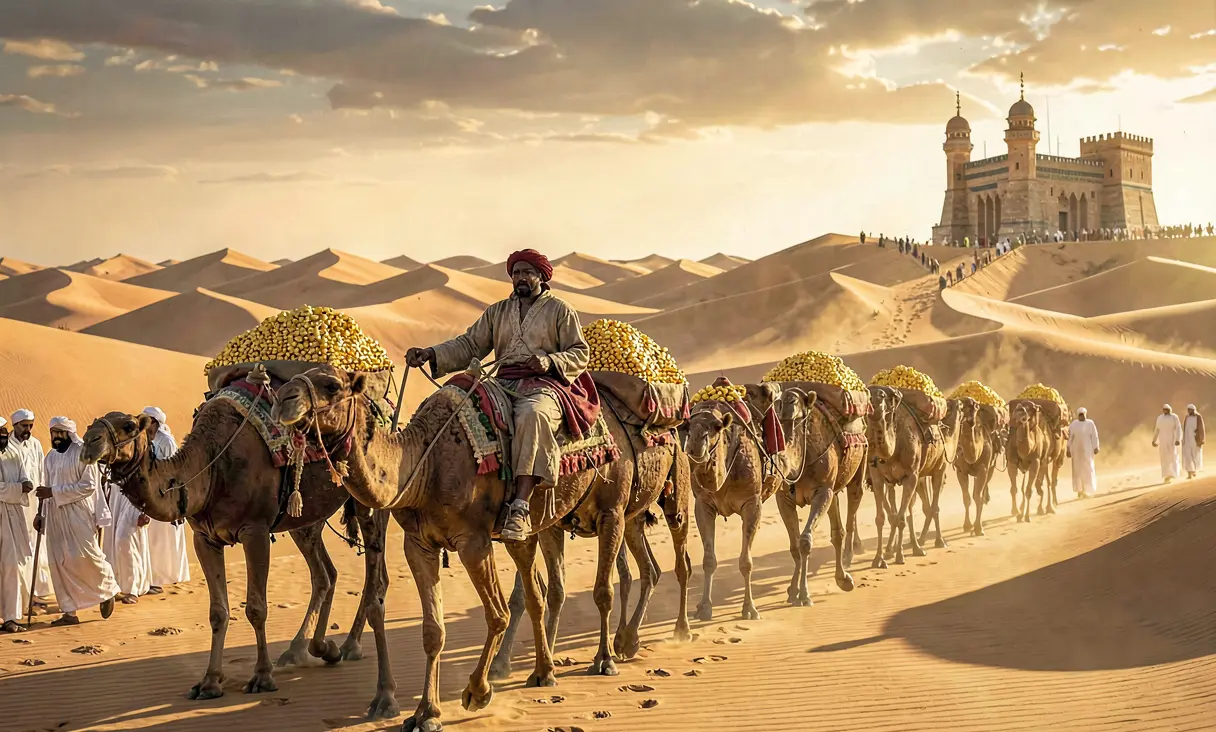
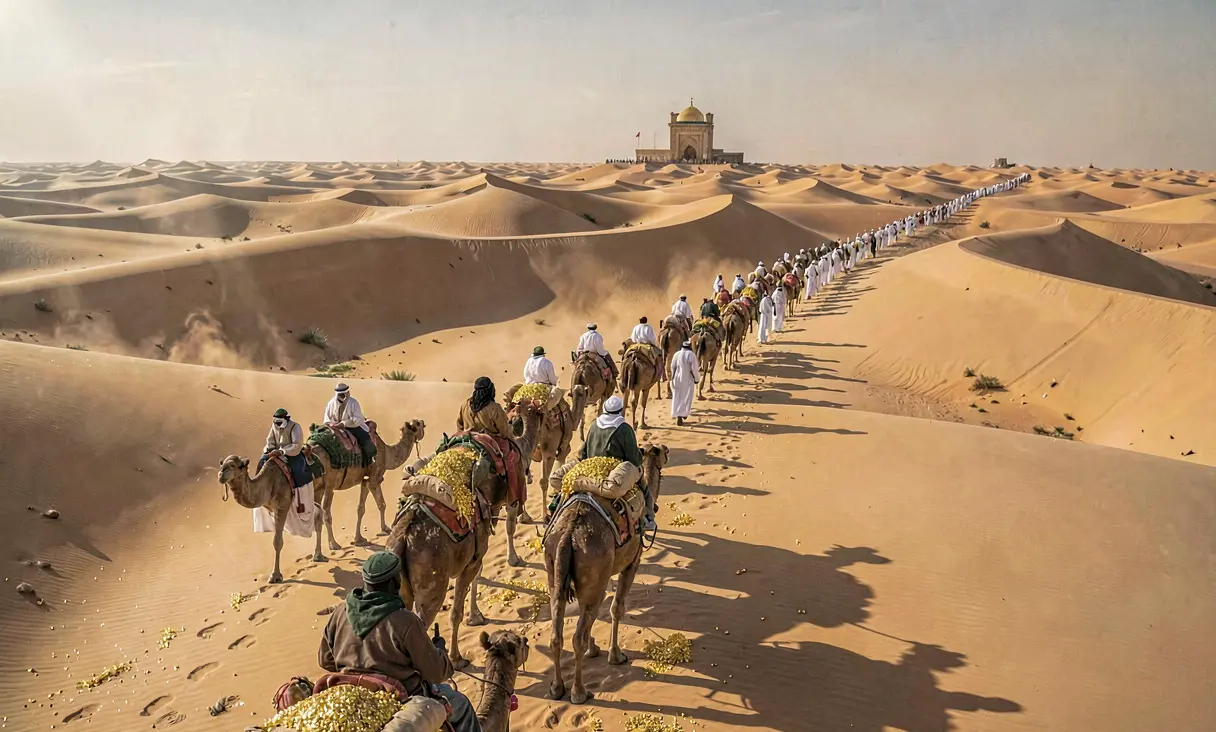
Around 1497 CE, Askia Muhammad assembled one of the most formidable caravans in African history. Contemporary Arab chroniclers, including al-Sadi and Ibn Khaldun's successors, estimated the procession at approximately 600,000 souls, a figure that likely encompasses the core military guard, administrative entourage, servants, and the vast logistical support required to sustain such a journey across the Sahara. The caravan departed from Gao, the imperial capital, laden with tons of pure gold dust—the empire's primary export—which was intended as tribute and currency for trade along the route. This display of wealth was calculated; it signaled to North African powers that Songhai possessed resources rivalling those of Egypt or Persia, fundamentally altering the geopolitical perception of Sub-Saharan Africa.
Diplomacy in Cairo and Recognition in Medina
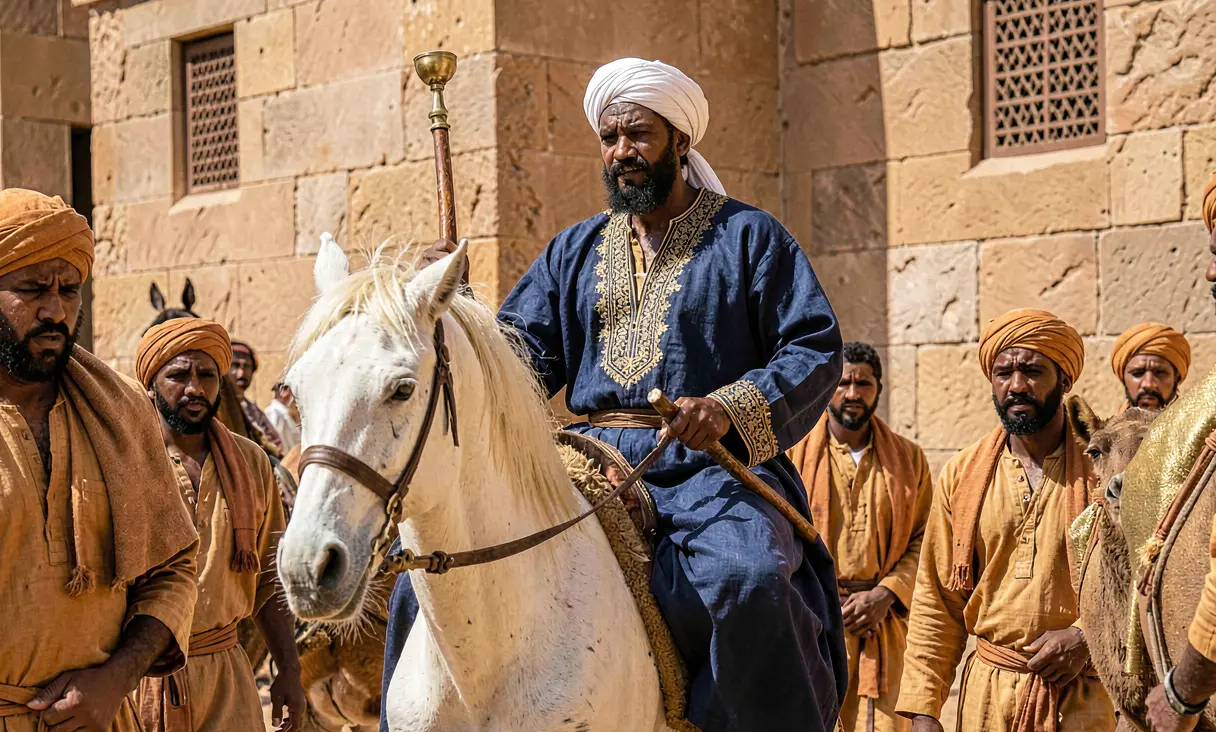
The journey traversed the dangerous Sahara Desert before arriving in Cairo, then under the rule of the Mamluk Sultan Qansuh al-Ghuri. Here, Askia did not merely pass through; he engaged in high-stakes diplomacy. He presented lavish gifts to the Sultan and was received with the honors due a sovereign monarch. However, his most significant achievement occurred upon reaching Medina. There, the renowned scholar and jurist Abu Abdallah al-Suyuti, acting as a representative of the broader Islamic scholarly community, formally recognized Askia Muhammad as the 'Caliph of the Sudan.' This title granted him religious authority over the Muslim communities in West Africa, effectively making him the spiritual head of the region independent of any North African or Middle Eastern overlord. It was a diplomatic masterstroke that elevated Songhai from a regional kingdom to a recognized caliphate.
The Return: Architects, Scholars, and Books
Askia's return journey in 1498 or early 1499 was as transformative as his departure. He did not travel alone; he brought back a retinue of experts who would reshape the cultural landscape of West Africa. Among them were architects from Egypt and the Maghreb, including the famous Andalusian poet-architect Abu Ishaq al-Sahili (though some historical debate exists regarding his specific arrival date relative to Askia's return), who introduced new architectural techniques that defined the Sudano-Sahelian style. He also recruited judges (qadis) trained in Maliki jurisprudence to standardize Islamic law across the empire and loaded his caravans with thousands of manuscripts on theology, astronomy, medicine, and law. These texts became the foundation for the libraries of Timbuktu, turning the city into a premier center of learning comparable to those in Cairo or Cordoba.
Consolidation of Empire and Intellectual Flourishing
Upon his return, Askia Muhammad immediately leveraged his new religious status to reorganize the Songhai state. He established a centralized bureaucracy staffed by loyalists and foreign experts, standardizing weights, measures, and trade regulations to facilitate commerce with North Africa and Europe. The influx of scholars led to an intellectual golden age in Timbuktu, where universities like Sankore thrived, attracting students from across the Muslim world. This period marked a shift from oral tradition to a literate society deeply integrated into global Islamic networks. The empire's stability allowed trade routes to flourish, with gold, salt, and kola nuts moving more freely than ever before, cementing Songhai's economic dominance for nearly a century.
Legacy of the Pilgrimage
The pilgrimage of Askia Muhammad I remains a defining moment in African history, symbolizing the maturity and sophistication of pre-colonial West African states. It shattered the notion that Sub-Saharan Africa was isolated from global currents, proving instead that it could project power, wealth, and religious authority on an international stage. The diplomatic ties established during this journey facilitated centuries of cultural exchange between the Maghreb and the Sudan. Although the Songhai Empire eventually fell to Moroccan invasion in 1591, the intellectual and legal frameworks established by Askia endured, influencing the region's Islamic identity long after the empire's collapse. His Hajj stands as a testament to the era when West Africa was a beacon of civilization and a crucial node in the global economy.
Elevated West Africa to prominence within the Islamic world and facilitated the exchange of knowledge and culture.
Where it happened
Mecca (via Gao) — see it on the interactive map →
Explore related history
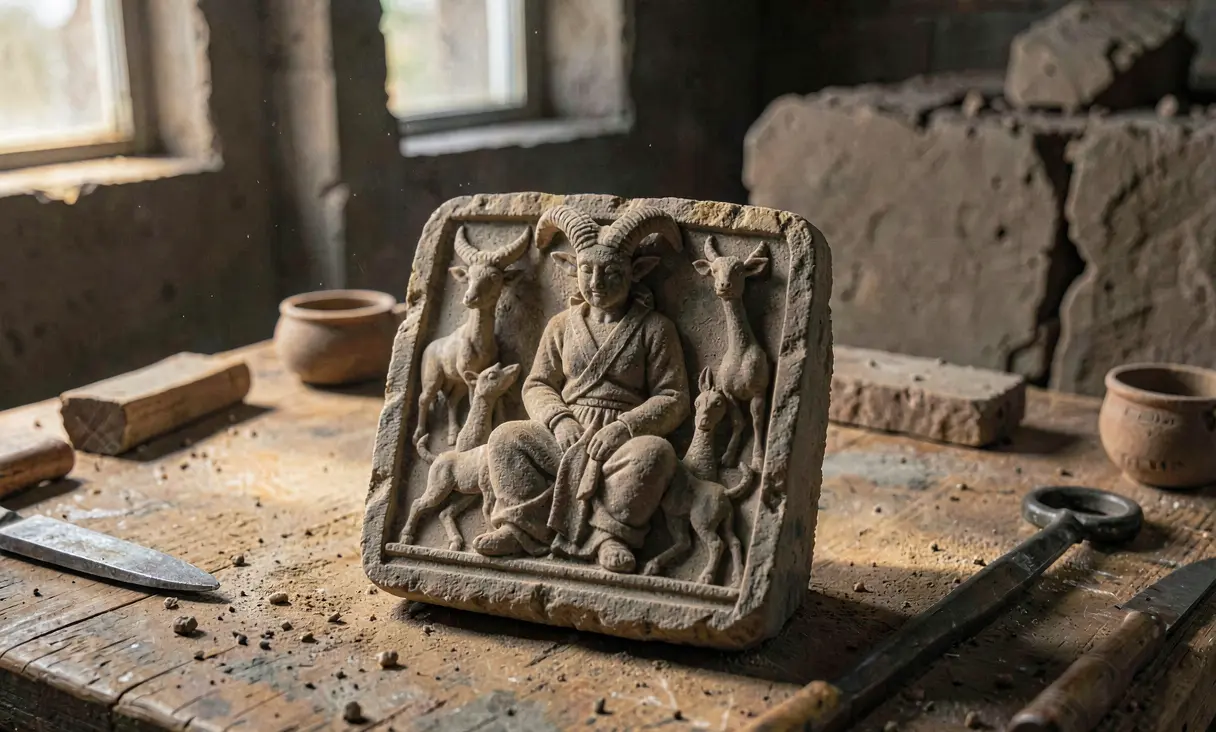 ReligionDiscovery of the Pashupati Sealc. 2500 BCE · Mohenjo-daro, Indus Valley (modern Pakistan)The Pashupati seal is carved, depicting a seated figure surrounded by animals, likely an early prototype of the Hindu god Shiva.
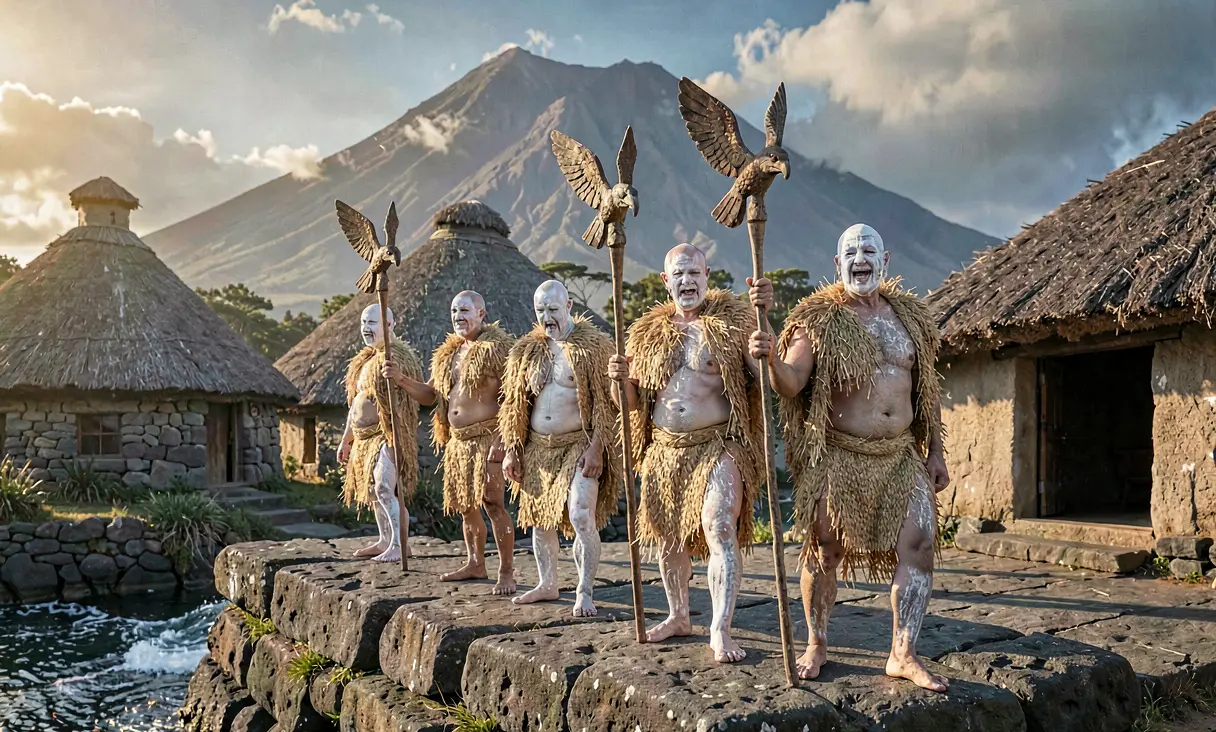 ReligionRise of the Birdman Cult on Rapa Nuic. 1600 CE · Orongo, Rapa NuiThe Birdman cult replaces moai worship as the central religious and political institution on Rapa Nui.
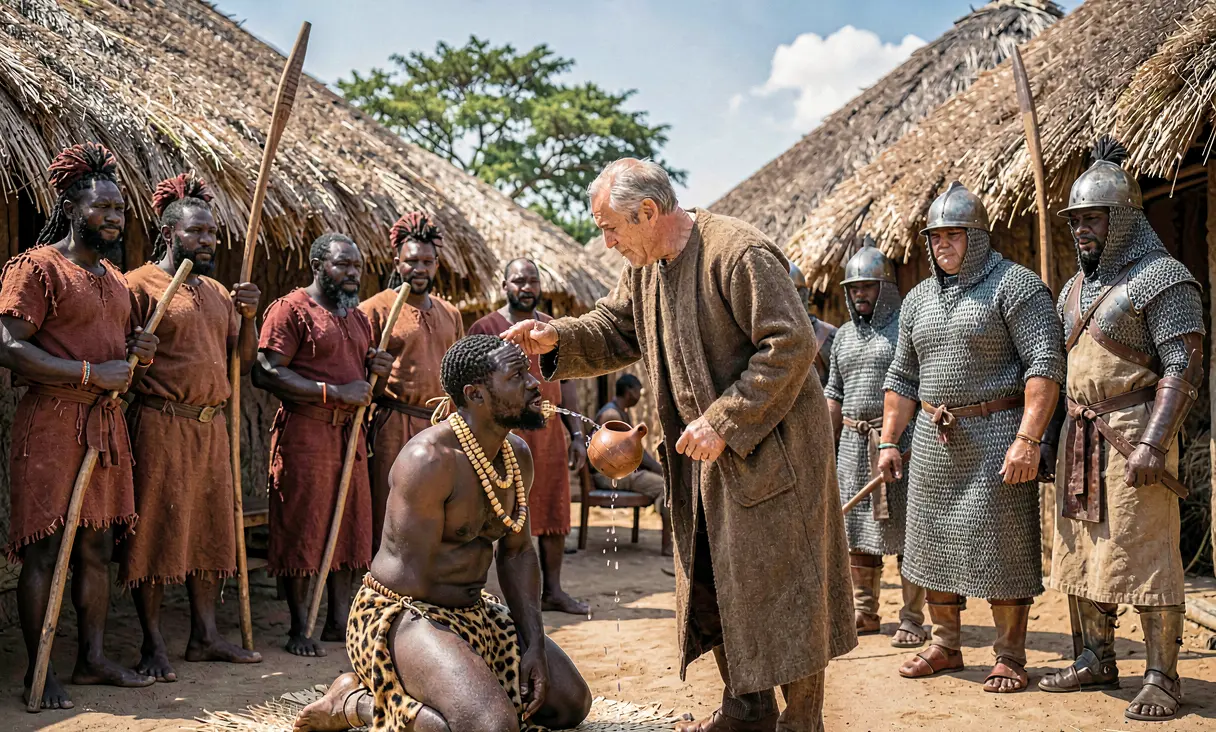 ReligionKing Nzinga a Nkuwu Baptized as João I of Kongo1491 CE · Mbanza Kongo, AngolaKing Nzinga a Nkuwu converts to Catholicism, initiating a complex fusion of Christian and traditional Kongo beliefs.
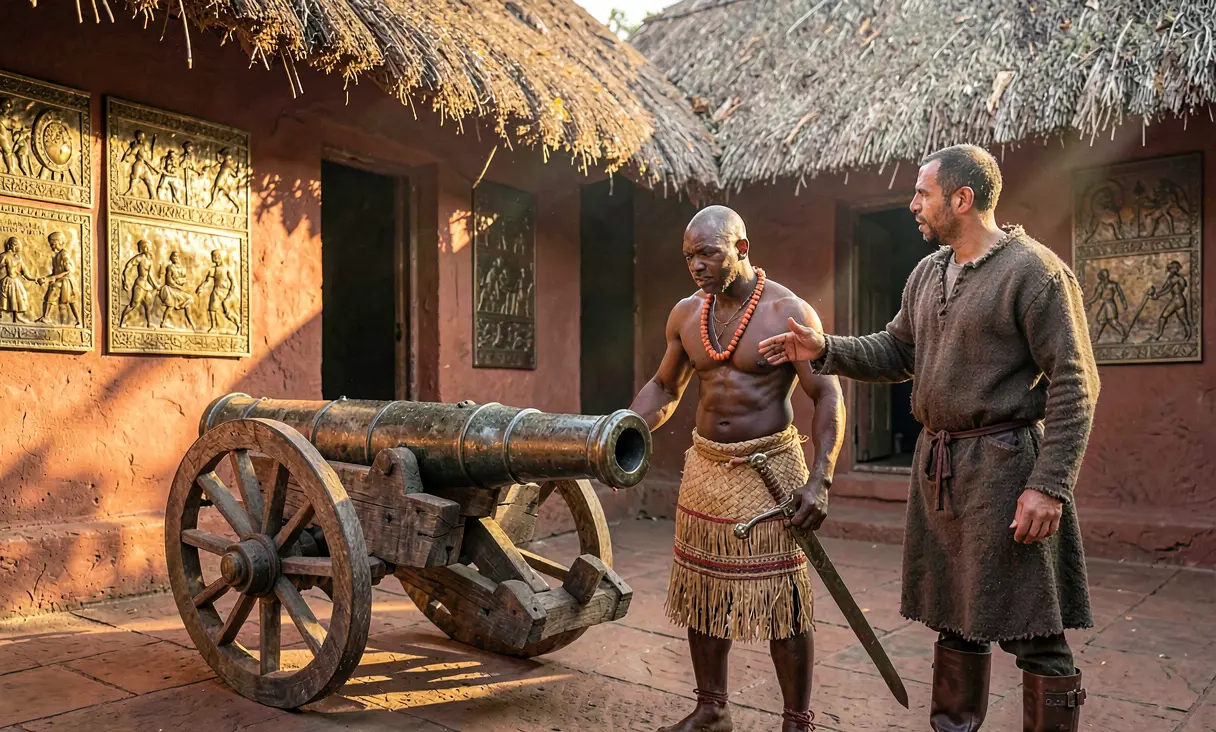 TechnologyBenin Acquires Cannon Technology from Portugalc. 1500 CE · Benin City, NigeriaThe Kingdom of Benin integrates Portuguese cannon technology into its military arsenals.
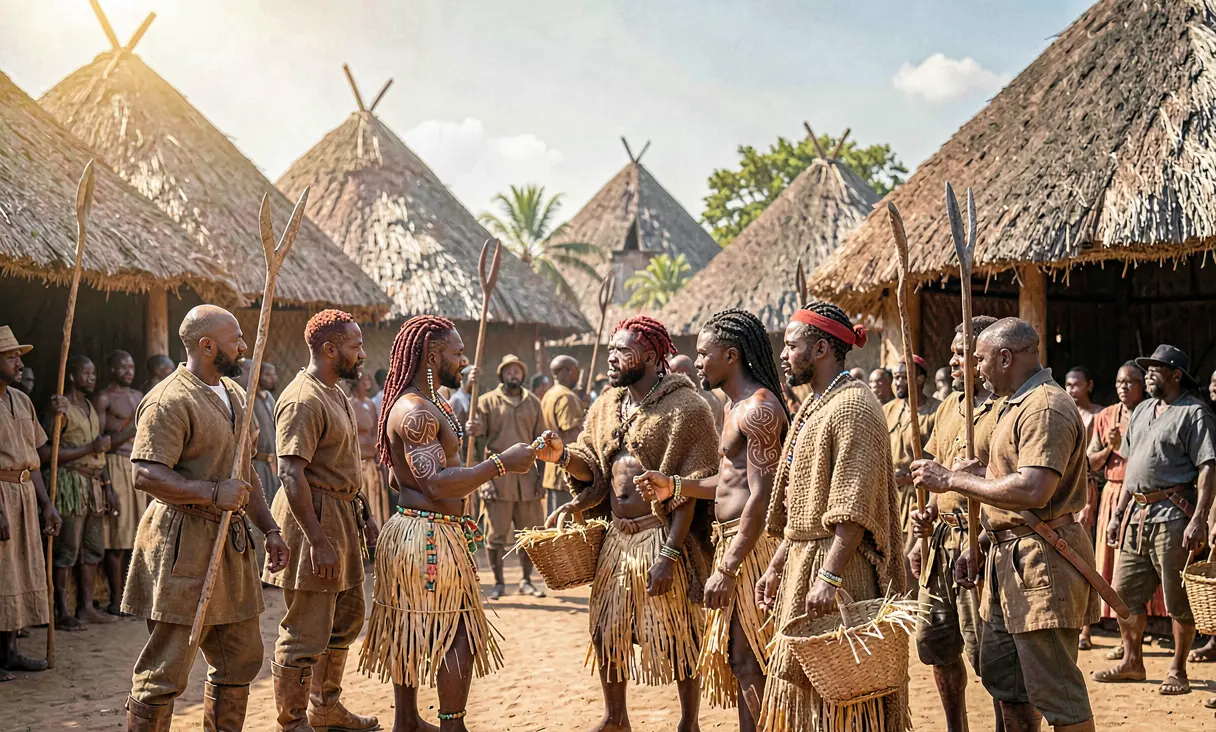 PoliticsKingdom of Kongo Engages in Large-Scale Slave Tradec. 1500 CE · Mbanza Kongo, AngolaThe Kingdom of Kongo begins exporting significant numbers of captives to Portuguese traders in exchange for goods.
 TechnologyCompletion of the Qhapaq Ñan Road Networkc. 1500 CE · Andes Mountains (Various), Peru/ChileThe Inca finalize the vast road system connecting their empire.
Discussion
Loading…