Completion of Sistine Chapel Ceiling
In 1512, Michelangelo unveiled his monumental Sistine Chapel ceiling, revolutionizing Western art by fusing theological depth with dynamic humanism to define the High Renaissance.
A Reluctant Visionary
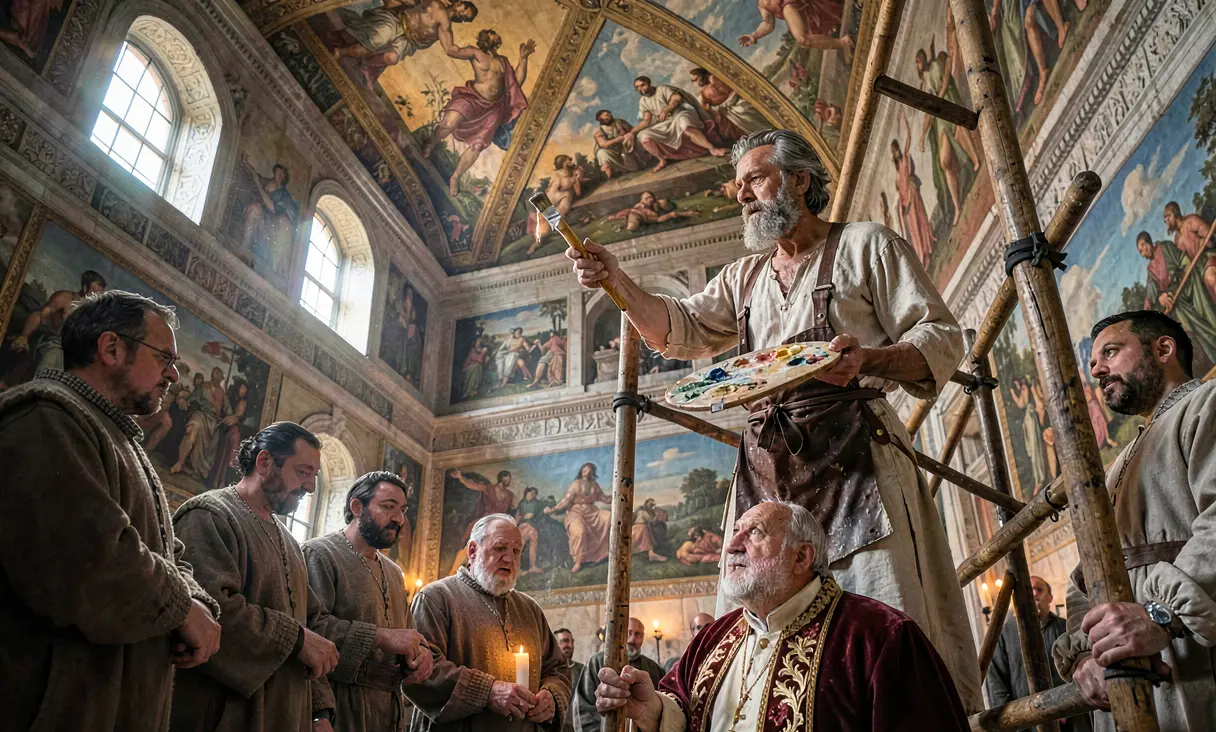
By the early 16th century, Michelangelo Buonarroti had already established himself as a sculptor of unparalleled genius, renowned for works like the Pietà and David. However, he viewed painting with skepticism, considering it a lesser art form compared to sculpture. In 1508, Pope Julius II, known as the 'Warrior Pope,' summoned Michelangelo to Rome under duress to undertake a monumental task: decorating the ceiling of the Sistine Chapel. The project was initially conceived by Bramante and Raphael as a series of geometric patterns with apostles in the lunettes, but Michelangelo, leveraging his artistic autonomy, convinced the Pope to allow him complete creative freedom. He proposed a complex theological narrative spanning from the Creation to the Fall of Man, a scheme that would require years of grueling labor on scaffolding erected high above the chapel floor.
The Architecture of Scaffolding and Stone
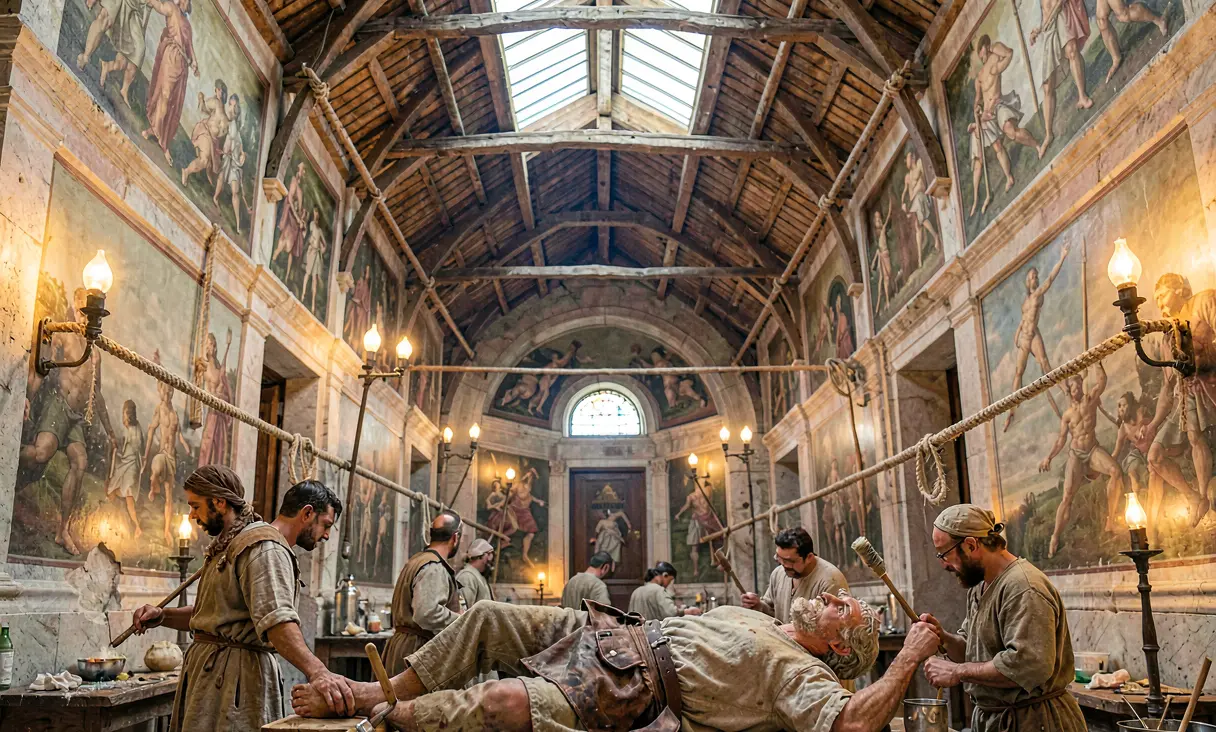
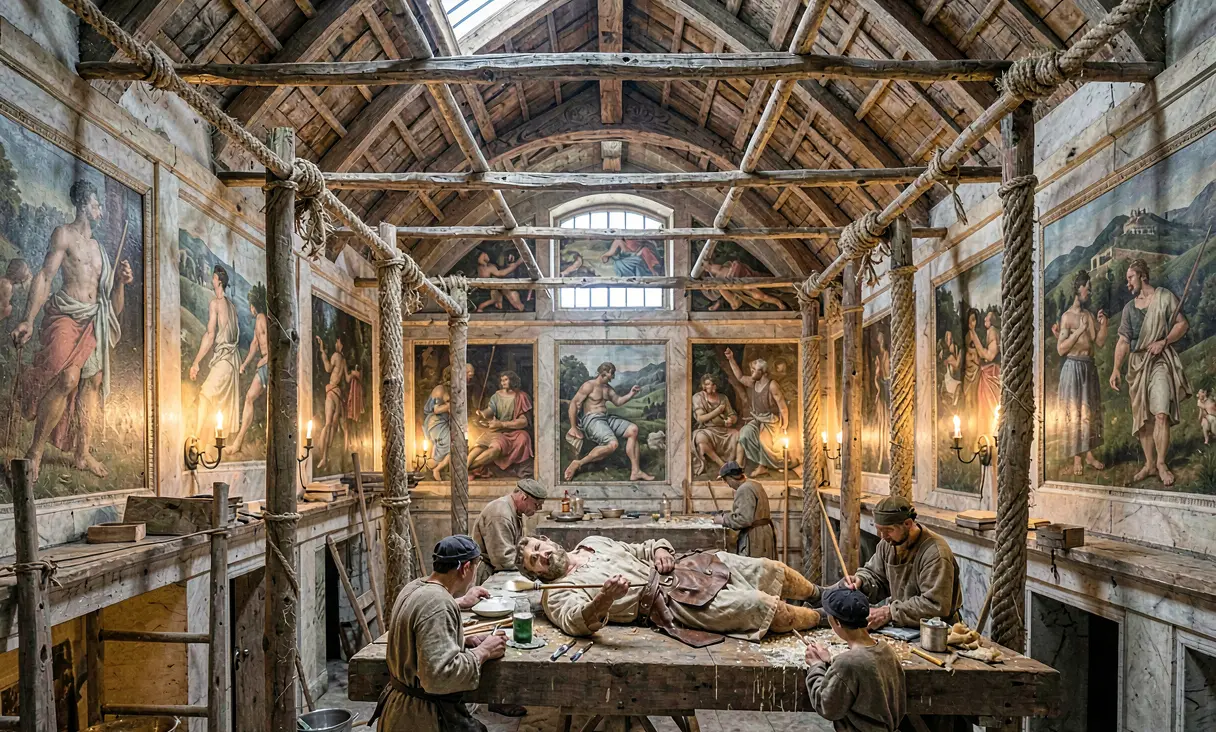
The physical execution of the ceiling was an engineering marvel in itself. Michelangelo designed a unique system of wooden scaffolding that did not rest on the chapel floor but was suspended from brackets inserted into the walls near the top, allowing workers to move freely beneath without obstructing the liturgical functions below. For nearly four years, from 1508 to 1512, Michelangelo worked in a posture that defied human comfort, often lying supine or craning his neck upward for hours on end. The physical toll was immense; he later wrote of his beard pointing toward heaven and his spine bent into a bow. Despite the presence of assistants like Francesco Granacci and Giuliano Bugiardini, Michelangelo dismissed them as he grew more confident in his vision, eventually painting the vast majority of the 5,000 square feet of frescoes almost single-handedly.
The Unveiling of Divine Narrative
On October 31, 1512, just in time for All Saints' Day, Pope Julius II officially opened the Sistine Chapel to the public, revealing the completed ceiling. The work was a shock to the contemporary eye, departing radically from the static, hierarchical compositions of previous centuries. At the center lay nine scenes from Genesis, divided into three groups: the Creation of the Heavens and Earth, the Creation of Adam and Eve and their Expulsion, and the story of Noah. These central panels were framed by ignudi (nude male figures), sibyls, prophets, and the ancestors of Christ. The most celebrated panel, the Creation of Adam, depicted God and man reaching toward one another in a charged moment of potential, capturing the spark of life with unprecedented dynamism. The color palette, utilizing vibrant blues, greens, and ochres, was designed to be seen from 60 feet below, employing *sfumato* and foreshortening to create a sense of three-dimensional depth.
Theological Complexity and Humanism
Michelangelo's masterpiece was not merely decorative; it was a profound synthesis of Christian theology and Renaissance humanism. The iconography drew from the Bible, but also from Neoplatonic philosophy, suggesting that the human soul could ascend to the divine through intellectual and spiritual striving. The figures themselves were monumental, possessing a muscular, heroic physicality that reflected Michelangelo's belief in the divine nature of the human form. Prophets like Jeremiah and Jonah are depicted not as distant saints but as brooding, emotional beings grappling with their destiny. This infusion of intense human emotion into sacred subjects marked a departure from medieval rigidity, asserting that the divine could be understood through the lens of human experience and physical beauty.
Immediate Impact and Artistic Revolution
The unveiling in 1512 sent shockwaves through the artistic community of Rome. Artists who had previously admired Raphael's harmonious style were now captivated by Michelangelo's 'terribilità'—an awesome, terrifying power that conveyed divine energy. The ceiling effectively redefined the boundaries of fresco painting, proving it could rival sculpture in its ability to convey movement and volume. Within months, Raphael was compelled to alter his own style, incorporating more dynamic poses and dramatic lighting into his subsequent works in the Vatican Stanze. Michelangelo had set a new standard for artistic ambition, challenging all who followed to match his synthesis of technical mastery and intellectual depth.
A Legacy Spanning Centuries
The Sistine Chapel ceiling remains the definitive symbol of the High Renaissance. Its influence permeated Mannerism, Baroque art, and beyond, serving as a primary reference point for artists from Titian to Rubens. In 1542, Michelangelo returned to the chapel to paint The Last Judgment on the altar wall, further cementing his legacy within the sacred space. Today, despite centuries of candle soot and environmental damage that were only partially remedied by a controversial restoration completed in 1989, the ceiling continues to draw millions of visitors annually. It stands as a testament to human potential, representing the pinnacle of Western art history where the boundaries between the earthly and the divine are dissolved through sheer artistic will.
It represents a pinnacle of Western art history and religious iconography.
Where it happened
Vatican City, Italy — see it on the interactive map →
Explore related history
 ArtPainting of the Mona Lisac. 1503 CE · Florence, ItalyLeonardo da Vinci creates the most famous portrait using sfumato technique.
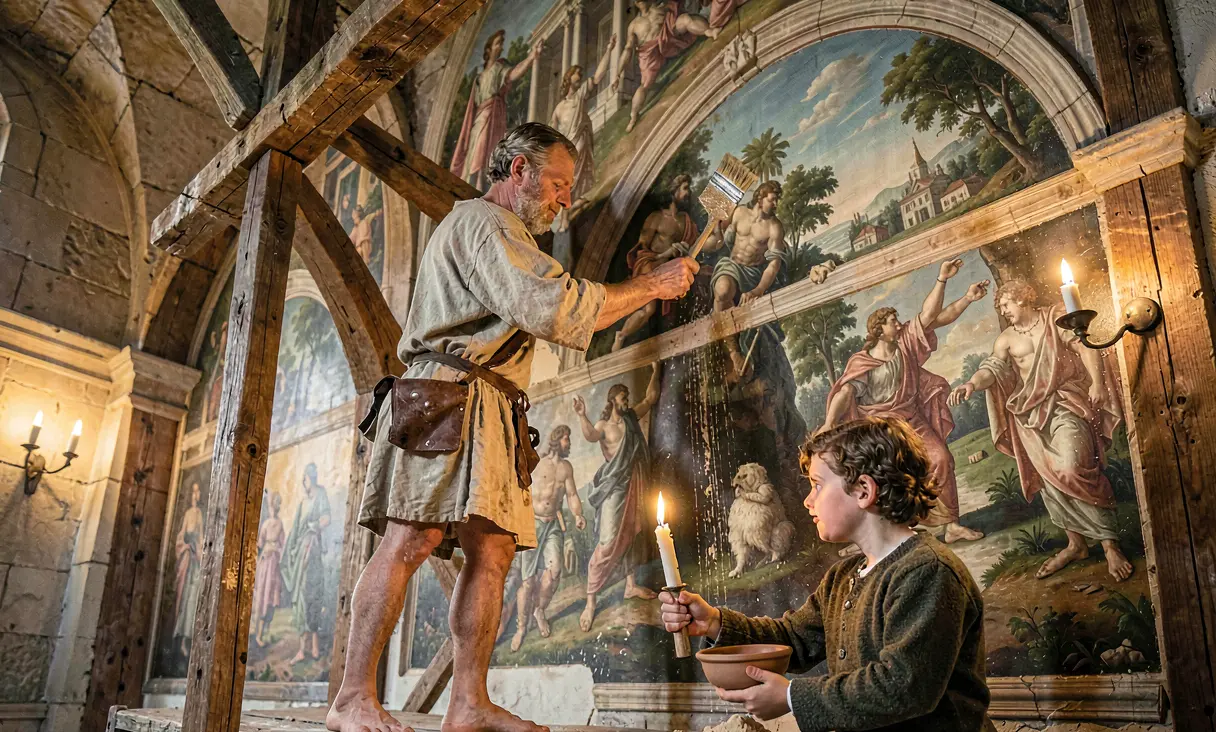 ArtMichelangelo Completes the Sistine Chapel CeilingOctober 31, 1512 · Vatican City, RomeMichelangelo finishes the monumental fresco cycle depicting Genesis.
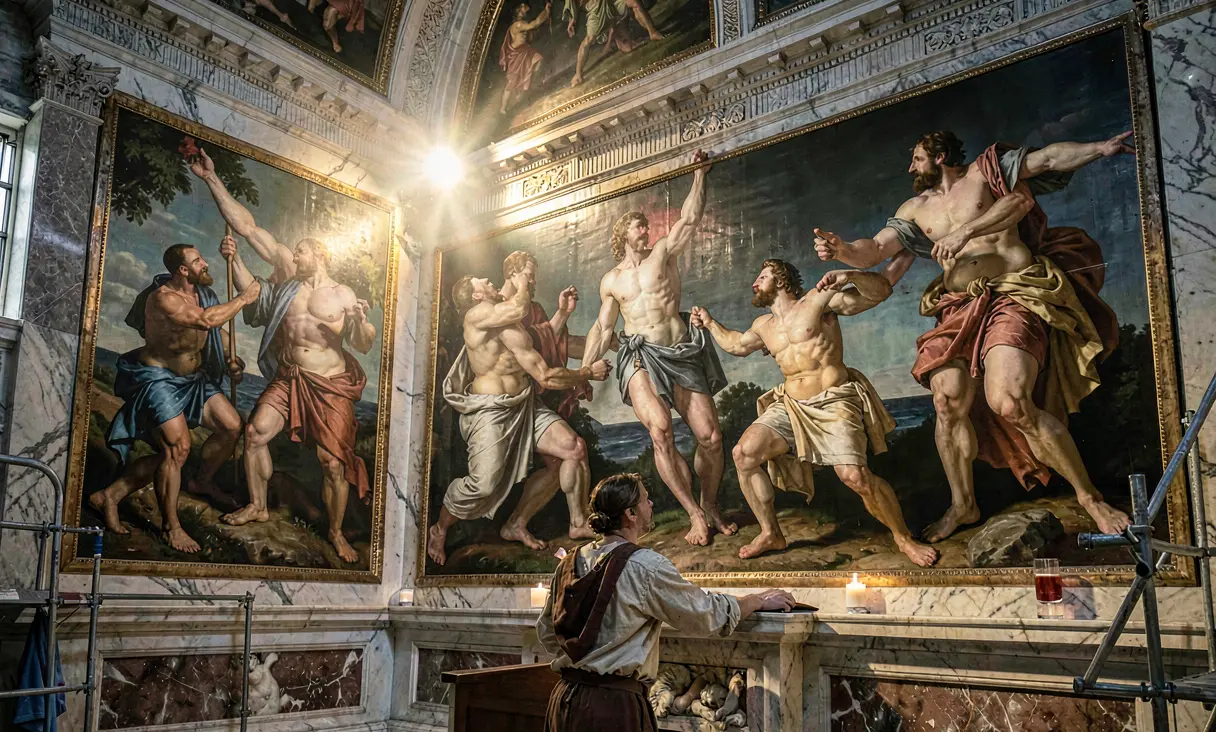 ArtMichelangelo Paints the Last JudgmentNovember 1541 · Vatican City, RomeMichelangelo completes the massive fresco on the altar wall of the Sistine Chapel.
 ReligionLuther Posts Ninety-Five ThesesOctober 31, 1517 CE · Wittenberg, GermanyMartin Luther challenges Catholic Church practices sparking the Protestant Reformation.
 TechnologyIntroduction of the Tomato to Europec. 1520 CE · Rome, ItalyTomatoes arrive in Europe from the Americas, revolutionizing global cuisine.
 ExplorationMagellan's Circumnavigation CompletedSeptember 6, 1522 CE · Seville, SpainFirst expedition sails around the globe proving Earth is round and vast.
Discussion
Loading…