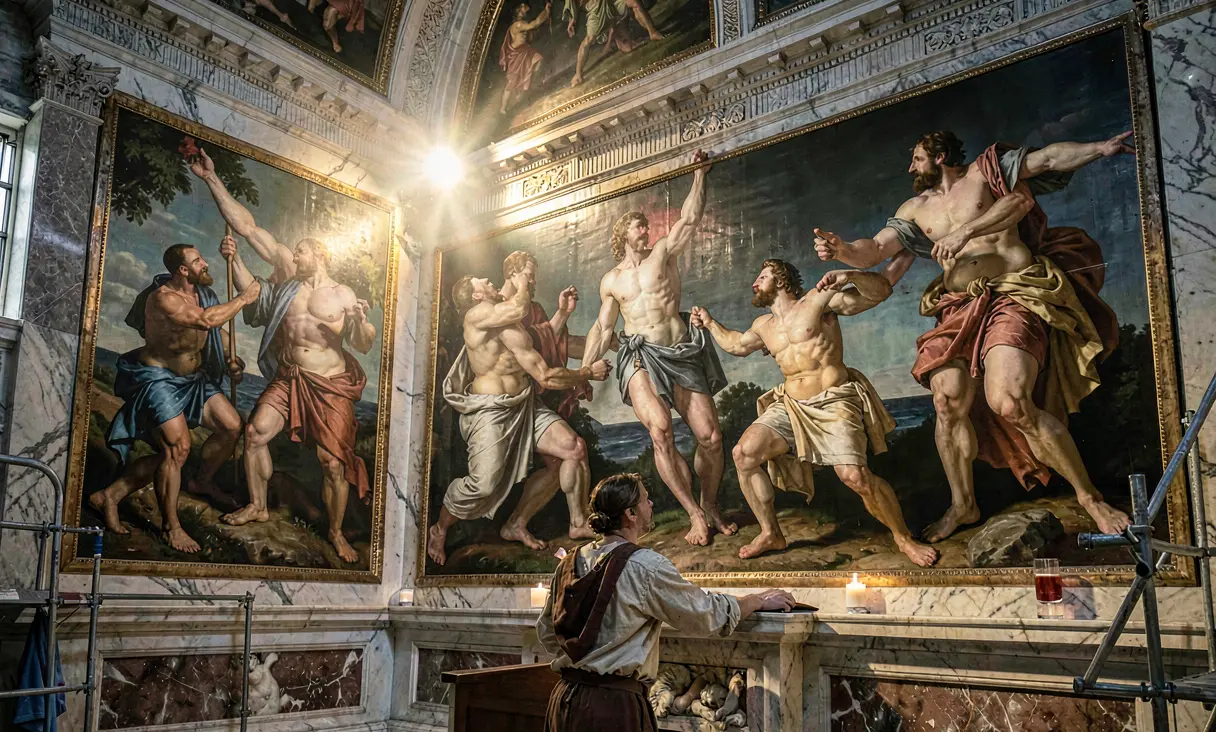
Michelangelo Paints the Last Judgment
In November 1541, Michelangelo unveiled his controversial fresco of Christ's final judgment on the Sistine Chapel altar wall, redefining religious art through dynamic Mannerism and sparking centuries
A Papal Commission Amidst Turmoil
By the early 1530s, the Sistine Chapel's altar wall in Vatican City remained a blank expanse of plaster, a stark contrast to the celestial grandeur Michelangelo Buonarroti had painted on its ceiling two decades prior. The political and religious landscape of Rome was shifting violently; the Sack of Rome in 1527 had left deep scars on the city's psyche, and the Protestant Reformation was challenging the very foundations of Catholic doctrine. Pope Paul III Farnese, seeking to reassert the authority and spiritual vitality of the Church, commissioned Michelangelo to depict the ultimate divine reckoning. Unlike the orderly narrative of Genesis above, this new commission demanded a visual theology that addressed the anxieties of an era defined by heresy and the need for reform.
The Vision of the Beardless Judge
Michelangelo approached the massive fresco with a radical departure from traditional iconography. Central to *The Last Judgment* is Christ, depicted not as the suffering Savior or the benevolent King, but as a muscular, beardless judge in a dynamic, twisting pose reminiscent of classical antiquity rather than Byzantine tradition. His raised hand signals condemnation while his lowered arm invites the saved toward heaven, creating a centrifugal force that pulls the viewer's eye through the chaotic composition. Surrounding him is a host of saints and apostles, including St. Bartholomew holding his own flayed skin—a grotesque self-portrait by Michelangelo—emphasizing the physicality of martyrdom and the artist's own spiritual introspection.
Chaos, Nudity, and the Counter-Reformation
The fresco is a swirling vortex of over 300 figures, devoid of architectural framing or the serene horizons typical of High Renaissance art. Instead, Michelangelo utilized a Mannerist aesthetic characterized by elongated limbs, contorted poses, and a lack of clear spatial logic to convey the terror and confusion of the final day. The work is infamous for its extensive nudity; nearly every figure, from the blessed in heaven to the damned in hell, is depicted without clothing. This artistic choice was intended to reflect the state of souls stripped of earthly sin before God, yet it immediately clashed with the growing prudery of the Counter-Reformation, setting the stage for immediate and fierce controversy upon its unveiling.
Unveiling and Immediate Controversy
The mural was unveiled on All Souls' Day, November 1, 1541, to a stunned congregation that included Pope Paul III himself. While many recognized the sheer technical mastery and emotional power of the work, others were horrified by the explicit nudity. Biographer Giorgio Vasari praised the work as 'the lamp of our art,' yet critics like the papal master of ceremonies Biagio da Cesena famously declared it a disgraceful display for a holy place, comparing it to a bathhouse rather than a chapel. The controversy was so intense that within months of Michelangelo's death in 1564, Pope Pius IV commissioned Daniele da Volterra to paint drapery over the most offensive genitalia, earning him the derisive nickname 'Il Braghettone' (the breeches-maker).
The Enduring Legacy of a Masterpiece
Despite the centuries of censorship and restoration, *The Last Judgment* remains one of the most influential works in Western art history. It marked the definitive transition from the balanced harmony of the High Renaissance to the emotional intensity and complexity of Mannerism. The fresco influenced generations of artists, serving as a visual dictionary for depicting hell, resurrection, and divine wrath. Its presence on the altar wall fundamentally altered the liturgical experience of the Sistine Chapel, transforming it from a space of quiet contemplation into a theater of cosmic drama that confronted every visitor with the inescapable reality of judgment.
The Last Judgment stands as one of Michelangelo's final major works and a defining image of Catholic theology.
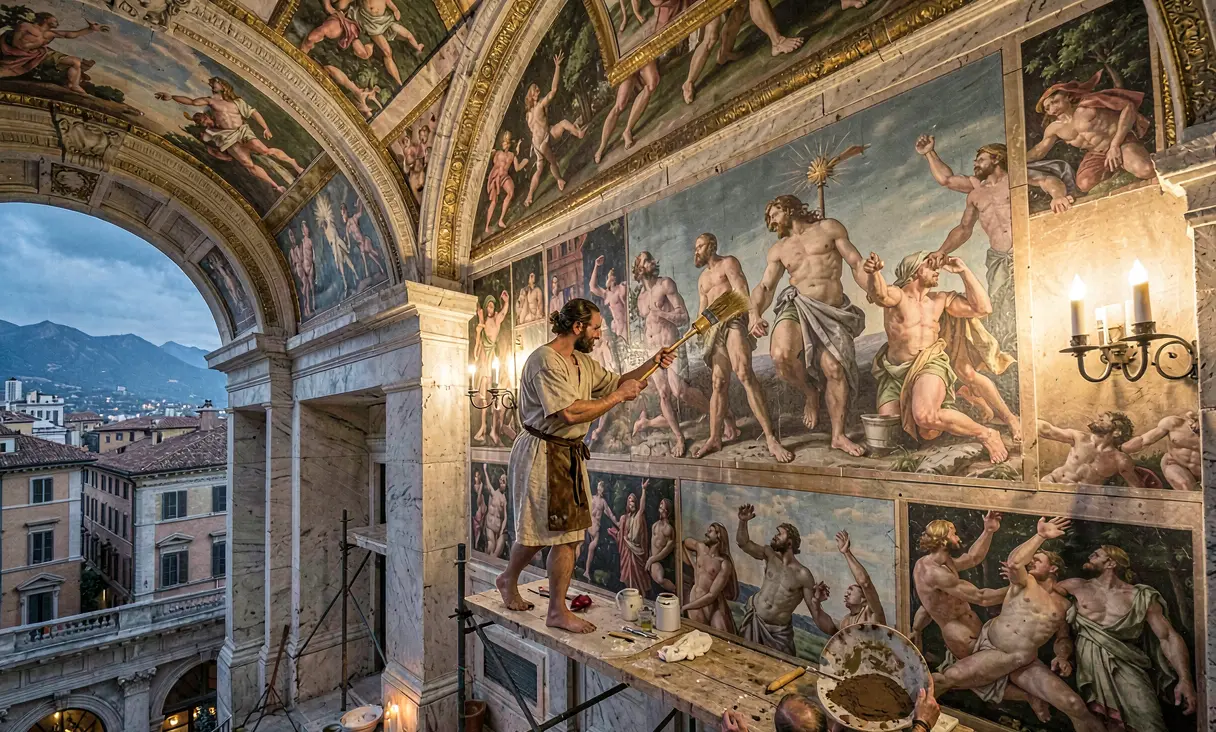
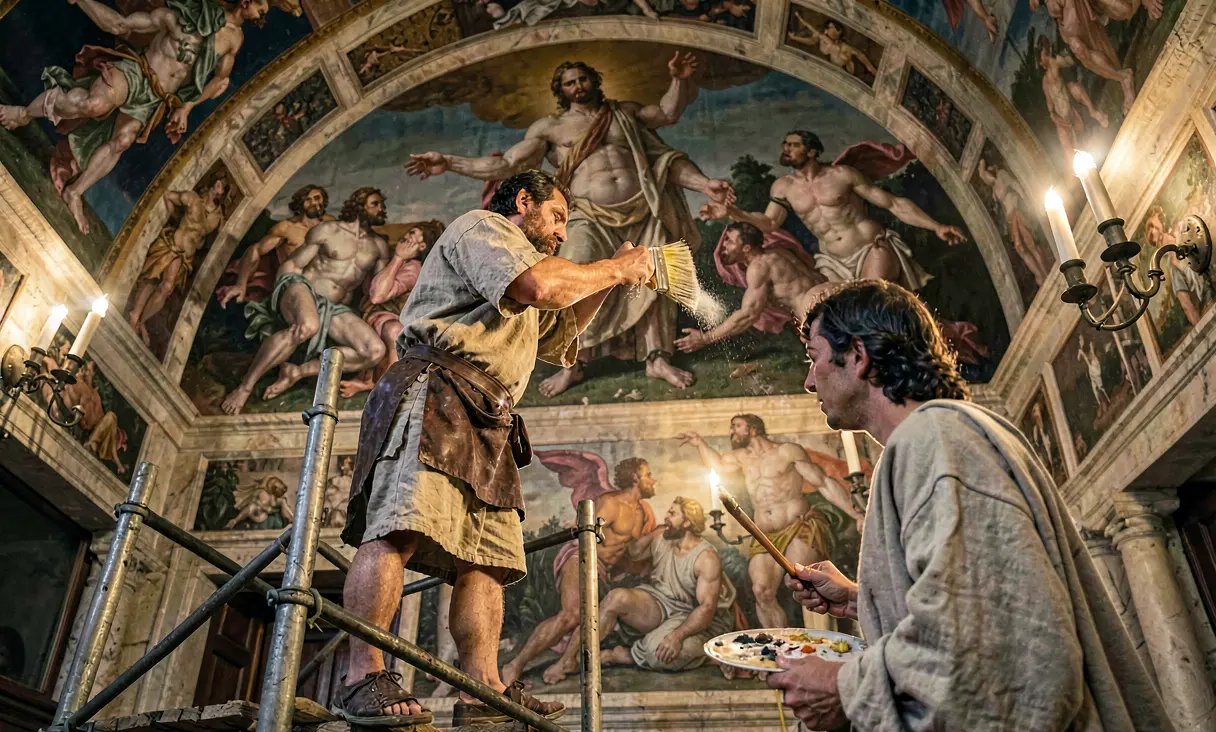
Where it happened
Vatican City, Rome — see it on the interactive map →
Explore related history
 ArtPainting of the Mona Lisac. 1503 CE · Florence, ItalyLeonardo da Vinci creates the most famous portrait using sfumato technique.
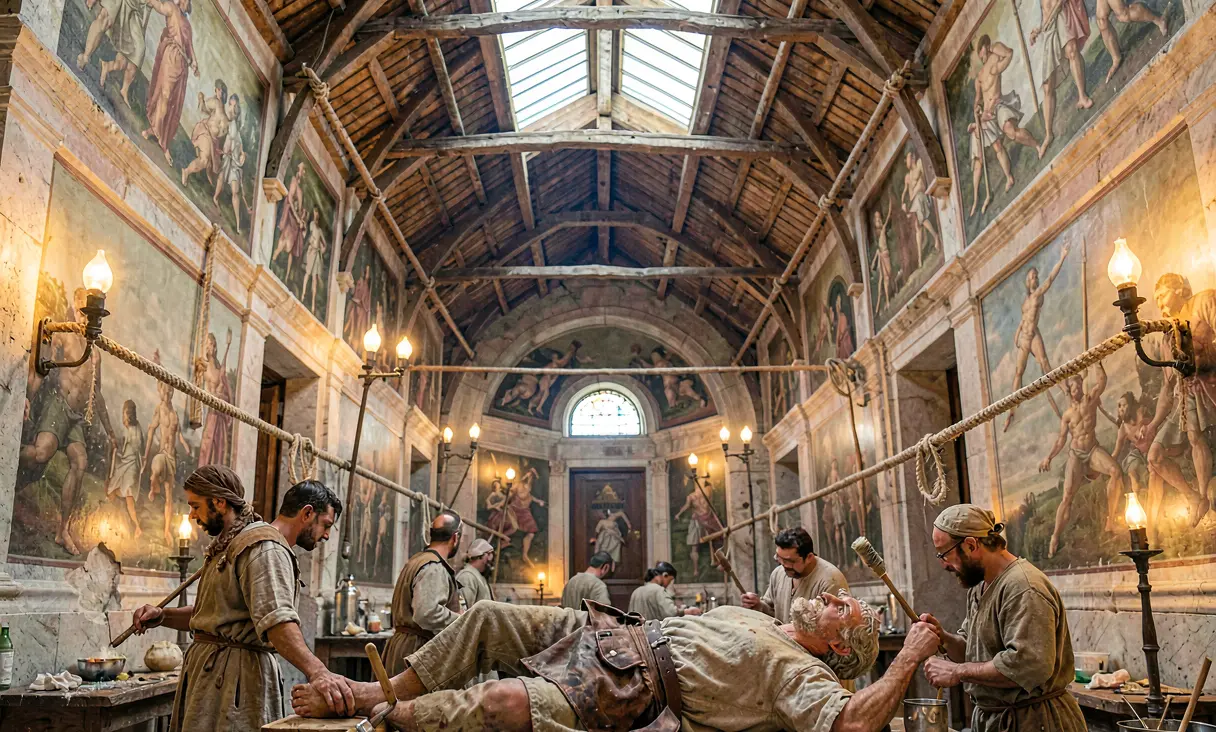 ArtCompletion of Sistine Chapel CeilingOctober 31, 1512 CE · Vatican City, ItalyMichelangelo finishes frescoes depicting Genesis scenes transforming Renaissance art.
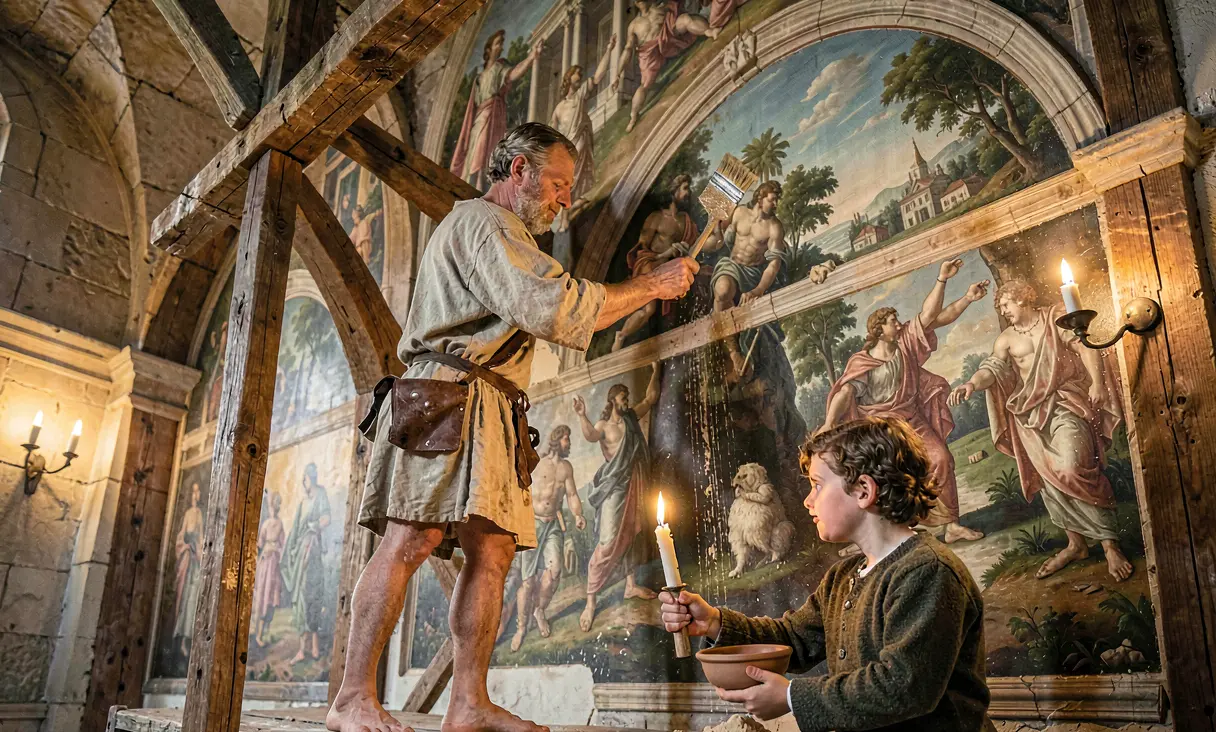 ArtMichelangelo Completes the Sistine Chapel CeilingOctober 31, 1512 · Vatican City, RomeMichelangelo finishes the monumental fresco cycle depicting Genesis.
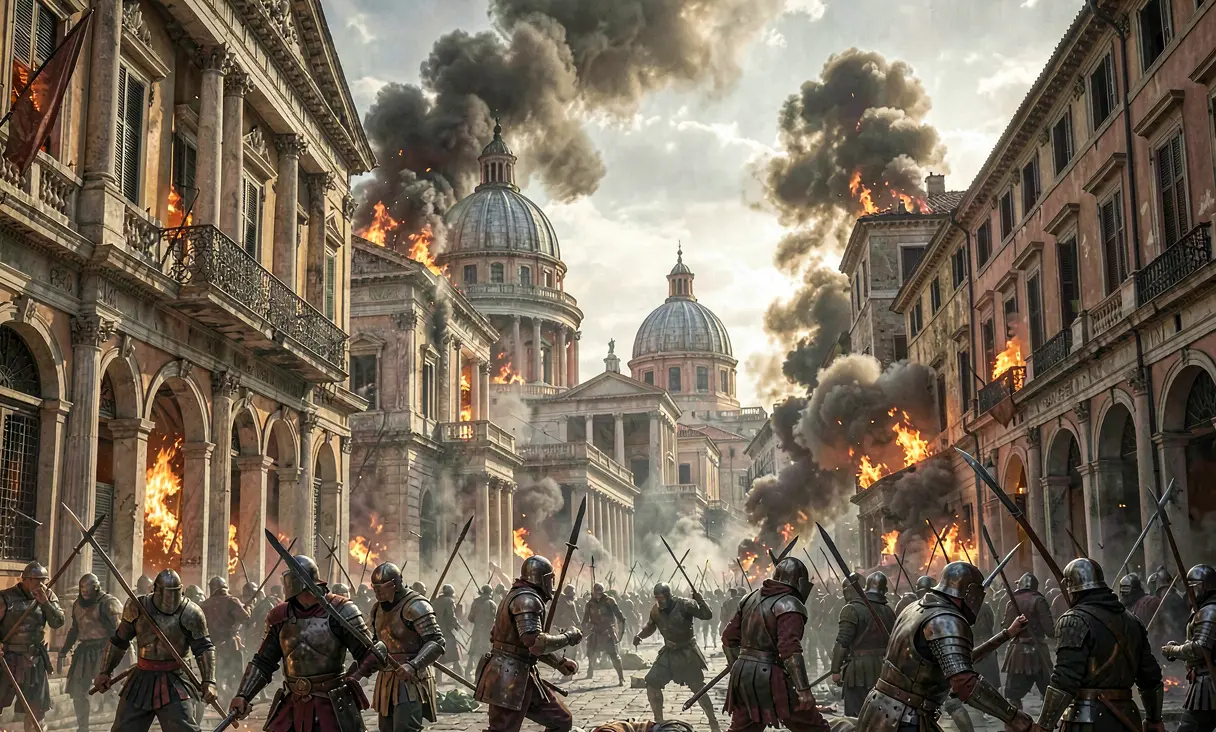 WarSack of RomeMay 6, 1527 · Rome, ItalyMutinous troops of Charles V brutally loot Rome, ending the High Renaissance.
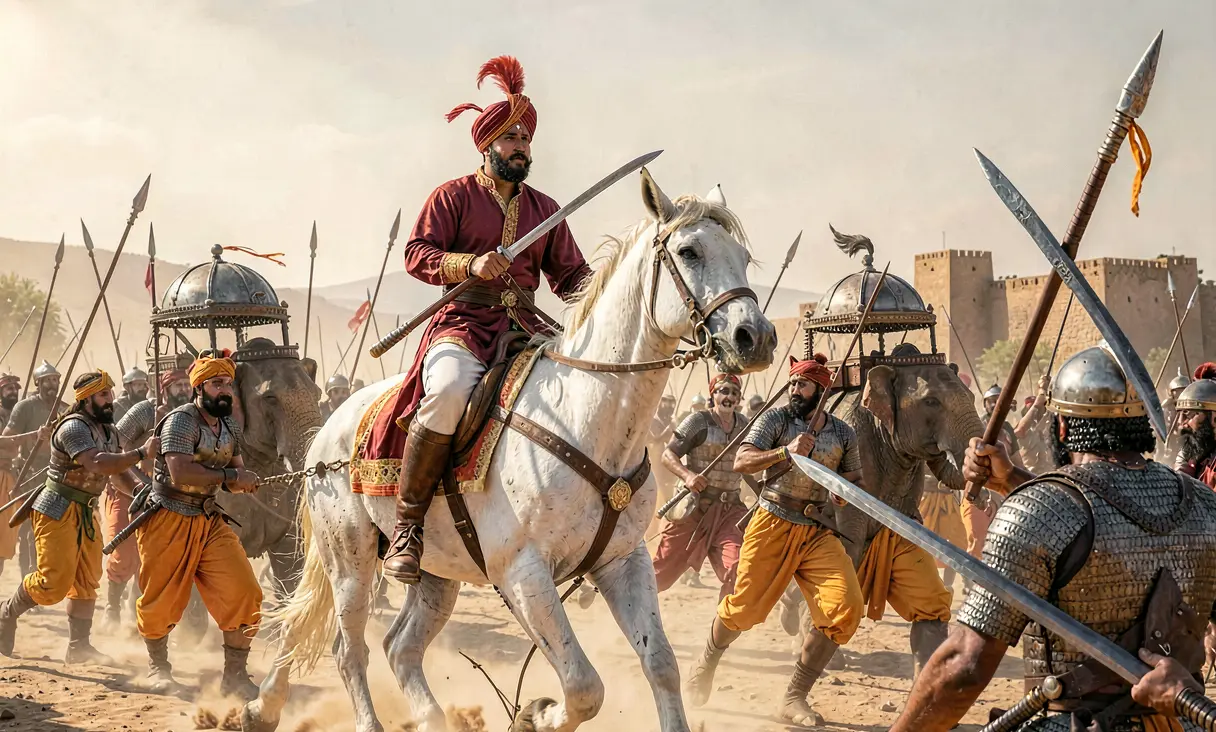 WarBabur's Victory at Khanwac. 1527 CE · Khanwa, Rajasthan, IndiaBabur defeats the Rajput confederacy led by Rana Sanga, consolidating Mughal rule over North India.
 WarBabur's Victory at Panipat and Founding of Mughalsc. 1526 CE · Panipat (modern Haryana/India)Babur defeats the Lodi Sultanate at the First Battle of Panipat, establishing the Mughal Empire in India.
Discussion
Loading…