Michelangelo Completes the Sistine Chapel Ceiling
In 1512, Michelangelo unveiled his Sistine Chapel ceiling, revolutionizing Western art with unprecedented anatomical mastery and theological depth, transforming him from a sculptor into a legendary pa
A Reluctant Master and a Pontifical Mandate
In the early 16th century, the High Renaissance was in full bloom, yet Michelangelo Buonarroti viewed himself primarily as a sculptor, not a painter. His reputation had been cemented by masterpieces such as the *David* and the *Pietà*, but Pope Julius II, known for his ambitious political and artistic vision, demanded more. In 1508, the Pope commissioned Michelangelo to repaint the ceiling of the Sistine Chapel, replacing a simple blue sky dotted with stars that had been painted by Piero Matteo d'Amelia decades earlier. The project was initially intended as a series of twelve apostles, but Michelangelo, seeking creative autonomy and driven by his own theological vision, proposed a far more complex scheme depicting the Creation, the Fall of Man, and the prophecy of redemption.
The Architecture of the Ceiling
The fresco cycle covers approximately 500 square meters (5,400 square feet) and is structurally divided by painted architectural elements that mimic a classical entablature. At the center lie nine scenes from the Book of Genesis, arranged chronologically from the altar to the entrance: *The Separation of Light from Darkness*, *The Creation of the Sun, Moon, and Plants*, *The Separation of Land and Water*, *The Creation of Adam*, *The Creation of Eve*, *The Temptation and Expulsion from Eden*, *The Sacrifice of Noah*, *The Great Flood*, and *The Drunkenness of Noah*. Flanking these central panels are twelve monumental figures—seven prophets of Israel and five sibyls of the pagan world—who foretold the coming of Christ. Below them, in the lunettes and spandrels, Michelangelo painted the ancestors of Christ, creating a continuous narrative thread that links the Old Testament to the lineage of Jesus.
Four Years on the Scaffold
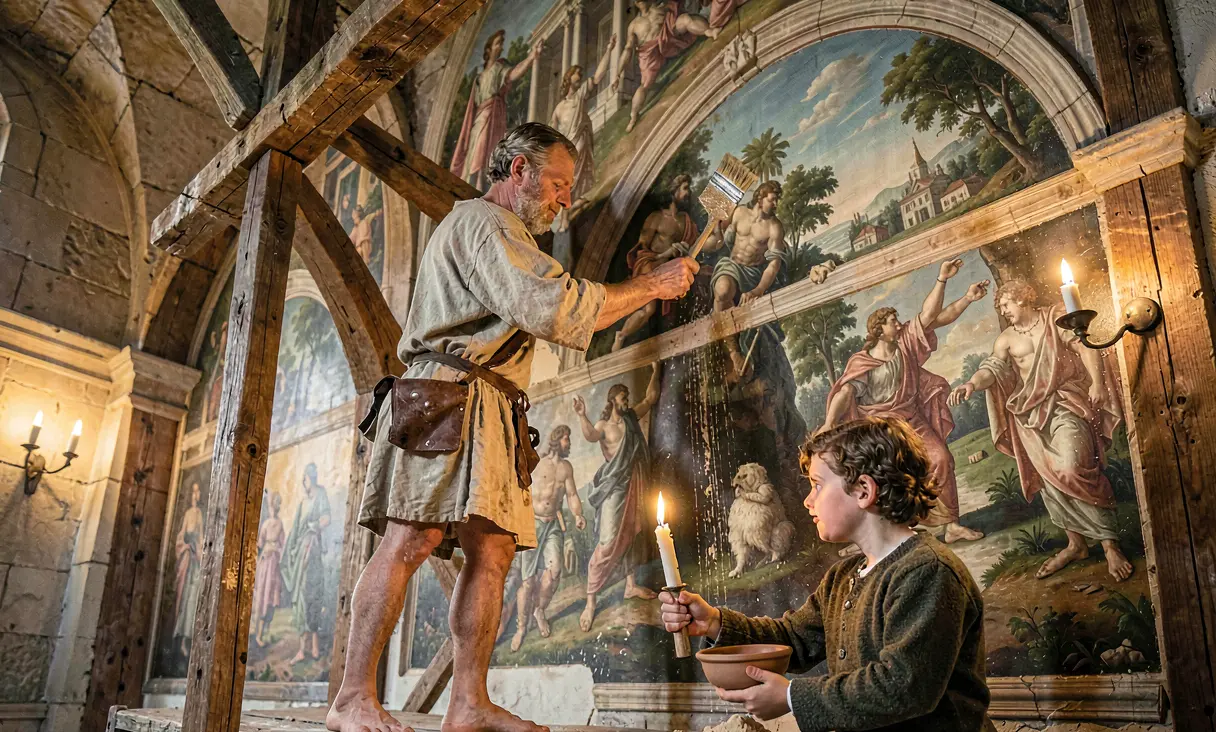
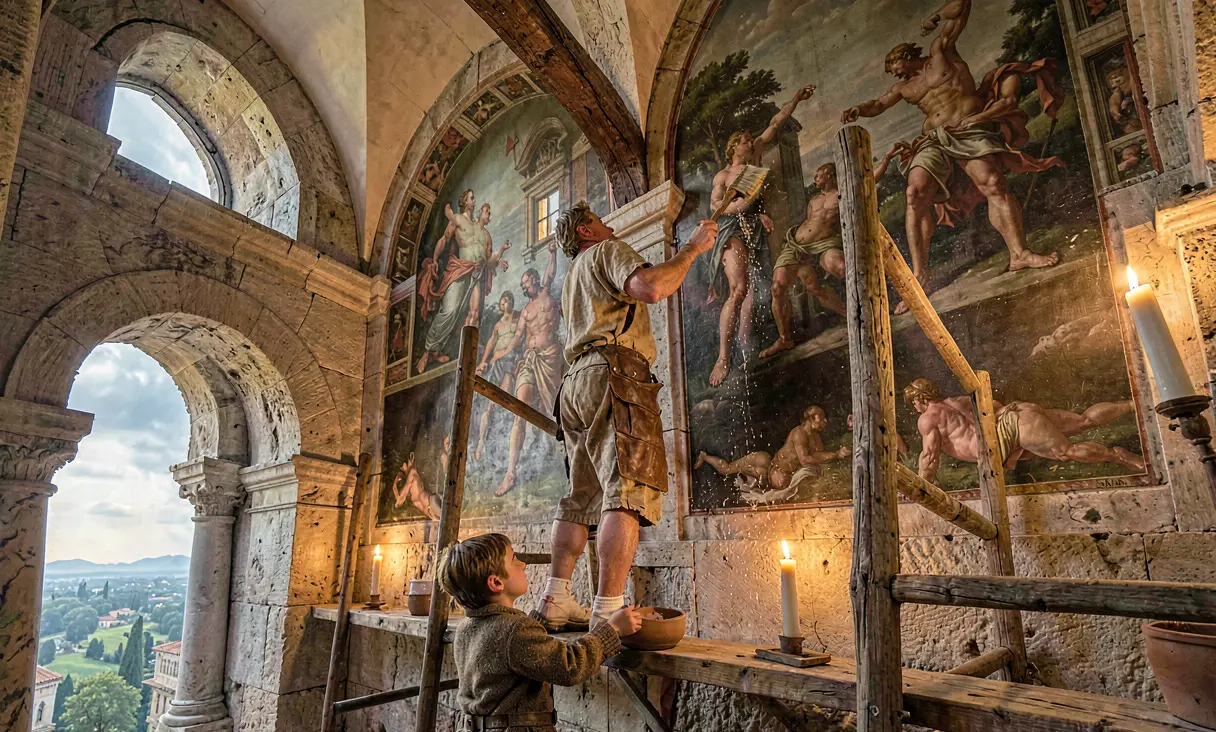
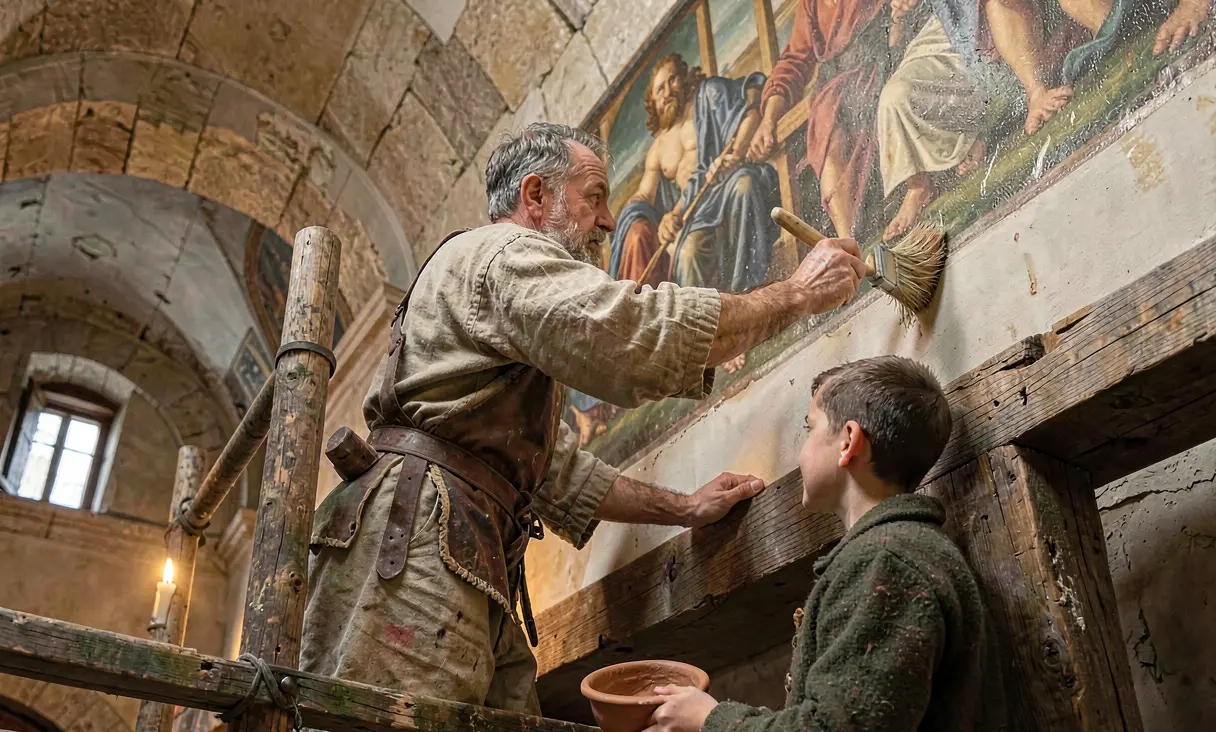
The execution of this monumental work was physically grueling. Michelangelo worked largely alone, with only a few assistants helping to mix pigments and prepare the plaster (*intonaco*). He designed his own unique scaffolding system, which was suspended from brackets inserted into the walls rather than resting on the floor, allowing him to paint while standing or lying supine. For four years, he endured the physical strain of painting overhead, a posture that reportedly damaged his eyesight and spine so severely that he could not read a letter without holding it above his head for months afterward. The work was executed in buon fresco, requiring immense speed and precision as the artist had to apply pigment to wet lime plaster before it dried.
The Unveiling of Divine Drama
On October 31, 1512, on the eve of All Saints' Day, Pope Julius II officially opened the Sistine Chapel to the public, revealing the completed ceiling. The reaction was immediate and profound; the sheer scale, anatomical precision, and dynamic composition stunned the Roman elite and the artistic community. Michelangelo's figures were unlike any seen before: muscular, twisting, and imbued with a psychological intensity that conveyed divine power and human struggle simultaneously. The *Creation of Adam*, where the nearly touching fingers of God and Man became an icon of Western art, demonstrated a mastery of perspective and anatomy that redefined the possibilities of painting. The work effectively ended Michelangelo's career as a sculptor in the public eye for decades, establishing him instead as the preeminent painter of his age.
From Sculptor to Painted Titan
The completion of the Sistine Chapel ceiling marked a pivotal transformation in Michelangelo's career and the trajectory of Western art. Prior to this commission, he was celebrated as the greatest sculptor of his time; afterward, he was recognized as a painter capable of rivaling Raphael and Leonardo da Vinci. The success of the project also solidified Julius II's legacy as a patron who could harness the genius of the era for the glory of the Church. Despite Michelangelo's initial reluctance and his frequent complaints about the Pope's interference, the resulting masterpiece became the definitive expression of High Renaissance humanism, blending classical form with Christian theology in an unprecedented synthesis.
An Enduring Legacy
The Sistine Chapel ceiling remains one of the most influential artworks in history, serving as a benchmark for artistic achievement for over five centuries. Its impact extended beyond the Vatican, influencing generations of Mannerist and Baroque artists who sought to emulate its complex compositions and emotional intensity. The frescoes have survived wars, pollution, and controversial restoration campaigns, retaining their vibrant colors and dramatic power. Today, they continue to draw millions of visitors annually, standing as a testament to human creativity and the enduring dialogue between art and faith that Michelangelo established in 1512.
The Sistine Chapel ceiling is widely considered the pinnacle of High Renaissance art and a masterpiece of human creativity.
Where it happened
Vatican City, Rome — see it on the interactive map →
Explore related history
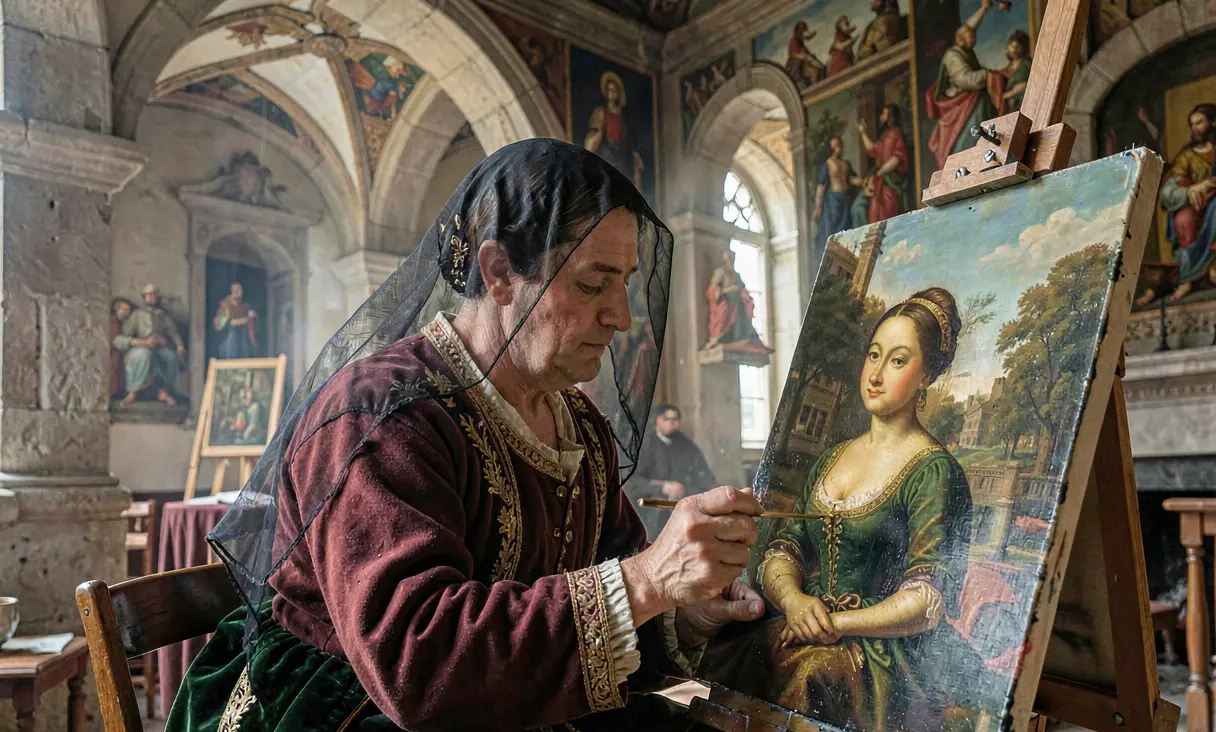 ArtPainting of the Mona Lisac. 1503 CE · Florence, ItalyLeonardo da Vinci creates the most famous portrait using sfumato technique.
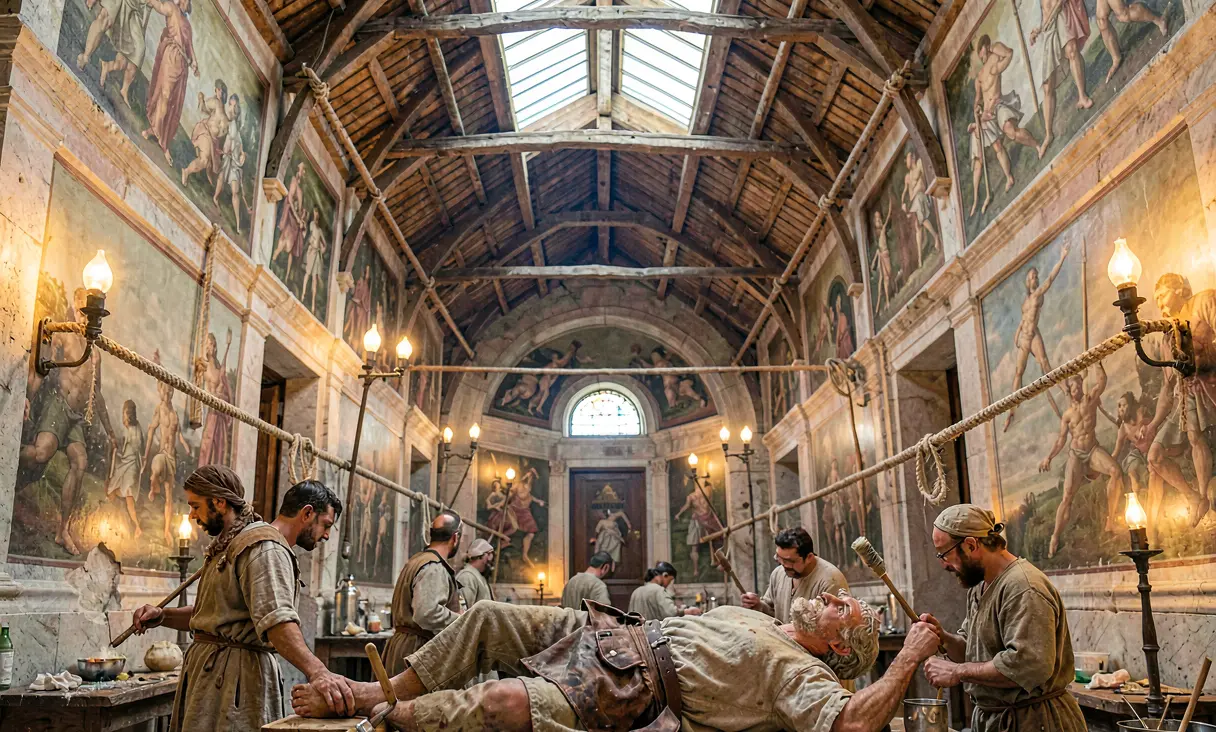 ArtCompletion of Sistine Chapel CeilingOctober 31, 1512 CE · Vatican City, ItalyMichelangelo finishes frescoes depicting Genesis scenes transforming Renaissance art.
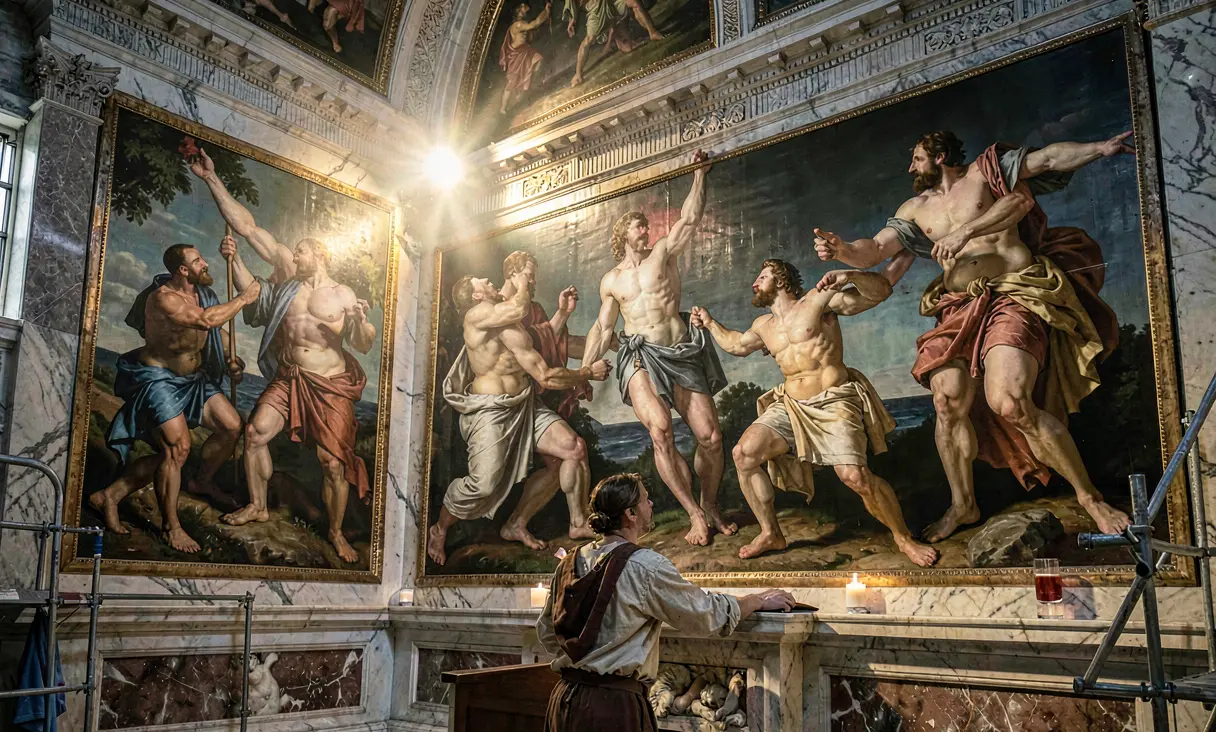 ArtMichelangelo Paints the Last JudgmentNovember 1541 · Vatican City, RomeMichelangelo completes the massive fresco on the altar wall of the Sistine Chapel.
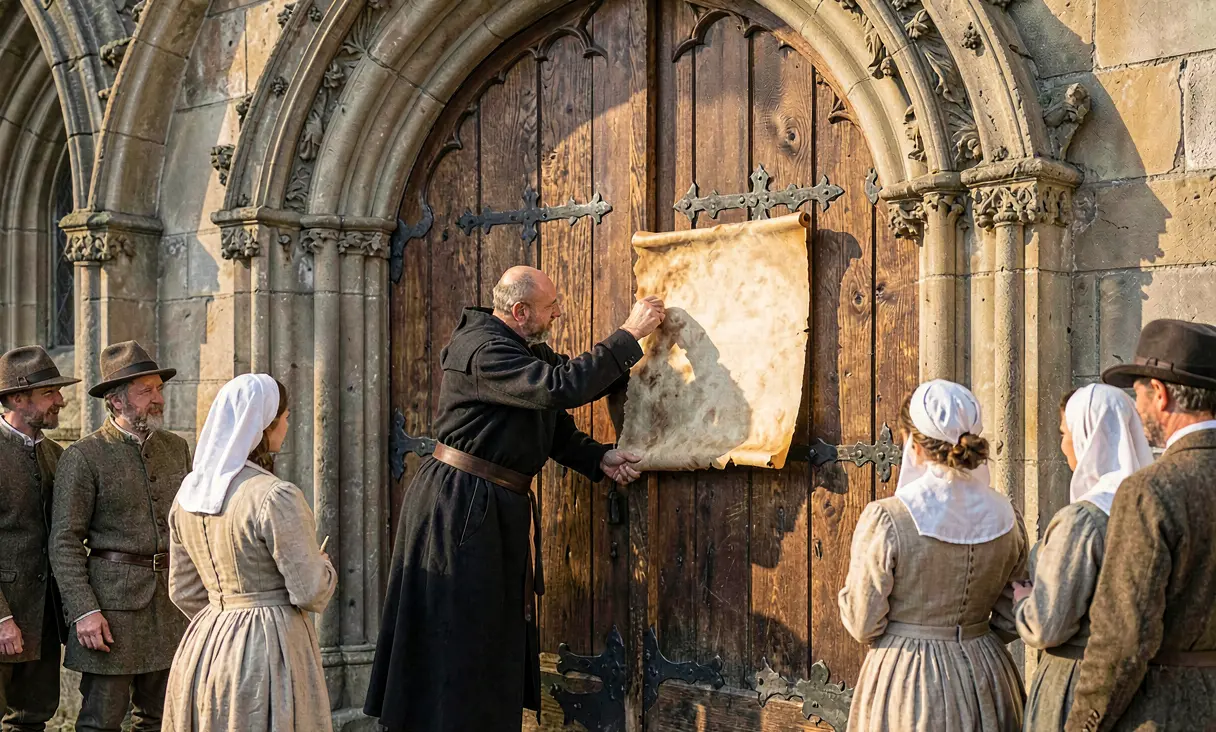 ReligionLuther Posts Ninety-Five ThesesOctober 31, 1517 CE · Wittenberg, GermanyMartin Luther challenges Catholic Church practices sparking the Protestant Reformation.
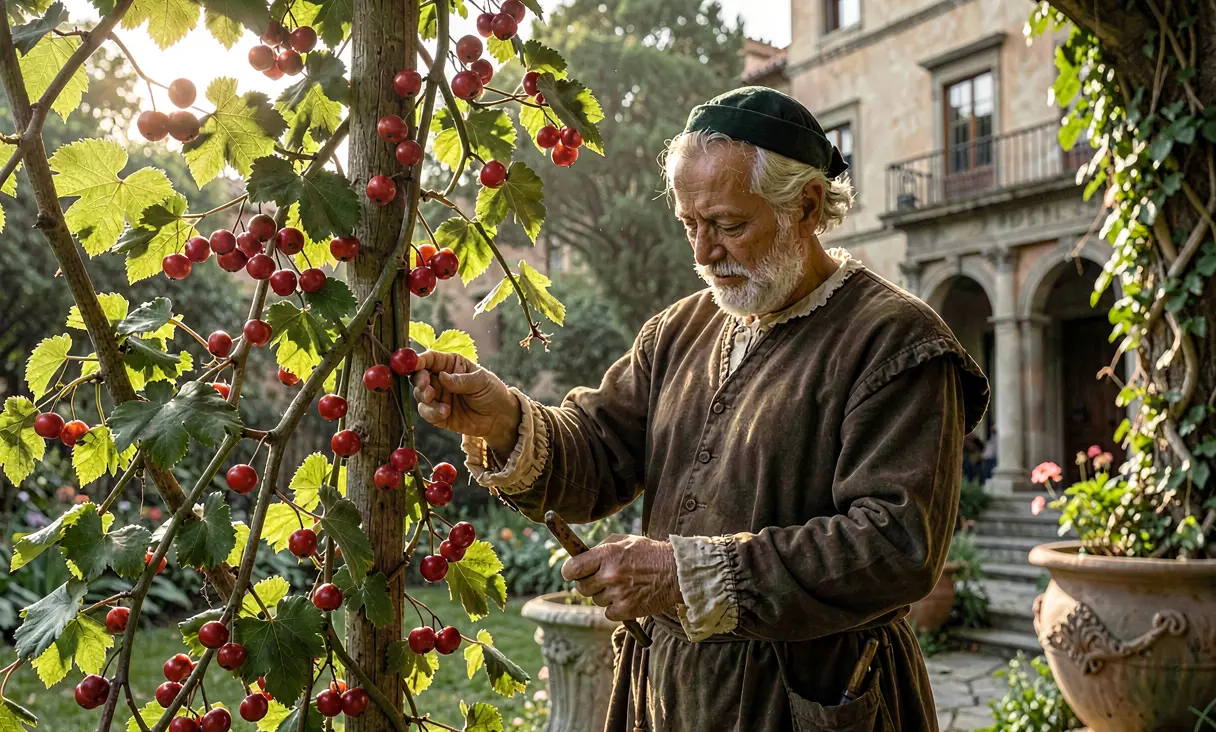 TechnologyIntroduction of the Tomato to Europec. 1520 CE · Rome, ItalyTomatoes arrive in Europe from the Americas, revolutionizing global cuisine.
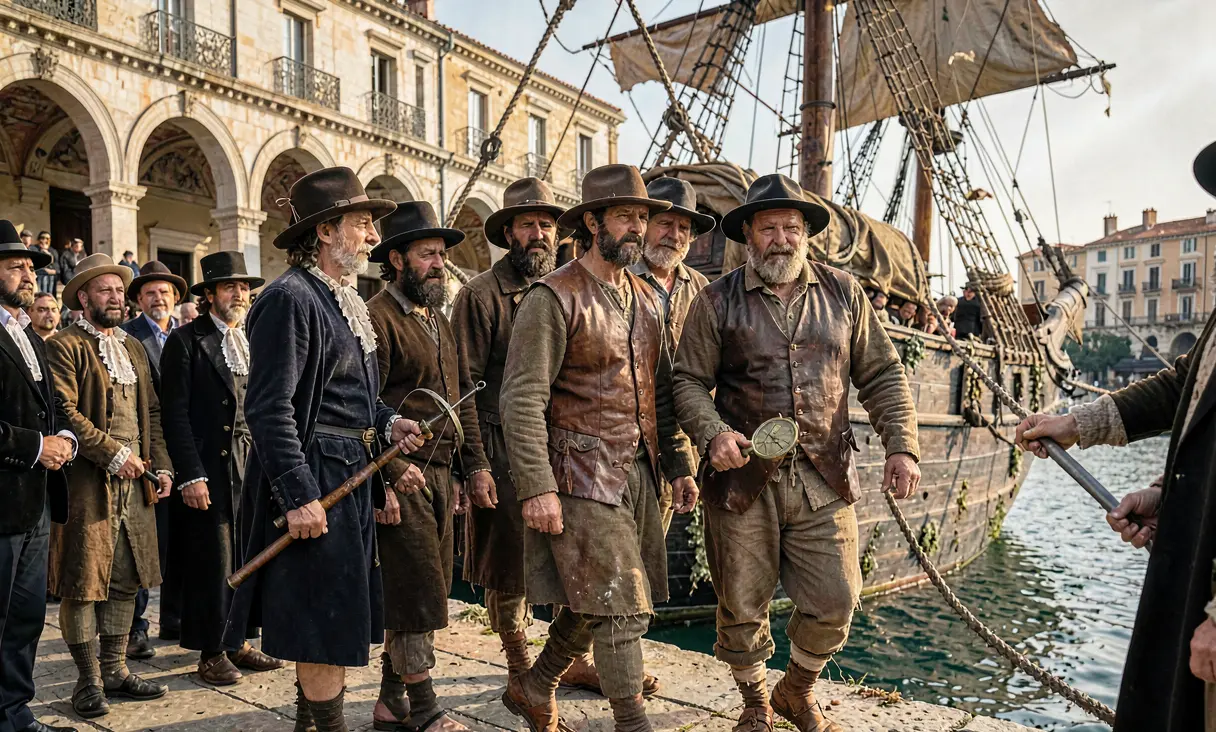 ExplorationMagellan's Circumnavigation CompletedSeptember 6, 1522 CE · Seville, SpainFirst expedition sails around the globe proving Earth is round and vast.
Discussion
Loading…