Rise of the Kingdom of Kush at Kerma
By c. 2500 BCE, the Kingdom of Kush at Kerma emerged as Africa's first indigenous urban state, challenging Egyptian hegemony through monumental architecture and a gold-fueled economy.
The Nile's Southern Counterweight
While the Old Kingdom of Egypt consolidated its power along the Lower and Middle Nile around 2686 BCE, a parallel civilization was simultaneously crystallizing in the fertile crescent of Upper Nubia. Centered at the site of Kerma, approximately 150 kilometers north of modern-day Khartoum, this emerging polity would become the first great kingdom of sub-Saharan Africa. By c. 2500 BCE, Kerma had evolved from a collection of pastoral settlements into a fortified urban center that rivaled its northern neighbor in complexity and wealth. This development fundamentally altered the geopolitical landscape of the Nile Valley, proving that sophisticated statehood was not an exclusively Egyptian phenomenon but a shared African achievement.
Urban Mastery and the Deffufa
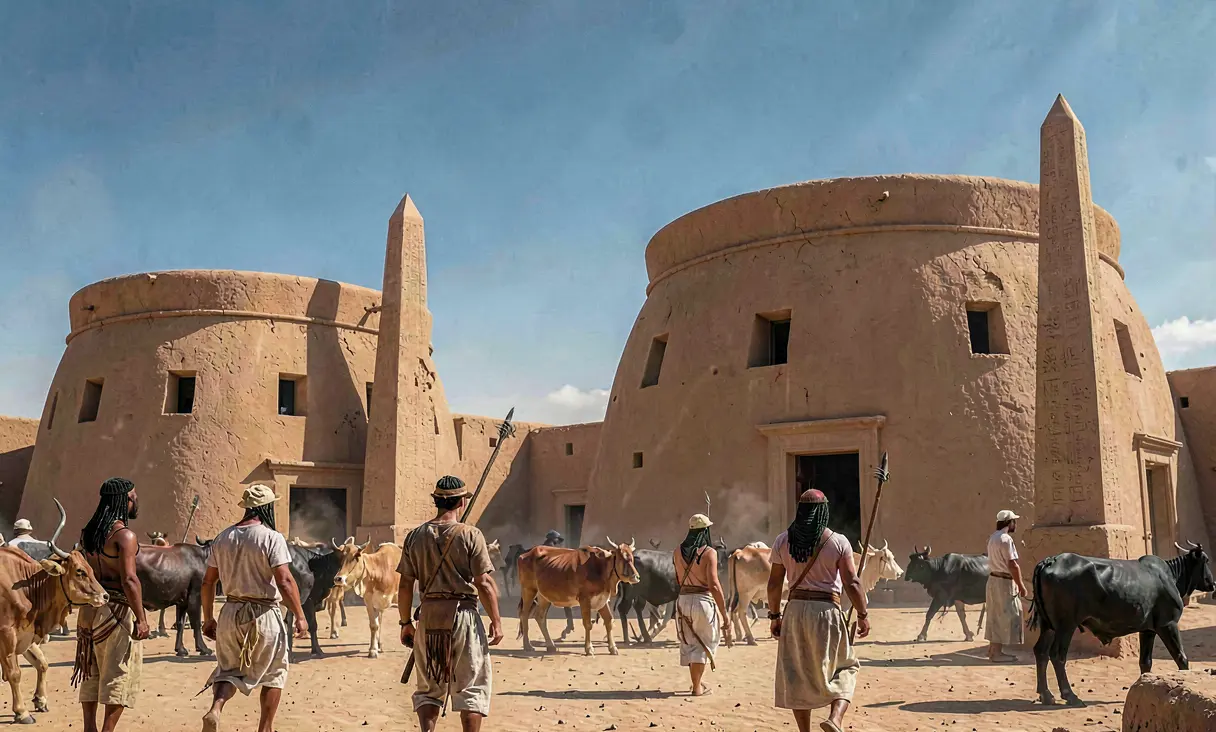
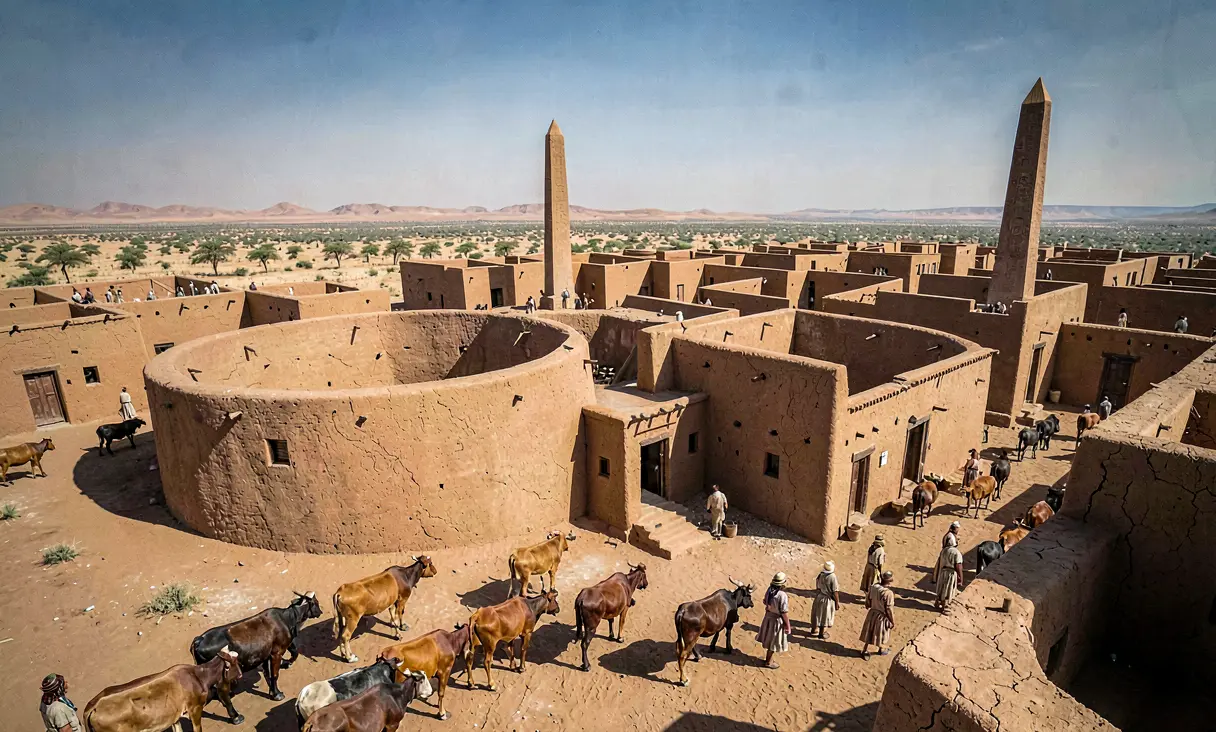
The physical manifestation of Kerma's power is best observed in its monumental architecture, most notably the Western Deffufa. This massive mud-brick structure, rising nearly 18 meters high with a base covering over 60 square meters, served as a religious and administrative hub, distinct from Egyptian stone temples yet equally imposing in scale. The city itself was meticulously planned, featuring grid-like streets, substantial residential quarters, and sophisticated drainage systems that supported a population estimated between 5,000 and 10,000 inhabitants at its zenith. Unlike the scattered villages of earlier periods, Kerma represented a centralized authority capable of mobilizing vast labor forces for public works, signaling a mature social stratification where a priestly and royal elite commanded the populace.
Economic Engines: Gold, Ivory, and Cattle
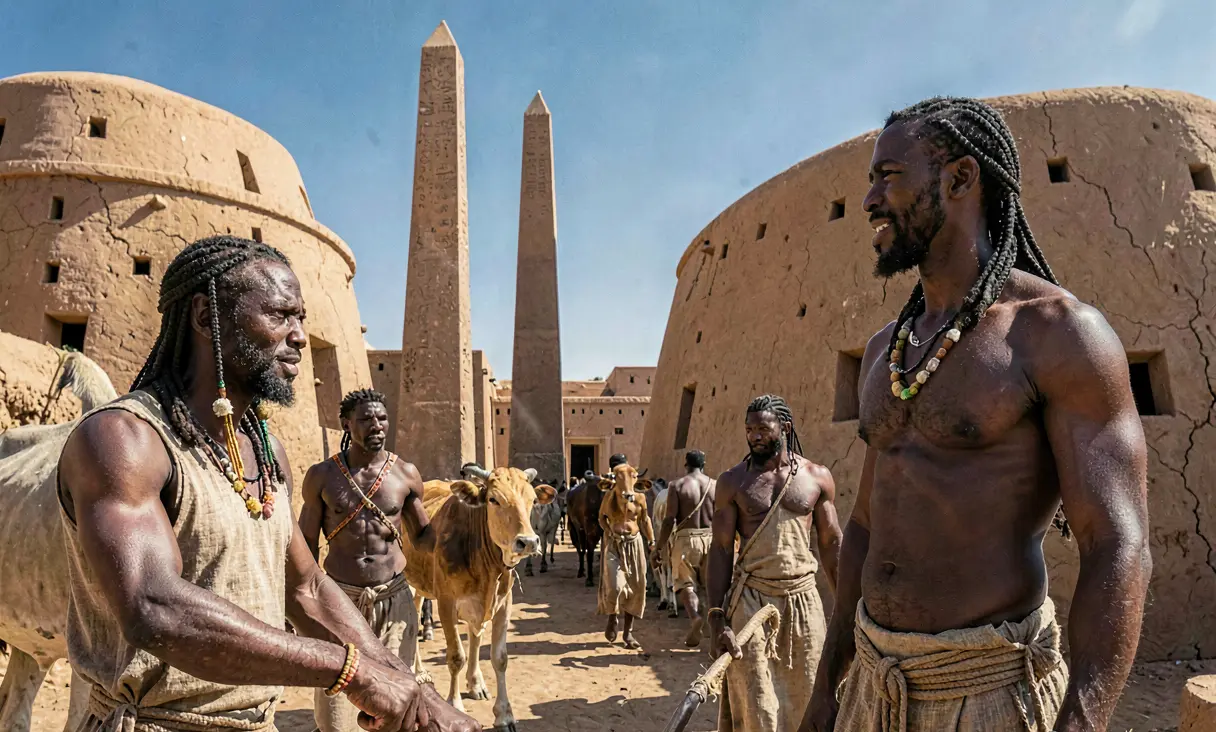
Kerma's prosperity was not built on conquest alone but on its strategic control of trade routes connecting Central Africa to the Mediterranean. The kingdom acted as the primary conduit for gold, ivory, ebony, and exotic animal skins destined for Egyptian markets, while simultaneously exporting vast herds of cattle that defined the Nubian pastoral economy. Archaeological evidence from the royal cemeteries reveals thousands of sacrificed cattle buried alongside elite individuals, underscoring the centrality of livestock in both wealth accumulation and religious ritual. This economic dominance allowed Kerma to maintain a robust military and diplomatic apparatus, enabling it to negotiate as an equal with the pharaohs of Egypt's Old Kingdom rather than merely serving as a peripheral source of raw materials.
Clash and Commerce with the Pharaohs
The relationship between Kerma and the Old Kingdom was characterized by a volatile oscillation between trade and conflict. While Egyptian texts from the reigns of Sneferu and subsequent pharaohs boast of military campaigns into Nubia to secure resources, archaeological layers at Semna and Buhen suggest that by 2500 BCE, Kerma had successfully resisted full annexation. The Kushites utilized their knowledge of the terrain and superior chariotry—adopted and adapted from Egyptian technology—to defend their sovereignty. Rather than a one-sided subjugation, the era saw a complex interplay where Egyptian expeditions often resulted in treaties or uneasy truces that acknowledged Kerma's autonomy, fostering a period where both civilizations flourished through regulated exchange despite underlying tensions.
The Burial of Kings and Social Hierarchy
The social structure of the Kingdom of Kush is most vividly preserved in its necropolises, particularly the Eastern Cemetery at Kerma. Here, massive tumuli, or burial mounds, rise from the desert floor, marking the resting places of kings and high officials. The largest of these, the Western Cemetery's Great Tumulus, covers an area comparable to a football field and contains a central chamber surrounded by hundreds of human sacrifices, likely retainers intended to serve the deceased in the afterlife. These burials, filled with imported Egyptian goods alongside distinctively Nubian pottery and jewelry, illustrate a society deeply stratified yet culturally confident, asserting its own identity while engaging in a dialogue with the material culture of Egypt.
Legacy of African Statehood
The rise of Kerma around 2500 BCE stands as a watershed moment in world history, dismantling the long-held Eurocentric and Egyptocentric narrative that complex civilization was imported to Africa from the Near East. Instead, it demonstrates an indigenous trajectory of urbanization and state formation that predated or paralleled many contemporary developments elsewhere. Although the kingdom would eventually face decline during the Middle Kingdom's aggressive expansion under Senusret I, its cultural DNA persisted, laying the foundational stone for the later Napatan and Meroitic kingdoms. Kerma remains a testament to the dynamism of the Nile Valley, where two great powers once stood shoulder-to-shoulder, shaping the destiny of ancient Africa.
It marked the emergence of a major African superpower that would later conquer Egypt itself as the 25th Dynasty.
Where it happened
Kerma, Sudan — see it on the interactive map →
Explore related history
 CivilizationEmergence of Norte Chico Urban Centersc. 3000 BCE · Caral-Supe Valley, PeruThe Norte Chico civilization establishes the oldest known cities in the Americas.
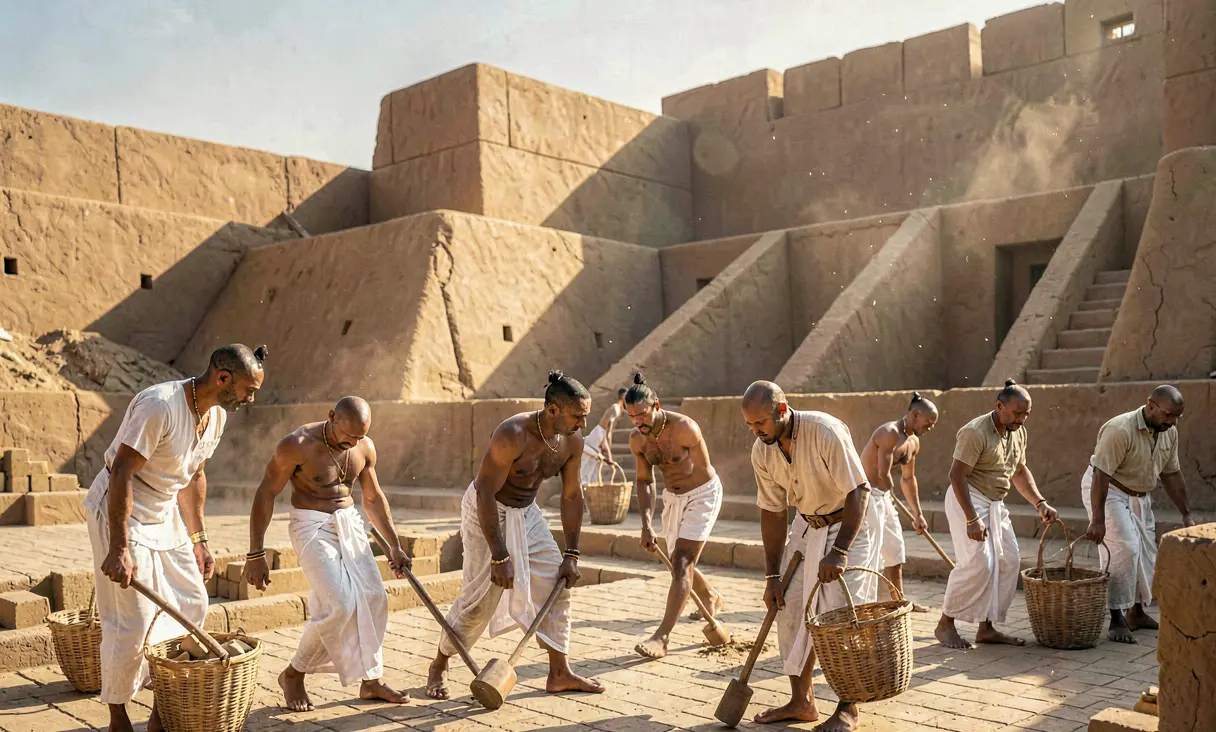 CivilizationUrban Planning of Mohenjo-daroc. 2600 BCE · Mohenjo-daro, PakistanThe Indus Valley Civilization constructs Mohenjo-daro with advanced grid systems and the world's first known urban sanitation.
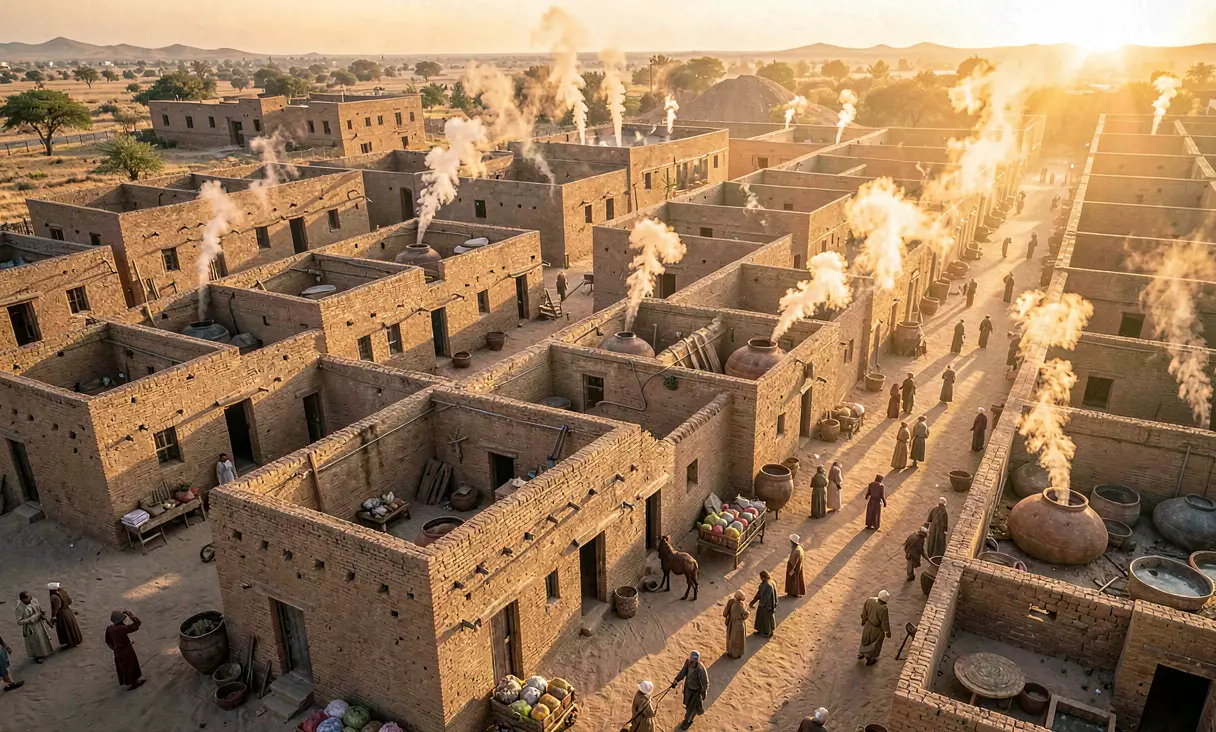 CivilizationUrbanization of Harappa and Mohenjo-daroc. 2600 BCE · Harappa and Mohenjo-daro, Indus Valley (modern Pakistan)The mature Harappan phase begins, establishing the first large-scale urban centers in South Asia with advanced grid planning.
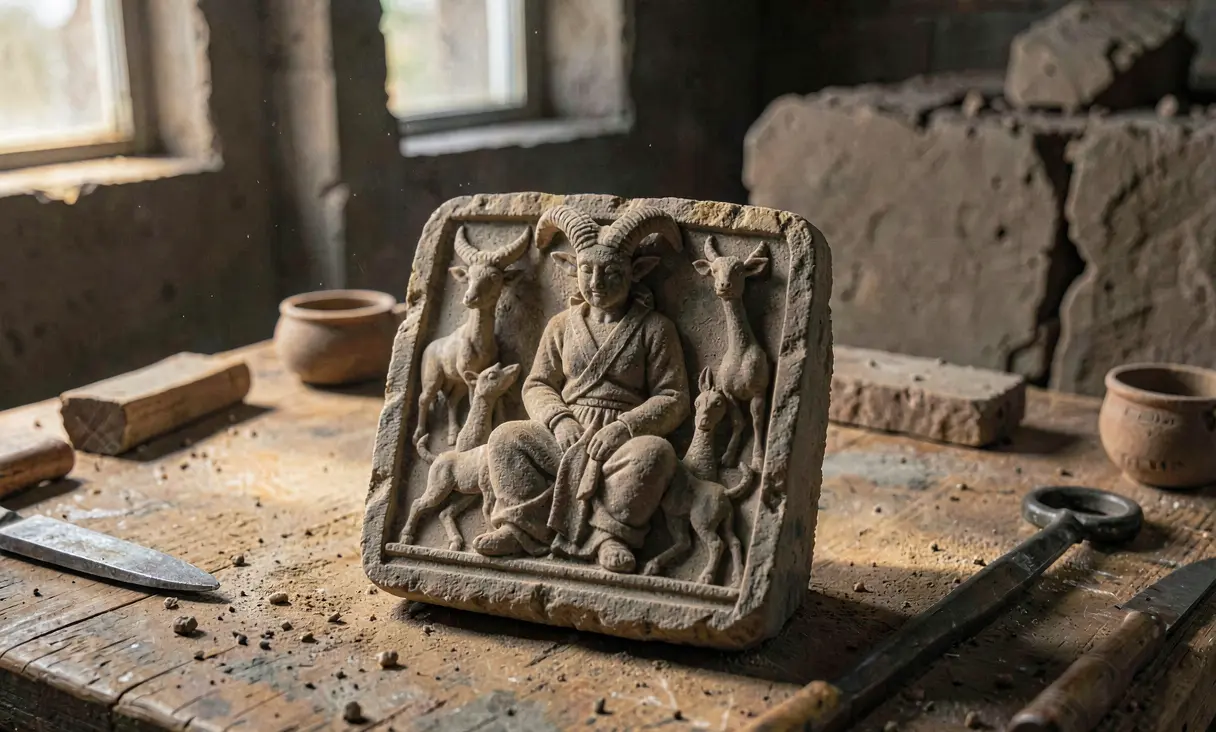 ReligionDiscovery of the Pashupati Sealc. 2500 BCE · Mohenjo-daro, Indus Valley (modern Pakistan)The Pashupati seal is carved, depicting a seated figure surrounded by animals, likely an early prototype of the Hindu god Shiva.
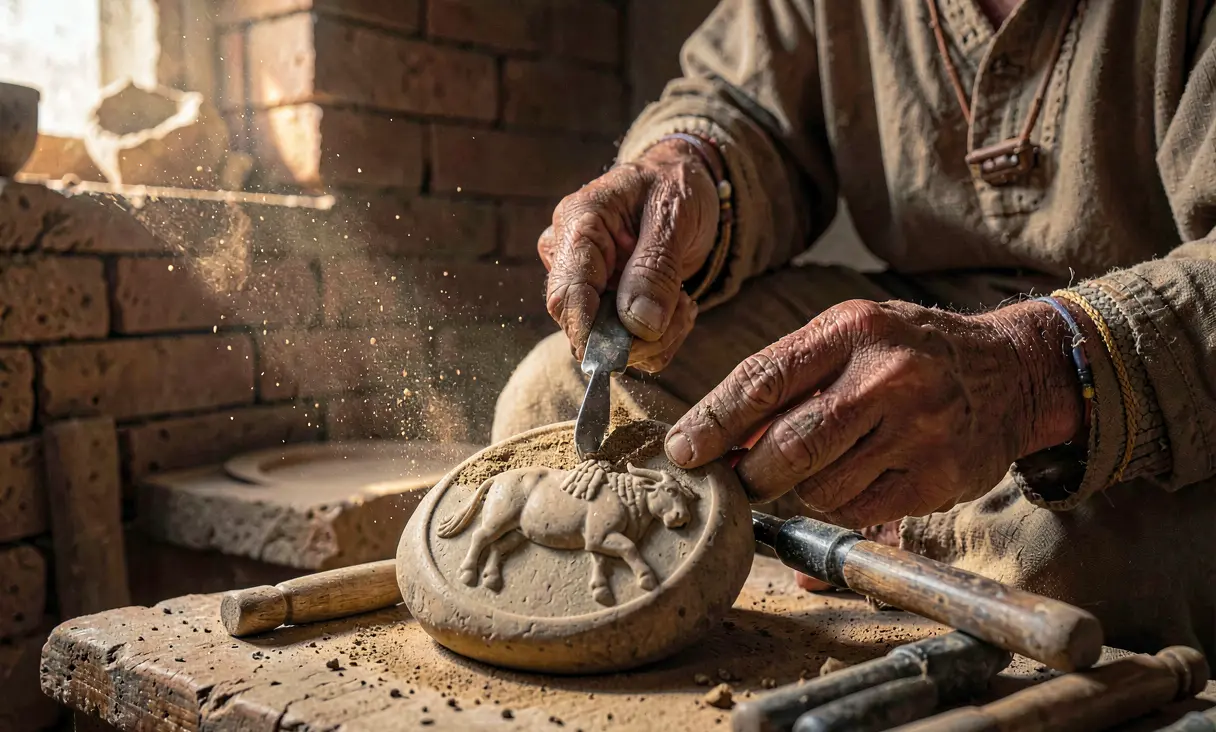 CivilizationProduction of Indus Valley Sealsc. 2500 BCE · Mohenjo-daro, Indus Valley (Modern Pakistan)Craftsmen carve intricate steatite seals featuring undeciphered script and animal motifs.
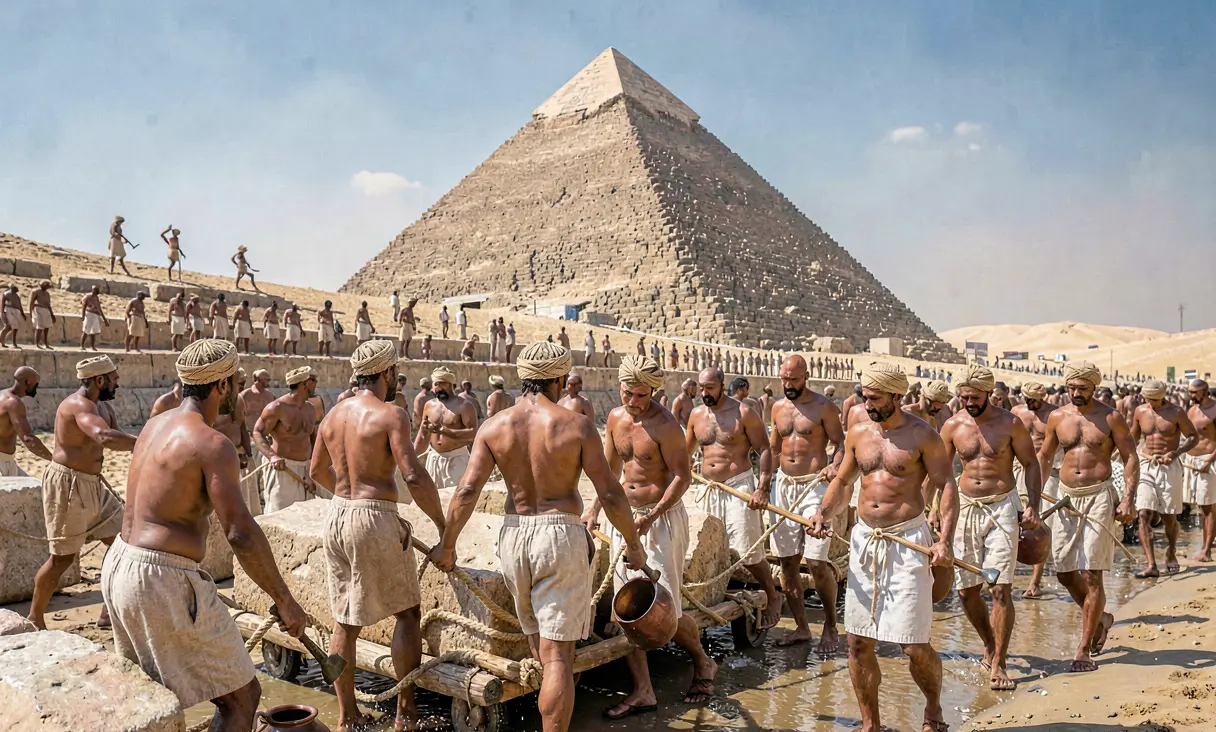 CivilizationGreat Pyramid of Giza Builtc. 2560 BCE · Giza, EgyptPharaoh Khufu commissions the largest ancient monument using millions of limestone blocks and advanced engineering.
Discussion
Loading…