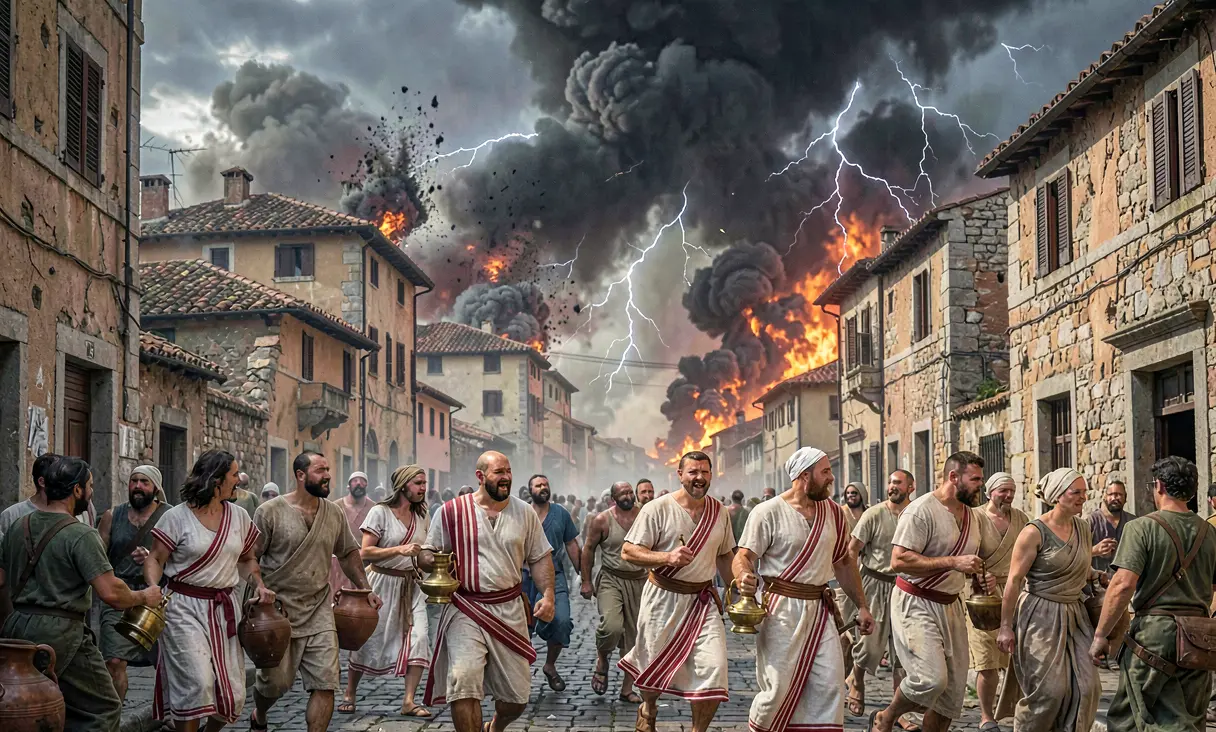
Eruption of Mount Vesuvius
The 79 CE eruption of Mount Vesuvius obliterated Pompeii and Herculaneum, preserving a vivid snapshot of Roman life while establishing the scientific framework for understanding volcanic hazards.
The Calm Before the Cataclysm
By the late first century CE, the Bay of Naples was a jewel of the Roman Empire, boasting a dense population and thriving economy centered on agriculture, viticulture, and maritime trade. The region's beauty was anchored by Mount Vesuvius, which loomed over the landscape not as an active threat, but as a majestic, green-capped mountain with a crater that appeared dormant to the untrained eye. The cities of Pompeii and Herculaneum flourished in its shadow; Pompeii, with its bustling forums, vibrant frescoes, and amphitheater capable of holding 20,000 spectators, represented the height of Roman urban life. Despite minor seismic activity recorded in 62 CE that had damaged many structures, the populace remained largely complacent, viewing the mountain as a permanent, benign feature of their environment rather than a sleeping giant.
The Plinian Eruption Begins
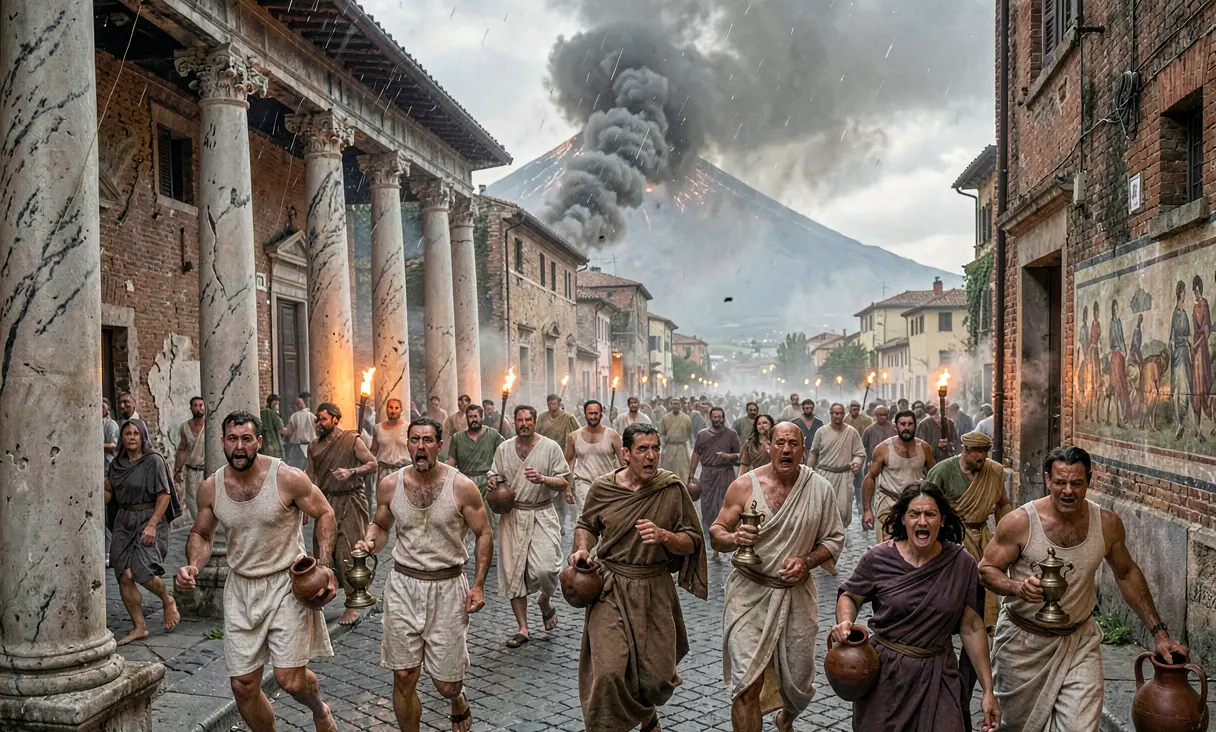
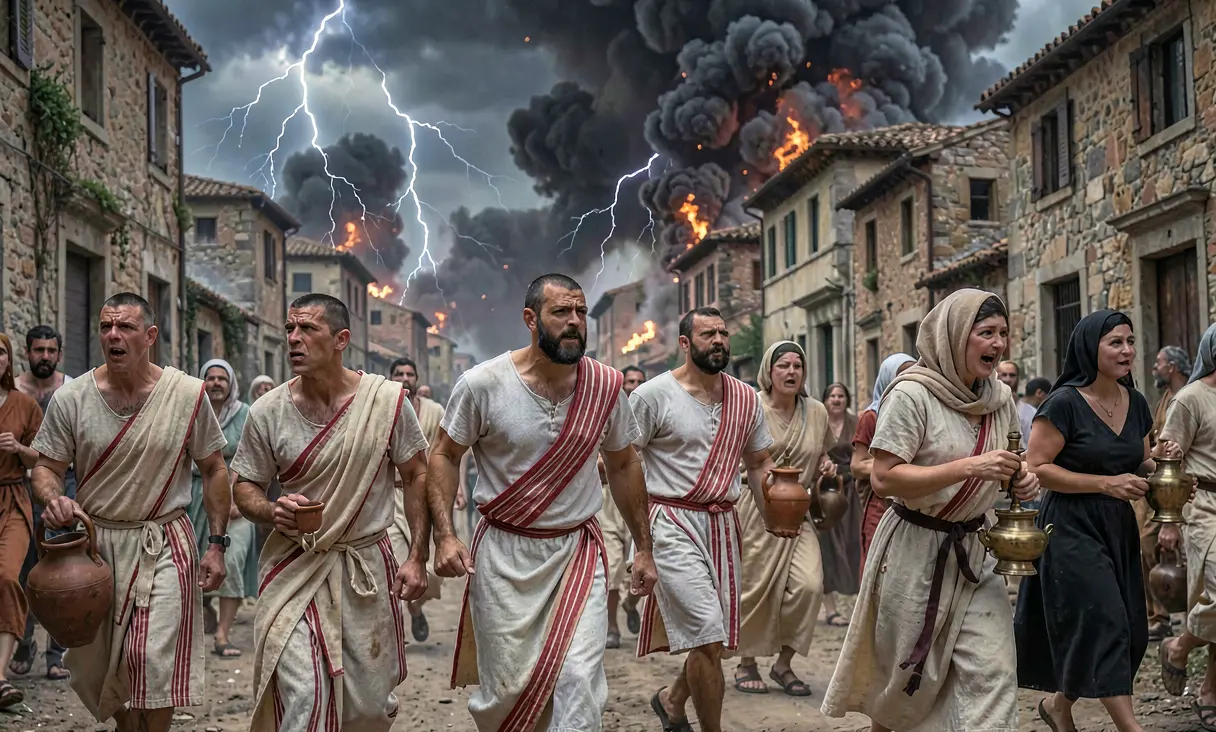
On August 24, 79 CE, at approximately 1:00 PM, the tranquility was shattered by a cataclysmic explosion that sent a towering column of ash and pumice into the stratosphere. This initial phase, later characterized by Pliny the Younger as 'Plinian' in his uncle's honor, ejected an estimated 3 to 4 cubic kilometers of material at speeds exceeding 100 meters per second. The eruption column rose roughly 33 kilometers high, drifting southeast with the prevailing winds to blanket Pompeii in a relentless rain of white and grey pumice stones. While the initial fall caused roofs to collapse under the weight, it allowed many residents time to flee toward the coast or seek shelter inland, though the sheer volume of falling debris quickly turned escape routes into death traps.
Pliny the Elder and the Heroic Failure
The eruption is immortalized in history largely due to the letters written by Gaius Plinius Caecilius Secundus, known as Pliny the Younger, to the historian Tacitus. His uncle, Gaius Plinius Secundus (Pliny the Elder), the commander of the Roman fleet at Misenum, initially set out to investigate the phenomenon with scientific curiosity and a desire to rescue friends on the coast. However, his expedition became a rescue mission that ended in tragedy. As toxic gases and intense heat from pyroclastic surges overwhelmed the area, Pliny the Elder succumbed to asphyxiation at Stabiae, likely due to a combination of volcanic fumes and pre-existing respiratory issues. His nephew remained safe across the bay but described the sky darkening with ash, the ground trembling violently, and the sea receding before being choked by pumice.
The Pyroclastic Surges and Final Destruction
While Pompeii was buried under meters of pumice over several hours, Herculaneum suffered a different, more immediate fate. On the night of August 24 and continuing into August 25, the eruption column collapsed, generating superheated pyroclastic surges—fast-moving currents of gas and volcanic rock that swept down the mountain slopes at hundreds of kilometers per hour. These surges reached temperatures exceeding 300°C (570°F), instantly carbonizing organic material and flash-freezing the inhabitants of Herculaneum in their final moments. The surge buried the city under more than 20 meters of volcanic deposits, sealing it in an anaerobic environment that preserved wooden boats, doors, and even the contents of ovens with extraordinary fidelity.
Preservation Through Burial
The rapid burial created a unique time capsule for archaeologists. In Pompeii, the voids left by decomposed bodies within the hardened ash allowed Giuseppe Fiorelli in the 19th century to develop a technique of pouring plaster into these cavities, revealing the agonized poses and expressions of the victims at the moment of death. These casts, alongside intact frescoes, mosaics, bread loaves, and everyday tools, provide an unparalleled window into Roman domestic life, social hierarchy, and daily routines. The preservation is so complete that historians can read graffiti scratched into walls just days before the disaster, offering a direct voice from the ancient world that is rare in historical records.
Legacy and Modern Significance
The eruption of Vesuvius remains one of the most studied volcanic events in history, fundamentally shaping modern volcanology. The distinction between Plinian eruptions (explosive columns) and pyroclastic flows was formalized based on this event, providing critical data for hazard assessment today. While the cities were lost to the earth for over 1,500 years until their rediscovery in the 18th century, they now serve as a UNESCO World Heritage site and a stark reminder of nature's power. The tragedy underscores the importance of monitoring active volcanoes near populated areas, as Vesuvius remains one of the world's most dangerous volcanoes due to its proximity to modern Naples and its history of catastrophic eruptions.
It froze a moment in ancient time allowing detailed study of Roman civilization.
Where it happened
Pompeii, Italy — see it on the interactive map →
Explore related history
 DisasterCatastrophic Floods and Collapse of Moche San José de Moroc. 750 CE · Lambayeque Valley, PeruEl Niño floods devastate Moche infrastructure leading to societal transformation.
 ReligionSpread of Buddhism along the Silk Road to Chinac. 100 CE · Kashgar, China (Gateway)Buddhist monks and merchants transmit the religion from India to China via Central Asian trade routes.
 ReligionKanishka I Convenes the Fourth Buddhist Councilc. 100 CE · Kundalavana Monastery, KashmirEmperor Kanishka I sponsors the Fourth Buddhist Council in Kashmir, formalizing Mahayana Buddhism and commissioning massive stupa construction.
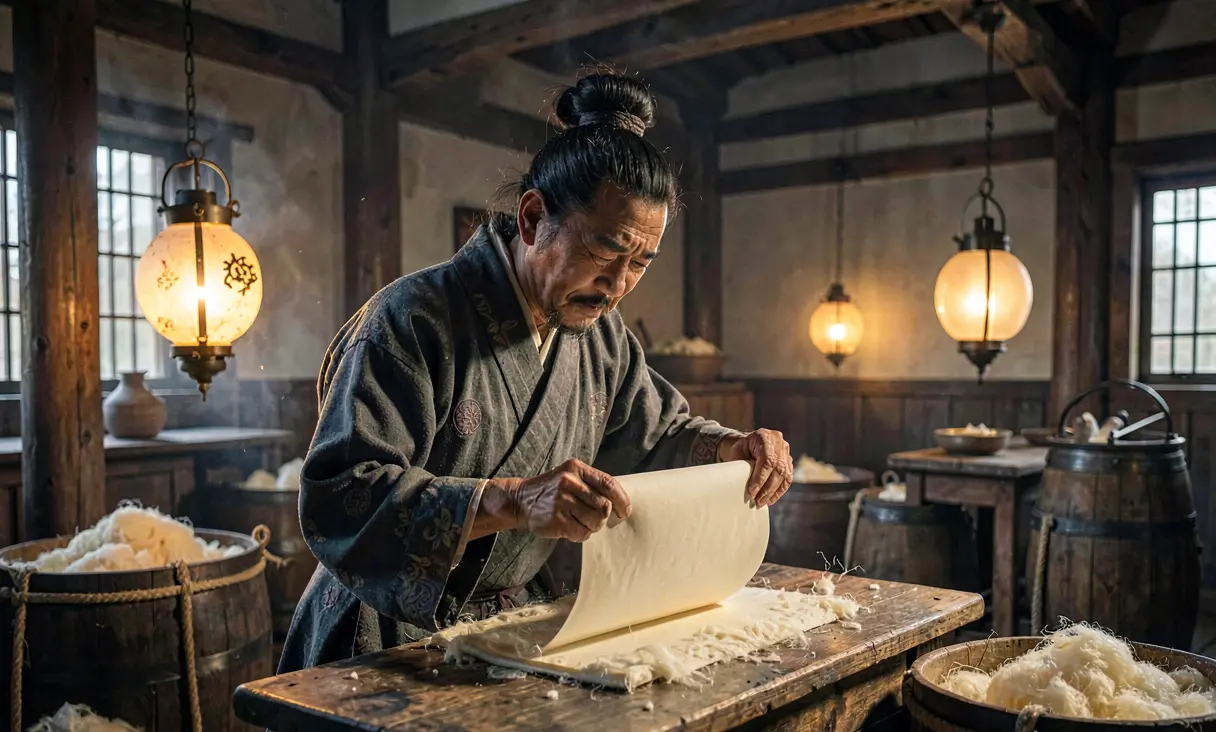 TechnologyRefinement of Papermaking by Cai Lun in Han China105 CE · Chang'an, ChinaCai Lun standardizes paper production using bark, hemp, rags, and fishing nets.
Discussion
Loading…