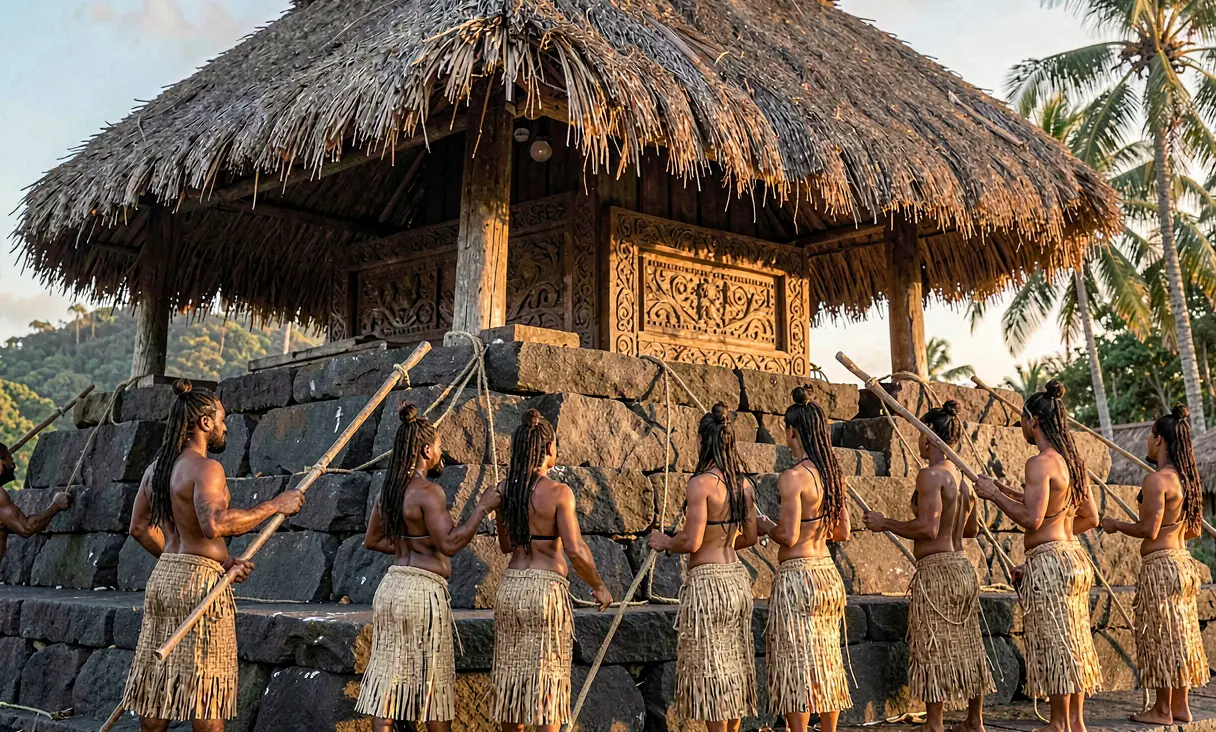
Construction of Marae Complexes Across Polynesia
Circa 1200 CE, the construction of monumental marae complexes in the Society Islands unified Polynesia through a shared religious network centered on Taputapuātea, establishing the architectural and s
The Sacred Geometry of the Pacific
By approximately 1200 CE, a profound architectural and spiritual transformation was reshaping the social landscape of Eastern Polynesia. Centered in the Society Islands, particularly on the islands of Raiatea and Tahiti, this era marked the consolidation of the marae complex as the definitive institution of Polynesian civilization. Unlike earlier, simpler shrines, these new structures were monumental expressions of cosmic order, designed to anchor the connection between the mortal realm (Ao) and the divine world (Po). The Society Islands served as the crucible for this development, with Raiatea's Taputapuātea emerging as the supreme religious center, a 'Temple of the World' that drew priests and chiefs from across the vast Pacific expanse.
Engineering the Divine Platform
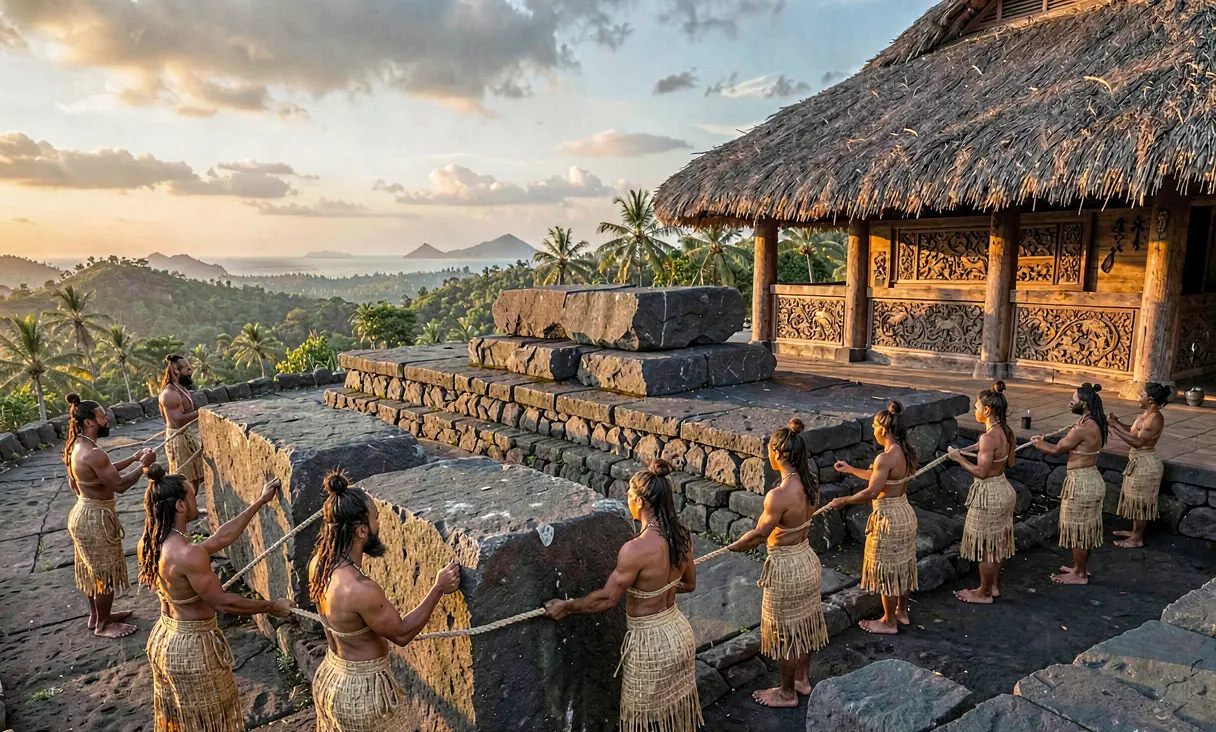
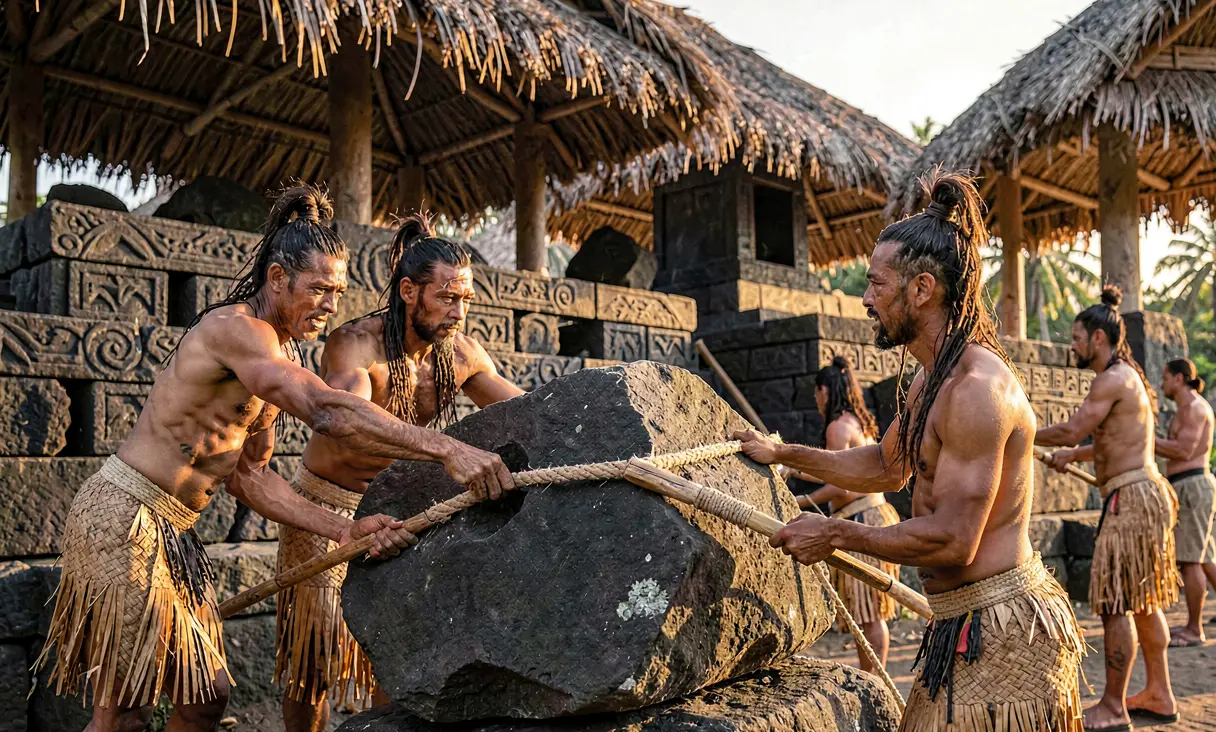
The construction of these complexes was a feat of communal engineering that required precise knowledge of geology and structural integrity. Builders quarried massive basalt slabs or coral blocks, often transporting them over difficult terrain without the aid of wheels or draft animals. The typical marae featured a rectangular courtyard paved with white stone, leading to a raised altar known as the ahu. This ahu was constructed by stacking stones in progressively smaller tiers, creating a pyramid-like structure that symbolized a mountain or a pathway for spirits. In the Society Islands, these structures could span hundreds of square meters, requiring the coordinated labor of entire villages under the direction of high priests (tahu'a) and paramount chiefs (ari'i rahi).
Taputapuātea: The Heart of the Pacific
While marae were built throughout Polynesia, Taputapuātea on Raiatea stood as the spiritual capital of the region. By 1200 CE, it had evolved into a complex containing multiple temples, burial grounds, and ceremonial spaces dedicated to 'Oro, the god of war and fertility who was central to the emerging religious hierarchy. The site functioned not merely as a local temple but as an international sanctuary where high priests from Hawaii, New Zealand (Aotearoa), and the Marquesas would converge to perform rituals that legitimized their authority back home. It was here that the 'Oro cult solidified its influence, creating a pan-Polynesian religious network that standardized ritual practices and reinforced social hierarchies across thousands of miles of ocean.
Rituals of Power and Sacrifice
The marae was the stage for the most critical political and religious events of Polynesian society. It was within these sacred enclosures that human sacrifices were occasionally offered to 'Oro during times of war or drought, intended to restore cosmic balance and ensure the prosperity of the land. The construction and maintenance of the ahu itself were acts of devotion; the placement of each stone was governed by strict taboos (tapu). Chiefs demonstrated their mana (spiritual power) through their ability to mobilize labor for these projects, while the priests interpreted the will of the gods through the rituals performed upon the altar. The marae thus served as a dual engine of statecraft and theology, binding the community together through shared sacred duty.
Divergent Paths: From Heiau to Wharenui
As the influence of the Society Islands spread, local adaptations of the marae concept emerged in distant archipelagos, reflecting unique environmental and cultural needs. In Hawaii, the tradition evolved into the massive heiau, characterized by towering stone walls and elaborate courtyards that could rival European cathedrals in scale, such as Pu'ukoholā Heiau built centuries later on the Great Island of Hawai'i. Conversely, in New Zealand, while the open-air stone marae remained for religious rites, the focus shifted toward the construction of the wharenui (meeting house) for social and political gatherings, though the term 'marae' retained its meaning as the sacred courtyard preceding it. Despite these variations, the fundamental layout—a paved court leading to a raised altar—remained a unifying cultural thread.
A Legacy of Stone and Memory
The construction boom of c. 1200 CE established a physical legacy that endures today, serving as the primary archaeological evidence of pre-contact Polynesian sophistication. Sites like Taputapuātea were later desecrated by European missionaries in the late 18th and early 19th centuries, yet their foundations remain visible, testifying to a civilization capable of organizing vast labor forces for spiritual purposes without written records or metal tools. The marae complexes represent the zenith of Polynesian social organization, where religion, politics, and engineering converged to create a stable societal framework that facilitated the settlement of the most remote islands on Earth.
Enduring Significance in Modern Oceania
In contemporary times, the restoration of these sites has become a vital part of Polynesian cultural renaissance and identity. Taputapuātea was inscribed as a UNESCO World Heritage Site in 2017, recognizing its role as the spiritual center that once united the Pacific. For modern Māori in New Zealand and Tahitians in French Polynesia, the marae remains the living heart of their communities, continuing to host ceremonies, welcome guests, and anchor tribal identity. The stone platforms built nearly a millennium ago continue to function as they were intended: as places where the past speaks to the present, maintaining an unbroken line of cultural continuity.
Marae complexes represent the architectural heart of traditional Polynesian society, serving as centers for religion, politics, and community life.
Where it happened
Society Islands, French Polynesia — see it on the interactive map →
Explore related history
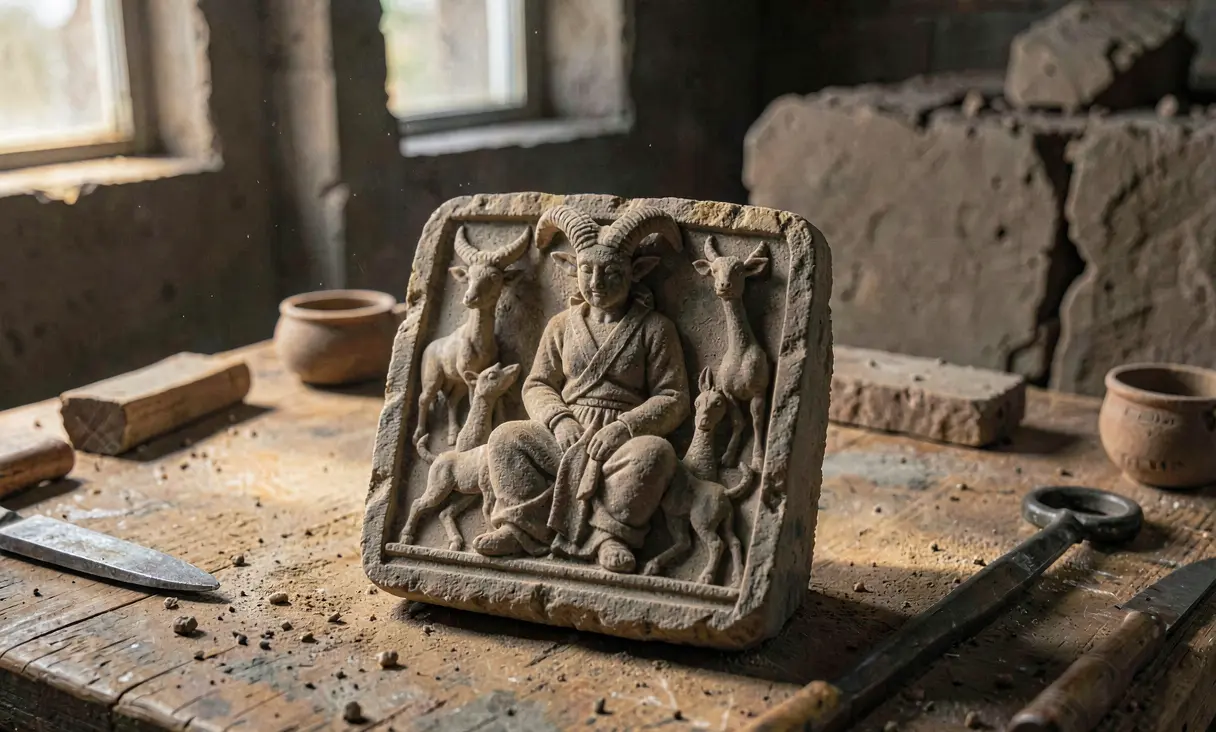 ReligionDiscovery of the Pashupati Sealc. 2500 BCE · Mohenjo-daro, Indus Valley (modern Pakistan)The Pashupati seal is carved, depicting a seated figure surrounded by animals, likely an early prototype of the Hindu god Shiva.
 ReligionRise of the Birdman Cult on Rapa Nuic. 1600 CE · Orongo, Rapa NuiThe Birdman cult replaces moai worship as the central religious and political institution on Rapa Nui.
 ReligionAskia Muhammad's Pilgrimage to Meccac. 1497 CE · Mecca (via Gao)Askia Muhammad undertakes a lavish pilgrimage to Mecca, strengthening ties with the Islamic world.
 ReligionZoroaster Preaches Dualistic Monotheismc. 1200 BCE · Greater Khorasan, Iran/Afghanistan border regionThe prophet Zoroaster establishes a dualistic faith emphasizing the cosmic struggle between good and evil in ancient Persia.
 CivilizationConstruction and Peak of Great Zimbabwec. 1200 CE · Great Zimbabwe, ZimbabweThe Great Zimbabwe complex reaches its zenith as a major trading hub connecting the interior to the Swahili coast.
 TechnologyConstruction of the Benin Walls Beginsc. 1200 CE · Benin City, NigeriaMassive earthwork fortifications begin to encircle Benin City, creating one of the world's largest pre-modern structures.
Discussion
Loading…