Phoenician Production of Tyrian Purple Dye
The Phoenicians' mastery of extracting Tyrian purple from Murex snails around 1500 BCE created a lucrative monopoly that fueled their maritime empire and defined royal status across the ancient world.
The Maritime Context of Ancient Tyre
By the mid-second millennium BCE, the city-state of Tyre (modern-day Sur, Lebanon) had emerged as a preeminent maritime power within the Levantine corridor. Unlike its inland rivals who relied on overland caravan routes, the Phoenicians possessed an unparalleled command of the Mediterranean Sea, leveraging their advanced shipbuilding techniques and navigational expertise to establish a vast trade network. It was within this flourishing commercial ecosystem that Tyre sought to diversify its economic portfolio beyond timber and glass production, turning its attention to the rich biological resources of the eastern Mediterranean seabed. The city's strategic location on a rocky island provided natural defenses and direct access to the specific species of predatory sea snails required for their most famous invention.
The Biological Source: Murex Snails
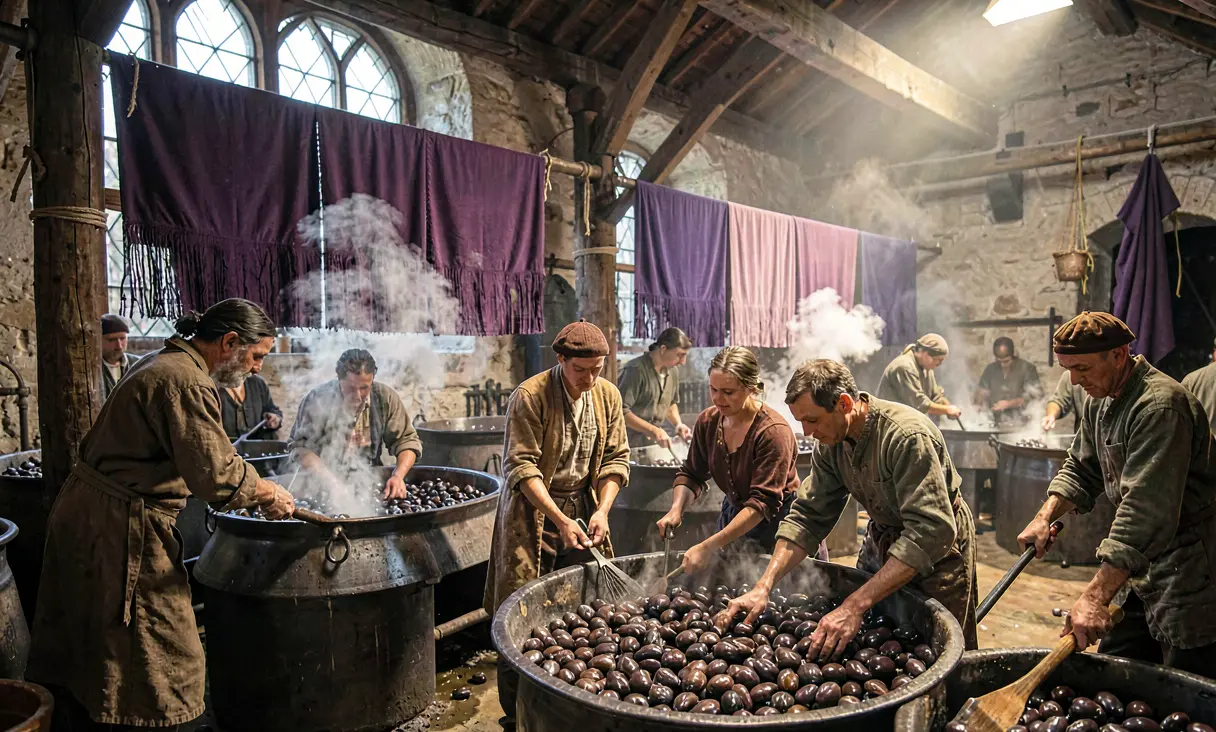
The production of Tyrian purple, known in antiquity as 'argaman,' relied entirely on the secretions of two specific species of predatory marine gastropods: *Bolinus brandaris* and *Hexaplex trunculus*. These snails, found abundantly in the shallow waters off the coast of Lebanon, contain a unique hypobranchial gland that produces a colorless precursor fluid. Contrary to popular myth, the dye was not extracted from the snail's blood but from this specific glandular secretion. The process required the harvesting of millions of these creatures; historical estimates suggest that producing just one gram of pure dye pigment necessitated the collection and processing of over 10,000 individual specimens, a labor-intensive reality that drove up the cost to levels comparable with gold.
The Alchemical Process
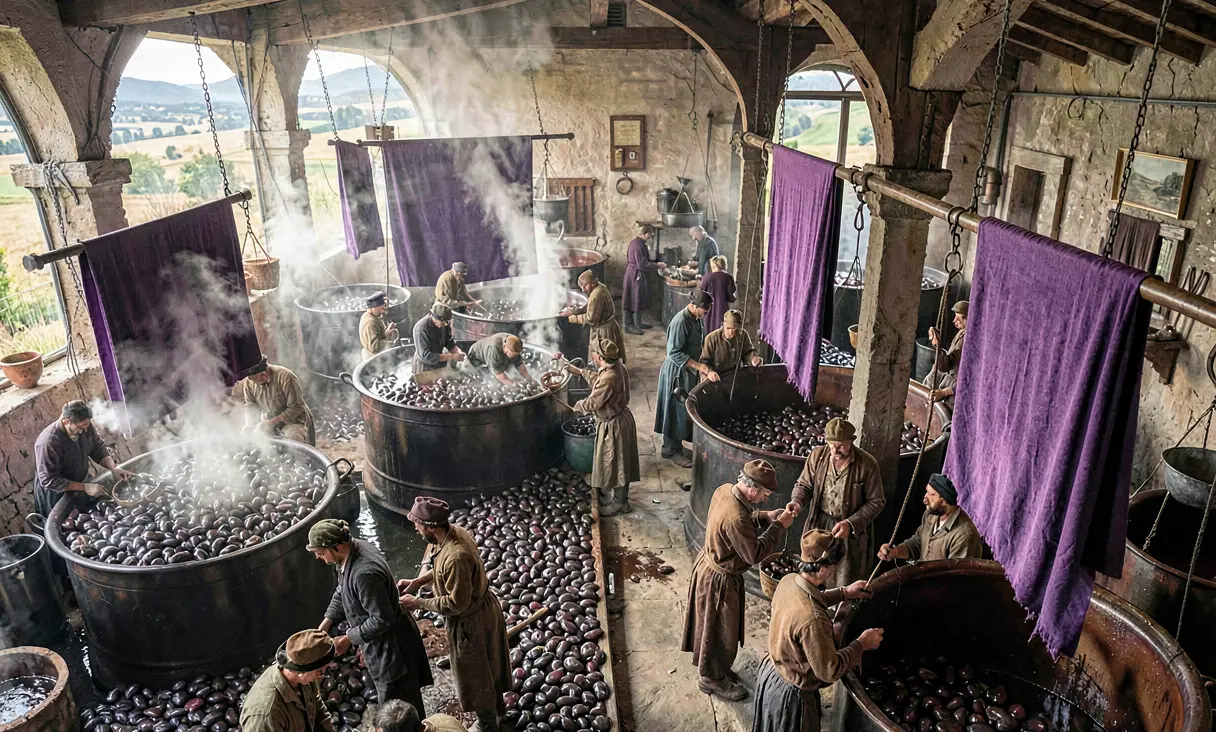
The extraction method was a sophisticated feat of early chemical engineering, perfected by Tyrian artisans around 1500 BCE. The collected snails were crushed or their glands carefully removed and placed in large lead vats, where they were boiled for several days to release the precursor fluid. This liquid, initially clear or pale yellow, underwent a complex photochemical reaction when exposed to sunlight and oxygen, gradually shifting through shades of green and blue before settling into the legendary deep violet-red hue. The addition of specific mordants and the precise control of boiling times allowed dyers to manipulate the final shade, ranging from the bright crimson favored by Egyptian elites to the dark, almost black-purple associated with Roman consuls.
Economic Dominance and Trade Networks
The monopoly on this 'royal purple' transformed Tyre into one of the wealthiest cities in the ancient world. The dye's resistance to fading, a property that earned it the description of being 'blood-like' and eternal, made it the ultimate status symbol across the Mediterranean basin. Phoenician merchants exported bolts of dyed linen and wool to Egypt, Greece, and eventually Rome, establishing trading colonies from Cyprus to Carthage to facilitate this lucrative trade. The revenue generated from purple dye exports funded Tyre's massive naval fleet and monumental architecture, including its famous twin harbors and the Temple of Melqart, effectively cementing Phoenician hegemony over Mediterranean commerce for centuries.
Cultural Impact and Imperial Adoption
The significance of Tyrian purple transcended mere economics; it became a codified element of social hierarchy and religious authority. In Egypt, the dye was reserved for high priests and pharaohs, symbolizing divine connection. Later, in Greece and Rome, sumptuary laws strictly regulated its use, often limiting the wearing of fully purple togas to senators or emperors. The Roman Emperor Julian the Apostate famously noted that a single pound of Tyrian purple cost three times as much as silver. This exclusivity created a psychological association between the color and absolute power, influencing imperial iconography from the Parthian Empire to the Byzantine court, where 'porphyrogenitus' (born in the purple) denoted legitimate dynastic succession.
Legacy of the Purple Monopoly
The decline of the Phoenician city-states following their absorption into the Persian and later Roman empires did not immediately end the production of Tyrian purple, but the centralization of the industry shifted to imperial workshops in Rome and Constantinople. The eventual discovery of synthetic aniline dyes in the 19th century rendered the ancient Murex process obsolete, yet the cultural imprint of Tyrian purple remains profound. It stands as a testament to the ingenuity of Bronze Age technology and the power of resource monopolies, illustrating how a single biological innovation could shape the economic and political landscape of an entire civilization for over a millennium.
The purple dye industry fueled Phoenician economic dominance and established their reputation as master traders of the ancient world.

Where it happened
Tyre (Sur), Lebanon — see it on the interactive map →
Explore related history
 TechnologyIndustrialization of Sericulture in Ancient Chinac. 2600 BCE · Shaanxi Province, ChinaChinese artisans perfect the reeling and spinning of silk from silkworm cocoons.
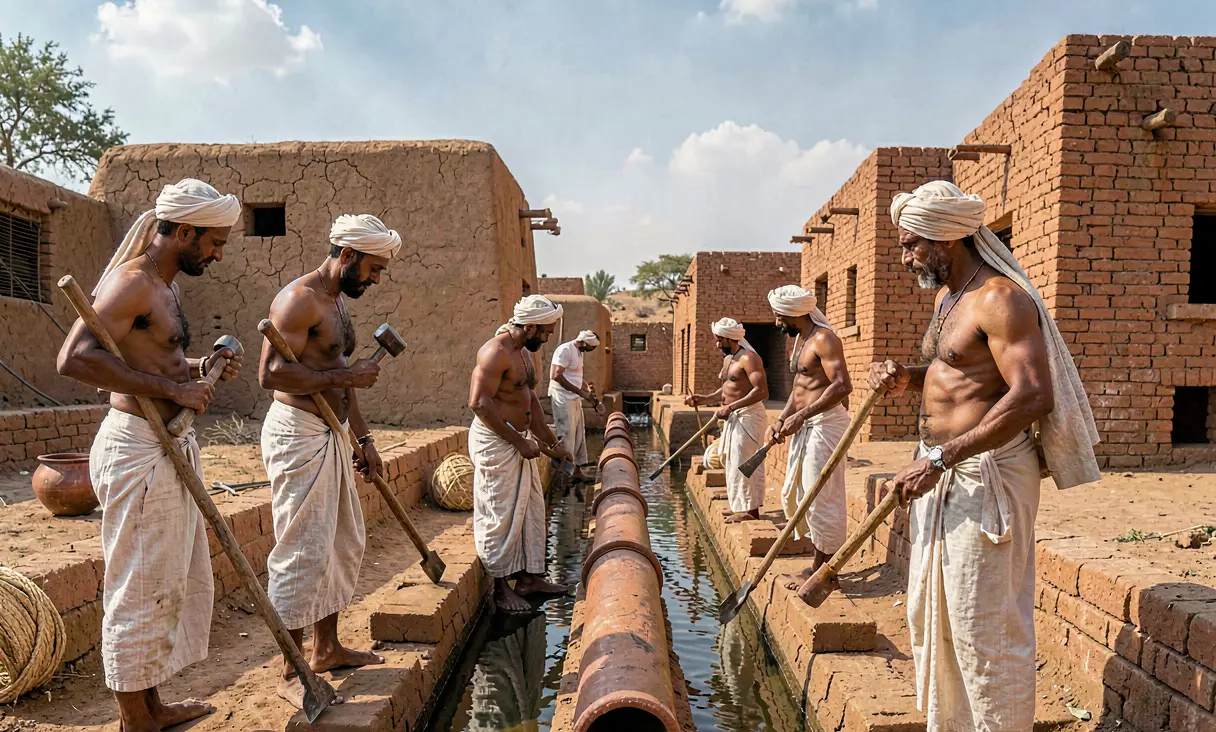 TechnologyAdvanced Irrigation Systems of the Indus Valley Civilizationc. 2600 BCE · Harappa, PakistanEngineers construct sophisticated canal networks and water reservoirs for urban agriculture.
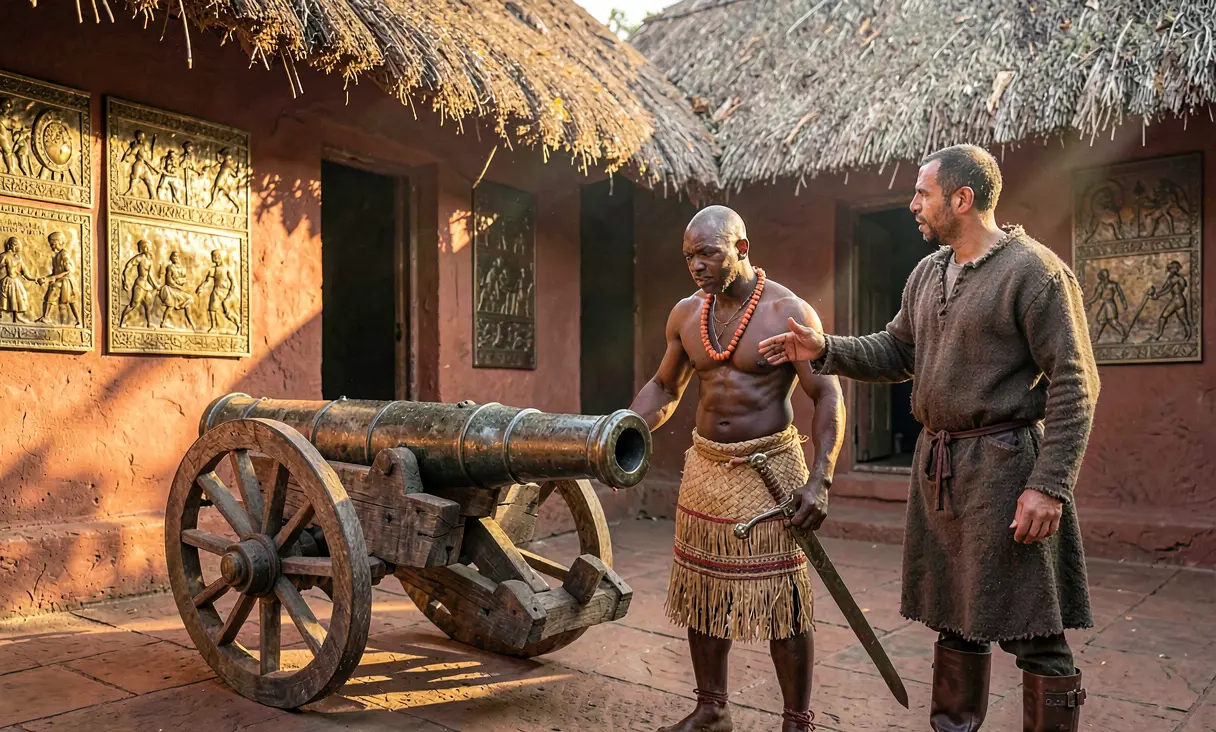 TechnologyBenin Acquires Cannon Technology from Portugalc. 1500 CE · Benin City, NigeriaThe Kingdom of Benin integrates Portuguese cannon technology into its military arsenals.
 PoliticsKingdom of Kongo Engages in Large-Scale Slave Tradec. 1500 CE · Mbanza Kongo, AngolaThe Kingdom of Kongo begins exporting significant numbers of captives to Portuguese traders in exchange for goods.
 TechnologyCompletion of the Qhapaq Ñan Road Networkc. 1500 CE · Andes Mountains (Various), Peru/ChileThe Inca finalize the vast road system connecting their empire.
 CivilizationArrival of Indo-Aryan Speakers in the Punjabc. 1500 BCE · Punjab Region (modern Pakistan/India)Indo-Aryan tribes migrate into the northwestern Indian subcontinent, introducing the Vedic Sanskrit language and horse culture.
Discussion
Loading…