Hiram I of Tyre Supplies Cedar for Solomon's Temple
King Hiram I's supply of Lebanese cedar and artisans enabled Solomon to build the First Temple, forging a pivotal economic and cultural alliance that defined the golden age of the United Monarchy.
Geopolitical Context of the Early Iron Age
By the late 10th century BCE, the Levant was a patchwork of emerging city-states and kingdoms navigating the power vacuum left by the collapse of the Late Bronze Age. In the north, Tyre had risen as the preeminent maritime power under the dynamic leadership of King Hiram I (r. c. 969–936 BCE). To the south, the United Monarchy of Israel, consolidated under David and now ruled by his son Solomon, sought to transform a tribal confederation into a centralized state with Jerusalem as its spiritual and political capital. The region was defined by a symbiotic relationship between the agrarian highlands of Israel and the maritime trade networks of Phoenicia. While Israel possessed fertile land for growing grain and olives, it lacked the massive timber resources required for monumental architecture; conversely, Tyre controlled the dense cedar forests of Mount Lebanon but relied on agricultural imports to sustain its urban population.
The Covenant Between Solomon and Hiram
The alliance was formalized through a treaty recorded in biblical texts and corroborated by archaeological inference, establishing a reciprocal exchange that would define the economic landscape of the region for decades. King Solomon initiated contact with Hiram, leveraging the diplomatic rapport established during David's reign to secure the materials necessary for his ambitious building program. The agreement stipulated that Hiram would provide vast quantities of cedar and cypress timber from Lebanon, along with skilled craftsmen capable of working stone and wood, in exchange for a steady annual tribute of wheat (20,000 cors) and pure oil (20,000 baths). This transaction was not merely a commercial deal but a strategic alliance that secured Tyre's southern flank while granting Israel access to the luxury materials required to construct the First Temple.
Logistics of Timber Extraction and Transport
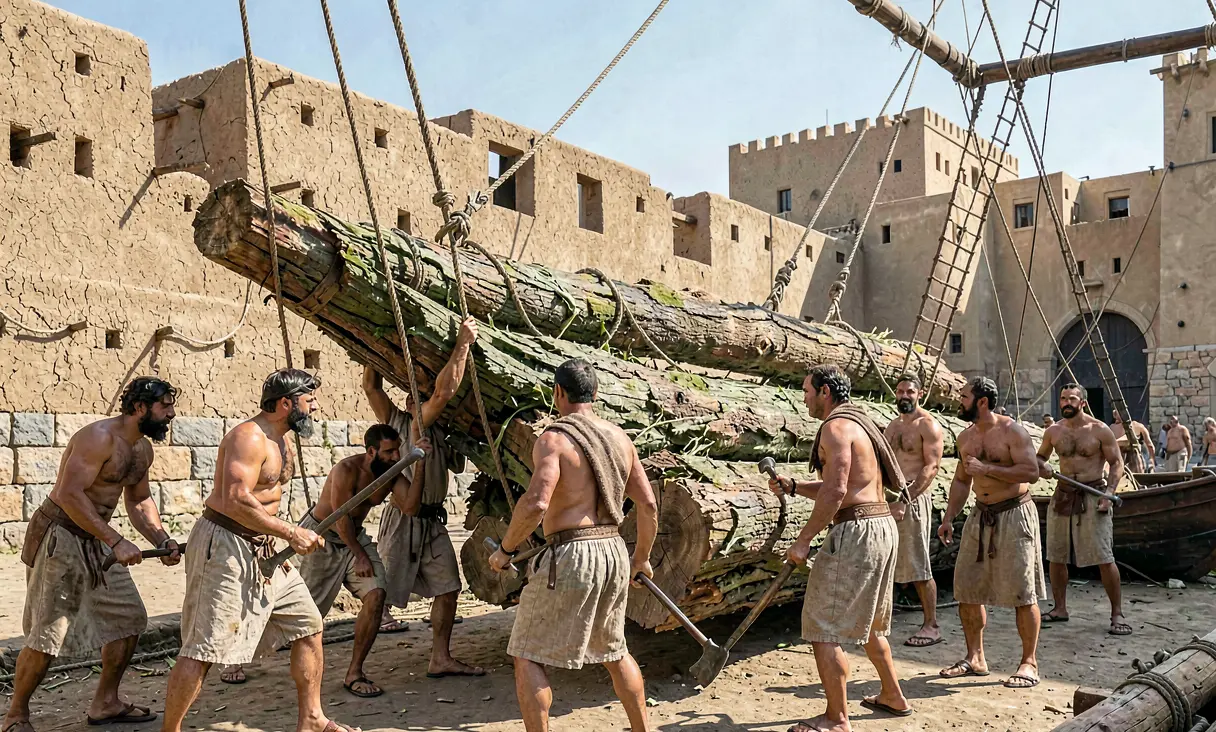
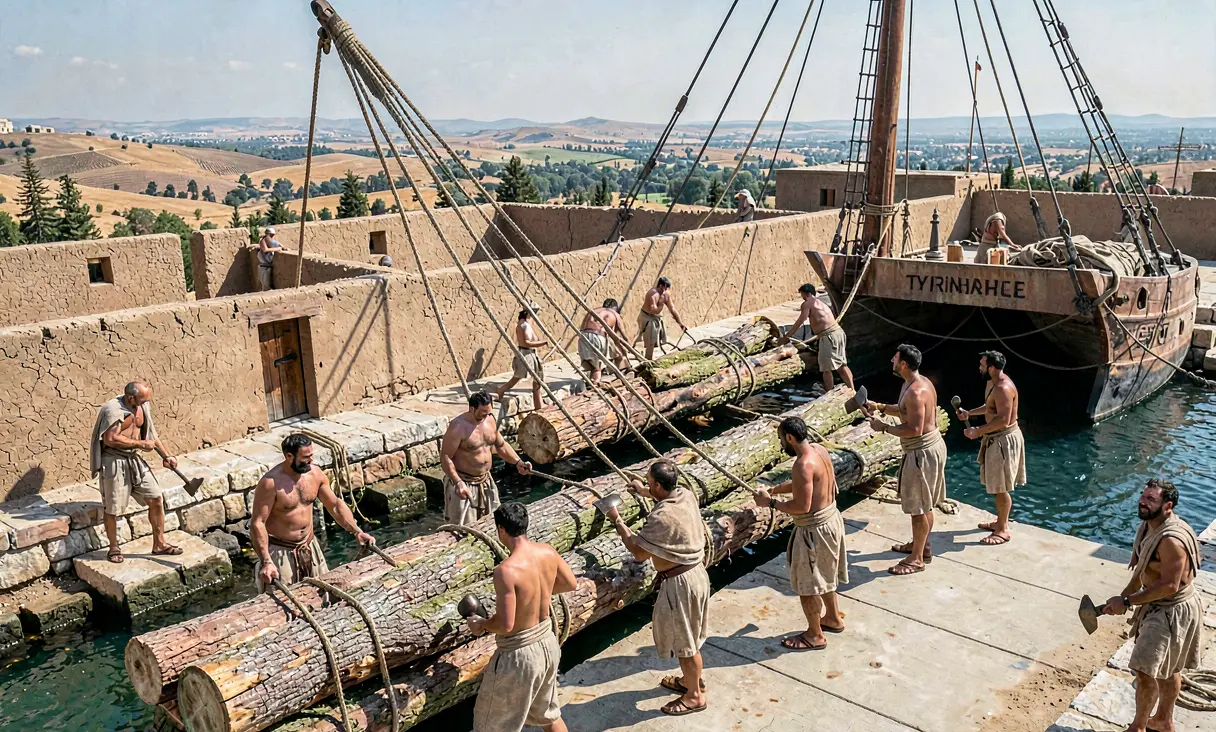
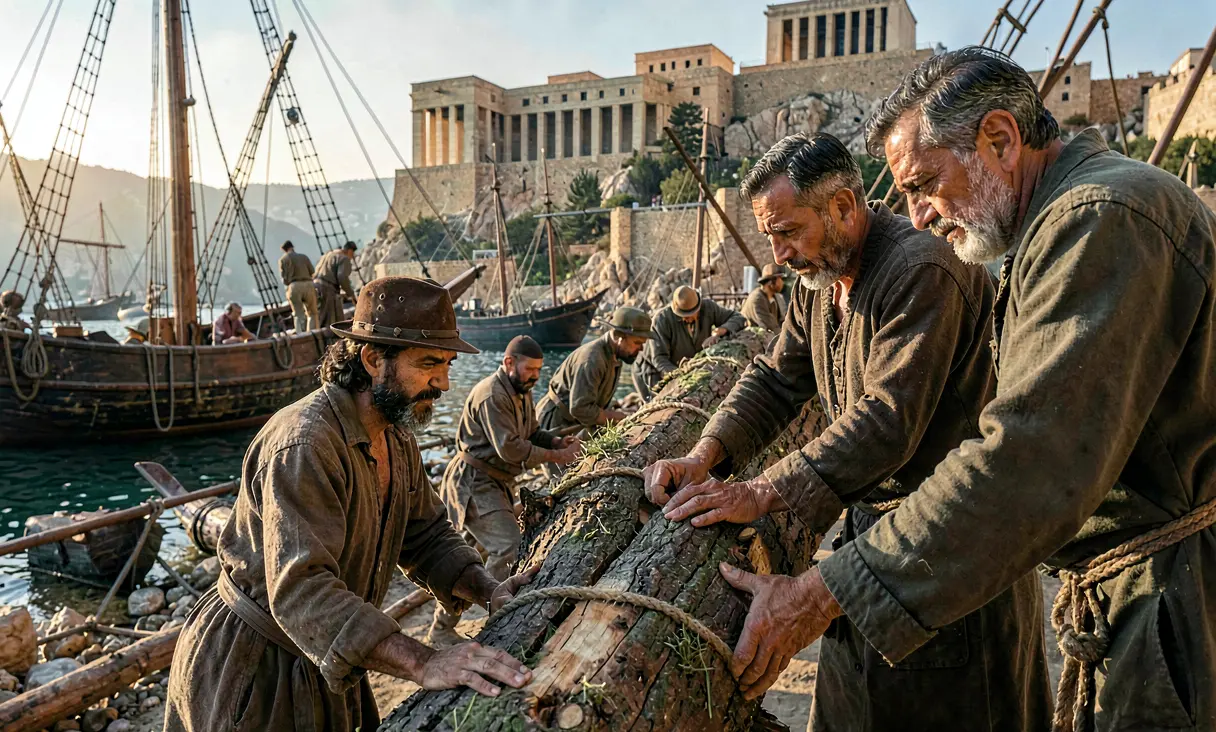
The execution of this agreement involved one of the most complex logistical operations of the ancient Near East. Hiram's loggers felled massive cedar trees in the highlands of Lebanon, a process that required specialized knowledge to harvest timber without damaging the valuable root systems or the surrounding ecosystem. The logs were then dragged to the coast and assembled into massive rafts, which were floated down the Mediterranean Sea to the port of Joppa (modern-day Jaffa). From there, the timber was transported overland to Jerusalem, a journey that required significant manpower and engineering to navigate the steep Judean hills. This maritime-terrestrial supply chain demonstrated the sophistication of Phoenician naval technology and their ability to project resources across vast distances.
Architectural Synthesis and Cultural Exchange
The arrival of Phoenician artisans marked a pivotal moment in Israelite architectural history, introducing sophisticated techniques and aesthetic motifs that had previously been unknown in the highlands. The construction of Solomon's Temple (the First Temple) utilized the cedar not only for structural beams but also for interior paneling, carving intricate cherubim, palm trees, and open flowers—iconography deeply rooted in Phoenician religious art. The temple's design, featuring a tripartite structure with an outer courtyard, a Holy Place, and a Most Holy Place (Debir), reflects the influence of contemporary Canaanite and Phoenician temple architecture, such as that found at Tell Tayinat or Byblos. This collaboration effectively merged Israelite theological requirements with Phoenician craftsmanship, creating a monumental edifice that served as the physical center of Yahwistic worship.
Economic Consequences and Regional Stability
The partnership yielded profound economic benefits for both kingdoms, stabilizing their respective economies through specialized trade. For Tyre, the influx of high-quality grain and oil from Israel's rich agricultural valleys allowed the city-state to focus entirely on maritime commerce and luxury production, fueling its rise as a dominant trading hub in the Mediterranean. For Solomon, the guaranteed supply of timber enabled the construction not only of the Temple but also of his own palace complex and major fortification projects across the kingdom. This era of prosperity facilitated the expansion of Israelite trade routes toward Arabia and the Red Sea, often conducted jointly with Phoenician partners, further integrating the Levant into the broader ancient world economy.
Legacy of the Cedar Alliance
The legacy of Hiram I's contribution to Solomon's Temple extends far beyond the physical structure itself, which was later destroyed by the Babylonians in 586 BCE. The event established a historical precedent for diplomatic cooperation between Israel and Phoenicia that would influence regional politics for centuries. Furthermore, the cedar wood became a symbol of divine presence and royal authority in Hebrew literature, frequently cited in Psalms and prophetic books as a metaphor for strength and majesty. The architectural and artistic fusion achieved during this period left an indelible mark on Near Eastern culture, demonstrating how cross-cultural exchange could elevate material culture to new heights. Ultimately, the alliance stands as a testament to the interconnectedness of the ancient world, where geography dictated necessity and diplomacy turned scarcity into prosperity.
The alliance demonstrates the critical role of Phoenician resources and craftsmanship in building one of antiquity's most important religious sites.
Where it happened
Jerusalem / Tyre (Lebanon) — see it on the interactive map →
Explore related history
 ExplorationLapita Expansion into the Bismarck Archipelagoc. 1500 BCE · Bismarck Archipelago, Papua New GuineaLapita people migrate from Island Melanesia into the Bismarck Archipelago, establishing distinct pottery traditions.
 ExplorationEnd of Zheng He's Voyages and Ming Isolationism1433 CE · East Africa / China CoastThe Ming Dynasty halts the great naval expeditions and restricts maritime trade.
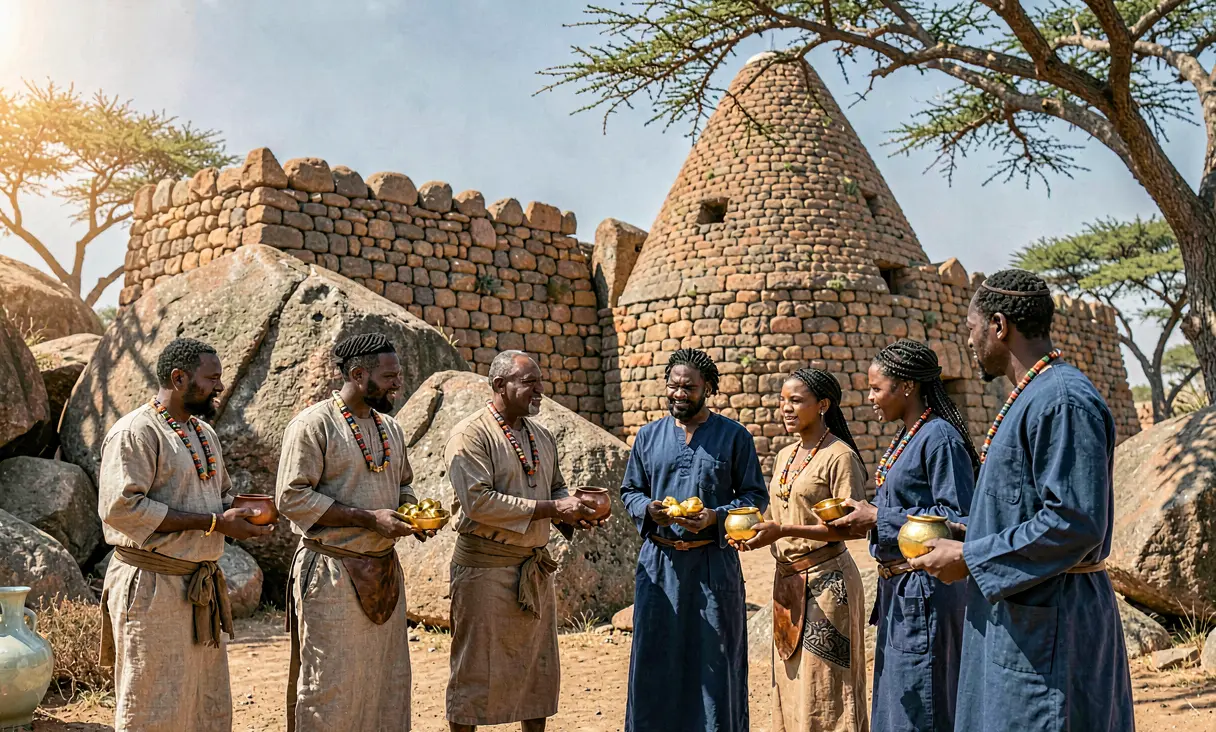 ExplorationGreat Zimbabwe Dominates Gold Trade with Kilwac. 1400 CE · Great Zimbabwe, ZimbabweArchaeological evidence confirms extensive gold trade between Great Zimbabwe and Swahili coastal cities.
 PoliticsEmperor Taizu Establishes the Song Dynasty960 CE · Kaifeng, ChinaZhao Kuangyin seizes power in the Chenqiao Mutiny, founding the Northern Song and centralizing authority.
 CivilizationRise of the Chimú Kingdom at Chan Chanc. 1000 CE · Chan Chan, PeruThe Chimú establish the largest adobe city in the Americas at Chan Chan.
 ExplorationLapita Settlement in Western Samoac. 1000 BCE · Western SamoaLapita voyagers reach the Samoan archipelago, marking the first entry into Remote Oceania.
Discussion
Loading…