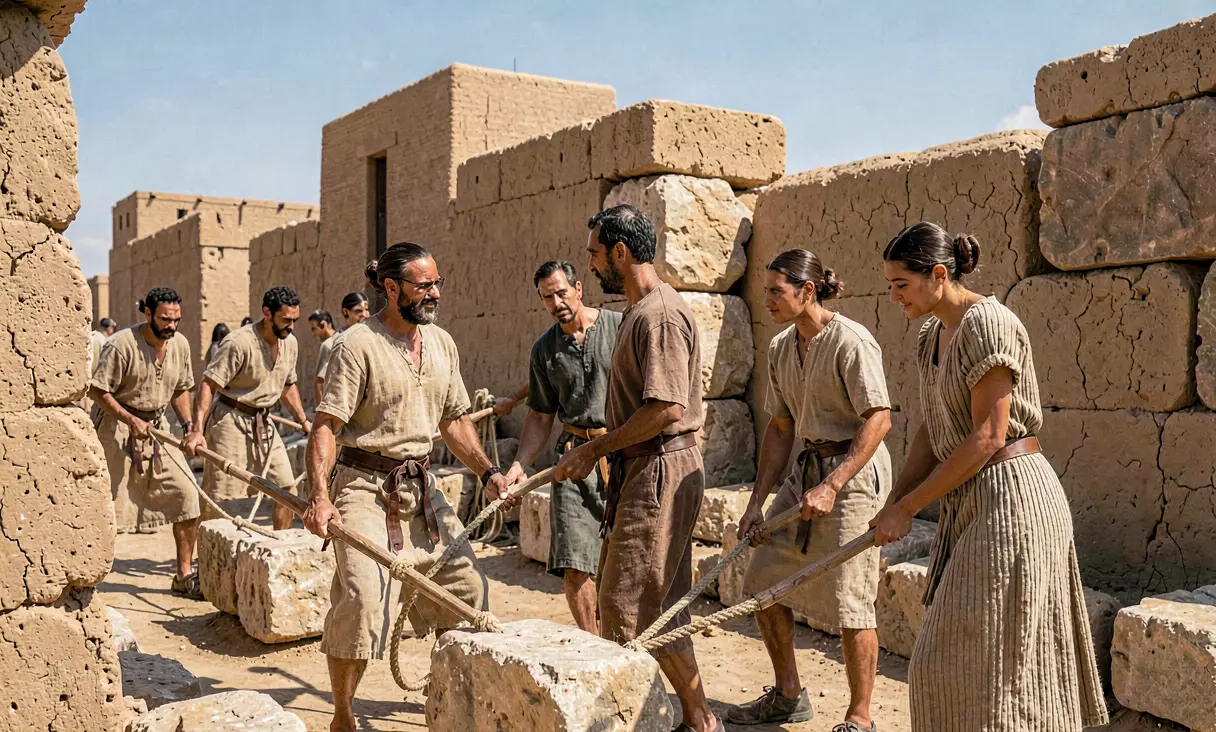
Foundation of Carthage by Phoenician Colonists
Founded c. 814 BCE by Phoenician refugees led by Queen Elissa, Carthage evolved from a strategic trading post into a maritime empire that challenged Rome for dominance of the Mediterranean.
The Phoenician Diaspora and Western Expansion
By the early first millennium BCE, the Levantine city-states of Tyre, Sidon, and Byblos had established themselves as the preeminent maritime powers of the ancient world. Driven by a scarcity of arable land at home and an insatiable demand for metals like silver, tin, and gold from the distant west, Phoenician merchants began establishing trading posts along the North African coast. This era marked a shift from simple commercial outposts to permanent colonization, necessitated by the need to secure safe harbors and control the vital sea lanes connecting the resource-rich Iberian Peninsula with the Greek world. The political landscape of the eastern Mediterranean was also shifting; the rise of Neo-Assyrian hegemony in the 9th century BCE exerted pressure on Tyre, prompting a strategic westward migration that would irrevocably alter the demographic and cultural map of the Mediterranean basin.
The Legend of Elissa and the Oxhide Tract
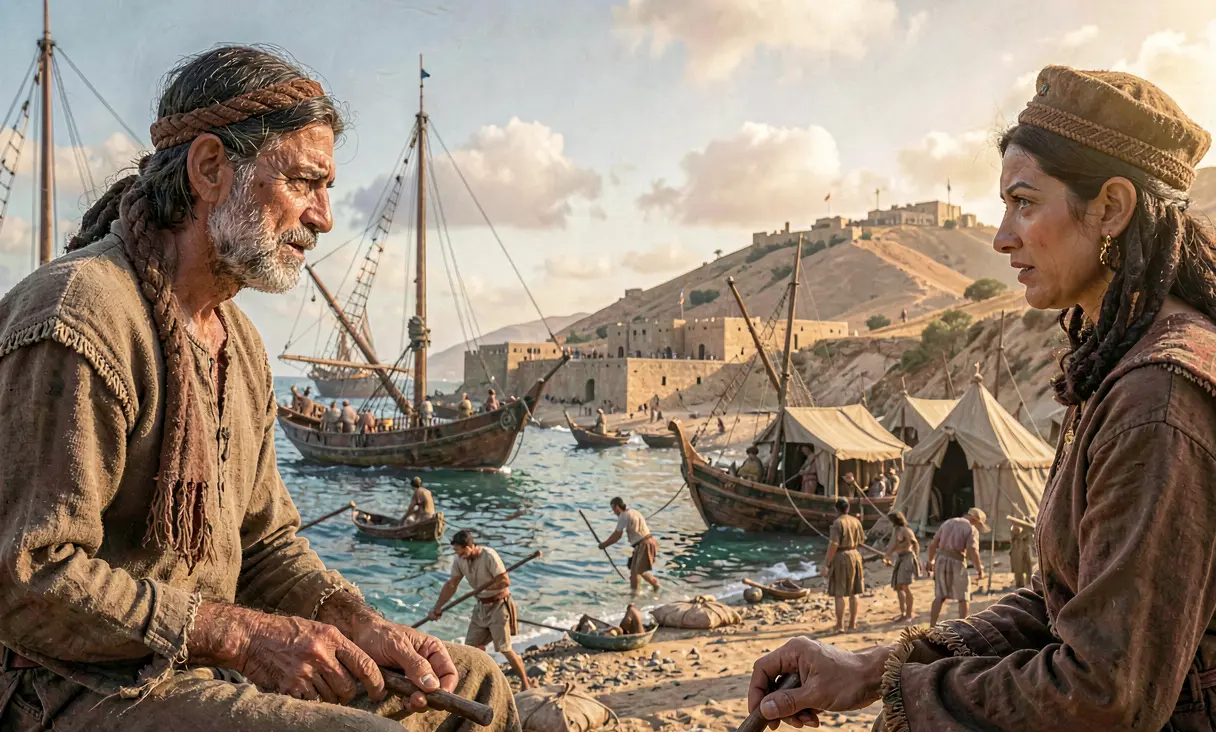
Ancient tradition attributes the founding of Carthage to Queen Elissa, known in Greek sources as Dido, a princess who fled Tyre following the murder of her husband, Sychaeus, by her brother Pygmalion. According to the narrative preserved by Roman historian Justin and later elaborated by Virgil, Elissa led a fleet of Phoenician refugees to the shores of modern-day Tunisia around 814 BCE. Upon arrival, she negotiated with the local Berber chieftain Iarbas for land, requesting only what could be covered by an oxhide. In a display of cunning characteristic of Phoenician diplomacy and ingenuity, Elissa cut the hide into thin strips to encircle a significant hill, thereby securing the site that would become the Byrsa citadel. This foundational myth underscores the city's origins not merely as a military conquest but as a feat of diplomatic negotiation and strategic foresight.
Strategic Geography and Urban Genesis
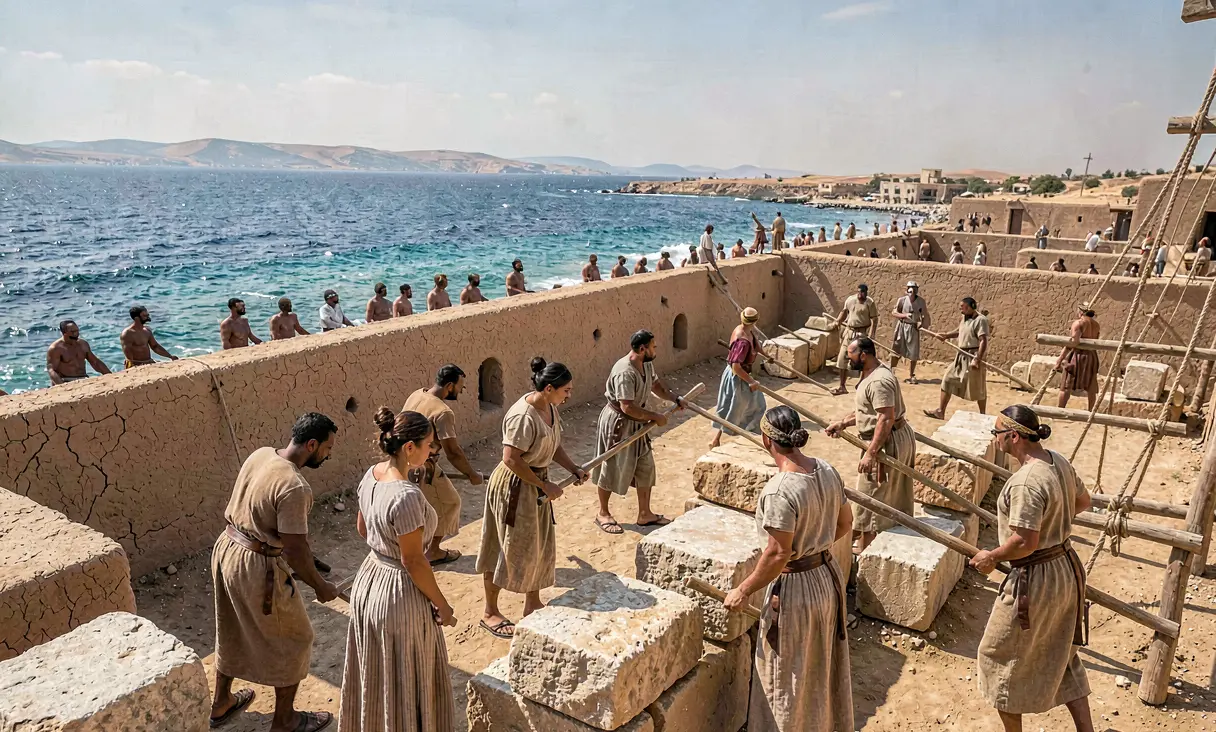
The chosen location was a narrow peninsula jutting into the Gulf of Tunis, offering natural protection from storms and a commanding view of the surrounding waters. The site featured two adjacent harbors: a circular military harbor capable of housing hundreds of warships and a rectangular commercial port for merchant vessels, a dual-system that would define Carthage's naval supremacy for centuries. Archaeological evidence suggests that while the precise date of 814 BCE is derived from later literary calculations (specifically Menander of Ephesus via Josephus), the material culture confirms a rapid establishment of Tyrian-style architecture and pottery in the late 9th or early 8th century BCE. The city was laid out with a grid plan typical of Phoenician urbanism, centered around the sacred precinct dedicated to Tanit and Baal Hammon, establishing a distinct Punic identity separate from its mother city.
From Colony to Hegemon: The Rise of Carthage
Within two centuries of its foundation, Carthage had eclipsed Tyre as the dominant Phoenician power in the western Mediterranean. While the eastern colonies remained under the shadow of Assyrian and later Persian empires, Carthage operated with increasing autonomy, eventually evolving into a sovereign oligarchic republic. The city leveraged its strategic position to monopolize trade routes, controlling access to the Strait of Gibraltar and dominating the tin trade from Cornwall and the silver mines of Spain. Unlike the Greek colonization model, which often involved direct conflict with indigenous populations, Carthage initially maintained a symbiotic relationship with local Numidian tribes, utilizing them for agriculture and military support while focusing its own resources on maritime commerce and naval innovation.
The Punic Legacy and the Clash of Civilizations
The foundation of Carthage set in motion a chain of events that would define the geopolitical history of antiquity for nearly eight hundred years. The city's expansion brought it into inevitable conflict with the rising Greek powers in Sicily, leading to centuries of warfare known as the Sicilian Wars. More significantly, its westward and northward growth eventually clashed with the expanding Roman Republic, culminating in the Punic Wars. These conflicts were not merely territorial disputes but a struggle for the soul of the Mediterranean economy. The destruction of Carthage in 146 BCE marked the end of Phoenician political independence, yet the city's cultural imprint endured; its agricultural treatises, legal codes, and urban planning influenced Roman administration, while its language, Punic, persisted in North Africa long after the fall of Rome.
Historical Significance and Archaeological Reality
While the romanticized tale of Dido provides a compelling narrative framework, modern archaeology confirms Carthage's rapid ascent as a complex urban center. Excavations in the Tophet sanctuary reveal extensive religious practices involving child sacrifice, a practice that fueled Roman propaganda but also highlights the distinct and often brutal nature of Punic theology. The city's foundation represents a pivotal moment where the eastern Mediterranean civilization successfully transplanted itself to Africa, creating a hybrid culture that blended Semitic traditions with indigenous Berber elements. This synthesis created a maritime empire that, for nearly six centuries, stood as the primary counterweight to Hellenistic and Roman power, fundamentally shaping the economic and cultural contours of the ancient world.
The founding of Carthage created a dominant western Mediterranean power that would shape classical history for centuries.
Where it happened
Carthage (Tunis), Tunisia — see it on the interactive map →
Explore related history
 ExplorationLapita Expansion into the Bismarck Archipelagoc. 1500 BCE · Bismarck Archipelago, Papua New GuineaLapita people migrate from Island Melanesia into the Bismarck Archipelago, establishing distinct pottery traditions.
 ExplorationEnd of Zheng He's Voyages and Ming Isolationism1433 CE · East Africa / China CoastThe Ming Dynasty halts the great naval expeditions and restricts maritime trade.
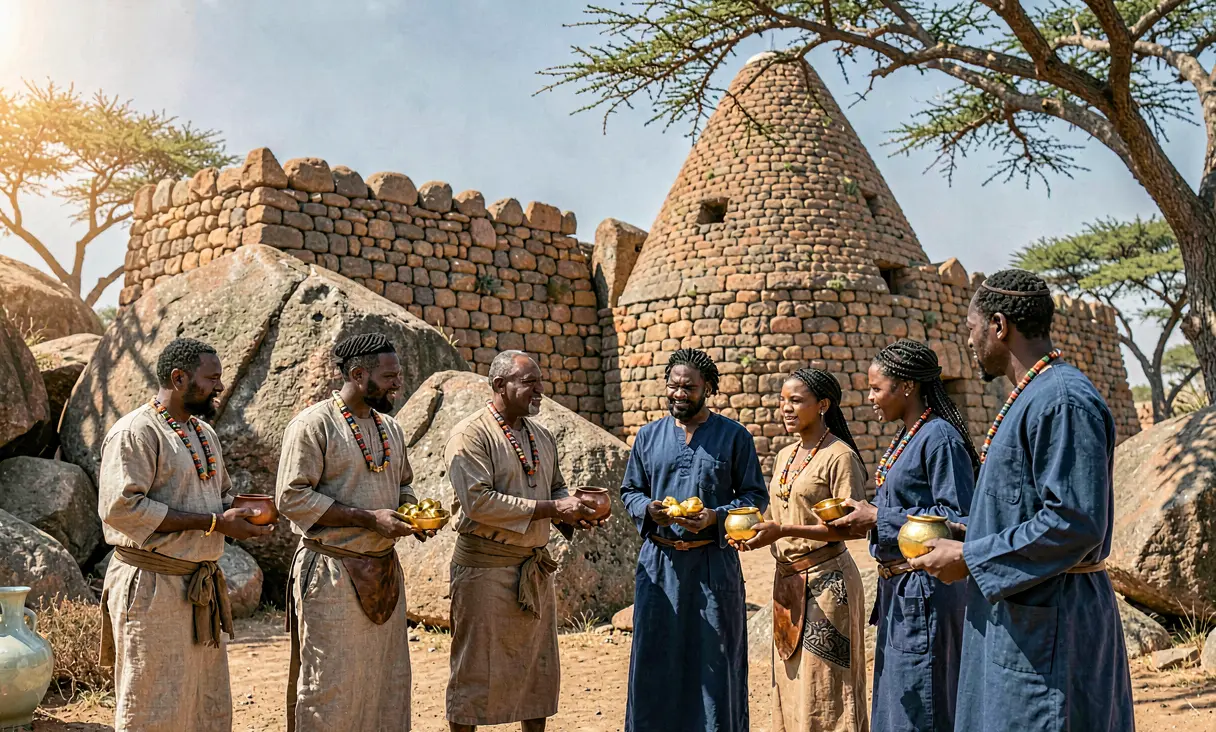 ExplorationGreat Zimbabwe Dominates Gold Trade with Kilwac. 1400 CE · Great Zimbabwe, ZimbabweArchaeological evidence confirms extensive gold trade between Great Zimbabwe and Swahili coastal cities.
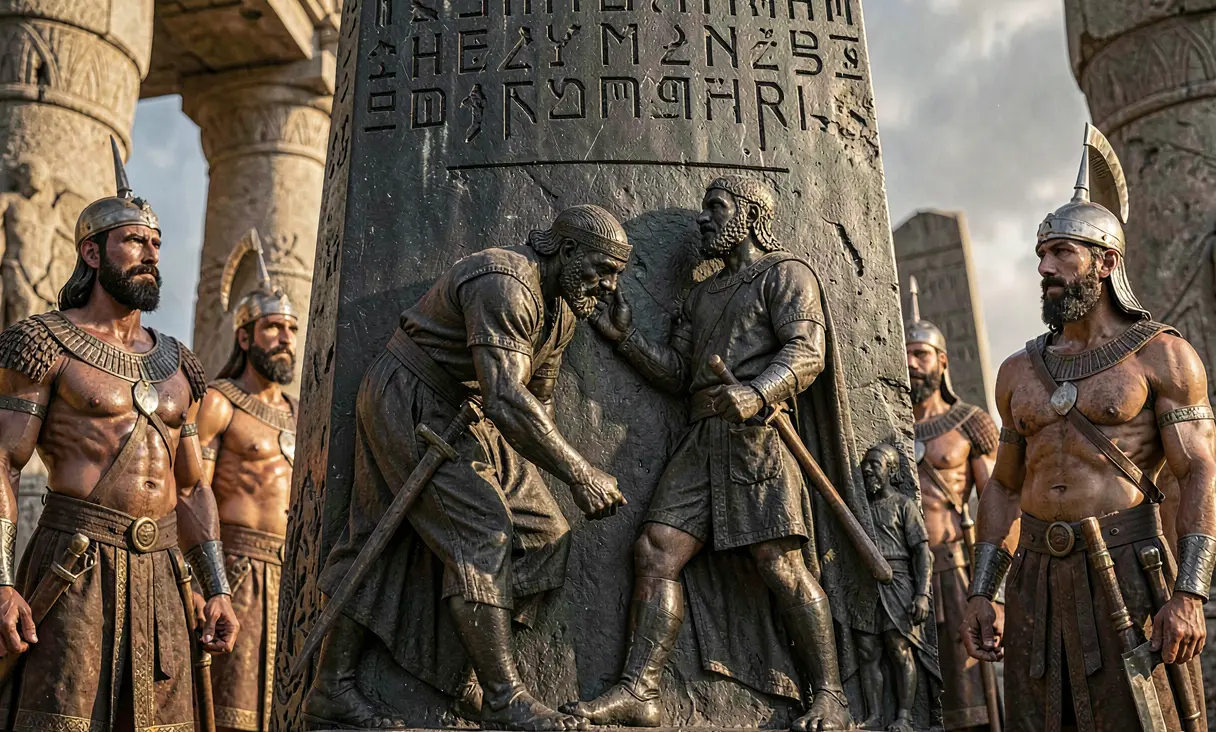 ArtErection of the Black Obelisk by Shalmaneser IIIc. 825 BCE · Nineveh (Mosul), IraqShalmaneser III erects an obelisk depicting the submission of King Jehu of Israel.
 PoliticsJayavarman II Declares Independence from Java802 CE · Mount Kulen, CambodiaJayavarman II performs the Devaraja ceremony, founding the Khmer Empire and declaring independence.
 WarHuang Chao Rebellion and Fall of Tang874 CE · Shandong Province, ChinaHuang Chao leads a massive peasant uprising that sacks Chang'an and destroys Tang authority.
Discussion
Loading…