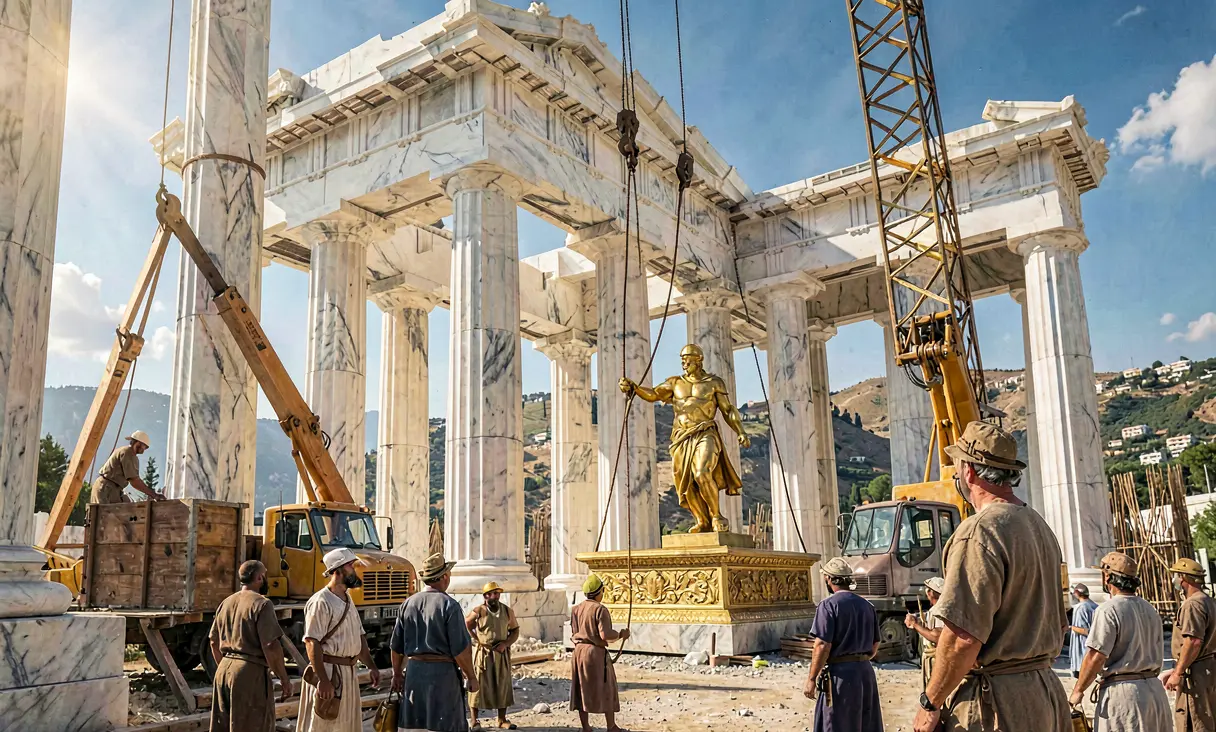
Construction of the Parthenon Begins
In 447 BCE, Athens began constructing the Parthenon under Pericles, creating a marble masterpiece that defined Western architecture and symbolized the democratic city-state's cultural zenith.
The Golden Age and Political Ambition
By the mid-5th century BCE, Athens had emerged from the devastation of the Persian Wars as the preeminent naval power in the Aegean. Under the leadership of the statesman Pericles, the city sought to transform its Acropolis—a sacred hill scarred by Persian destruction during the sack of 480 BCE—into a monument to Athenian supremacy and democratic ideals. The decision to rebuild was not merely religious; it was a profound political maneuver designed to utilize the surplus funds of the Delian League, an alliance originally formed for defense against Persia but increasingly dominated by Athens. Pericles argued that these funds belonged to the allies only so long as they were needed for defense, and since no Persian threat remained imminent, the money could be used to beautify the city and provide employment for its citizens.
The Architects and the Design
In 447 BCE, the project was entrusted to two of the most brilliant architects of antiquity: Ictinus and Callicrates. Their task was to construct a temple dedicated to Athena Parthenos that would surpass all previous Greek temples in scale, beauty, and technical sophistication. The design broke with tradition by replacing the older wooden and limestone structures with Pentelic marble, quarried from Mount Pentelikon approximately 18 kilometers away. This material choice was deliberate; Pentelic marble possesses a warm, honeyed hue that shifts dramatically under sunlight, creating a living texture that changes throughout the day. The architects conceived a Doric peripteral temple measuring roughly 69.5 meters by 30.9 meters, featuring eight columns across the short ends and seventeen along the long sides, establishing a harmonious ratio that would define Classical architecture for millennia.
Engineering Mastery and Optical Corrections
The construction of the Parthenon represented a pinnacle of engineering precision, driven by an obsession with visual perfection rather than mathematical rigidity. Ictinus and Callicrates understood that straight lines viewed from a distance often appear to sag or warp to the human eye. To counteract this optical illusion, they employed a series of subtle refinements known as entasis and curvature. The stylobate, or base platform, curves upward slightly in the center by about 11 centimeters on the long sides, preventing the appearance of a downward dip. Similarly, the columns lean inward minutely, and their shafts bulge slightly in the middle to avoid looking concave. These adjustments were so precise that they are nearly invisible to the naked eye, yet they ensure that the temple appears perfectly straight and dynamic when viewed from ground level.
The Statue of Athena and Phidias
While the architects designed the shell, the interior was destined to house a masterpiece by the sculptor Phidias, who served as the overall artistic director of the entire Acropolis project. The centerpiece was the chryselephantine statue of Athena Parthenos, standing over 12 meters tall. Crafted from sheets of gold and ivory mounted on a wooden core, the goddess depicted in full armor held a winged Nike (Victory) in her right hand and a shield in her left. The sheer scale and material cost of the statue were staggering; it reportedly contained over one ton of solid gold, which could be removed if necessary for emergency state funds. Phidias's work was not merely decorative but theological, embodying the protective presence of the city's patron deity and serving as a tangible manifestation of Athens' divine favor.
Construction Timeline and Labor
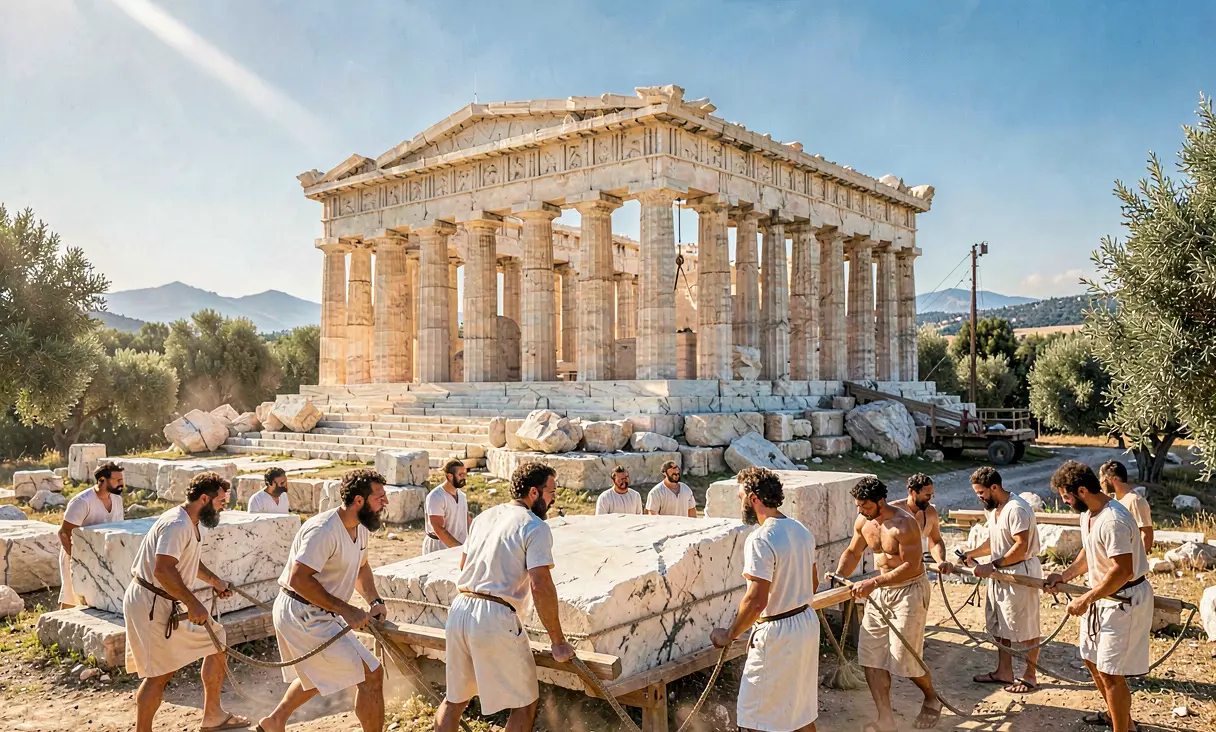
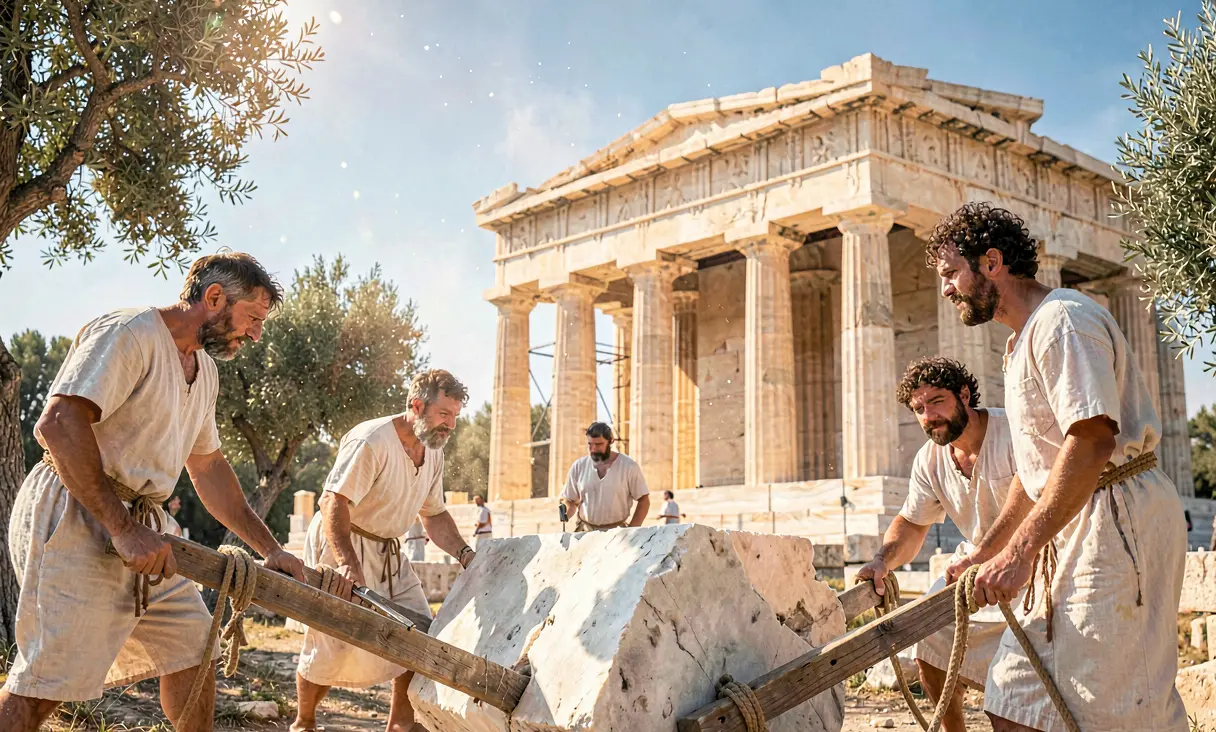
The construction of the Parthenon proceeded with remarkable speed for such an ambitious undertaking. The primary structure was largely completed by 432 BCE, just five years before Pericles's death, although decorative elements like the pedimental sculptures continued to be added until 438 BCE. The workforce consisted of a diverse mix of Athenian citizens, metics (resident aliens), and skilled slaves, all working in a highly organized system that included stonecutters, masons, carpenters, and painters. The logistics were immense; thousands of tons of marble had to be quarried, transported via sledges and ox-carts to the port at Phaleron, shipped up the harbor, and hauled up the Acropolis slope using complex ramp systems and cranes powered by human treadwheels.
Legacy and Enduring Symbolism
The completion of the Parthenon marked the zenith of Classical Greek civilization, symbolizing a fleeting moment where democracy, art, and philosophy converged. Although it suffered significant damage over subsequent millennia—serving as a Christian church, a Muslim mosque, and a Venetian ammunition depot that exploded in 1687—it remains the most iconic structure of ancient Greece. Its architectural language has been endlessly imitated, from the neoclassical buildings of Washington D.C. to modern government structures worldwide. The Parthenon stands not just as a ruin, but as an enduring testament to human ingenuity and the aspiration for perfection, encapsulating the spirit of the Athenian Golden Age in stone.
The Parthenon remains the supreme example of Classical Greek architecture and Western artistic ideals.
Where it happened
Athens Acropolis, Greece — see it on the interactive map →
Explore related history
 PoliticsErection of Stela 31 at Tikalc. 450 CE · Tikal, GuatemalaYax Nuun Ayiin I commemorates his victory and foreign alliances.
 ReligionParinirvana of the Buddhac. 483 BCE · Kushinagar (modern Uttar Pradesh/India)Siddhartha Gautama passes away, entering final Nirvana and leaving his disciples with the Dharma to guide them.
 ReligionFirst Buddhist Council at Rajgirc. 483 BCE · Rajgir (modern Bihar/India)Monks gather to recite and codify the Buddha's teachings after his death, preserving the Dharma for future generations.
Discussion
Loading…