Oda Nobunaga's Battle of Okehazama
In 1560, Oda Nobunaga's daring surprise attack at Okehazama killed Imagawa Yoshimoto, shattering a massive army and launching Nobunaga's campaign to unify Japan.
The Shadow of the Imagawa
By 1560, the Sengoku period in Japan was defined by relentless fragmentation and shifting alliances. In the east, the powerful Imagawa clan, led by the ambitious daimyo Imagawa Yoshimoto, controlled vast territories spanning Suruga, Tōtōmi, and Mikawa provinces. With an estimated army of 25,000 men, Yoshimoto marched west toward Kyoto with the explicit intent of seizing imperial capital and establishing himself as the de facto ruler of Japan. His path led directly through Owari Province, a relatively small and often overlooked domain ruled by Oda Nobunaga. While the Imagawa forces were formidable, their supply lines were overextended, and their command structure relied heavily on Yoshimoto's personal authority rather than decentralized initiative.
The Asymmetric Challenge
Oda Nobunaga faced a dire strategic predicament. His available forces numbered only between 2,000 and 3,000 men, a fraction of the enemy's strength. Traditional military doctrine of the era would have dictated a defensive posture, retreating to fortified castles like Kiyosu or Nagoya (Nagoya Castle) to wear down the invaders. However, Nobunaga recognized that a static defense against such overwhelming odds would likely result in his eventual defeat as neighboring clans turned on him once the Imagawa army had passed. Instead of retreat, he chose a path of extreme audacity: a preemptive strike designed to decapitate the enemy leadership before the full weight of their army could be brought to bear.
The March and The Storm
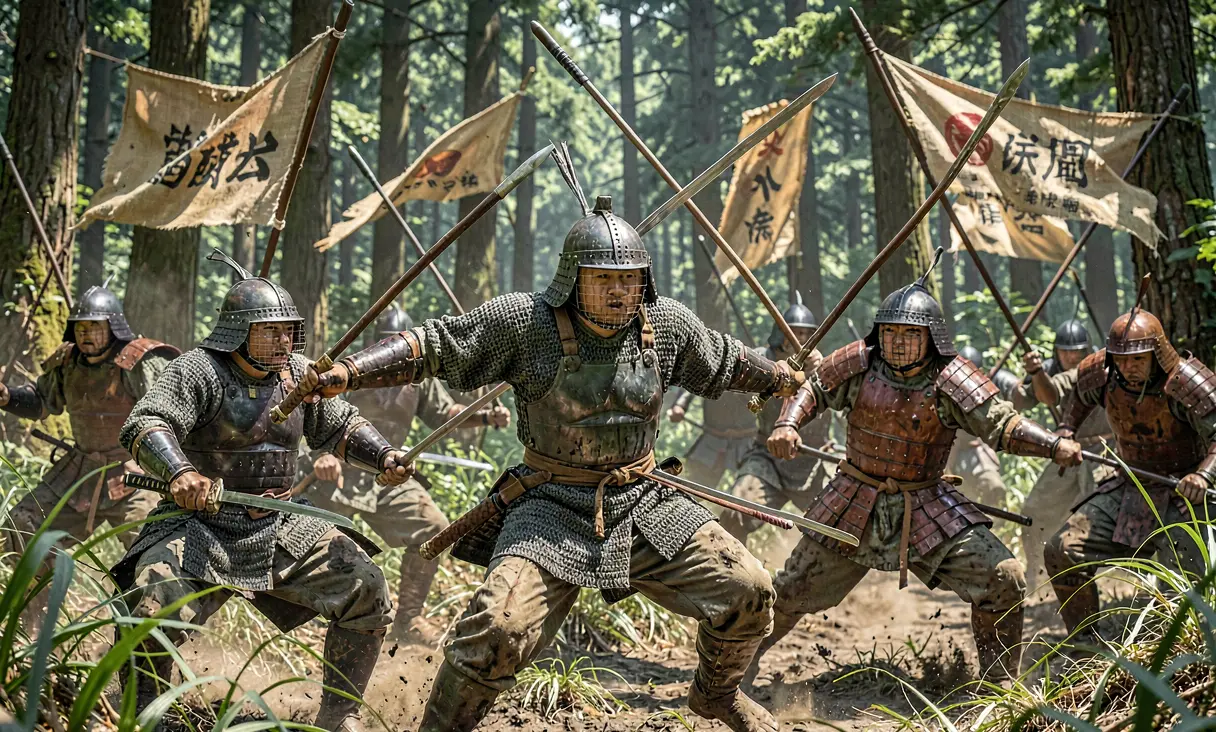
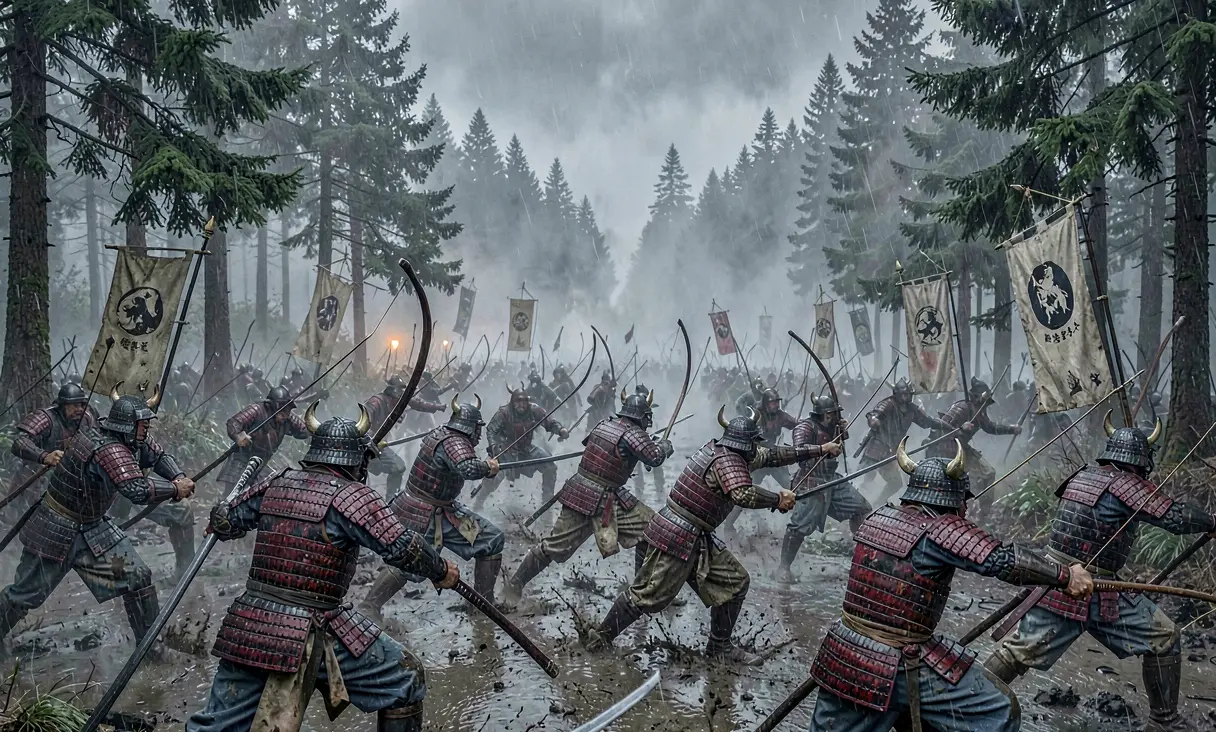
On June 12, 1560, Yoshimoto established his main camp at Dengakuhazama, a narrow valley near the village of Okehazama in present-day Aichi Prefecture. Believing his flank was secure due to the difficult terrain and the belief that Nobunaga was paralyzed by fear, the Imagawa commander relaxed his guard. He celebrated early victories with sake, unaware that Nobunaga had already marched his small force from Kiyosu Castle under the cover of darkness and heavy rain. A sudden summer thunderstorm provided the perfect concealment for Nobunaga's troops as they maneuvered through dense forests and rugged paths to reach the rear of the Imagawa encampment.
The Decapitation Strike
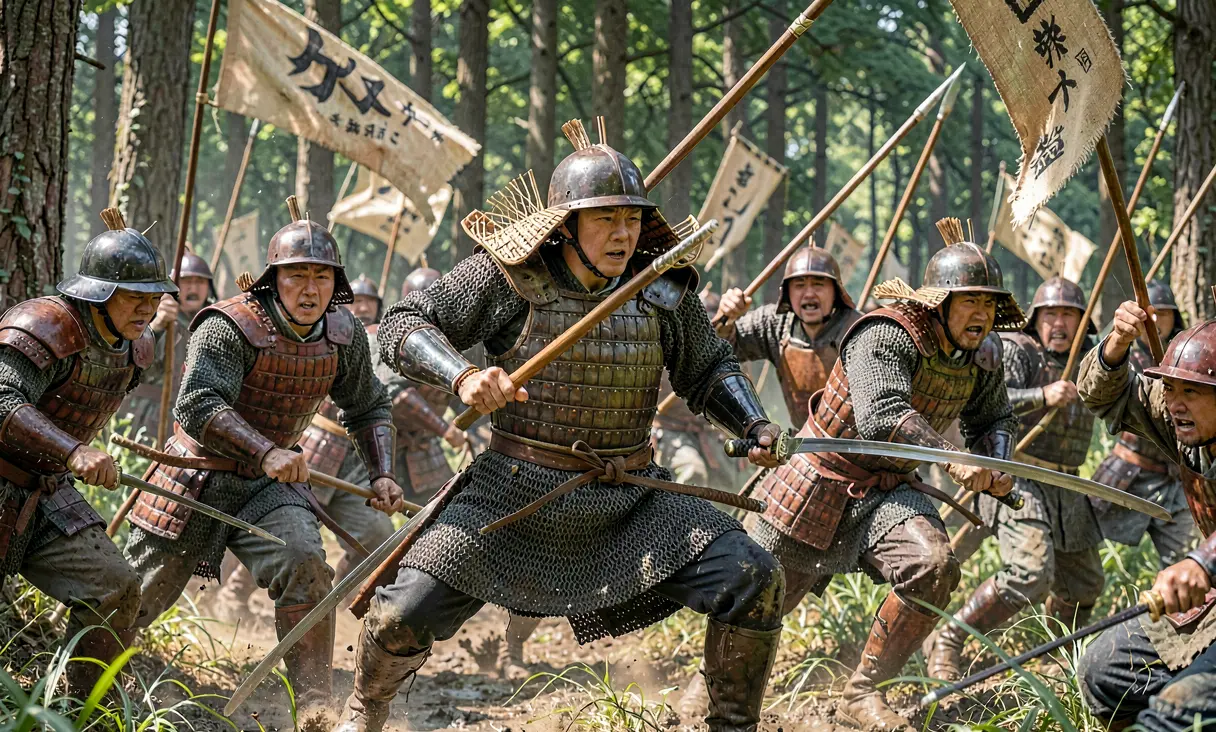
As the storm broke, the Oda forces launched a chaotic but precise assault directly into Yoshimoto's camp. The confusion was absolute; many Imagawa soldiers mistook their attackers for reinforcements or were too disoriented by the weather to mount an organized defense. Nobunaga's warriors bypassed the main army and targeted the command tent specifically. In the ensuing melee, Oda general Mori Shigemoto struck down Yoshimoto with a spear thrust while the warlord was attempting to flee on horseback. The death of their supreme commander caused immediate panic and disintegration within the Imagawa ranks. Without Yoshimoto's charismatic leadership, the vast army dissolved into a rout, with thousands killed or captured in the chaos.
A New Era Dawns
The Battle of Okehazama was not merely a tactical victory; it was a geopolitical earthquake. The death of Imagawa Yoshimoto instantly shattered the power of his clan, which had been one of the three dominant forces in eastern Japan. In the immediate aftermath, key vassals like Tokugawa Ieyasu (then known as Matsudaira Motoyasu) broke away from the Imagawa alliance to secure their own independence. This vacuum allowed Nobunaga to rapidly expand his influence beyond Owari, transforming him overnight from a minor regional lord into a major contender for national supremacy. The victory validated his unconventional tactics and demonstrated that boldness could overcome numerical superiority.
Legacy of the Unlikely Victor
Historians regard Okehazama as one of the most significant turning points in Japanese history, marking the true beginning of the unification process that would eventually lead to the Edo period. The battle established a precedent for military innovation and psychological warfare that Nobunaga would continue to refine throughout his career. It demonstrated the decline of traditional feudal hierarchies where birthright guaranteed command, favoring instead merit and strategic genius. The event remains a quintessential example in military history of how terrain, weather, and decisive leadership can overturn impossible odds, forever altering the trajectory of the Sengoku period.
The victory at Okehazama launched Oda Nobunaga's rise as the unifier of Japan, initiating the process that ended centuries of feudal warfare.
Where it happened
Okehazama, Aichi, Japan — see it on the interactive map →
Explore related history
 WarAlgerian War of Independence BeginsNovember 1, 1954 · Algiers, AlgeriaThe National Liberation Front launches coordinated attacks marking the start of the Algerian War against France.
 WarMau Mau Uprising Begins in KenyaOctober 20, 1952 · Nairobi, KenyaThe Kikuyu-led Mau Mau rebellion begins against British colonial rule and white settler land ownership.
 WarTurkish War of Independence BeginsMay 19, 1919 · Samsun, TurkeyMustafa Kemal Atatürk lands in Samsun to organize resistance against Allied occupation and the Ottoman Sultanate.
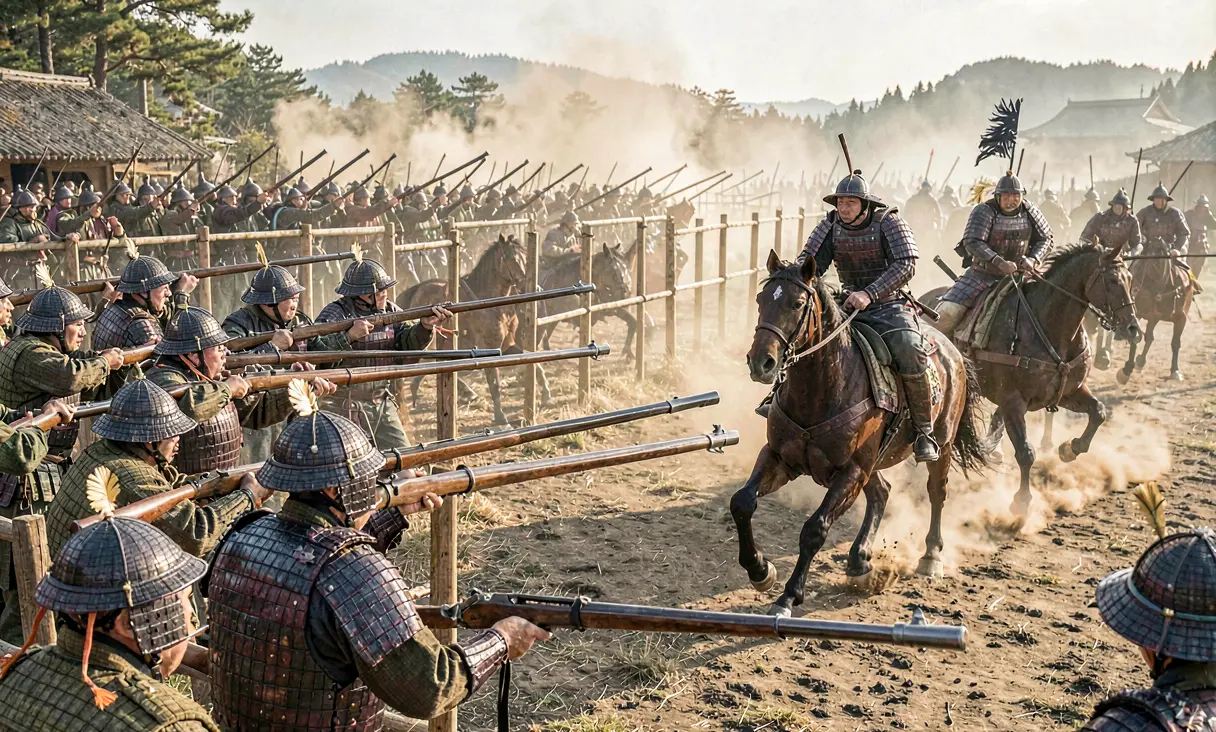 WarBattle of Nagashino: Introduction of Massed Firepower1575 CE · Nagashino, JapanOda Nobunaga and Tokugawa Ieyasu use rotating arquebus volleys to defeat Takeda cavalry.
 PoliticsTran and Le Dynasties Split Vietnam (North-South Division)1533 CE · Hanoi / Hue, VietnamThe Mac Dynasty usurps the throne, leading to a prolonged civil war between North and South.
 WarHideyoshi's First Invasion of Korea (Imjin War)1592 CE · Seoul (Hanyang), KoreaToyotomi Hideyoshi launches a massive invasion of Joseon Korea to conquer Ming China.
Discussion
Loading…