
Ascension of the Nanda Dynasty
In 345 BCE, Mahapadma Nanda overthrew the Shishunaga dynasty to establish a wealthy, militarized empire that unified northern India and laid the administrative foundation for the Mauryan Empire.
The Twilight of the Shishunagas
By the mid-4th century BCE, the Magadha kingdom, long the preeminent power in northern India under the Shishunaga dynasty, faced internal stagnation and external pressure. The Shishunagas had expanded Magadhan territory significantly, but their later rulers struggled to maintain control over a fracturing realm. The capital, Pataliputra (modern-day Patna), remained a strategic stronghold on the Ganges, yet the administrative machinery was faltering under the weight of regional satraps and the rising influence of non-Kshatriya elements within the court. This period of political volatility created a vacuum that allowed ambitious military commanders to seize power, setting the stage for a radical shift in the subcontinent's geopolitical landscape.
The Rise of Mahapadma Nanda
Around 345 BCE, Mahapadma Nanda, a figure of controversial lineage often described in Puranic texts as the son of a Shishunaga king and a barber woman (or Sudra), orchestrated a coup that dismantled the existing order. Unlike previous transitions which were often dynastic successions or gradual usurpations, Mahapadma's ascent was marked by the systematic extermination of all Kshatriya rivals, earning him the epithet 'Ekarat' or 'Sole Ruler.' He did not merely succeed to the throne; he founded a new imperial house, the Nanda Dynasty, claiming sovereignty over a vast swathe of territory that stretched from Bengal in the east to the Punjab in the west. His rise signaled a decisive break from traditional varna-based legitimacy, prioritizing military might and administrative efficiency over hereditary caste purity.
Military Might and Economic Centralization
The Nanda Empire was defined by its unprecedented scale of military mobilization and fiscal centralization. Greek sources, referring to the dynasty as 'Agrammes' or 'Xandrames,' marveled at the sheer size of the Nanda army, which ancient historians like Plutarch estimated at 200,000 infantry, 2,000 chariots, and 3,000 war elephants. This standing force dwarfed any contemporary power in the region and served as a deterrent against both internal rebellion and external invasion, particularly from the northwestern frontier where Alexander the Great would soon arrive. To sustain this colossal apparatus, Mahapadma and his successors implemented a rigorous taxation system, extracting heavy levies from agriculture and trade while establishing a centralized bureaucracy that bypassed local chieftains to report directly to the imperial court in Pataliputra.
The Consolidation of Northern India
Under the Nandas, the concept of a unified northern Indian empire moved from theoretical possibility to administrative reality. The dynasty absorbed the remnants of the Vajji confederacy and other smaller republics, integrating them into a single political entity for the first time in recorded history. This consolidation was not merely territorial but infrastructural; the Nanda administration improved road networks and standardized revenue collection, creating a fiscal surplus that was legendary even among their contemporaries. The accumulation of such vast wealth allowed the empire to project power far beyond its core, effectively unifying the Gangetic plain and establishing Pataliputra as the undisputed political center of the subcontinent.
The Precursor to the Mauryan Empire
The Nanda Dynasty's legacy is inextricably linked to its role as the direct precursor to the Mauryan Empire. Although the Nandas were eventually overthrown by Chandragupta Maurya around 321 BCE, they had laid the essential groundwork for India's first pan-Indian empire. The administrative structures, the standing army, and the centralized revenue systems developed under Mahapadma were not dismantled but rather inherited and refined by Chandragupta and his mentor Chanakya (Kautilya). The immense resources accumulated by the Nandas provided the material basis for Mauryan expansion, proving that a single authority could govern the diverse and vast territories of northern India. Without the Nanda experiments in statecraft, the rapid rise and consolidation of the Mauryas would have been improbable.
Historical Significance and Legacy
The ascension of the Nanda Dynasty represents a pivotal turning point in ancient Indian history, marking the transition from regional kingdoms to imperial hegemony. It demonstrated that political power could be seized through military prowess and administrative reform rather than solely through divine right or caste lineage. The dynasty's ability to mobilize resources on such a massive scale influenced the geopolitical strategies of subsequent rulers for centuries. While their rule was relatively short-lived compared to the Mauryas, the Nandas established the blueprint for Indian statecraft, proving that a centralized bureaucracy could effectively manage a multi-ethnic, vast empire, thereby shaping the trajectory of South Asian politics for millennia.
The Nanda Dynasty created the first extensive centralized state in India, establishing the military and bureaucratic foundations for future empires.


Where it happened
Pataliputra (modern Patna/India) — see it on the interactive map →
Explore related history
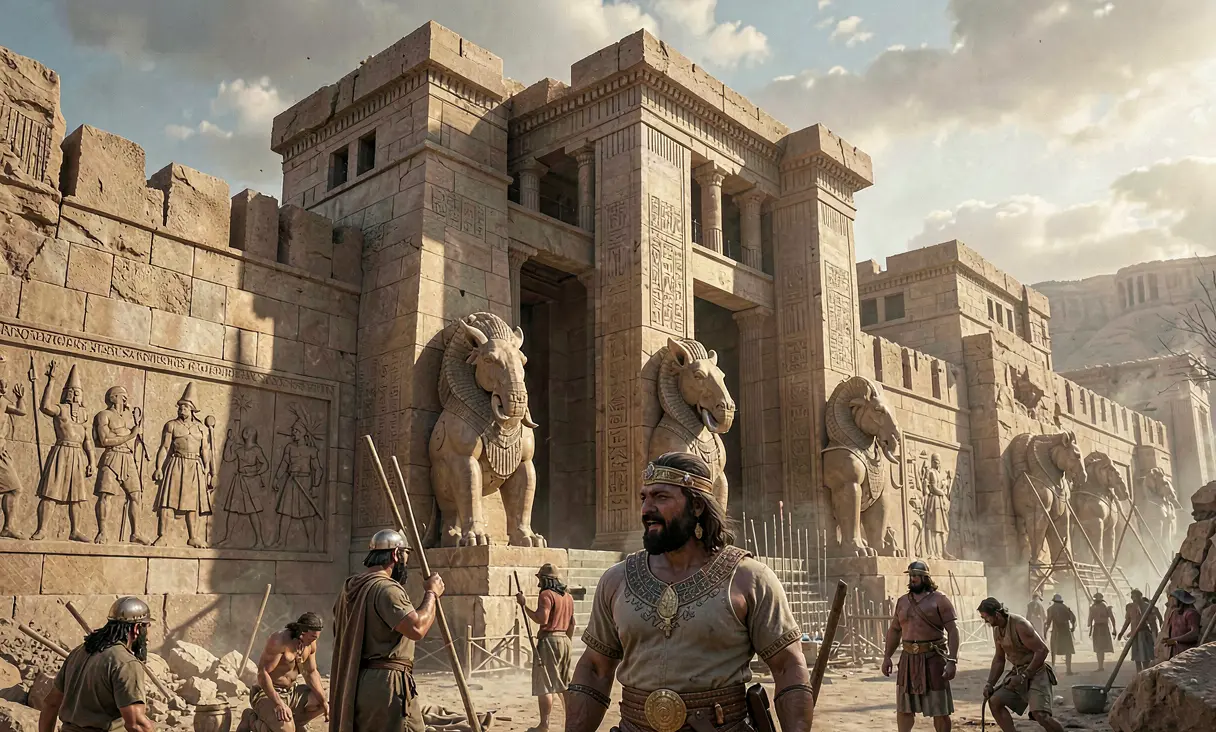 PoliticsFounding of Dur-Sharrukin by Sargon IIc. 717 BCE · Khorsabad (Dur-Sharrukin), IraqSargon II builds a new capital city to project Assyrian power and administrative control.
 PoliticsReign of Emperor Taizong and the Zhenguan Era626 CE · Chang'an, ChinaLi Shimin ascends the throne after the Xuanwu Gate Incident, ushering in a golden age of governance.
 PoliticsRise of the Sixteen Mahajanapadasc. 600 BCE · Gangetic Plain (modern Uttar Pradesh/India)Sixteen great kingdoms and republics emerge across the Gangetic plain, marking the transition from tribal chiefdoms to state-level societies.
 economicsAksum Issues Gold Coins with Christian Imageryc. 350 CE · Aksum, EthiopiaKing Ezana mints the first African gold coins featuring Christian symbols and Ge'ez inscriptions.
 ReligionKing Ezana Declares Aksum a Christian Kingdomc. 330 CE · Aksum, EthiopiaKing Ezana adopts Christianity as the state religion of Aksum under the influence of Frumentius.
 ScienceRefinement of the Maya Long Count Calendar Systemc. 361 BCE · Chiapa de Corzo, MexicoMaya scholars formalize the Long Count calendar for tracking deep historical time.
Discussion
Loading…