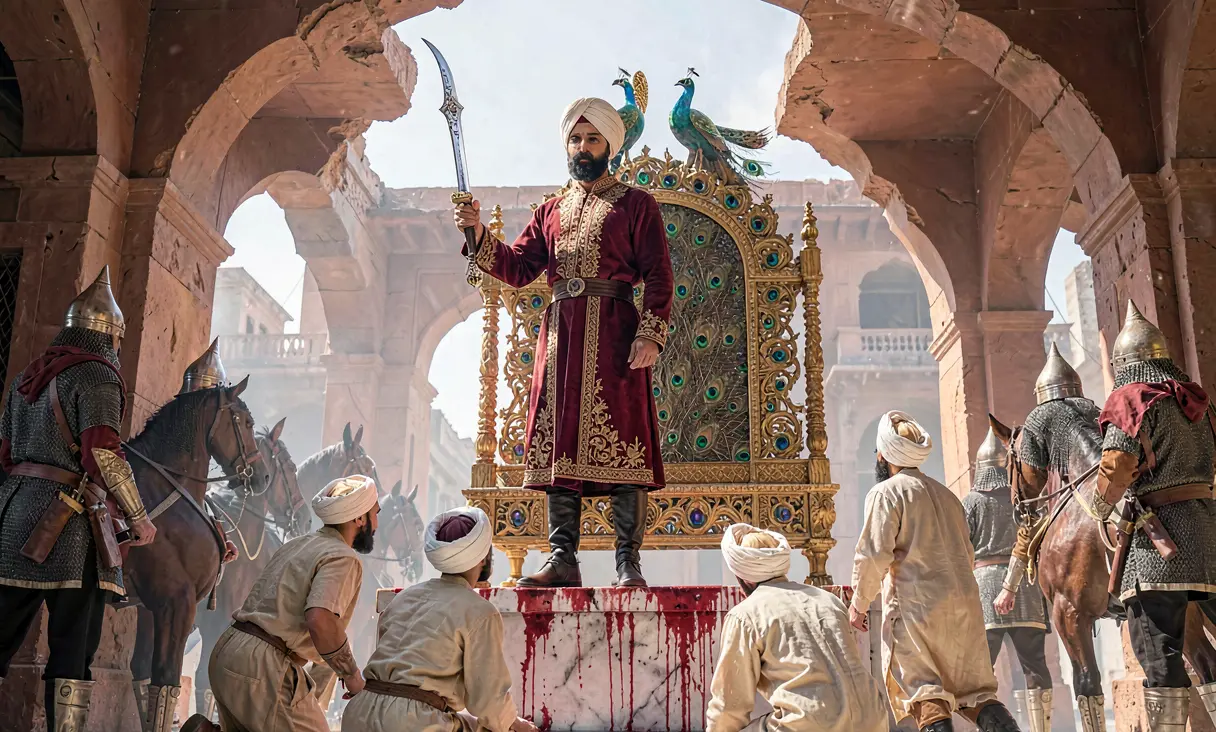
Nader Shah Sacks Delhi and Takes Peacock Throne
Nader Shah's 1739 invasion shattered the Mughal Empire, slaughtering thousands in Delhi and stripping it of the Peacock Throne, permanently ending its dominance and inviting foreign colonization.
The Erosion of the Mughal Colossus
By the early 18th century, the Mughal Empire, once the dominant power of the Indian subcontinent, was fracturing under the weight of internal succession crises and regional separatism. The death of Emperor Aurangzeb in 1707 had triggered a rapid decline, leaving his successors as figureheads while real power devolved to regional governors and rising confederacies like the Marathas. Muhammad Shah, known as 'Rangila' for his indulgence in arts rather than statecraft, ascended the throne in 1719 but lacked the military acumen or political will to halt this disintegration. Simultaneously, across the Hindu Kush, Nader Qoli Beg, a brilliant and ruthless military commander from Khorasan, had unified Persia under his rule as Nader Shah. With a battle-hardened army that had recently defeated the Ottomans and secured his eastern flank, Nader turned his gaze toward the legendary wealth of India, seeing an empire ripe for harvest.
The Battle of Karnal
In late 1738, Nader Shah crossed into Mughal territory, systematically capturing key fortresses and advancing toward Delhi. The Mughal response was sluggish; Muhammad Shah finally assembled a massive but undisciplined force to meet the Persian invaders at Karnal, approximately 140 kilometers north of Delhi, in February 1739. Despite outnumbering Nader's forces significantly—estimates suggest a Mughal strength of over 250,000 against Nader's 55,000—the Mughal army was plagued by poor leadership and internal discord. On February 24, 1739, the Battle of Karnal erupted. Utilizing superior artillery tactics and mobile cavalry maneuvers, Nader Shah decimated the Mughal ranks in a single day. The Emperor himself was captured, and the Mughal war machine was effectively annihilated, leaving the road to Delhi open and undefended.
The Entry and the Massacre
Following his victory at Karnal, Nader Shah entered Delhi on March 20, 1739. Initially, the occupation was orderly; Muhammad Shah was reinstated as a puppet ruler to maintain administrative continuity, and the Persian troops were quartered peacefully. However, tensions flared when rumors spread that the city's inhabitants had murdered several of Nader's officers during a skirmish in the bazaar. In reality, the violence was likely a localized dispute or a misunderstanding, but Nader interpreted it as a coordinated rebellion. Enraged, he issued a *fathnama* (victory proclamation) ordering the immediate execution of all able-bodied men in Delhi. For hours on March 22, Persian cavalry swept through the city's streets and markets, slaughtering civilians indiscriminately. Contemporary accounts estimate that between 20,000 and 30,000 people were killed in a single day of carnage, turning the imperial capital into a charnel house.
The Plunder of Imperial Treasures
Once order was restored through bloodshed, Nader Shah turned his attention to the systematic extraction of Mughal wealth. He demanded the surrender of the imperial treasury and the royal jewels, which had been accumulated over centuries by emperors like Akbar, Jahangir, and Shah Jahan. The most coveted prize was the Peacock Throne, a masterpiece commissioned by Shah Jahan in 1628, encrusted with rubies, emeralds, and diamonds, and featuring two peacocks with tails of turquoise and gold. Alongside it went the Koh-i-Noor diamond, then known as the 'Mountain of Light,' and countless other gems, including the Timur Ruby. Nader also seized vast quantities of gold and silver bullion, textiles, and elephants. The total value of the loot is estimated to have been equivalent to 700 million rupees at the time, a sum so immense that it allowed Nader to suspend taxation in Persia for three years.
Departure and Strategic Vacuum
Nader Shah departed Delhi in May 1739, leaving behind a shattered capital and a humiliated emperor. He returned to Mashhad with his plunder and the captive Muhammad Shah, who was released shortly after Nader's return to Persia. The invasion exposed the catastrophic military obsolescence of the Mughal army and the complete collapse of central authority. With the imperial treasury drained and the prestige of the dynasty obliterated, the subcontinent entered a power vacuum that invited further aggression. Regional powers such as the Marathas and the Afghans under Ahmad Shah Durrani saw the weakness of Delhi and began to carve out their own dominions, accelerating the fragmentation of India into competing states.
Legacy of the Sack
The Sack of Delhi stands as a watershed moment in South Asian history, marking the definitive end of Mughal hegemony and the beginning of the colonial era's prelude. The removal of the Peacock Throne symbolized the transfer of imperial legitimacy from the declining Muslim emperors to new powers, while the Koh-i-Noor would eventually find its way into the British Crown Jewels, serving as a lasting reminder of this conquest. Historically, the event demonstrated that traditional feudal armies could no longer withstand modernized, professional forces equipped with superior artillery and tactics. It fundamentally altered the geopolitical landscape of India, shifting the balance of power away from Delhi and setting the stage for the eventual rise of the British East India Company, which would fill the void left by Nader's departure.
The sack of Delhi by Nader Shah marked the effective end of Mughal supremacy and triggered a period of anarchy in North India.
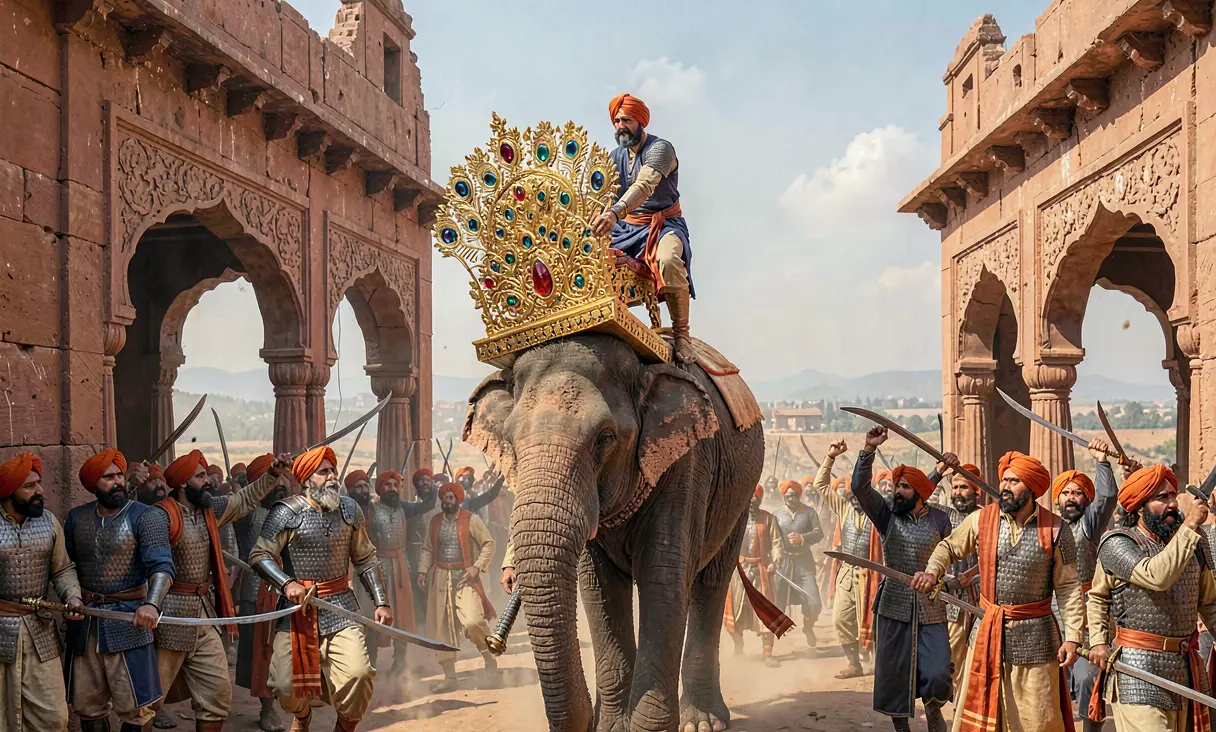
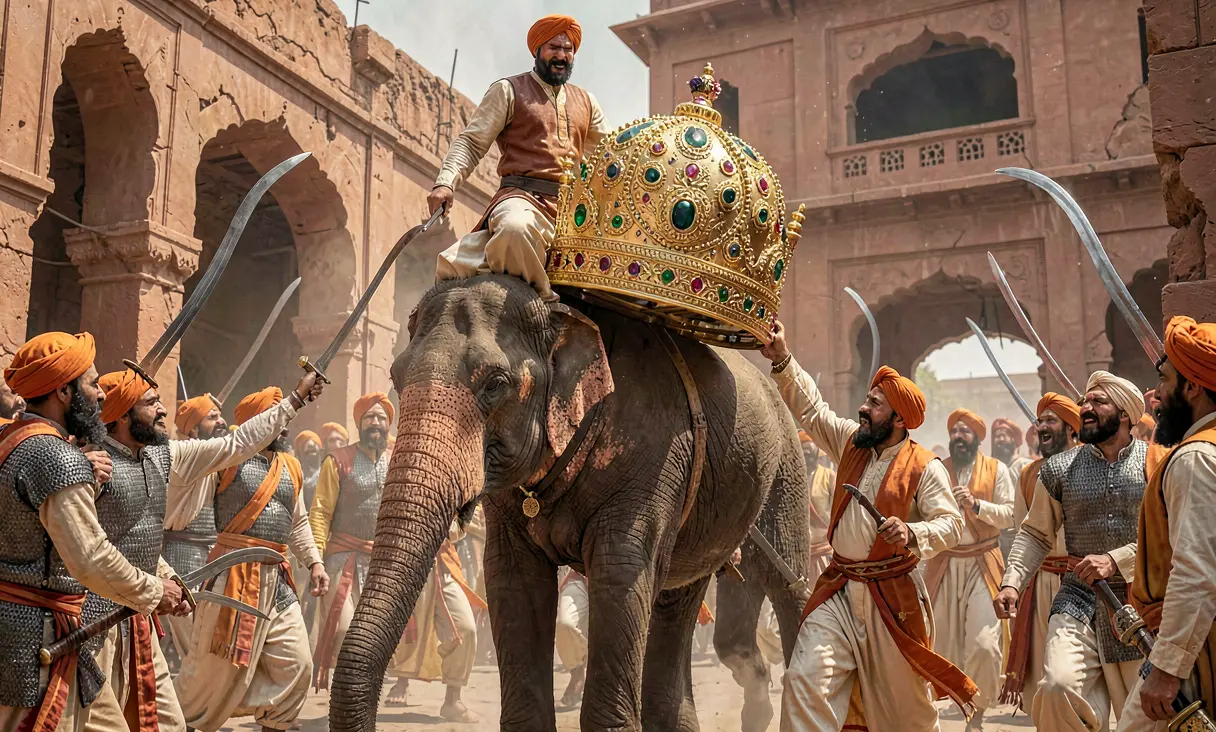
Where it happened
Delhi, India — see it on the interactive map →
Explore related history
 WarBabur's Victory at Panipat and Founding of Mughalsc. 1526 CE · Panipat (modern Haryana/India)Babur defeats the Lodi Sultanate at the First Battle of Panipat, establishing the Mughal Empire in India.
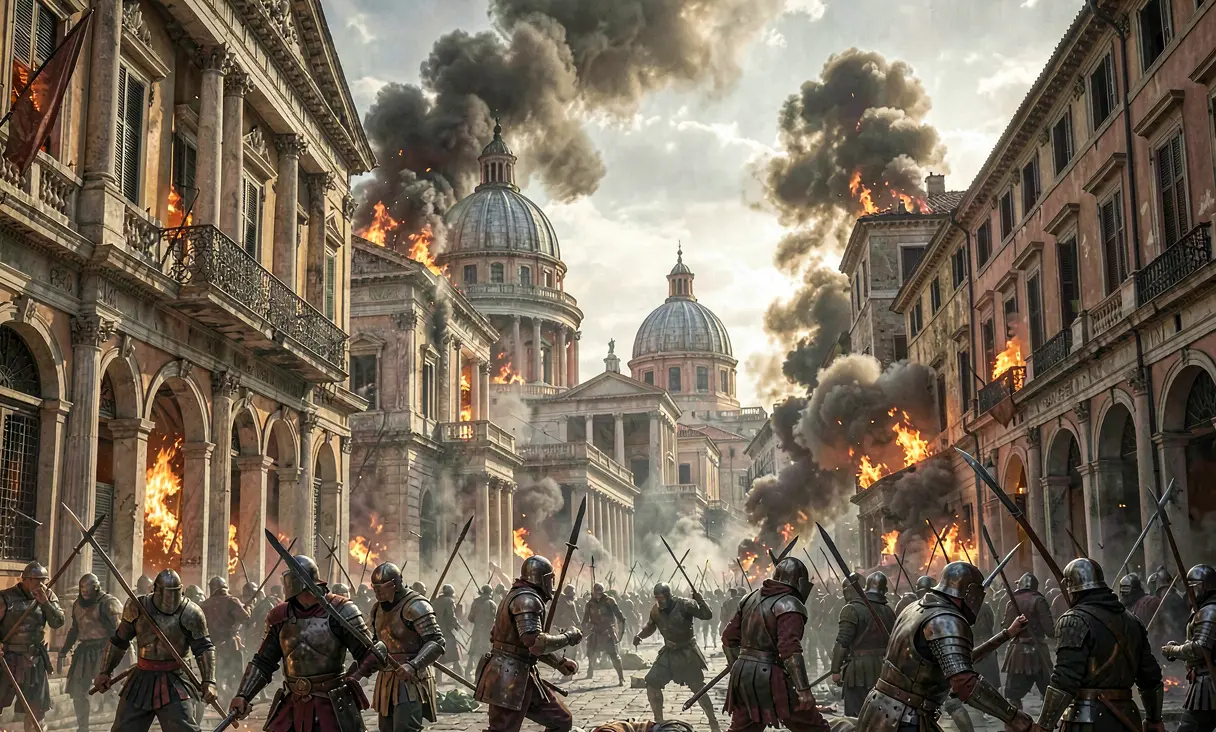 WarSack of RomeMay 6, 1527 · Rome, ItalyMutinous troops of Charles V brutally loot Rome, ending the High Renaissance.
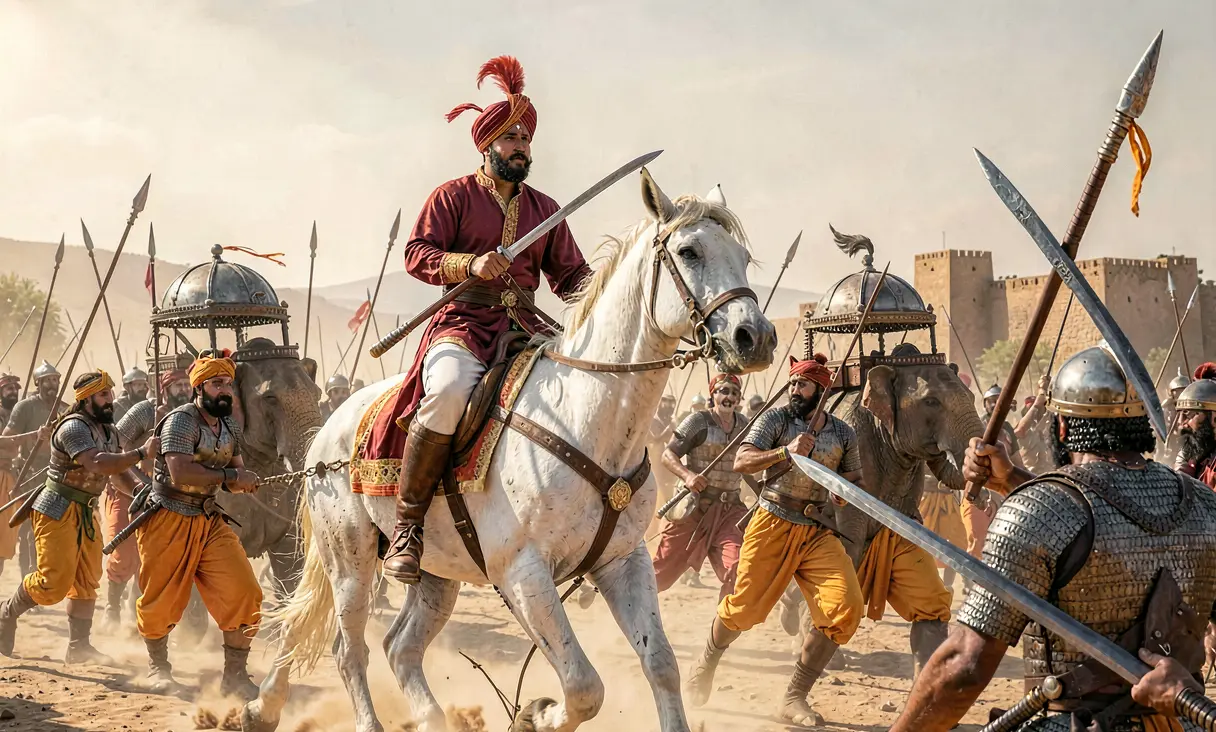 WarBabur's Victory at Khanwac. 1527 CE · Khanwa, Rajasthan, IndiaBabur defeats the Rajput confederacy led by Rana Sanga, consolidating Mughal rule over North India.
 DisasterLisbon Earthquake and TsunamiNovember 1, 1755 CE · Lisbon, PortugalMassive quake and fire destroy capital city challenging Enlightenment optimism.
 PoliticsAdoption of US Declaration of IndependenceJuly 4, 1776 CE · Philadelphia, USAThirteen colonies declare independence from Britain asserting natural rights.
 PoliticsStorming of the BastilleJuly 14, 1789 · Paris, FranceRevolutionaries storm the Bastille prison, symbolizing the start of the French Revolution.
Discussion
Loading…