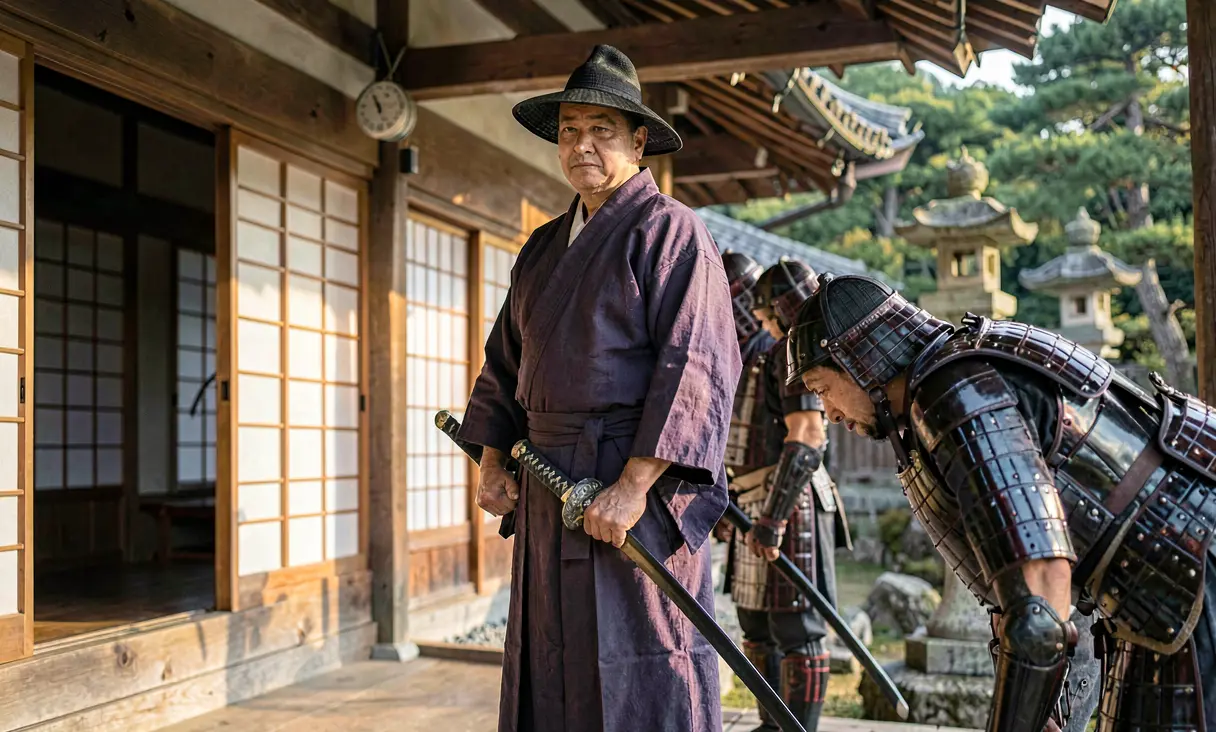
Ashikaga Takauji Establishes Muromachi Shogunate
In 1336, Ashikaga Takauji overthrew Emperor Go-Daigo to establish the Muromachi Shogunate, fracturing Japan into rival Northern and Southern Courts and initiating a chaotic yet culturally rich era of
The Collapse of the Kenmu Restoration
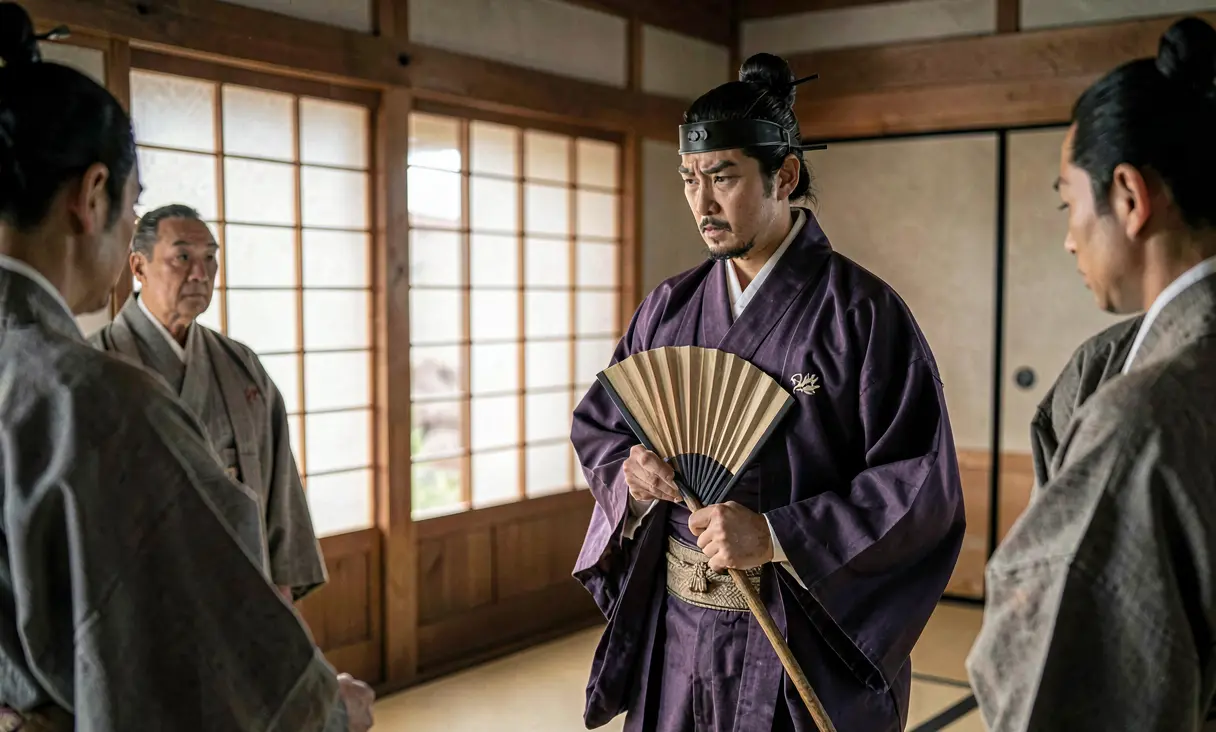
By 1335, the brief and idealistic Kenmu Restoration, initiated by Emperor Go-Daigo in 1333 to restore direct imperial rule, was rapidly disintegrating. The restoration had failed to satisfy the powerful warrior class, particularly the Ashikaga clan, due to its perceived favoritism toward court nobles (kuge) over samurai landholders and its inability to resolve complex property disputes regarding confiscated estates. Ashikaga Takauji, a descendant of Minamoto no Yoritomo's lineage who had initially served Go-Daigo, found himself at odds with the Emperor's chief strategist, Prince Morinaga, and the increasingly radical court faction. The tension culminated in 1335 when Takauji, acting without imperial sanction to suppress a rebellion by the Hōjō remnants in Kamakura, was subsequently declared an enemy of the throne by Go-Daigo.
The March on Kyoto and the Proclamation
In early 1336, Takauji marched westward from Kyushu, rallying disgruntled provincial warriors who felt marginalized by the Kenmu government. Upon reaching Kyoto in May, he defeated the imperial loyalist forces led by Kusunoki Masashige and Ashikaga Tadayoshi (Takauji's own brother, temporarily aligned with the Emperor) at the Battle of Minatogawa. Following this decisive victory, Takauji entered Kyoto and effectively seized control of the capital. On November 26, 1336, he promulgated the Kenmu Shikimoku, a legal code that acknowledged the necessity of samurai governance while attempting to blend warrior customs with traditional court law. Simultaneously, he orchestrated the installation of Emperor Kōgon as the first Northern Court emperor, formally rejecting Go-Daigo's authority and establishing a rival imperial line in Kyoto.
The Division: The Nanbokucho Crisis
The establishment of the Ashikaga Shogunate did not bring immediate peace but rather ignited the Nanbokucho period, or the Era of Northern and Southern Courts. Emperor Go-Daigo fled Kyoto in 1336, retreating to Yoshino in the mountains of Yamato Province where he established the Southern Court, claiming the legitimacy of his line through the Imperial Regalia. For nearly sixty years, Japan was bifurcated into two competing imperial lines: the Northern Court in Kyoto, supported by the Ashikaga shoguns and recognized by the majority of the warrior class, and the Southern Court in Yoshino, which retained moral authority among loyalists. This schism created a unique political paradox where two emperors reigned simultaneously, each claiming divine mandate, turning the nation into a theater of civil war that would not be resolved until 1392.
A Fragile Hegemony and the Daimyo System
Unlike the Kamakura Shogunate, which maintained a relatively centralized control through the jitō (land stewards) system, the Muromachi Shogunate established by Takauji was inherently decentralized. Takauji lacked the military resources to impose direct rule over all provinces and instead relied on a network of powerful regional warlords known as shugo daimyo. These governors were granted significant autonomy in exchange for their loyalty and military service, effectively becoming hereditary rulers within their domains. This structural weakness meant that the shogun's power fluctuated based on his ability to balance competing clans rather than enforce absolute authority. The reliance on these semi-independent magnates sowed the seeds for future instability, as the daimyo gradually eroded central control, a trend that would accelerate in subsequent centuries.
Cultural Renaissance Amidst Chaos
Despite the persistent military conflict and political fragmentation of the Nanbokucho period, the era under Ashikaga rule witnessed an extraordinary flourishing of Japanese culture. The shogunate, particularly under Takauji's successors like Ashikaga Yoshimitsu, became a major patron of the arts, fostering a distinct aesthetic that blended aristocratic refinement with warrior pragmatism. This period saw the codification of Noh theater by Kan'ami and his son Zeami, who transformed folk performances into sophisticated dramatic art. Simultaneously, Zen Buddhism gained immense popularity among the samurai class, influencing the development of ink wash painting (sumi-e), the tea ceremony (chanoyu), and the design of rock gardens. These cultural forms emphasized simplicity, asymmetry, and spiritual depth, leaving a legacy that defines traditional Japanese aesthetics to this day.
Legacy and Historical Significance
The establishment of the Muromachi Shogunate in 1336 marked a definitive turning point in Japanese history, cementing the dominance of the warrior class for nearly six centuries. While Takauji's decision to split the imperial line is often viewed as a betrayal that prolonged civil strife, it also created a political structure capable of absorbing regional power dynamics that had been impossible under previous centralized models. The shogunate survived until 1573, navigating through the Onin War and the eventual collapse into the Sengoku period of total war. Ultimately, the Muromachi era bridged the gap between the medieval feudalism of Kamakura and the early modern unification of Japan, preserving a unique cultural identity even as the nation fractured politically.
Takauji's shogunate created a long period of divided imperial authority but fostered unique cultural developments in Japanese aesthetics and Zen Buddhism.
Where it happened
Kyoto, Japan — see it on the interactive map →
Explore related history
 PoliticsSargon of Akkad Establishes the First Empirec. 2334 BCE · Akkad (Location uncertain, near Baghdad, Iraq)Sargon unifies Sumerian city-states to create the world's first multi-ethnic empire.
 PoliticsPromulgation of the Code of Ur-Nammuc. 2100 BCE · Ur, Southern Mesopotamia (Iraq)The earliest known surviving law code is established in the Sumerian city of Ur.
 PoliticsNelson Mandela Elected President of South AfricaApril 27, 1994 · Cape Town, South AfricaSouth Africa holds its first democratic election, ending the apartheid regime and establishing a multiracial government.
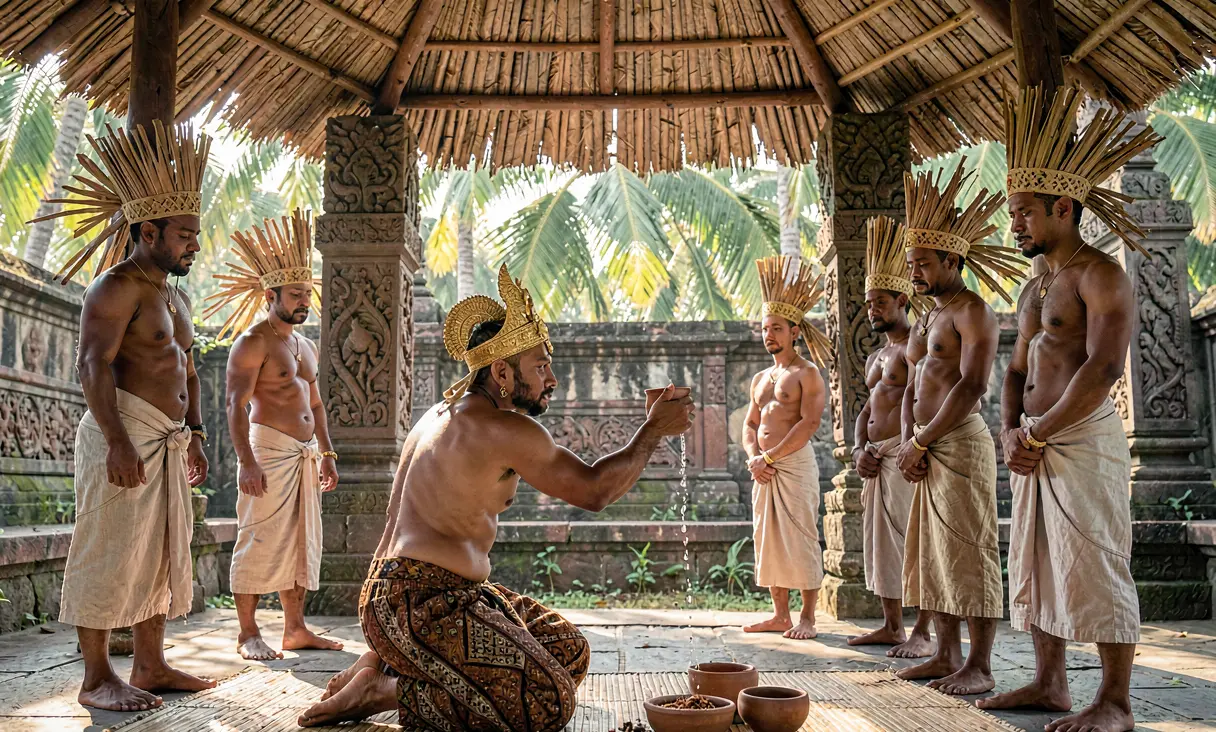 PoliticsGajah Mada's Palapa Oath1336 CE · Trowulan, Java, IndonesiaPrime Minister Gajah Mada vows to unify the archipelago before tasting spices.
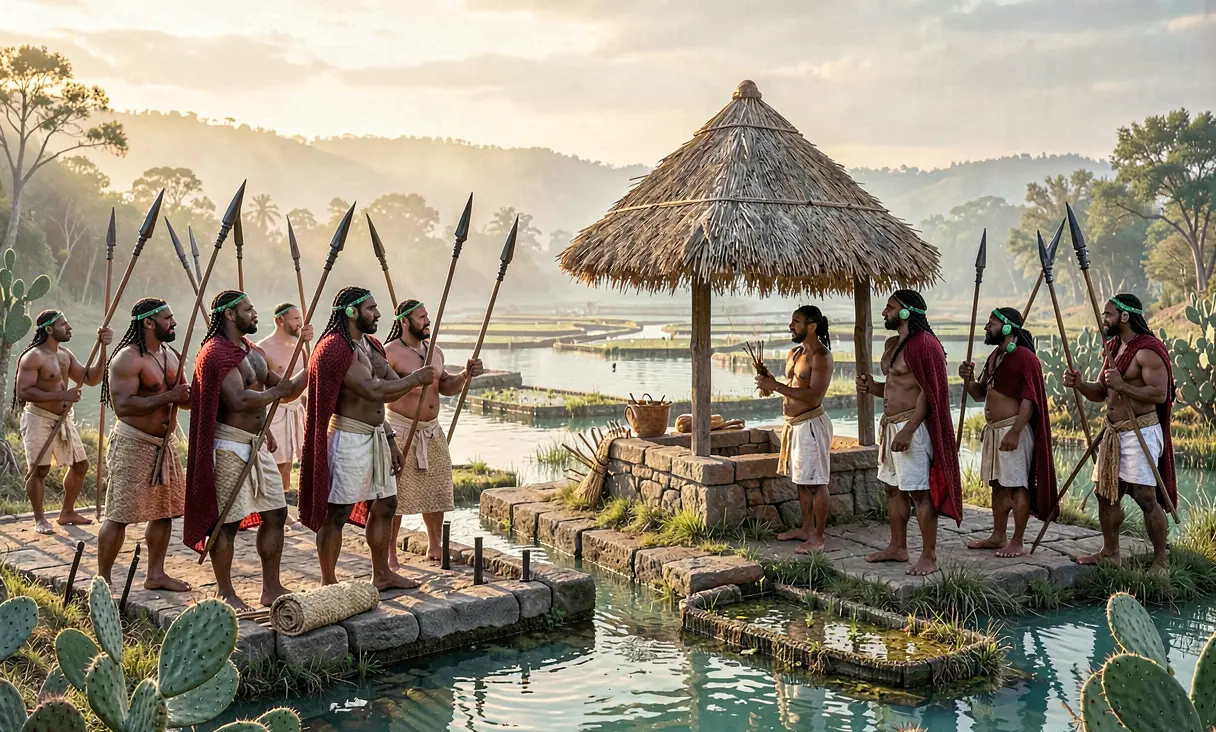 ExplorationFounding of Tenochtitlán on Lake Texcococ. 1325 CE · Lake Texcoco, Mexico City, MexicoThe Mexica establish their capital on an island in Lake Texcoco.
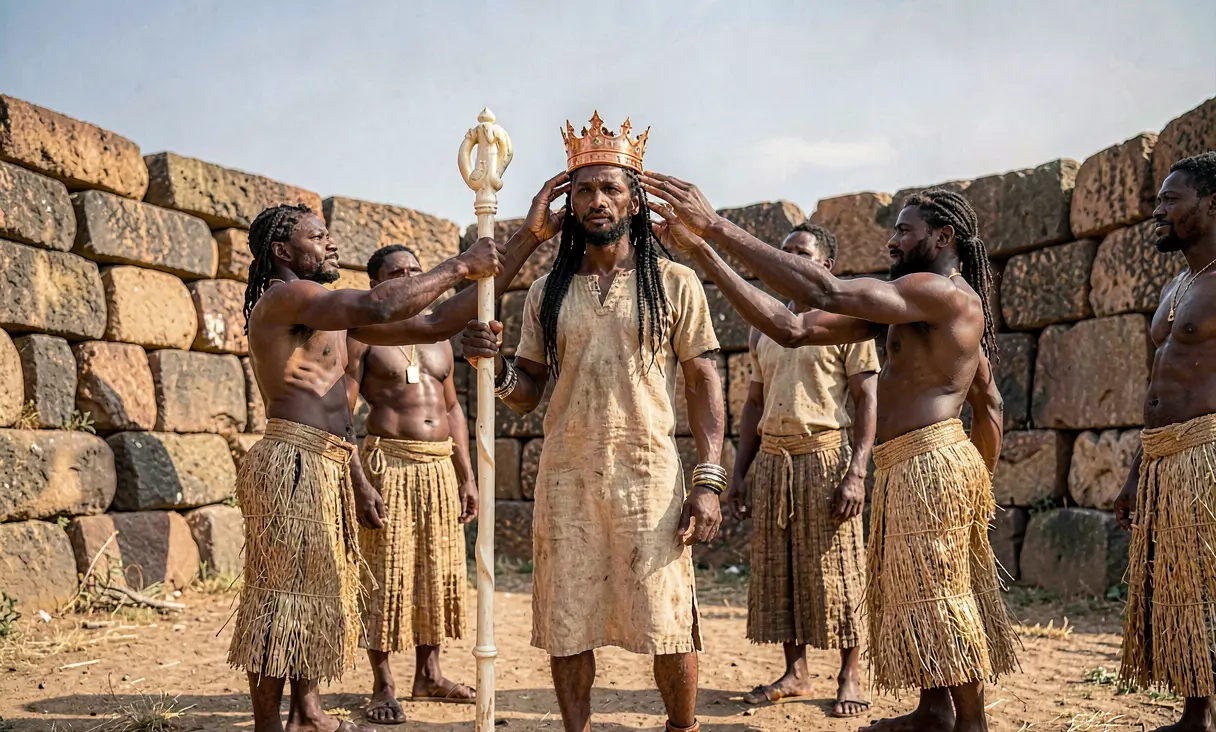 ReligionCoronation Ceremony at Great Zimbabwec. 1350 CE · Great Zimbabwe, ZimbabweThe Munhumutapa king is crowned in a grand ritual linking spiritual authority with the stone enclosures.
Discussion
Loading…