Babur's Victory at Panipat and Founding of Mughals
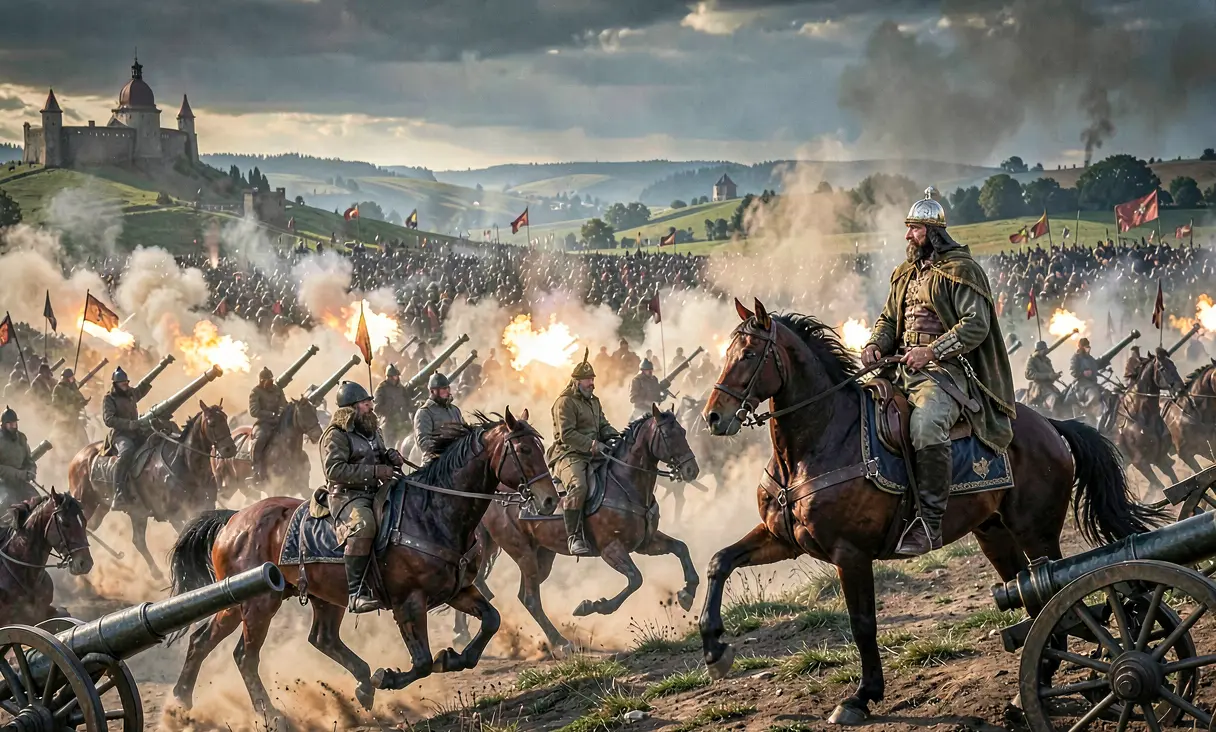
Babur's 1526 victory at Panipat introduced gunpowder warfare to India, annihilating Ibrahim Lodi's army and establishing the Mughal Empire that would shape South Asian history for three centuries.
Context of Conquest
By the early 16th century, the Delhi Sultanate under the Lodi dynasty was fracturing. Ibrahim Lodi, the reigning sultan, faced widespread discontent among his Afghan nobility due to his autocratic rule and execution of dissenters. Simultaneously, Zahir-ud-din Muhammad Babur, a descendant of Timur and Genghis Khan, had lost his ancestral kingdom in Fergana and was ruling Kabul as a precarious warlord. Seeking new lands and glory, Babur turned his gaze toward the fertile plains of Hindustan. In 1524, he launched an initial raid but withdrew after facing logistical challenges. However, encouraged by defections from Lodi's court, notably Daulat Khan Lodi, Babur returned in late 1525 with a determined force, crossing the Indus River and marching toward Delhi to challenge the Sultanate's authority.
The Contending Forces
The opposing armies represented a clash of military philosophies. Ibrahim Lodi commanded a massive force estimated between 100,000 infantry and cavalry, supported by approximately 1,000 war elephants intended to shatter enemy lines through sheer psychological and physical impact. His army was a traditional Afghan host, reliant on numerical superiority and the shock value of heavy charges. In stark contrast, Babur led a seasoned but significantly smaller force of roughly 12,000 to 15,000 men. These were veteran Central Asian troops experienced in the fluid warfare of the steppe. Crucially, Babur had integrated Ottoman-style gunpowder technology into his arsenal, including field artillery and matchlock muskets (tufang), which he had refined during his campaigns in Persia and Anatolia.
Tactical Innovation at Panipat
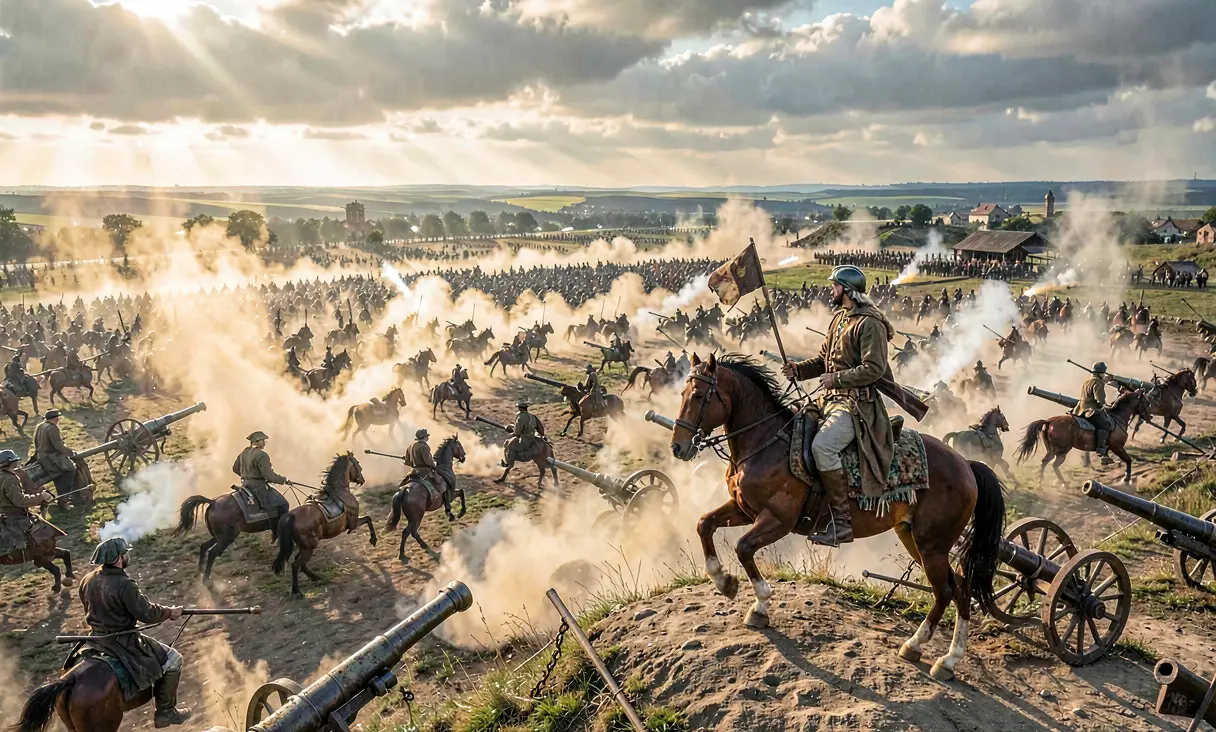
On April 21, 1526, the two armies met on the historic plains of Panipat, a site strategically chosen for its flat terrain suitable for cavalry maneuvers. Babur employed a sophisticated defensive formation known as the Tulghuma, or 'flanking maneuver,' combined with the Ottoman technique of chaining wagons (araba) to create a mobile fortification. He positioned his artillery in the center behind these chained carts, creating a kill zone that could decimate charging elephants and infantry before they reached his lines. The flanks were held by elite cavalry units ready to execute the Tulghuma, sweeping around the enemy's sides and rear once their formation was disrupted. This tactical setup neutralized Lodi's numerical advantage and rendered his war elephants ineffective against the disciplined volleys of cannon fire.
The Battle Unfolds
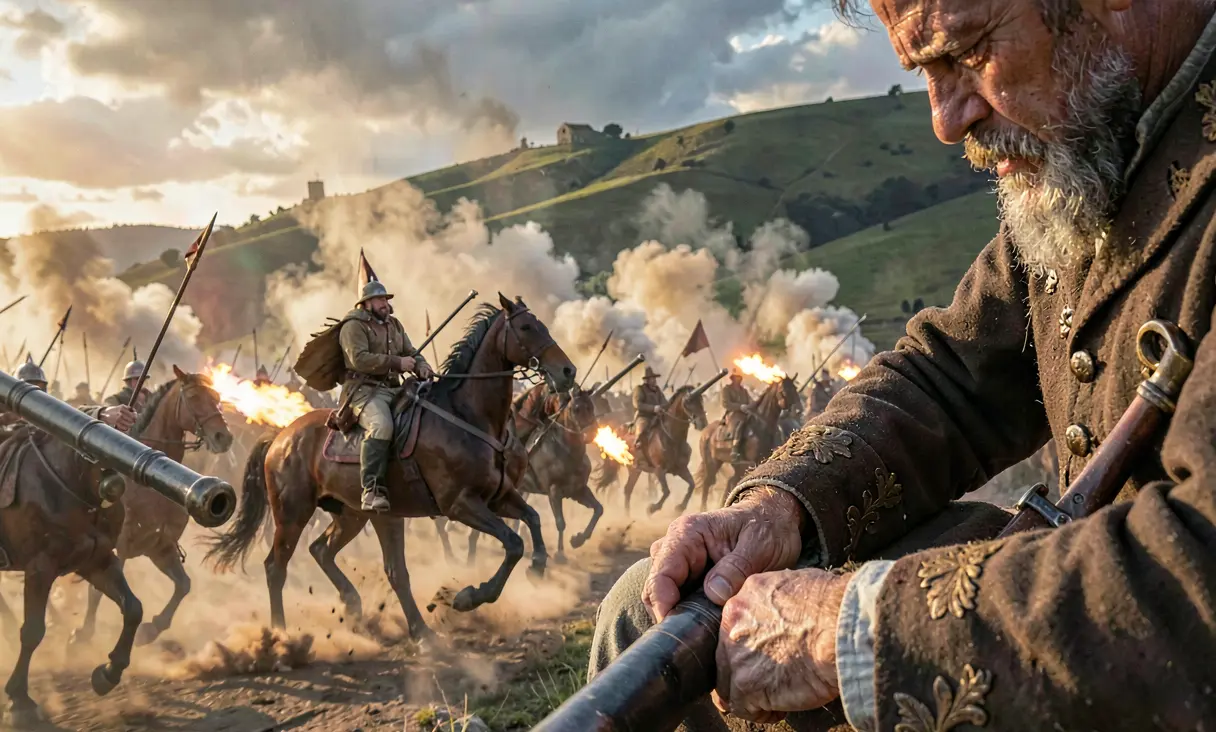
The battle commenced with Ibrahim Lodi ordering a massive frontal assault, driven by his confidence in his superior numbers. As his troops advanced, they were met with a barrage of cannon and musket fire that caused chaos among the war elephants; panicked beasts turned on their own handlers, creating disorder within the Afghan ranks. Seizing this moment of confusion, Babur's cavalry executed the Tulghuma, enveloping the Lodi forces from both flanks and cutting off their retreat. The Afghan army, unable to maneuver effectively in the face of the chained wagons and encirclement, collapsed into a rout. Ibrahim Lodi fought bravely on the field but was killed amidst the carnage, marking the effective end of his resistance.
Immediate Aftermath
The victory at Panipat was decisive and total. Babur lost only a fraction of his men compared to the estimated 15,000 to 20,000 casualties suffered by Lodi's forces. Following the battle, Babur entered Delhi and Agra, proclaiming himself Emperor of Hindustan (Ghazi). He established his capital at Agra rather than Delhi initially, securing the treasury and consolidating control over the Gangetic plain. The death of Ibrahim Lodi left a power vacuum that Babur filled rapidly, though he faced immediate challenges from other regional powers, including Rana Sanga of Mewar, whom he would defeat later in 1527 at the Battle of Khanwa to secure his rule.
Legacy and Historical Significance
The First Battle of Panipat is widely regarded as the foundational moment of the Mughal Empire, which would dominate the Indian subcontinent for over three centuries. It introduced systematic gunpowder warfare to India, shifting military doctrine from reliance on elephants and heavy cavalry to a combined-arms approach involving artillery, infantry, and mobile cavalry. Culturally and administratively, it marked the beginning of a syncretic Indo-Persian civilization that would define Indian art, architecture, and governance until the mid-19th century. The battle demonstrated how technological innovation and tactical flexibility could overcome overwhelming numerical odds, setting a precedent for future military engagements in South Asia.
Babur's victory at Panipat established the Mughal Empire, transforming the political and cultural landscape of South Asia for centuries.
Where it happened
Panipat (modern Haryana/India) — see it on the interactive map →
Explore related history
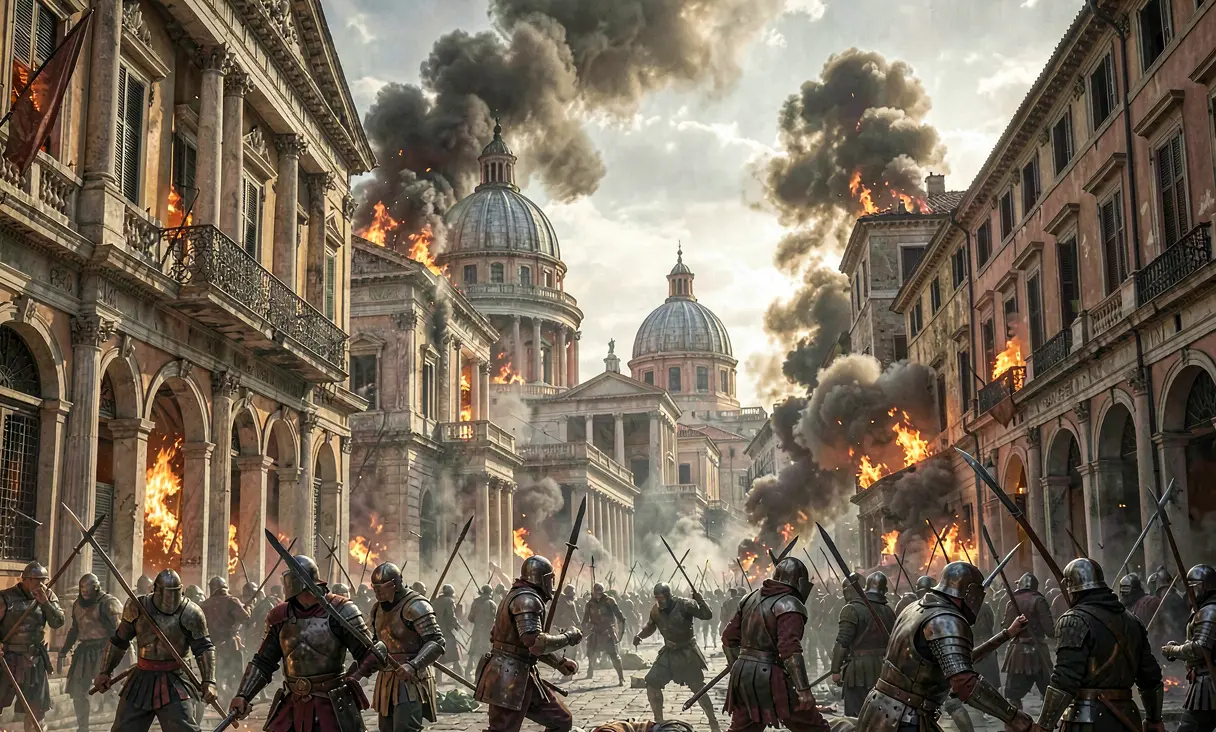 WarSack of RomeMay 6, 1527 · Rome, ItalyMutinous troops of Charles V brutally loot Rome, ending the High Renaissance.
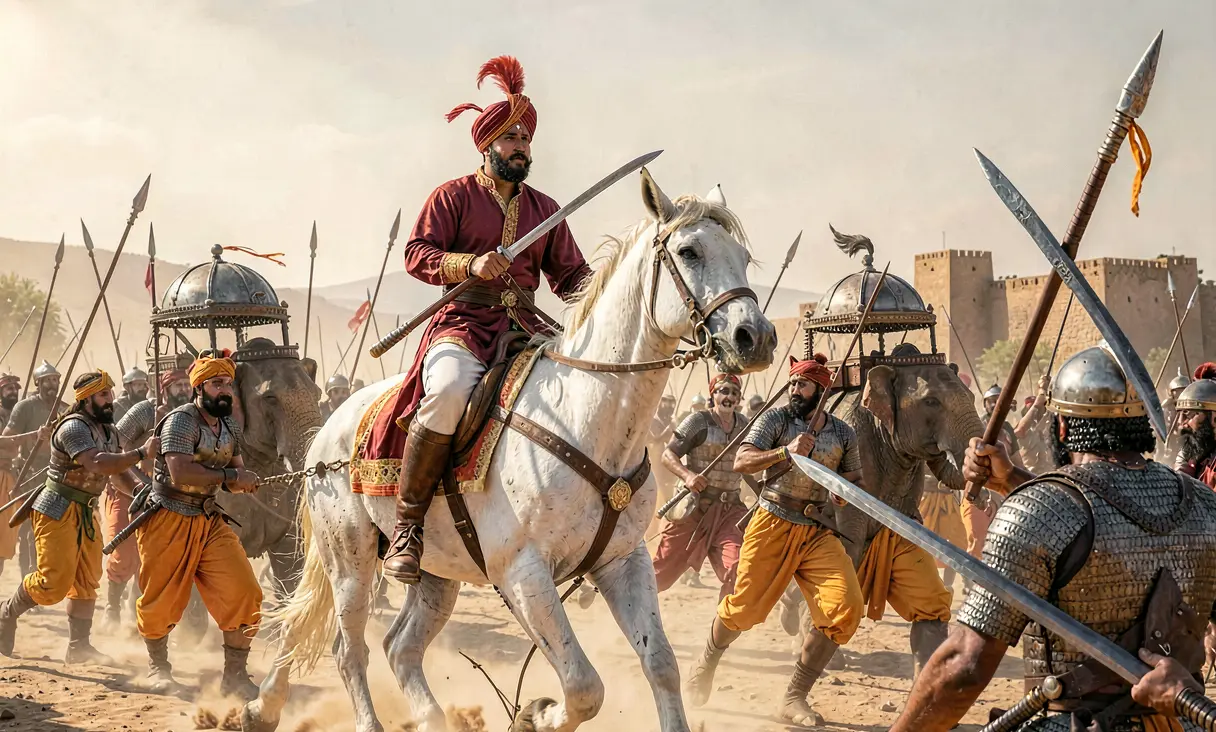 WarBabur's Victory at Khanwac. 1527 CE · Khanwa, Rajasthan, IndiaBabur defeats the Rajput confederacy led by Rana Sanga, consolidating Mughal rule over North India.
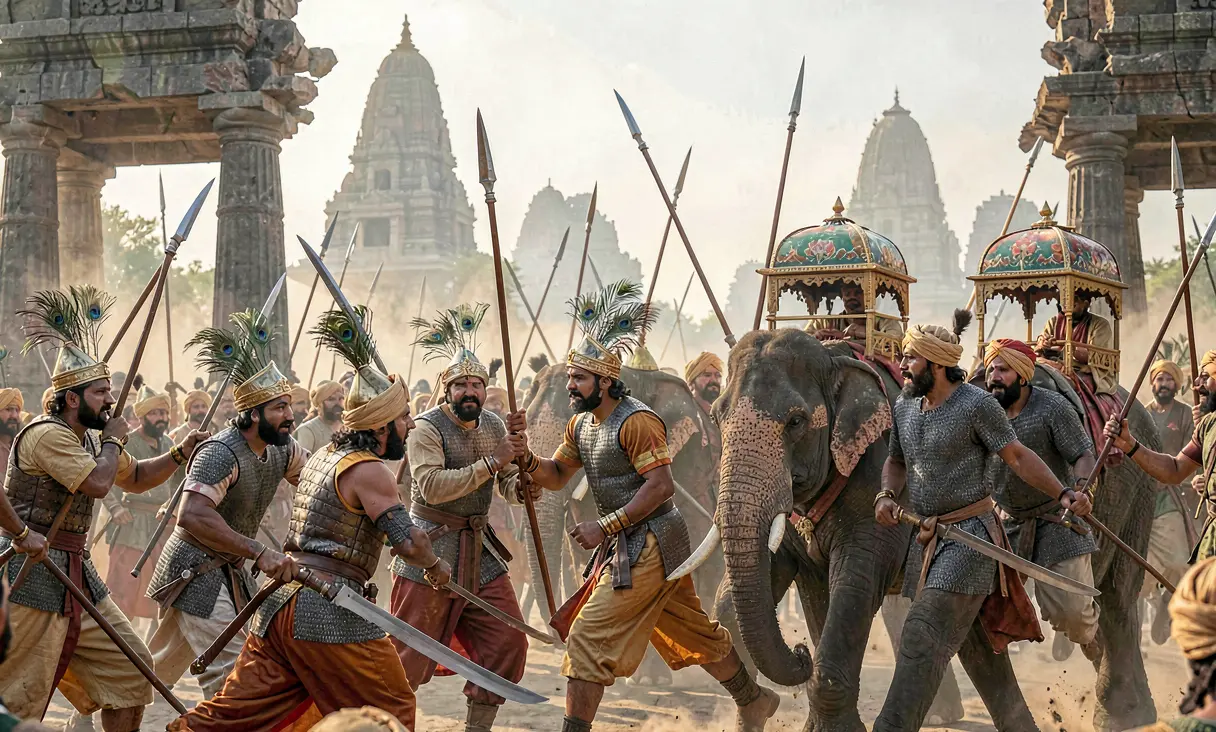 WarBattle of Talikota and Fall of Vijayanagarac. 1565 CE · Talikota, Karnataka, IndiaThe Deccan Sultanates defeat the Vijayanagara Empire in a decisive battle, leading to the sack of Hampi and the empire's collapse.
 ExplorationMagellan's Circumnavigation CompletedSeptember 6, 1522 CE · Seville, SpainFirst expedition sails around the globe proving Earth is round and vast.
 TechnologyIntroduction of the Tomato to Europec. 1520 CE · Rome, ItalyTomatoes arrive in Europe from the Americas, revolutionizing global cuisine.
 ReligionLuther Posts Ninety-Five ThesesOctober 31, 1517 CE · Wittenberg, GermanyMartin Luther challenges Catholic Church practices sparking the Protestant Reformation.
Discussion
Loading…