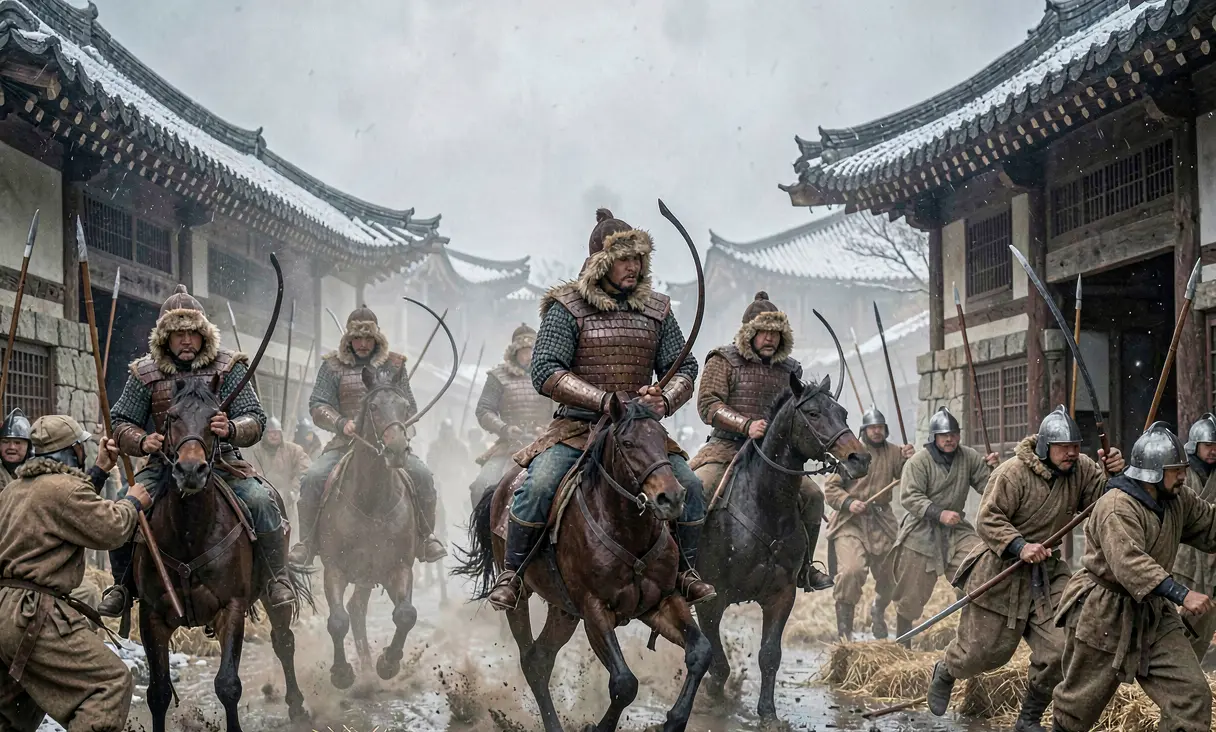
Mongol Invasions of Goryeo Begin
The 1231 Mongol invasion of Goryeo triggered a forty-year war that devastated Korea but ultimately forged a resilient vassal state and facilitated profound cultural exchange across Eurasia.
The Shadow of the Steppe
By the early 13th century, the Mongol Empire under Genghis Khan had already swept across Eurasia, leaving a trail of shattered cities and subjugated nations. The Kingdom of Goryeo, established in 918 CE on the Korean Peninsula, found itself caught between the rising power of the Jurchen Jin Dynasty to the north and the terrifying expansion of the Mongols. Initially, Goryeo maintained a tributary relationship with the Jin, but as the Mongols crushed the Jin in 1234, the peninsula became the next logical target for Chinggisid ambition. The Goryeo court, dominated by the military regime of the Choe family since 1170, faced an ultimatum: submit fully to Mongol overlordship or face annihilation. Diplomatic missions were sent, but tensions escalated when Goryeo refused to relocate its capital to the mainland and comply with demands for hostages and tribute, viewing these as existential threats to their sovereignty.
The Invasion of 1231
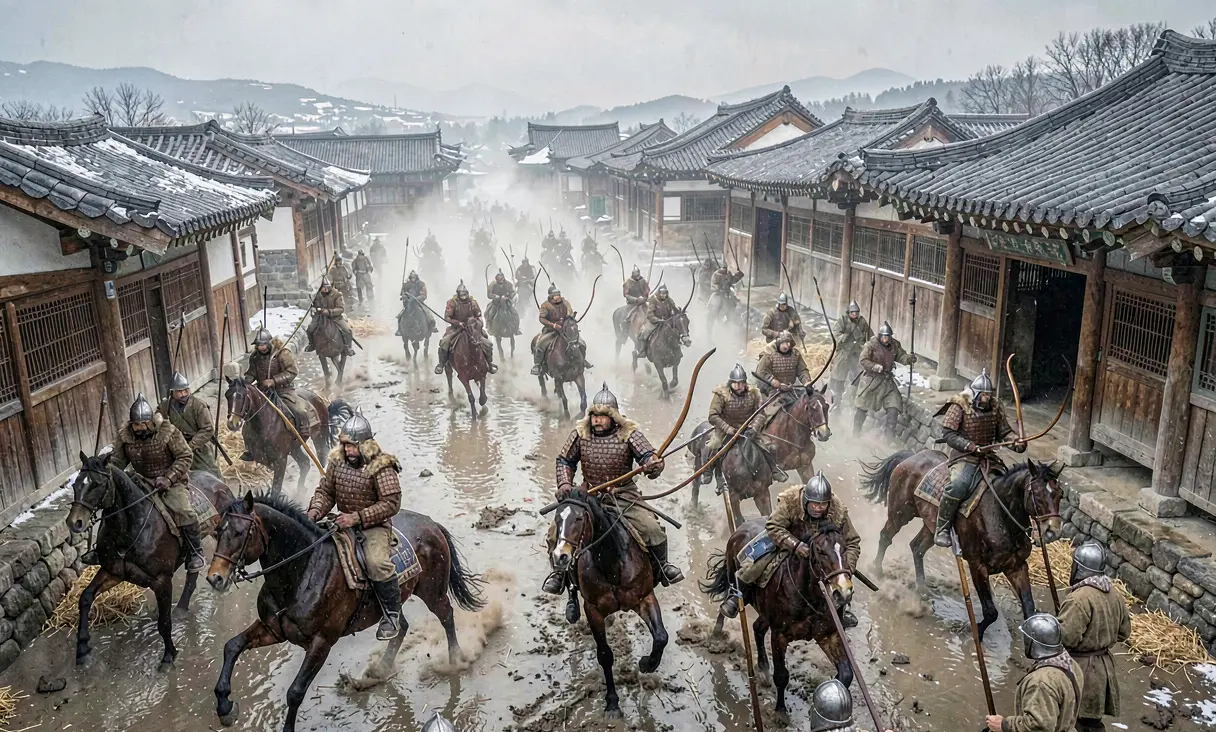
In the summer of 1231, General Saritai (also known as Sartek), a seasoned commander under Ögedei Khan, led a massive Mongol army across the Yalu River into Goryeo territory. The invasion force, numbering in the tens of thousands and supported by Jurchen defectors, moved with terrifying speed and efficiency. They bypassed the heavily fortified capital at Kaesong initially, instead focusing on dismantling regional defenses and sacking major cities such as Pyeongan and Hwangju. The Mongol tactics relied on swift cavalry maneuvers, psychological warfare, and the systematic destruction of infrastructure to break Goryeo's will. By late 1231, Saritai had reached the outskirts of the capital, forcing King Gojong into a desperate position where the survival of the dynasty hung in the balance.
Flight to Ganghwa and Resistance
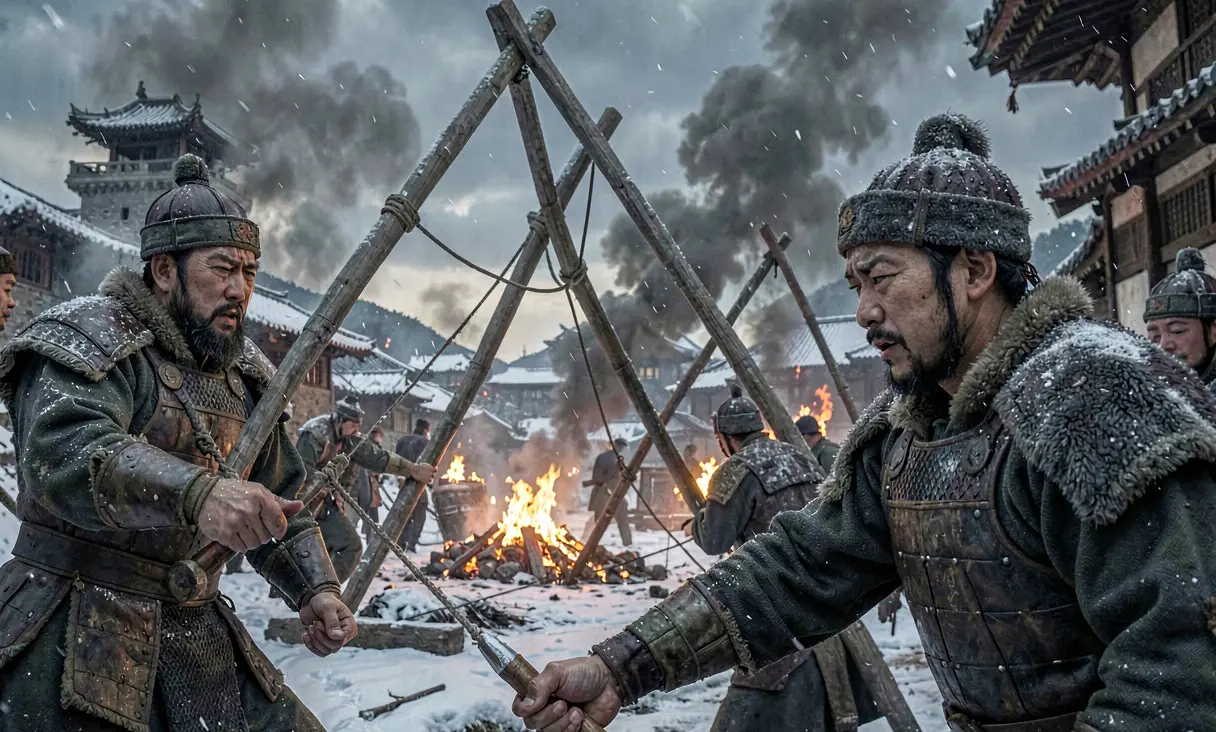
Fearing the capture of the monarch and the total collapse of the state, the Choe military regime made the fateful decision to move the royal court from Kaesong to the fortified island of Ganghwa in the West Sea in November 1231. This strategic retreat isolated the government from the mainland but provided a natural moat that the Mongol cavalry could not easily cross. While the court sought refuge, the mainland did not fall silent; instead, it ignited with fierce resistance. Local aristocrats and peasant militias, often led by figures like Yi Gyu-bo (though his political maneuvering was complex), organized guerrilla campaigns against the occupying forces. The Mongols found themselves in a protracted stalemate, unable to root out the determined defenders who utilized the rugged terrain of the peninsula to their advantage.
A Century of Attrition
The conflict did not end with the initial invasion but evolved into a grueling series of six major campaigns spanning nearly four decades. Between 1231 and 1270, the Mongols launched repeated offensives to force Goryeo's total submission, while the Goryeo court on Ganghwa Island continued to resist, often sending royal princes as hostages only to have them return or escape. The war devastated the agricultural base of the peninsula, leading to widespread famine and social upheaval. Despite internal strife within the Choe regime and the eventual rise of a pro-Mongol faction led by General Kim Jun, the Goryeo monarchy maintained its distinct identity. It was not until 1270, after the Mongols had consolidated their power in China under Kublai Khan and shifted their strategic focus, that a formal peace treaty was signed, ending active hostilities.
The Vassal State and Cultural Synthesis
Following the 1270 settlement, Goryeo became a semi-autonomous vassal state of the Yuan Dynasty. The capital was eventually returned to Kaesong, but the kingdom was required to provide troops for Mongol campaigns, including the ill-fated invasions of Japan in 1274 and 1281. This period marked a profound transformation in Goryeo society; while political independence was curtailed, the integration into the vast Mongol Empire facilitated unprecedented cultural exchange. Korean artisans, scholars, and monks traveled to China and beyond, bringing back new technologies, artistic styles, and religious ideas. The marriage of Princess Jeonghwa to Kublai Khan's son further cemented these ties, creating a unique hybrid culture that blended Confucian traditions with Mongol influences.
Legacy of the Steppe
The Mongol Invasions of Goryeo stand as one of the most defining chapters in Korean history, reshaping the peninsula's demographic, political, and cultural landscape. The war resulted in massive loss of life and the destruction of countless artifacts, yet it also forged a resilient national identity that would eventually lead to the restoration of full sovereignty under King Chungnyeol's successors. The experience of resistance against a global empire became a cornerstone of Korean historical memory, symbolizing the endurance of civilization against overwhelming force. Furthermore, Goryeo's role as a crucial bridge between East Asia and the Mongol heartland accelerated the flow of goods and ideas along the Silk Road, leaving an indelible mark on the broader history of Eurasia.
The prolonged conflict forced Goryeo into the Mongol sphere, altering its political structure and integrating Korea into the broader Pax Mongolica trade network.
Where it happened
Seoul (Hanyang), Korea — see it on the interactive map →
Explore related history
 WarAlgerian War of Independence BeginsNovember 1, 1954 · Algiers, AlgeriaThe National Liberation Front launches coordinated attacks marking the start of the Algerian War against France.
 WarMau Mau Uprising Begins in KenyaOctober 20, 1952 · Nairobi, KenyaThe Kikuyu-led Mau Mau rebellion begins against British colonial rule and white settler land ownership.
 WarTurkish War of Independence BeginsMay 19, 1919 · Samsun, TurkeyMustafa Kemal Atatürk lands in Samsun to organize resistance against Allied occupation and the Ottoman Sultanate.
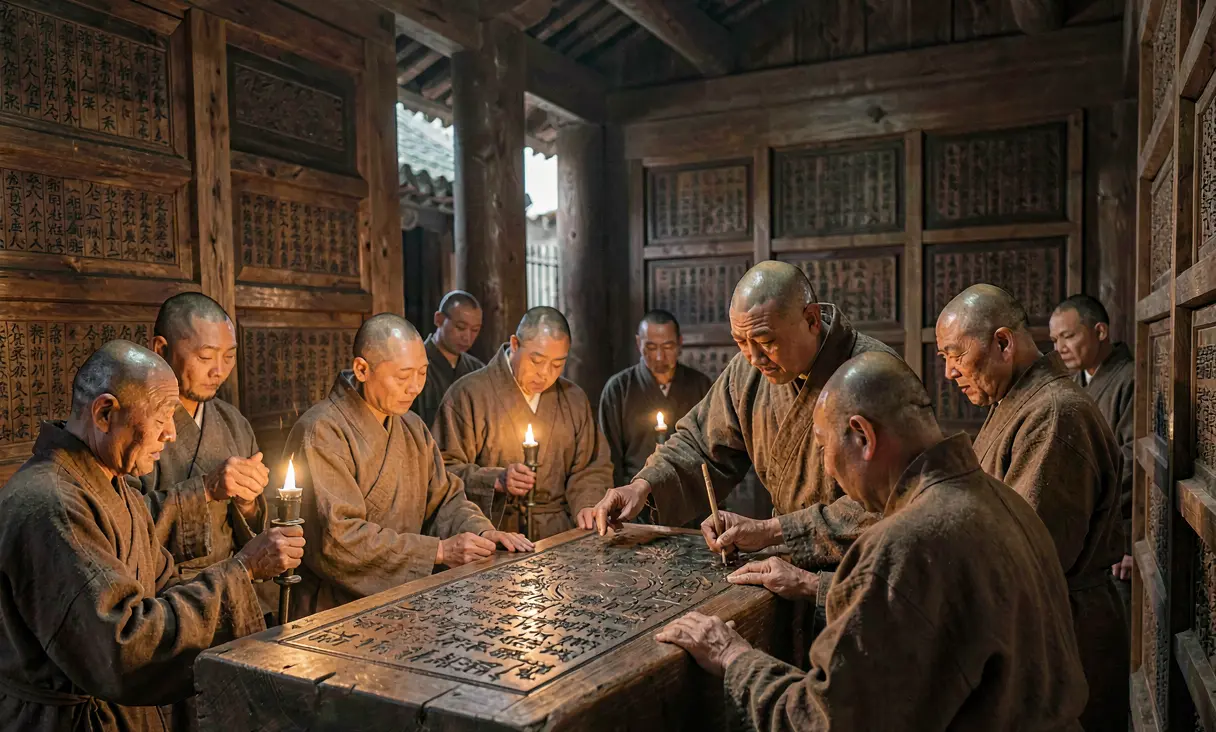 ReligionCompletion of Tripitaka Koreana Woodblocks1251 CE · Haeinsa Temple, KoreaGoryeo completes the most complete Buddhist canon carved on woodblocks to repel Mongol invasion.
 PoliticsSigning of the Egyptian-Hittite Peace Treatyc. 1259 BCE · Hattusa (Bogazkoy), Turkey / Thebes, EgyptRamses II and Hattusili III sign the world's first known peace treaty.
 ReligionZoroaster Preaches Dualistic Monotheismc. 1200 BCE · Greater Khorasan, Iran/Afghanistan border regionThe prophet Zoroaster establishes a dualistic faith emphasizing the cosmic struggle between good and evil in ancient Persia.
Discussion
Loading…