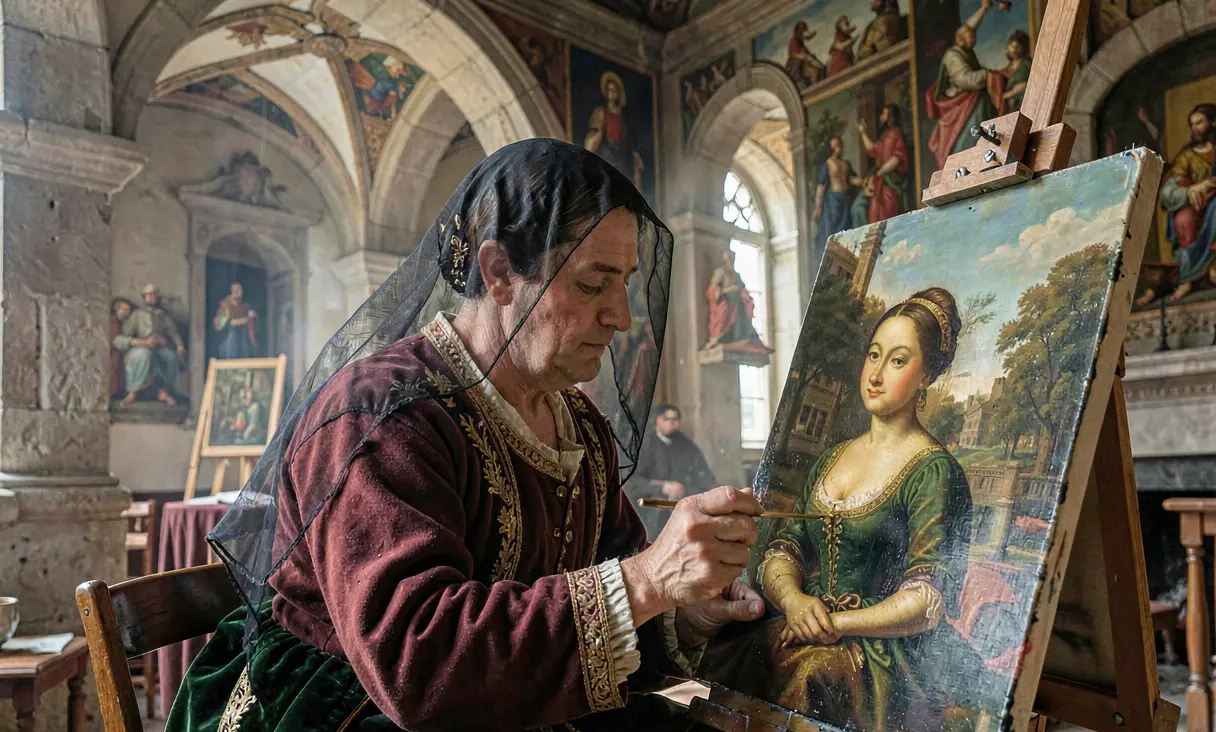
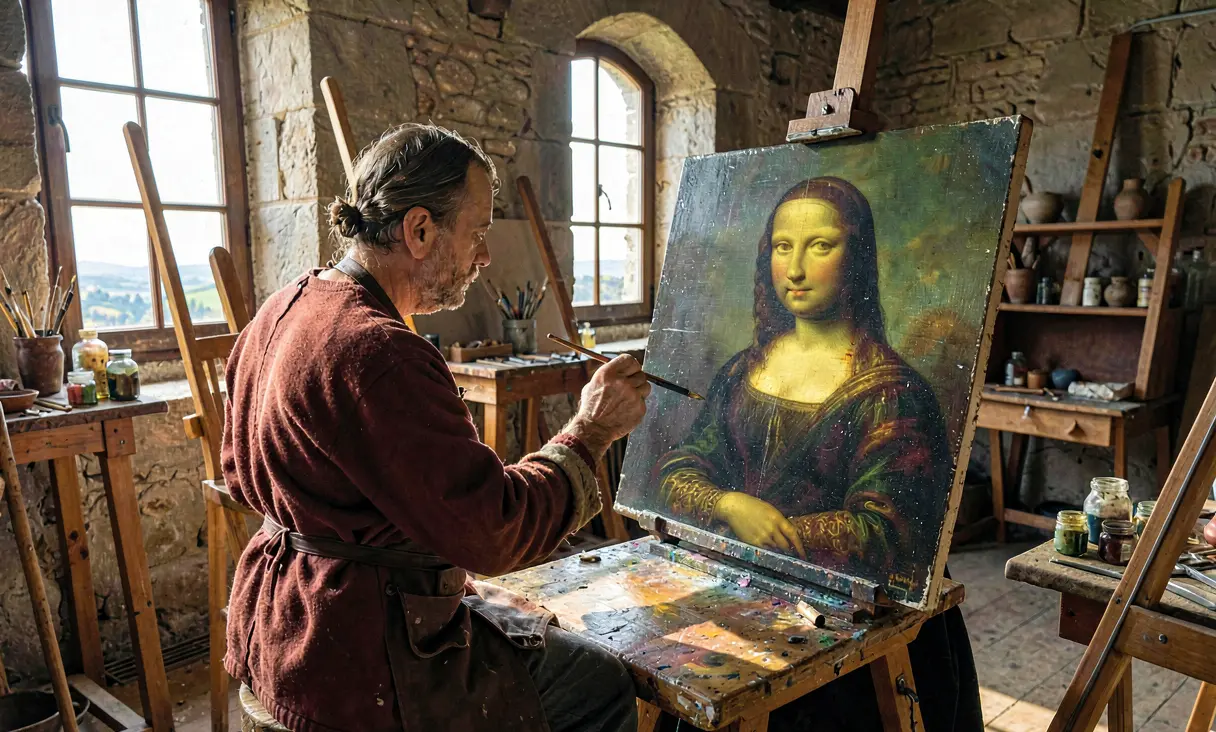
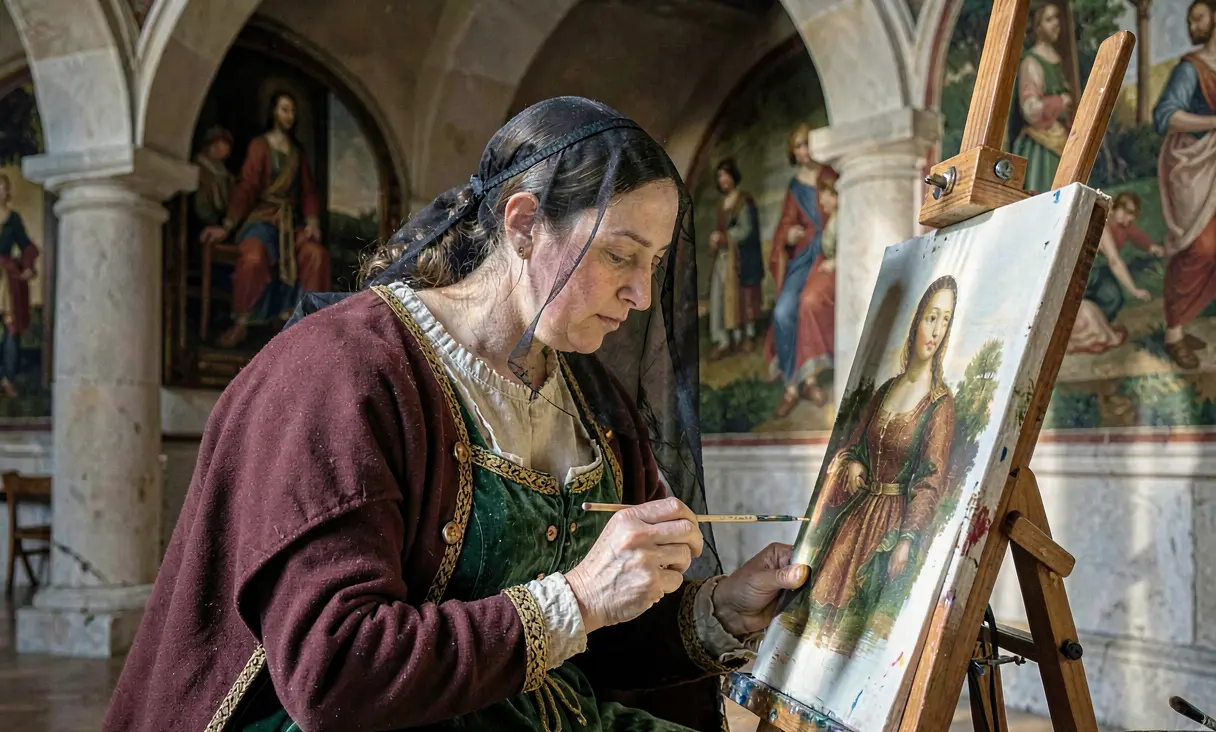
Painting of the Mona Lisa
Leonardo da Vinci's c. 1503 masterpiece revolutionized portraiture with sfumato technique, becoming a global icon after its sensational 1911 theft from the Louvre.
Renaissance Context and Commission
In the early 16th century, Florence stood as the epicenter of the Italian Renaissance, a period defined by a resurgence of classical learning and an unprecedented focus on humanism. It was within this vibrant intellectual climate that Francesco del Giocondo, a wealthy silk merchant, commissioned Leonardo da Vinci to paint a portrait of his wife, Lisa Gherardini, in approximately 1503. Unlike the rigid, profile portraits common in earlier centuries, this commission aimed to capture the sitter's personality and inner life, reflecting the era's shifting artistic priorities toward psychological depth and naturalism.
The Artist and His Method
Leonardo da Vinci approached the canvas not merely as a painter but as a scientist of light and anatomy. He abandoned the sharp outlines typical of his contemporaries, instead employing a revolutionary technique known as sfumato, derived from the Italian word for 'smoke.' By applying dozens of microscopic layers of oil glaze, often taking months to dry between coats, Leonardo achieved a seamless transition between colors and tones. This method allowed the subject's features, particularly around the eyes and mouth, to emerge from the shadows with an ethereal softness, creating a sense of three-dimensional volume that mimicked the way the human eye perceives reality.
The Enigma of Lisa Gherardini
The subject, Lisa del Giocondo, is depicted seated before a distant, imaginary landscape featuring winding roads and crumbling bridges, which serve as a metaphor for the passage of time. Her posture is relaxed yet dignified, with hands folded gently in her lap, while her gaze meets the viewer directly. The most debated aspect of the work remains her expression: a fleeting smile that seems to appear and disappear depending on the viewer's angle and focus. This ambiguity was intentional; Leonardo understood the mechanics of facial muscles and the interplay of light on the corners of the mouth, capturing a moment of transient emotion rather than a static pose.
A Work in Perpetual Motion
Remarkably, Leonardo never delivered the painting to the Giocondo family. Historical records suggest he kept the work with him until his death in 1519, continuing to refine it for nearly two decades. This prolonged engagement indicates that the piece was less a commercial transaction and more an experimental laboratory for Leonardo's evolving theories on optics and geology. The painting eventually passed into the hands of King Francis I of France, entering the French royal collection where it remained hidden from public view for centuries, preserved in the private chambers of monarchs before finding its home at the Louvre.
The Theft That Made a Legend
For over three hundred years, the painting was revered by artists and scholars but remained relatively unknown to the general public. Its status as a global icon was cemented not by its artistic merit alone, but by a sensational crime: on August 21, 1911, it was stolen from the Louvre Museum by Vincenzo Peruggia, an Italian handyman who believed the artwork belonged in Italy. The two-year absence of the masterpiece generated worldwide headlines and turned the empty space on the wall into a pilgrimage site for art lovers. When Peruggia was caught attempting to sell the painting in Florence in 1913, the event transformed the work from a Renaissance treasure into a modern celebrity.
Enduring Legacy and Cultural Impact
Today, the Mona Lisa is arguably the most recognized artwork in human history, drawing over six million visitors annually to the Louvre. It has transcended its origins as a portrait of a Florentine woman to become a universal symbol of mystery, artistic genius, and the enduring power of visual culture. The painting's influence permeates everything from high art to pop culture, serving as a reference point for discussions on gender, identity, and the nature of perception. Its survival through wars, thefts, and vandalism stands as a testament to its resilience, securing Leonardo da Vinci's reputation as the quintessential polymath of the Renaissance.
It stands as the most recognized painting in human history.
Where it happened
Florence, Italy — see it on the interactive map →
Explore related history
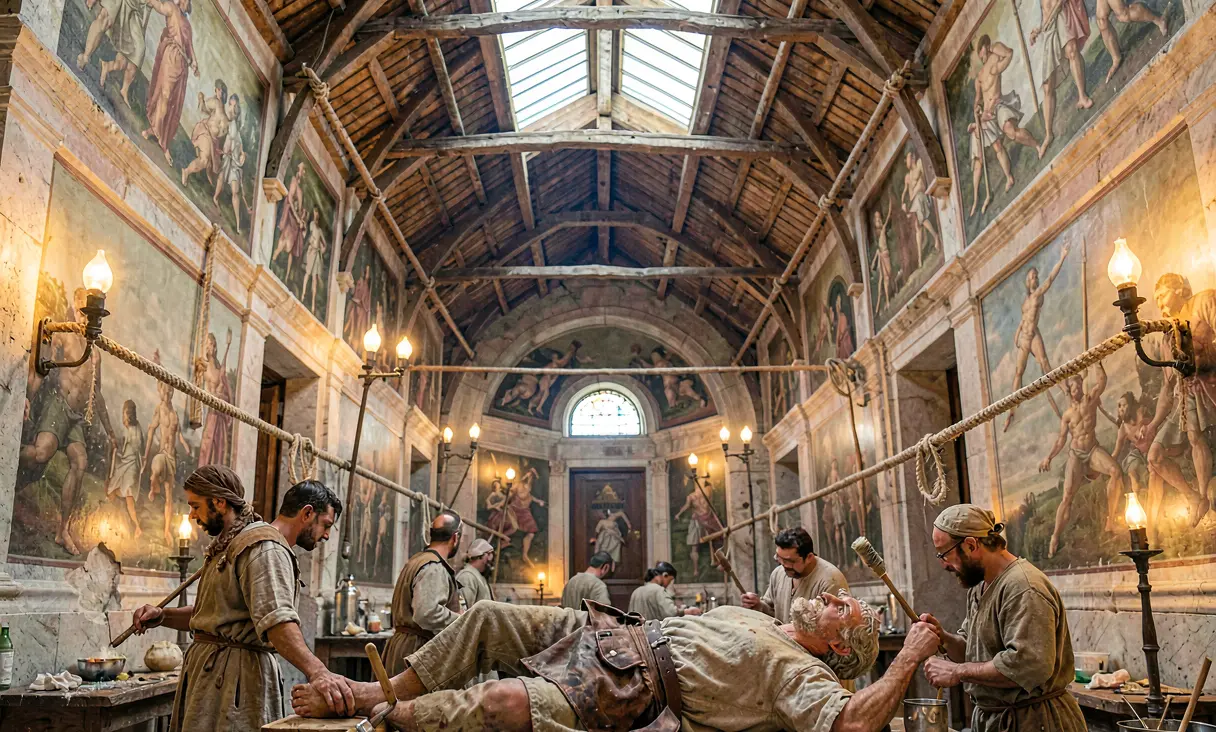 ArtCompletion of Sistine Chapel CeilingOctober 31, 1512 CE · Vatican City, ItalyMichelangelo finishes frescoes depicting Genesis scenes transforming Renaissance art.
 ArtMichelangelo Completes the Sistine Chapel CeilingOctober 31, 1512 · Vatican City, RomeMichelangelo finishes the monumental fresco cycle depicting Genesis.
 ArtMichelangelo Paints the Last JudgmentNovember 1541 · Vatican City, RomeMichelangelo completes the massive fresco on the altar wall of the Sistine Chapel.
 ReligionLuther Posts Ninety-Five ThesesOctober 31, 1517 CE · Wittenberg, GermanyMartin Luther challenges Catholic Church practices sparking the Protestant Reformation.
 TechnologyIntroduction of the Tomato to Europec. 1520 CE · Rome, ItalyTomatoes arrive in Europe from the Americas, revolutionizing global cuisine.
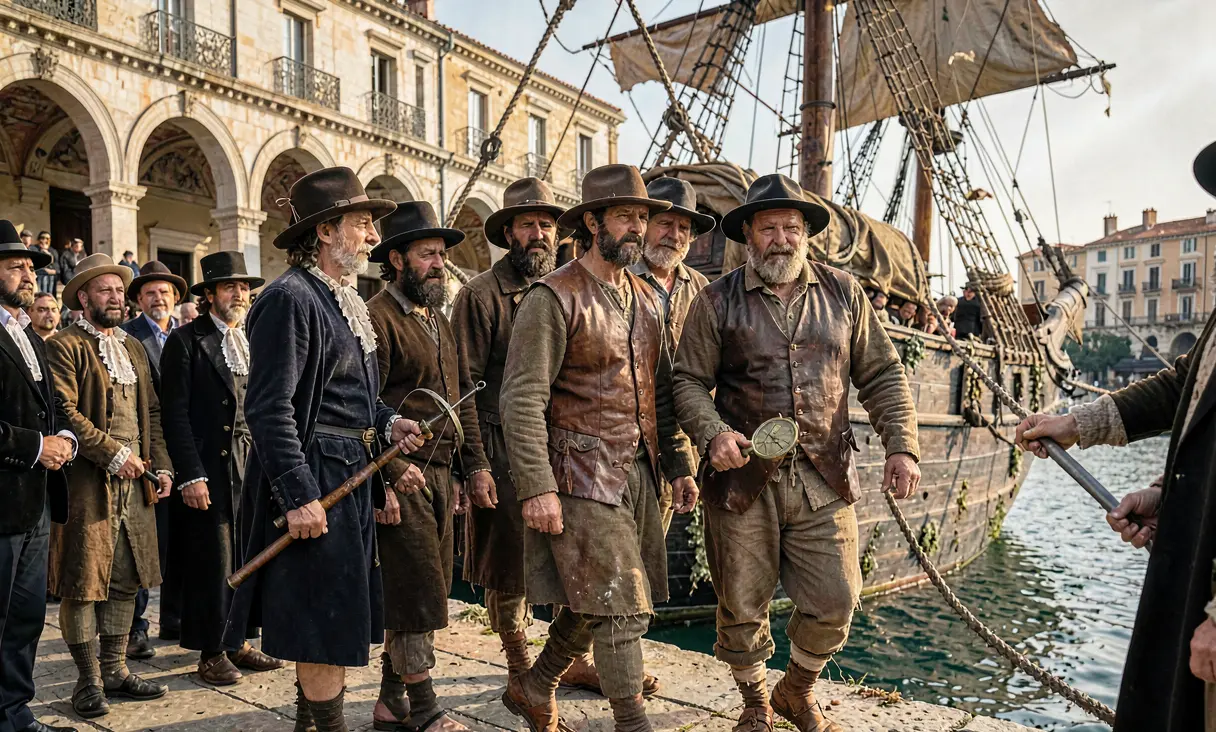 ExplorationMagellan's Circumnavigation CompletedSeptember 6, 1522 CE · Seville, SpainFirst expedition sails around the globe proving Earth is round and vast.
Discussion
Loading…