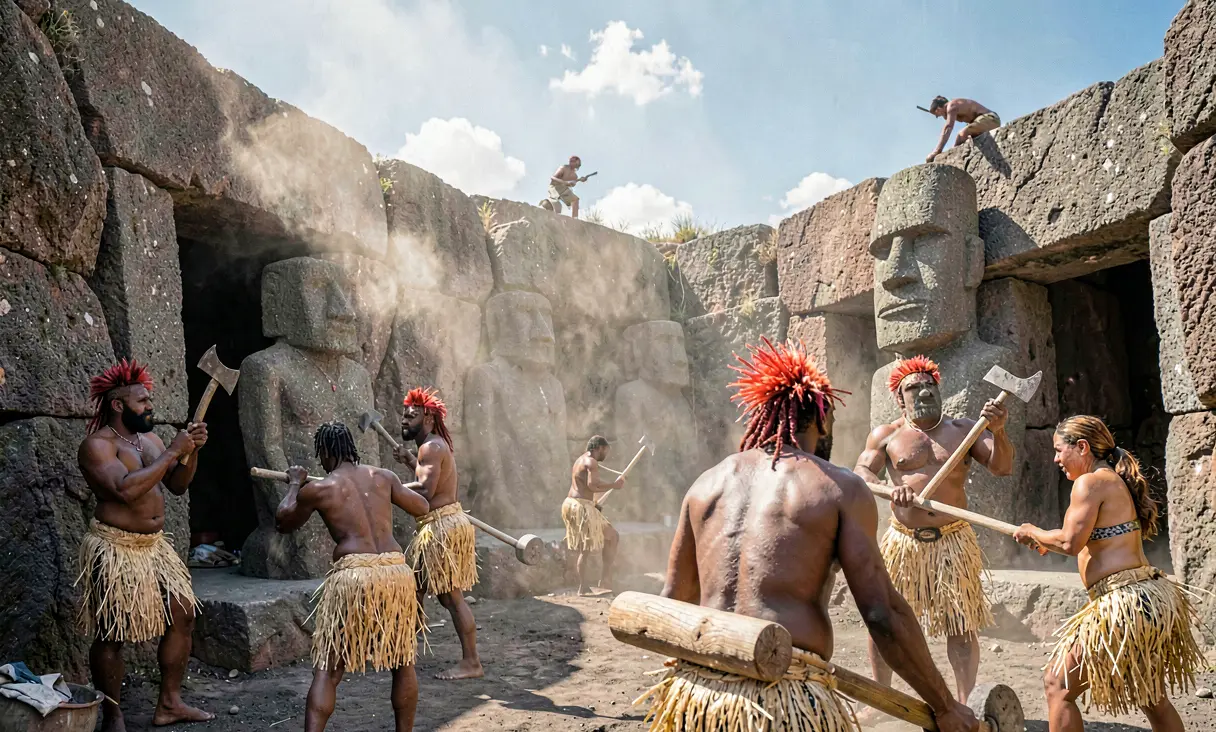
Mass Production of Moai Statues at Rano Raraku
Between 1400 and 1650 CE, Rapa Nui society mobilized massive labor forces to carve nearly 900 giant stone ancestors at Rano Raraku, creating a unique archaeological record of pre-industrial engineerin
Context of the Classic Period
By approximately 1250 CE, Rapa Nui (Easter Island) had transitioned from initial settlement to a complex chiefdom society. However, it was during the 'Classic Period' (c. 1400–1650 CE) that the island's social and religious structures reached their zenith, driving an unprecedented cultural phenomenon: the mass production of the moai. This era coincided with a period of relative climatic stability and resource abundance, allowing the population to swell to perhaps 7,000 to 15,000 individuals. The society was organized into distinct clans (mata) led by hereditary chiefs (ariki), each vying for prestige through the construction of monumental stone platforms (ahu) topped with giant statues representing their deified ancestors.
The Rano Raraku Quarry
At the heart of this industrial and spiritual endeavor lay Rano Raraku, a volcanic crater on the island's eastern slope. Composed primarily of soft, compacted volcanic tuff, the quarry provided the ideal medium for carving. Unlike other Polynesian cultures that utilized harder basalt or coral, the Rapa Nui artisans exploited the unique geological properties of this site to create figures of staggering scale. Between 1400 and 1650 CE, over 900 moai were initiated here, creating a surreal landscape where hundreds of statues stood in various stages of completion, some still fused to the living rock, others lying prone awaiting transport.
Techniques of Carving and Tooling
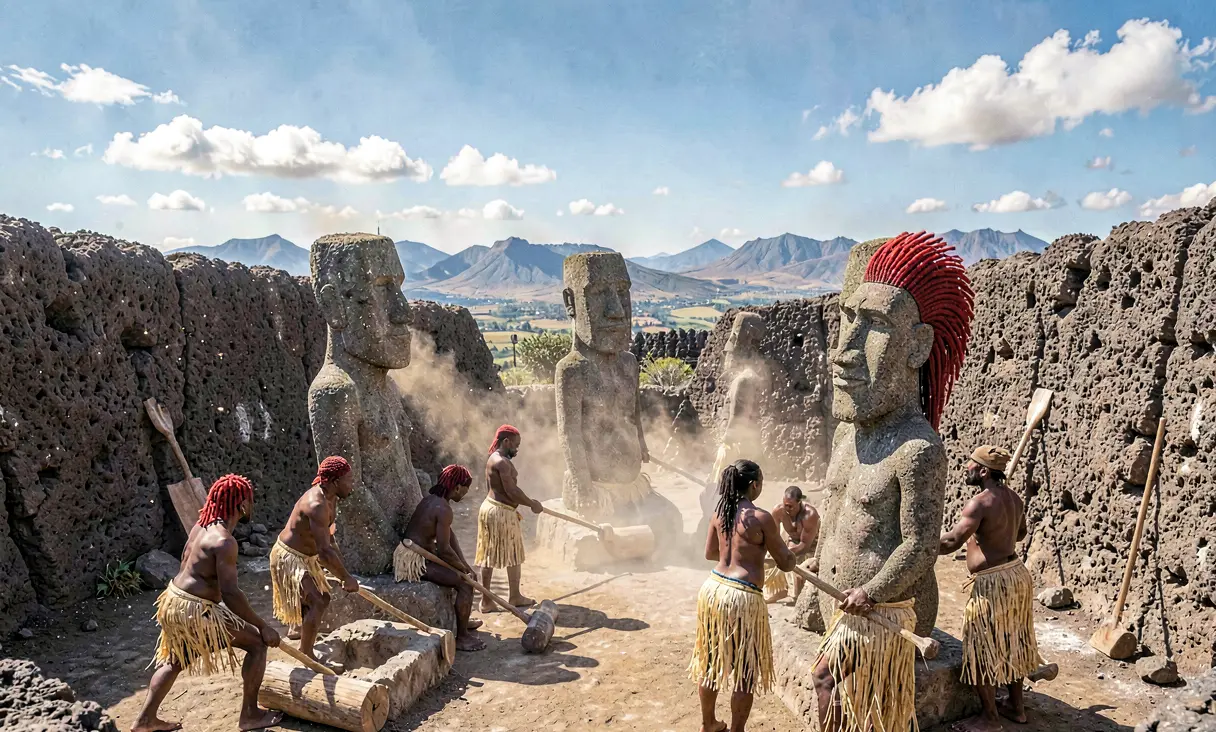
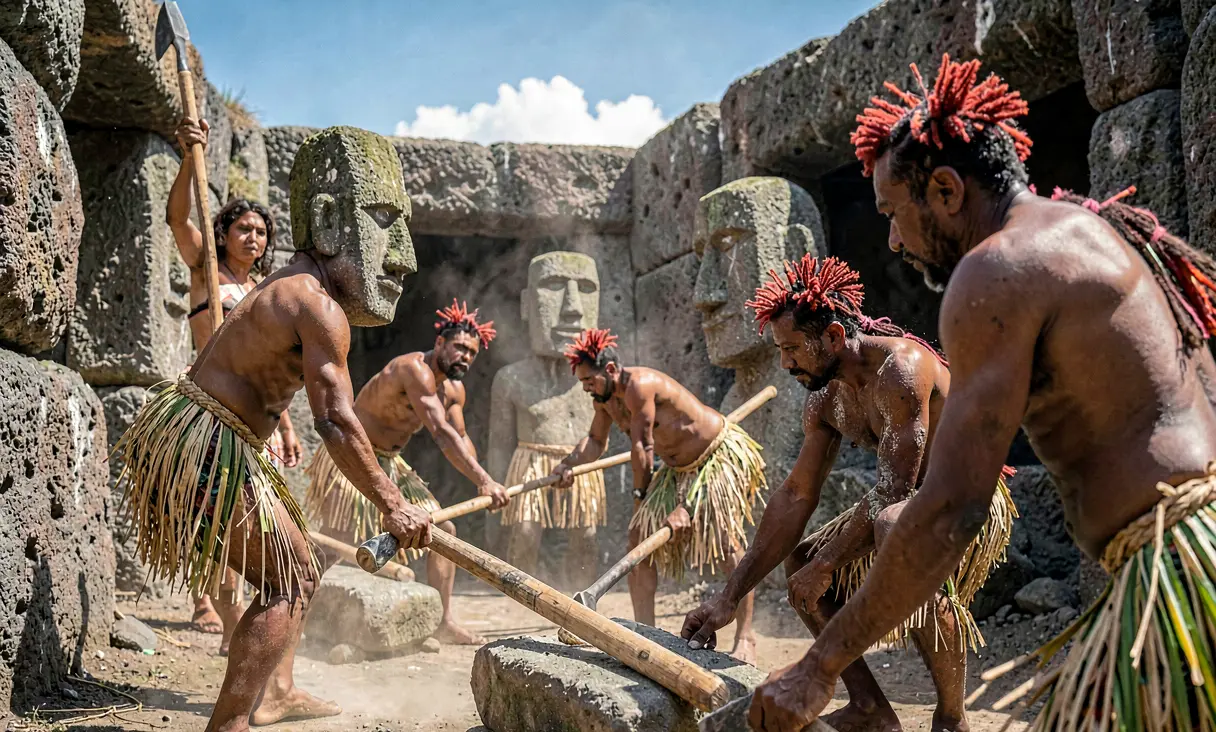
The production process was a marvel of pre-industrial engineering and labor organization. Artisans, known as tangata haka moai, utilized stone chisels called toki, crafted from the harder basalt found elsewhere on the island. Working in teams, they carved the statues directly into the crater walls, beginning with the back and moving toward the front. The average moai stood roughly 4 meters (13 feet) tall and weighed approximately 12.5 tons, though some reached heights of nearly 10 meters and weights exceeding 80 tons. The quarry floor reveals a meticulous workflow: roughed-out figures were shaped, then detailed with facial features and earlobes before being undercut to detach them from the bedrock.
Logistics of Transport and Erection
Once detached, the monumental challenge began: moving these colossal figures from Rano Raraku to coastal ahu sites scattered across the island. Archaeological evidence and oral tradition suggest that the statues were not dragged on sleds but 'walked' upright using a rocking motion. Teams of men would sway the statue back and forth, pivoting it forward in a rhythmic dance that required immense coordination. This method, combined with the use of wooden rollers or sledge-like structures for leveling, allowed the Rapa Nui to transport statues weighing up to 82 tons over distances exceeding 10 kilometers without the aid of wheels or draft animals.
Social Dynamics and Ritual Significance
The mass production of moai was not merely an artistic endeavor but a mechanism for political consolidation and spiritual protection. Each statue served as a vessel (mana) for the spirit of a revered ancestor, acting as a guardian to protect the clan's territory and ensure agricultural fertility. The construction of these figures fueled a competitive arms race among clans; the ability to mobilize labor, secure resources, and erect larger, more imposing statues was a direct display of power. This intense period of construction likely placed significant strain on the island's ecosystem, contributing to deforestation as timber was required for transport and canoe building.
Legacy and Archaeological Snapshot
The cessation of moai production around 1650 CE marked a profound societal shift, likely triggered by resource depletion, civil conflict, or the arrival of European diseases. Today, Rano Raraku remains an unparalleled open-air museum, preserving a frozen moment in time where the carving process is visible in situ. The site contains statues ranging from mere outlines to fully finished masterpieces, offering historians and archaeologists a unique window into the technical skills and spiritual beliefs of the Rapa Nui people. It stands as one of the most significant examples of pre-Columbian monumental art in the Pacific.
The moai represent one of history's most remarkable feats of pre-industrial sculpture and communal organization.
Where it happened
Rano Raraku Quarry, Rapa Nui — see it on the interactive map →
Explore related history
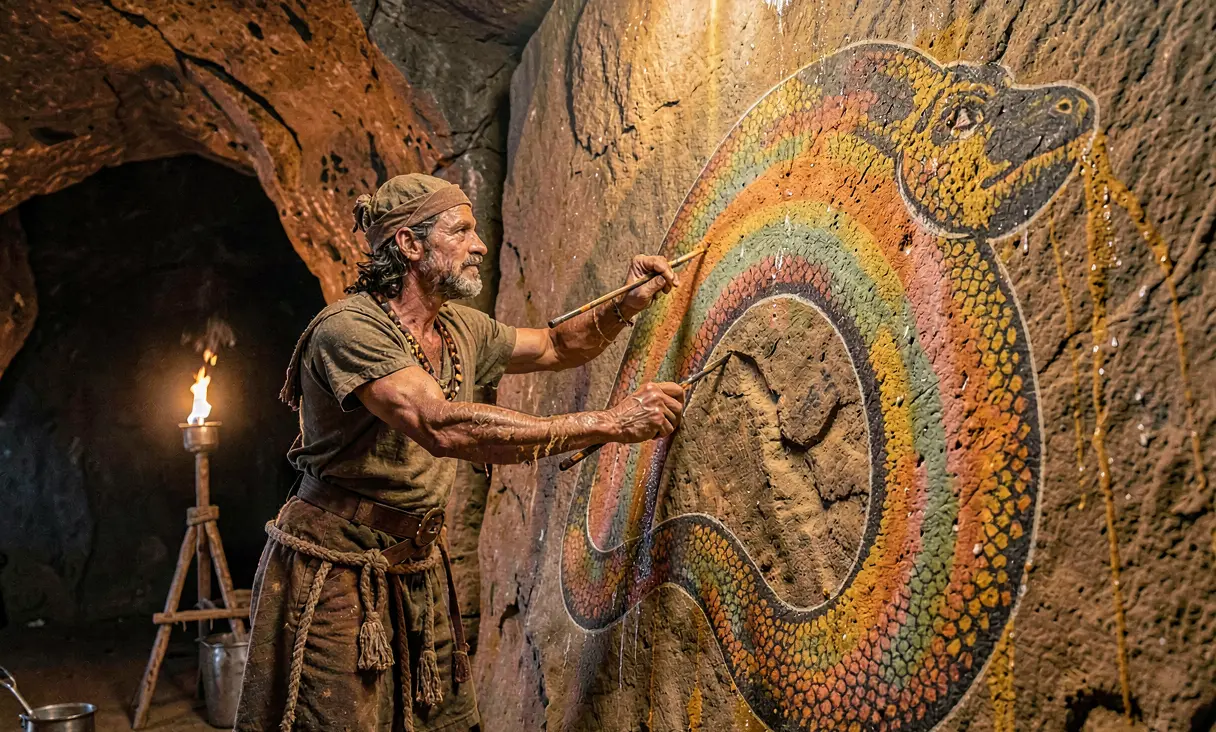 ArtPeak Period of Australian Aboriginal Rock Artc. 3000 BCE to 1500 CE · Kakadu National Park, AustraliaAboriginal artists create vast galleries of rock paintings depicting ancestral beings and hunting scenes.
 ArtCreation of the Benin Bronzes under Oba Ewuarec. 1450 CE · Benin City, NigeriaOba Ewuare commissions the famous bronze and ivory plaques documenting court life and military victories.
 ArtDevelopment of Māori Tā Moko Tattooing Traditionc. 1400 CE · North Island, New ZealandMāori refine the art of tā moko, using chisels to carve permanent facial and body tattoos.
 ExplorationGreat Zimbabwe Dominates Gold Trade with Kilwac. 1400 CE · Great Zimbabwe, ZimbabweArchaeological evidence confirms extensive gold trade between Great Zimbabwe and Swahili coastal cities.
 TechnologyExpansion of Chinampa Agriculture in the Valley of Mexicoc. 1400 CE · Lake Xochimilco, Mexico City, MexicoAztec engineers develop intensive floating gardens to feed a growing population.
 PoliticsBreaking of the Tapu by High Chiefsc. 1400 CE · North Island, New ZealandHigh chiefs challenge and modify traditional tapu rules to consolidate power and redistribute resources.
Discussion
Loading…