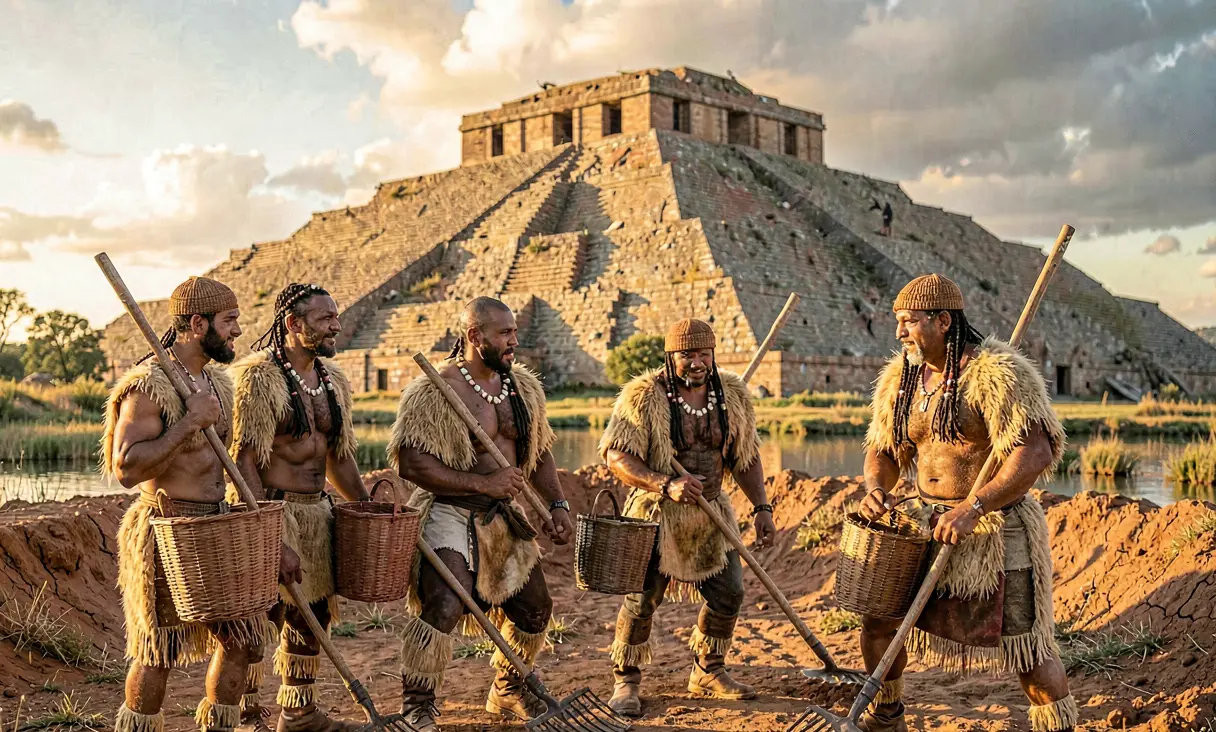
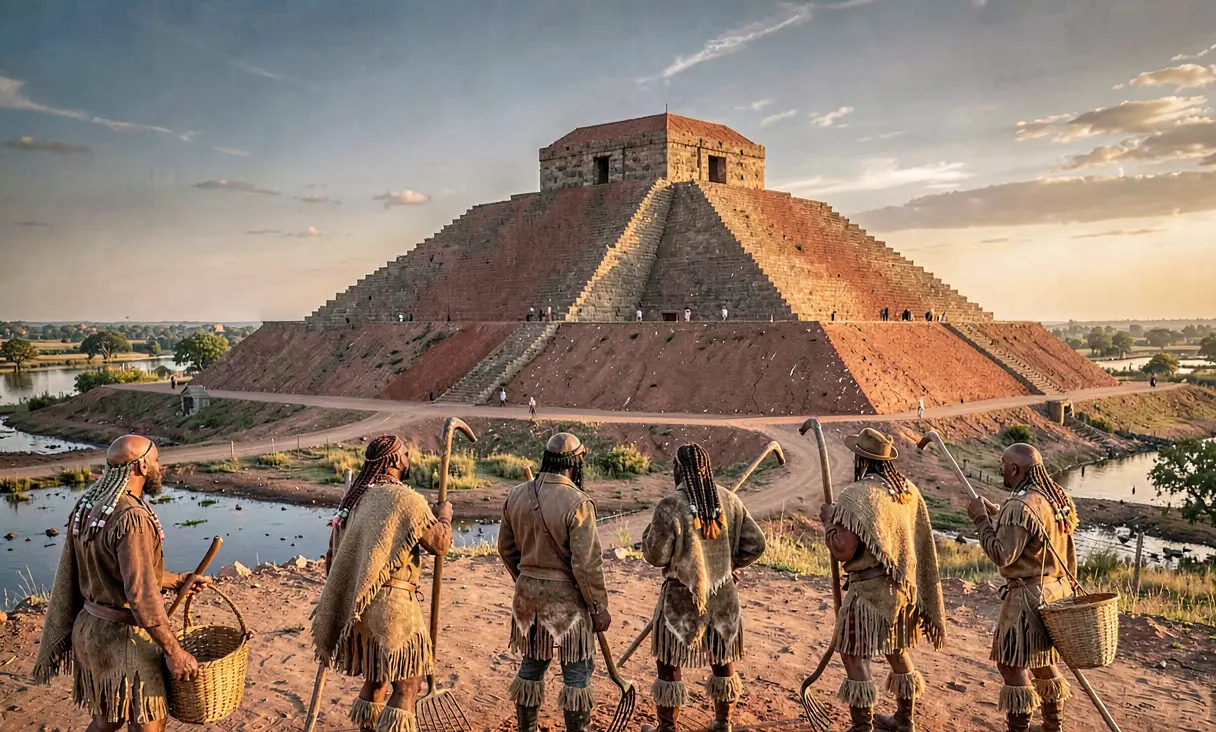
Construction of Monks Mound at Cahokia
Built by hand around 1050 CE, Monks Mound stands as the largest prehistoric earthwork in North America, symbolizing the peak of Cahokia's power and sophisticated Mississippian cosmology.
The Rise of the Mississippians
By the early 11th century, the American Bottom region, situated at the confluence of the Mississippi, Missouri, and Illinois rivers, had become a demographic crucible. Following centuries of gradual agricultural intensification centered on maize cultivation, scattered villages coalesced into a sprawling urban center known today as Cahokia. This period, often termed the 'Stirling Phase' (c. 1050–1200 CE), marked a radical shift in social organization. The population exploded from a few thousand to an estimated 10,000 to 20,000 inhabitants within a century, creating a complex stratified society capable of mobilizing vast labor forces. It was into this atmosphere of rapid urbanization and religious fervor that the construction of Monks Mound began, signaling the emergence of the first true city north of Mexico.
The Architectural Marvel
Initiated around 1050 CE, the construction of Monks Mound (originally known as Structure 38) was an undertaking of unprecedented scale in pre-Columbian North America. Rising to a height of approximately 30 meters (98 feet), the mound covers 14 acres at its base, making it larger than the Great Pyramid of Giza by volume. Unlike stone monuments of the Old World or Andes, this edifice was built entirely from earth, clay, and gravel. The structure features four distinct terraces, with the largest terrace supporting a massive rectangular platform that once held a temple or elite residence. Its precise orientation aligns with the solstices and equinoxes, demonstrating a sophisticated understanding of astronomy integrated directly into urban planning.
The Mechanics of Earthmoving
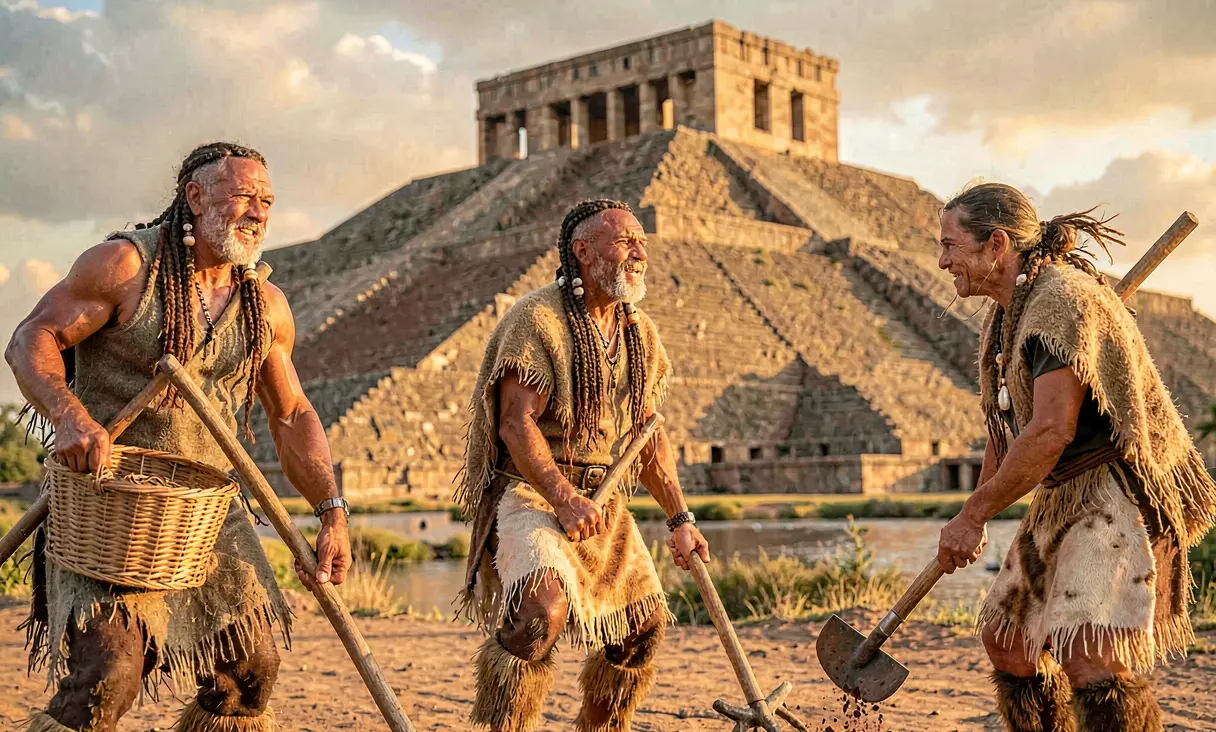
The engineering feat required no metal tools, wheels, or draft animals. Instead, the mound was constructed through a labor-intensive process involving thousands of workers carrying soil in woven baskets on their backs and foreheads. Archaeological analysis of the soil composition reveals that the builders meticulously selected different types of clay and loam from specific locations within a 10-mile radius to ensure structural stability and symbolic significance. Each basket held roughly 25 kilograms of earth, meaning millions of individual trips were necessary to fill the mound's estimated 24 million cubic feet of volume. This massive mobilization implies a highly centralized authority capable of organizing labor on a scale previously unseen in the region.
Political and Religious Centrality
Monks Mound was not merely a monument; it was the functional heart of Cahokia's political and spiritual life. The summit, accessible via grand staircases on the east and west sides, served as the stage for rituals that legitimized the rule of the paramount chief, often referred to by archaeologists as the 'Great Sun.' From this elevated vantage point, elites could oversee the Grand Plaza below, where thousands gathered for ceremonies, games like chunkey, and public displays of power. The mound physically manifested the cosmological belief system of the Mississippian culture, acting as a bridge between the earthly realm and the upper world, reinforcing the divine right of the city's rulers.
Legacy of an Abandoned Giant
Although Cahokia began its decline by 1350 CE due to a combination of environmental degradation, social unrest, and climatic shifts, Monks Mound endured as the city's most enduring physical testament. The structure survived centuries of neglect, agricultural encroachment, and early European exploration, eventually being named after a group of Trappist monks who established a short-lived settlement nearby in the late 18th century. Today, it stands as the largest prehistoric earthwork in the Americas north of Mexico, a silent sentinel of a civilization that once rivaled contemporary medieval European cities in complexity and population density.
Historical Significance
The construction of Monks Mound fundamentally altered the historical trajectory of North America by proving the capacity for large-scale urbanism and state-level organization outside of Eurasia. It challenges long-held misconceptions about pre-Columbian societies, demonstrating that indigenous peoples engineered complex hydraulic systems, astronomical observatories, and monumental architecture without Old World technologies. As a UNESCO World Heritage Site candidate and a National Historic Landmark, the mound continues to provide critical insights into the social dynamics, labor organization, and spiritual worldviews of the Mississippian culture, serving as a cornerstone for understanding the deep history of the continent.
Monks Mound stands as a testament to the organizational capacity and engineering skill of Cahokia.
Where it happened
Cahokia Mounds State Historic Site, Illinois, USA — see it on the interactive map →
Explore related history
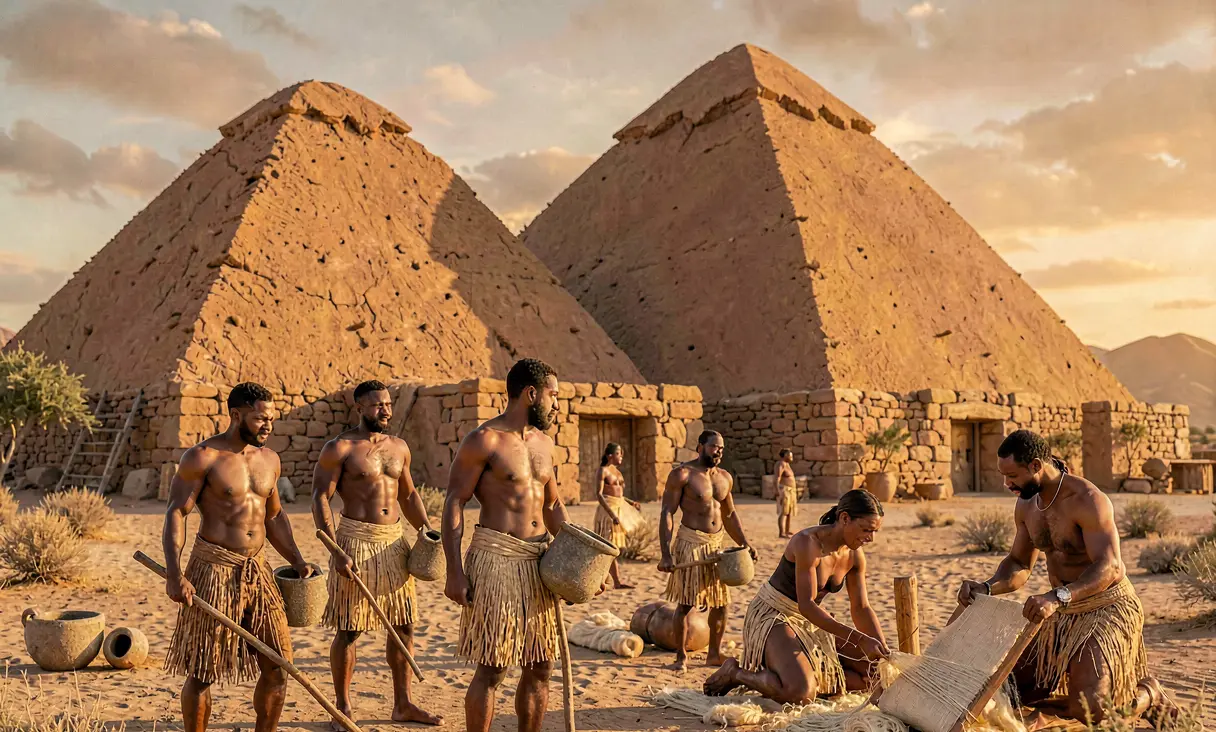 CivilizationEmergence of Norte Chico Urban Centersc. 3000 BCE · Caral-Supe Valley, PeruThe Norte Chico civilization establishes the oldest known cities in the Americas.
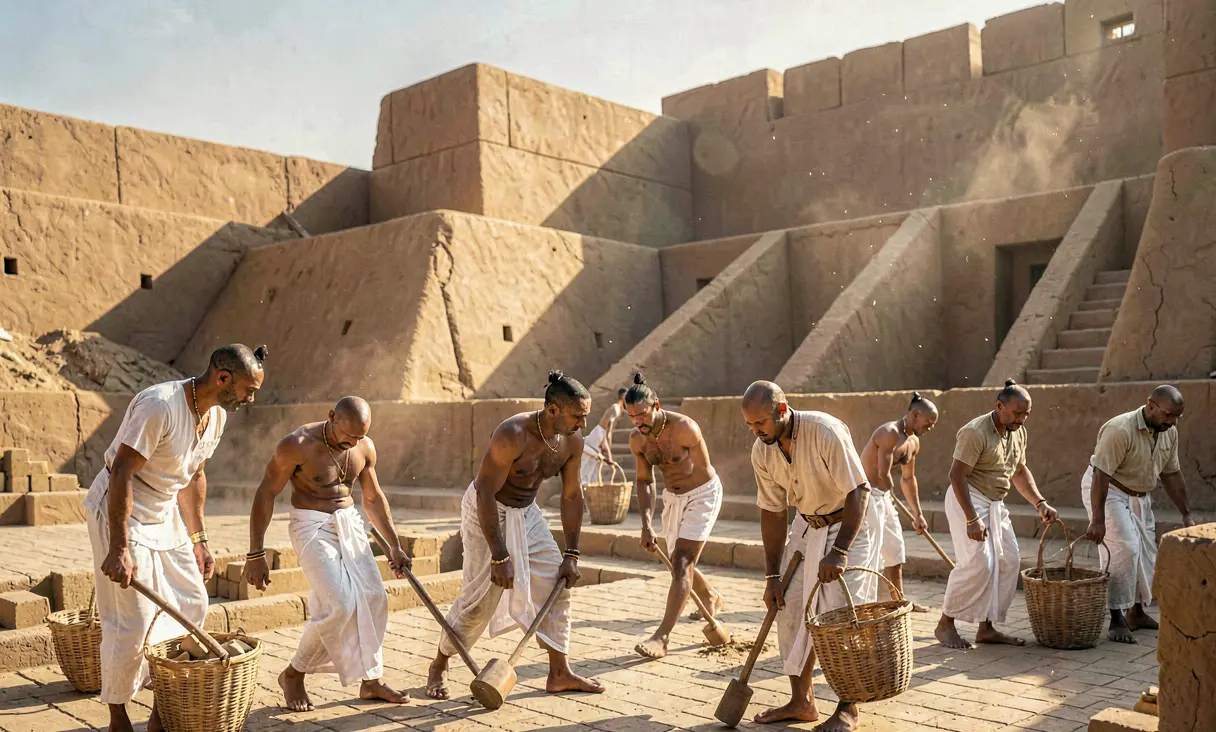 CivilizationUrban Planning of Mohenjo-daroc. 2600 BCE · Mohenjo-daro, PakistanThe Indus Valley Civilization constructs Mohenjo-daro with advanced grid systems and the world's first known urban sanitation.
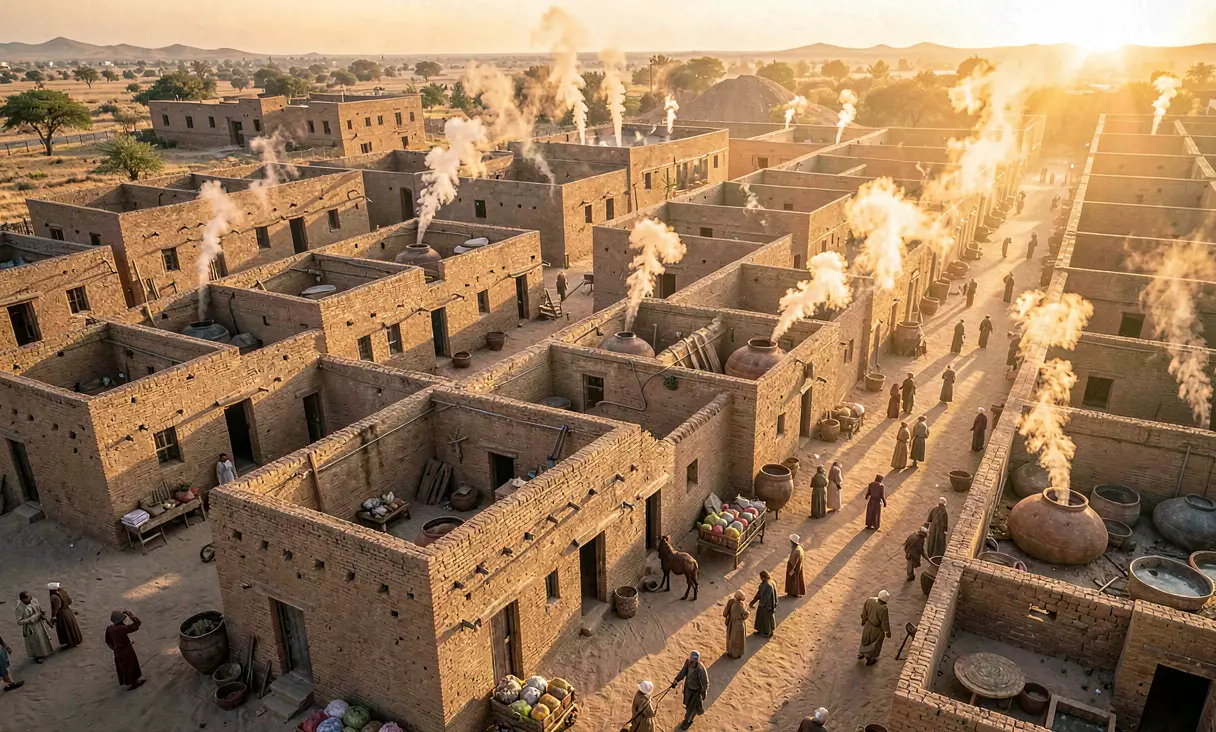 CivilizationUrbanization of Harappa and Mohenjo-daroc. 2600 BCE · Harappa and Mohenjo-daro, Indus Valley (modern Pakistan)The mature Harappan phase begins, establishing the first large-scale urban centers in South Asia with advanced grid planning.
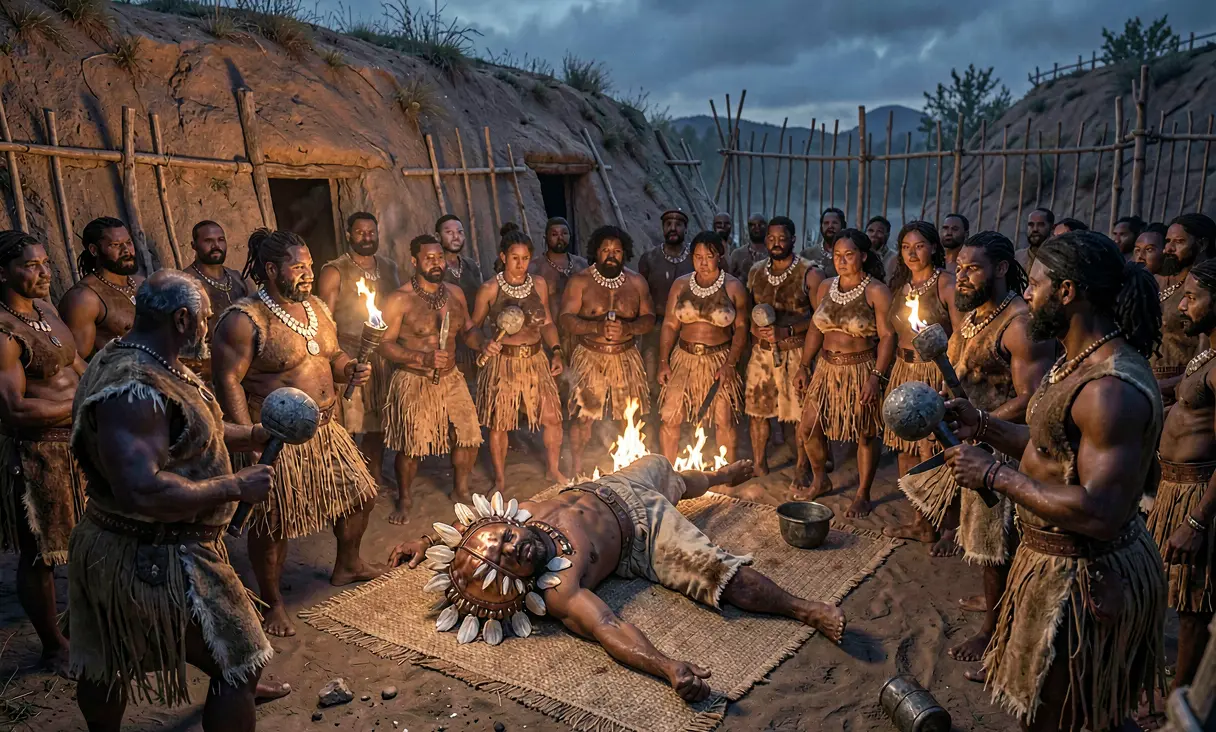 PoliticsThe Birdman Burial at Cahokia Mound 72c. 1050 CE · Cahokia, Illinois, USAA high-status Mississippian leader is buried with hundreds of sacrificial victims.
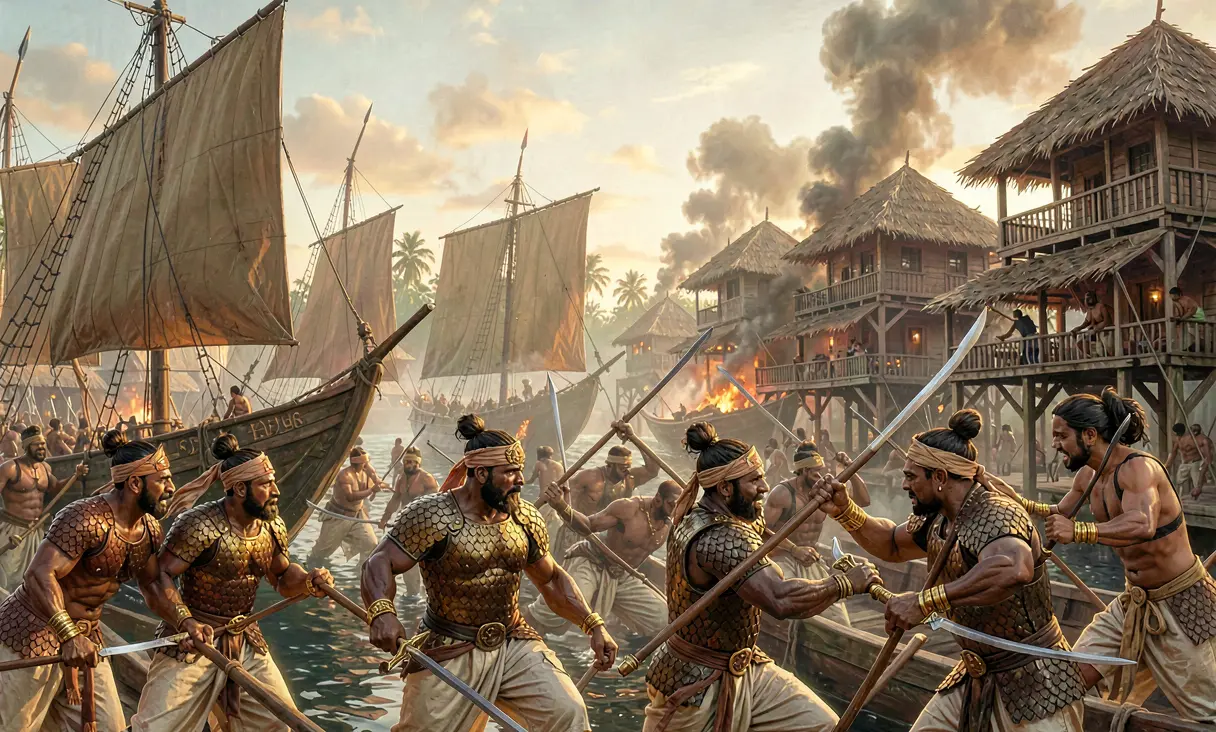 WarChola Raid on Srivijaya1025 CE · Palembang, Sumatra (Srivijaya)Rajendra Chola I launches a naval raid destroying Srivijayan ports and disrupting trade.
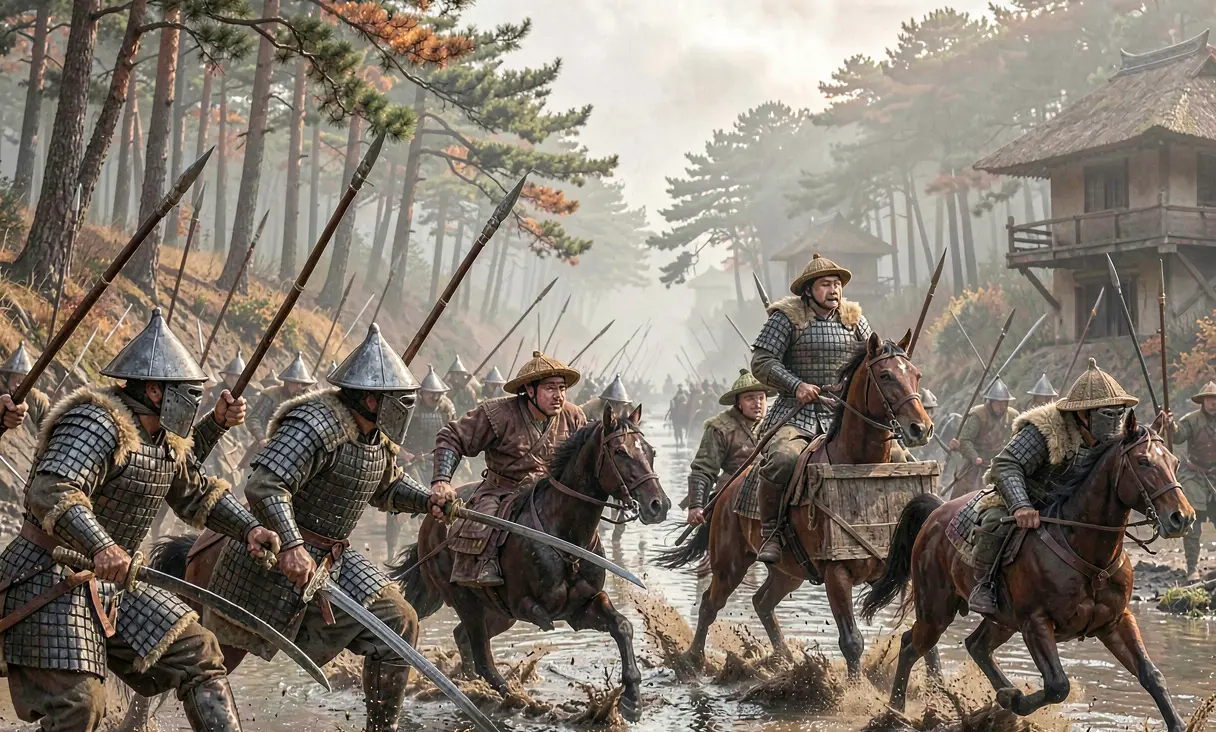 WarGoryeo Repels Khitan Liao Invasion1018 CE · Pyongan Province, KoreaGeneral Gang Gam-chan defeats the Khitan Liao army at the Battle of Guichu River.
Discussion
Loading…