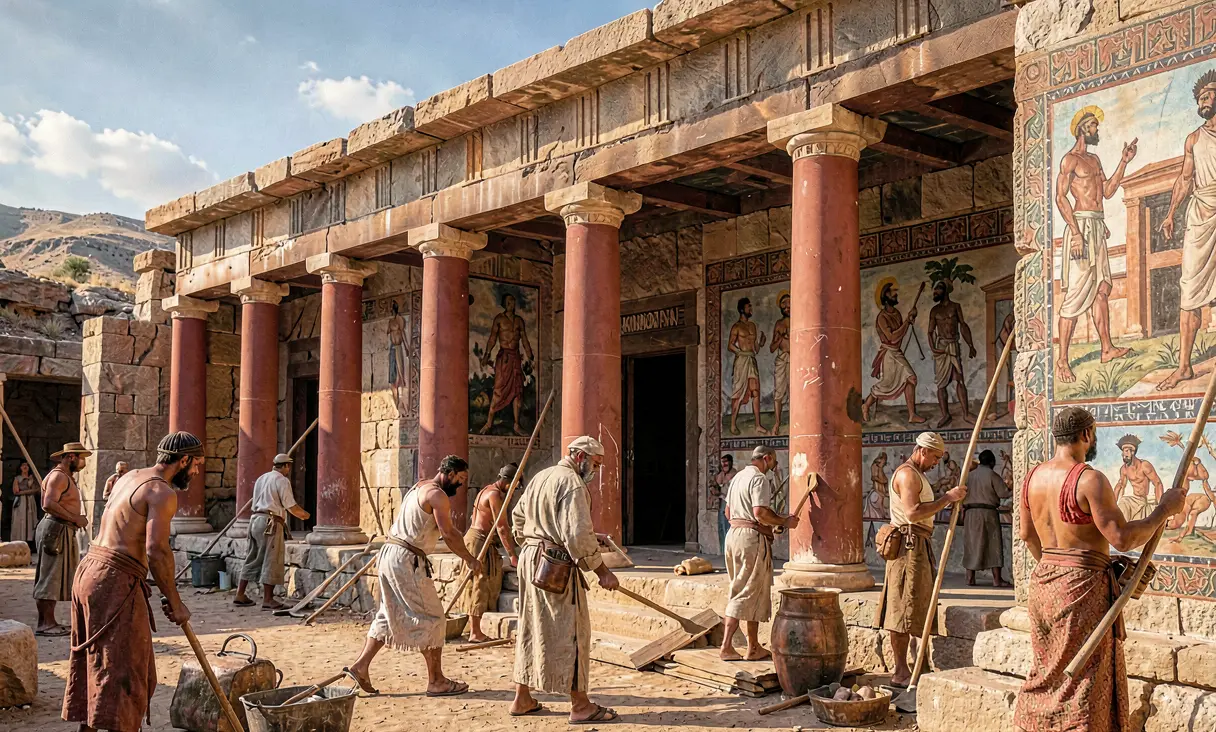
Rebuilding of the Palace at Knossos after Earthquake
After a catastrophic earthquake around 1700 BCE destroyed the first palace at Knossos, the Minoans rapidly rebuilt an even larger, architecturally revolutionary complex that cemented their dominance o
The First Palace and the Seismic Catastrophe
By the mid-19th century BCE, the island of Crete had entered its Middle Minoan period, characterized by the flourishing of complex urban centers. At Knossos, the first great palace complex stood as a testament to the emerging Minoan civilization's architectural prowess and administrative sophistication. This initial structure, built around 2000 BCE, featured multi-story buildings, storage magazines filled with pithoi, and early forms of centralized control. However, this golden age was abruptly shattered by a series of catastrophic earthquakes that struck Crete around 1700 BCE. Seismic activity of immense magnitude leveled the first palace at Knossos, along with other major centers such as Phaistos, Malia, and Zakros, effectively ending the First Palace Period. The destruction was total; walls collapsed, floors were crushed, and the administrative infrastructure lay in ruins.
A Rapid and Ambitious Reconstruction
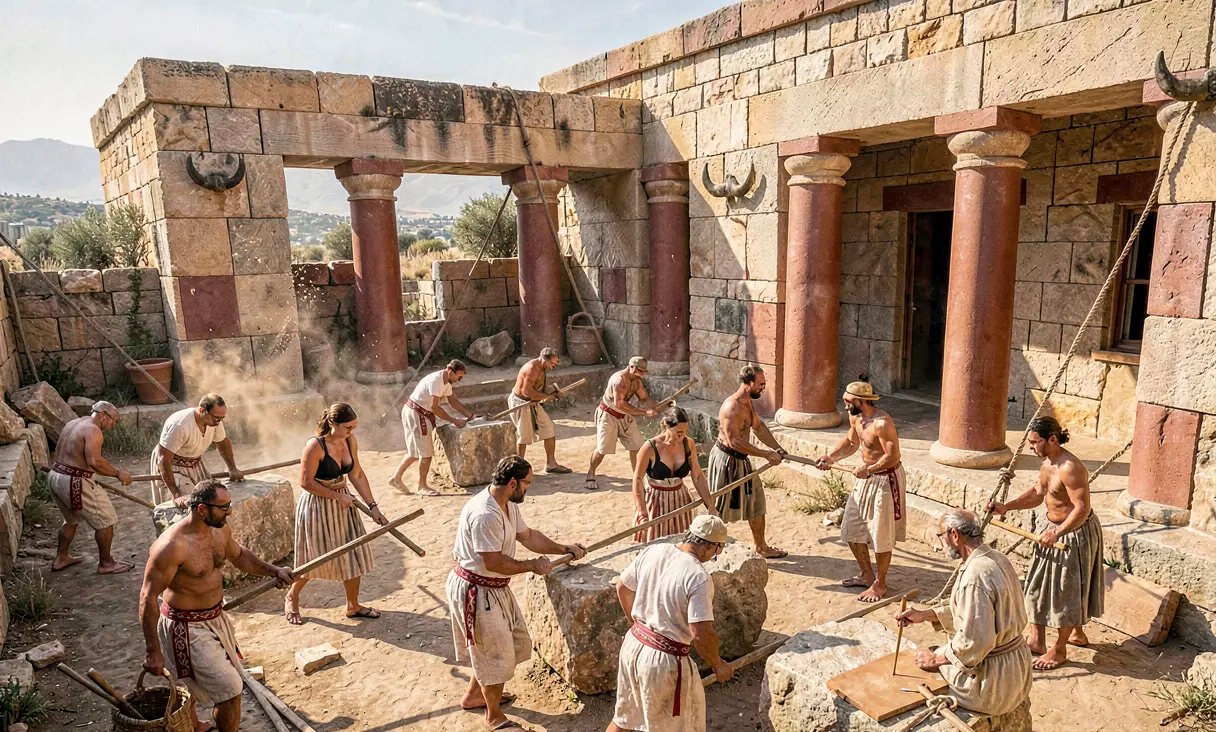
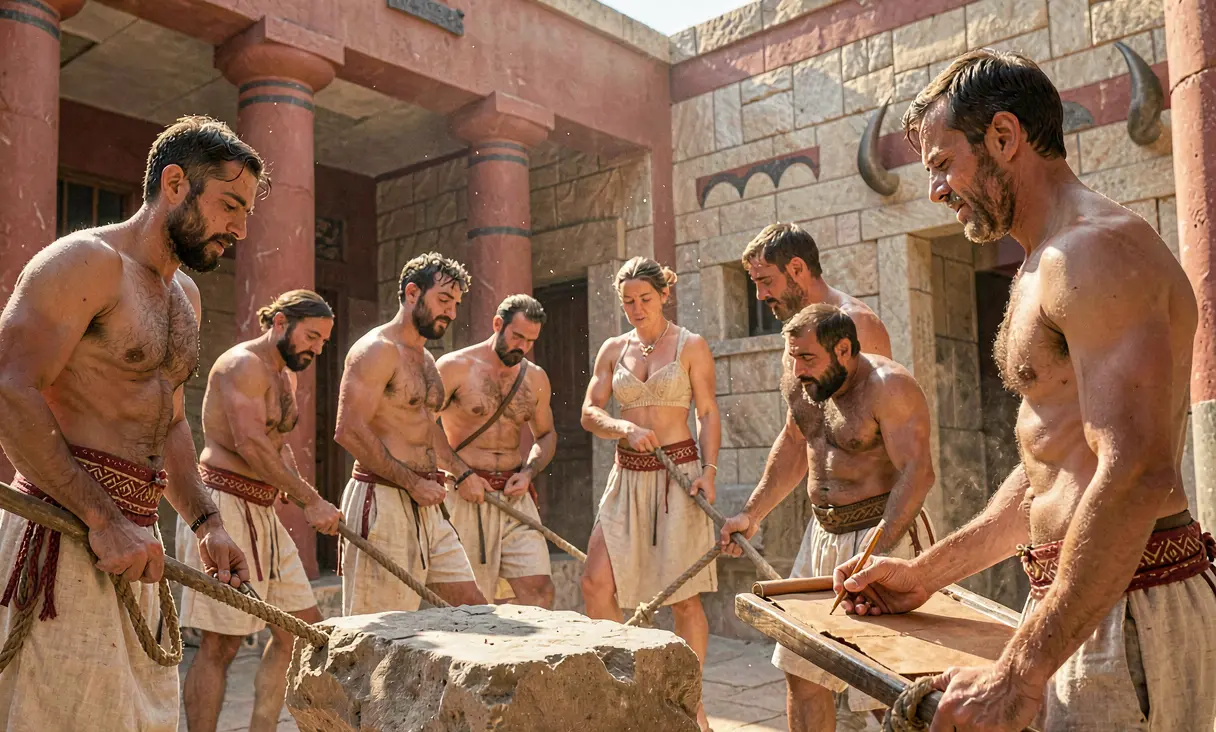
Rather than abandoning the site or retreating to a simpler pastoral existence, the Minoan leadership at Knossos demonstrated an extraordinary capacity for resilience and organizational power. Within a remarkably short timeframe—likely within a single generation—the ruins were cleared, and construction began on what would become known as the Second Palace Period complex. This was not merely a restoration but a radical reinvention of the architectural landscape. The new palace was built directly atop the debris of its predecessor, utilizing the rubble to level the ground for an even more expansive foundation. Archaeologists estimate that the rebuilt complex covered over 20,000 square meters, making it one of the largest and most intricate structures in the Bronze Age Mediterranean.
Architectural Innovation: Light Wells and Grand Staircases
The Second Palace at Knossos introduced revolutionary architectural features that defined Minoan aesthetics for centuries. Central to this new design was the proliferation of light wells—deep, vertical shafts designed to flood the interior rooms with natural illumination while maintaining structural integrity. These were complemented by grand staircases, such as the famous Great Staircase, which utilized a system of wooden columns that tapered upward, a unique engineering solution that provided stability and visual elegance. The layout became more complex, featuring a central courtyard surrounded by elaborate apartments, workshops, and storage areas. This sophistication suggests a society with advanced knowledge of structural engineering and a deep commitment to creating spaces that were both functional for administration and impressive for ritual display.
Administrative Expansion and the Linear A Script
The reconstruction of Knossos coincided with a significant expansion in administrative capabilities, reflecting a more centralized and powerful state apparatus. The new palace housed vast storage magazines capable of holding thousands of liters of olive oil, wine, and grain, indicating a robust economy based on redistribution. This complexity was managed through the use of the Linear A script, an undeciphered syllabic writing system used by the Minoans for record-keeping. Clay tablets discovered in the ruins of the Second Palace reveal detailed inventories, labor allocations, and religious offerings. The sheer volume of these documents suggests that the rebuilt palace served as a massive bureaucratic hub, coordinating resources across Crete and potentially managing trade networks throughout the Aegean.
The Consolidation of Minoan Hegemony
The successful rebuilding of Knossos following the 1700 BCE earthquake marked a turning point in Cretan history, solidifying the island's status as the dominant maritime power of the Aegean. Unlike other contemporary civilizations that might have fractured after such a disaster, the Minoans used the reconstruction to centralize authority further, likely diminishing the autonomy of rival palatial centers like Phaistos and Malia. Knossos emerged not just as a regional capital but as the undisputed political and religious heart of Crete. The ability to marshal the resources required for such a massive construction project implies a level of social cohesion and royal power that was unprecedented in the region, setting the stage for the height of Minoan civilization during the Late Bronze Age.
Legacy: A Civilization Resilient Against Nature
The Second Palace Period at Knossos stands as a enduring symbol of human resilience in the face of natural disaster. The architectural innovations developed during this reconstruction, particularly the use of light wells and flexible wooden columns, influenced Aegean architecture for centuries. Although another earthquake would eventually destroy the palace around 1450 BCE, leading to its eventual takeover by Mycenaean Greeks, the legacy of the 1700 BCE rebuilding remains profound. It demonstrated that the Minoan state was capable of absorbing massive shocks and emerging stronger, more organized, and culturally vibrant. The ruins of this rebuilt palace, later excavated by Sir Arthur Evans in the early 20th century, continue to provide invaluable insights into one of Europe's earliest advanced civilizations.
The rebuilding of Knossos showcases the resilience and architectural sophistication of the Minoan civilization after natural disaster.
Where it happened
Knossos, Crete (Greece) — see it on the interactive map →
Explore related history
 DisasterCatastrophic Flooding at Mohenjo-Daroc. 1900 BCE · Mohenjo-Daro, Sindh, PakistanDevastating floods from the Indus River repeatedly buried and destroyed layers of Mohenjo-Daro, signaling the decline of the urban phase.
 DisasterEcological Collapse and Deforestation of Rapa Nuic. 1600 CE · Rapa Nui (Easter Island), ChileOverexploitation of resources leads to deforestation and societal transformation on Rapa Nui.
 DisasterMinoan Eruption of Thera (Santorini)c. 1600 BCE · Santorini (Thera), Aegean SeaA massive volcanic eruption devastates the Minoan civilization and alters the Mediterranean climate.
 PoliticsOmani Arabs Establish Control over Zanzibarc. 1698 CE · Zanzibar, TanzaniaOmani forces expel the Portuguese from Zanzibar, establishing a new Arab-dominated trade network in East Africa.
 PoliticsCreation of the Code of Hammurabic. 1754 BCE · Babylon, Mesopotamia (Iraq)King Hammurabi compiles a comprehensive legal code on a massive diorite stele.
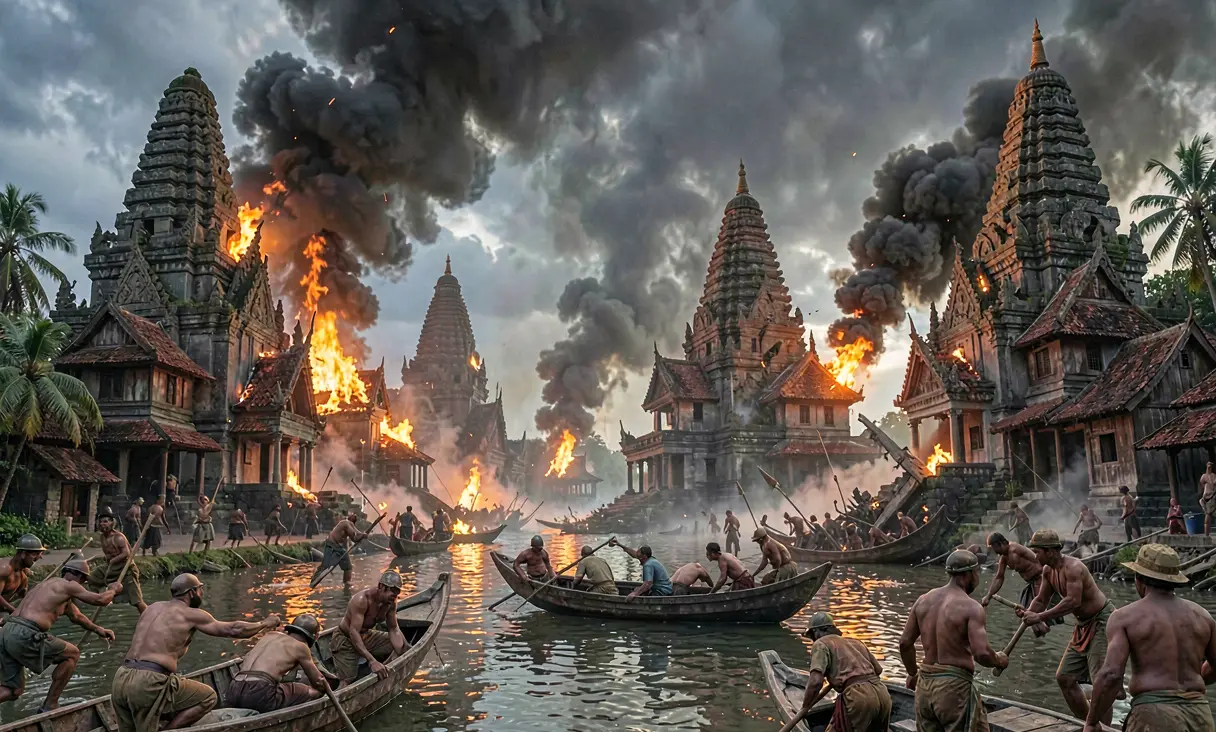 WarFall of Ayutthaya to Burma1767 CE · Ayutthaya, ThailandBurmese forces sack and burn Ayutthaya, ending the kingdom after four centuries.
Discussion
Loading…