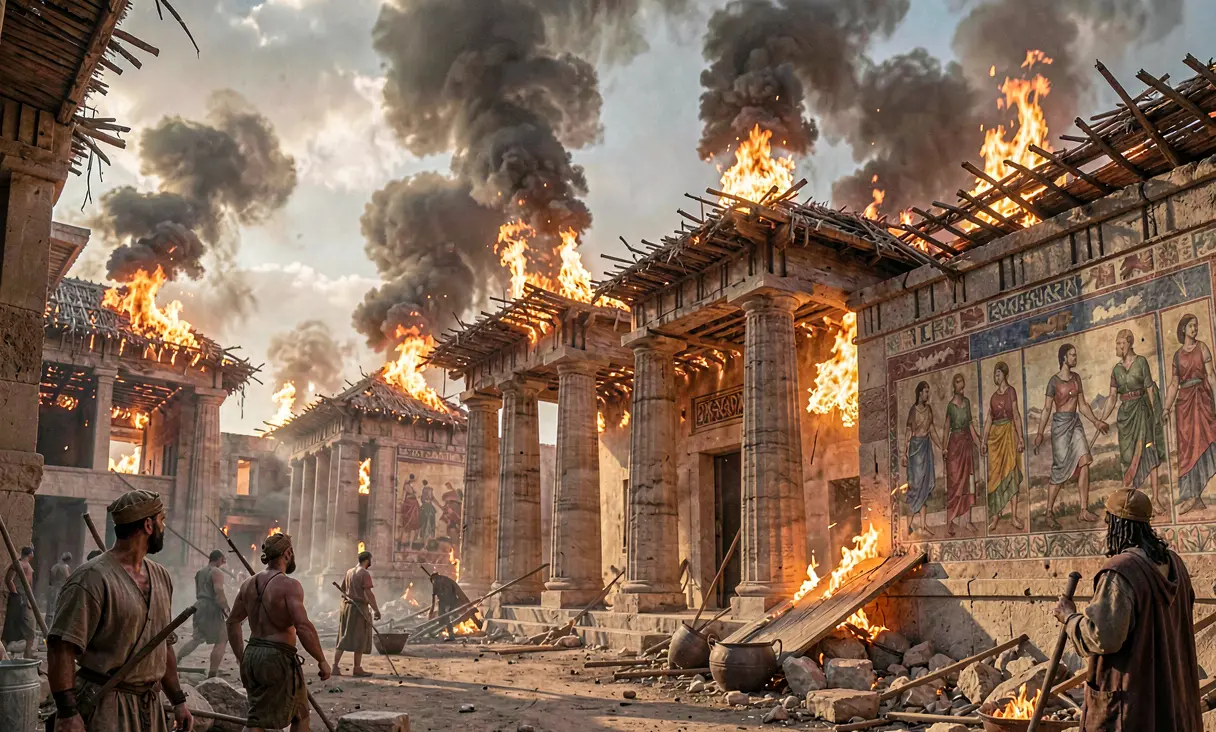
Destruction of Minoan Palaces by Fire
The c. 1450 BCE destruction of Crete's palaces ended Minoan independence and ushered in Mycenaean rule, permanently shifting the Aegean's cultural and political center to mainland Greece.
The Zenith of the Minoan World
By the mid-second millennium BCE, the Minoan civilization on Crete had reached an unprecedented level of sophistication, dominating the Aegean maritime trade network. Centered around massive palace complexes at Knossos, Phaistos, Malia, and Zakros, this society was characterized by its lack of fortification walls, suggesting a period of internal stability and naval supremacy. The palaces functioned as administrative, religious, and economic hubs, managing vast agricultural surpluses and distributing luxury goods like saffron, olive oil, and fine pottery across the Mediterranean. The artistic culture, evident in vibrant frescoes depicting bull-leaping and marine life, reflected a society deeply connected to its environment and distinct from the emerging warrior cultures of the Greek mainland.
The Cataclysmic Fires of c. 1450 BCE
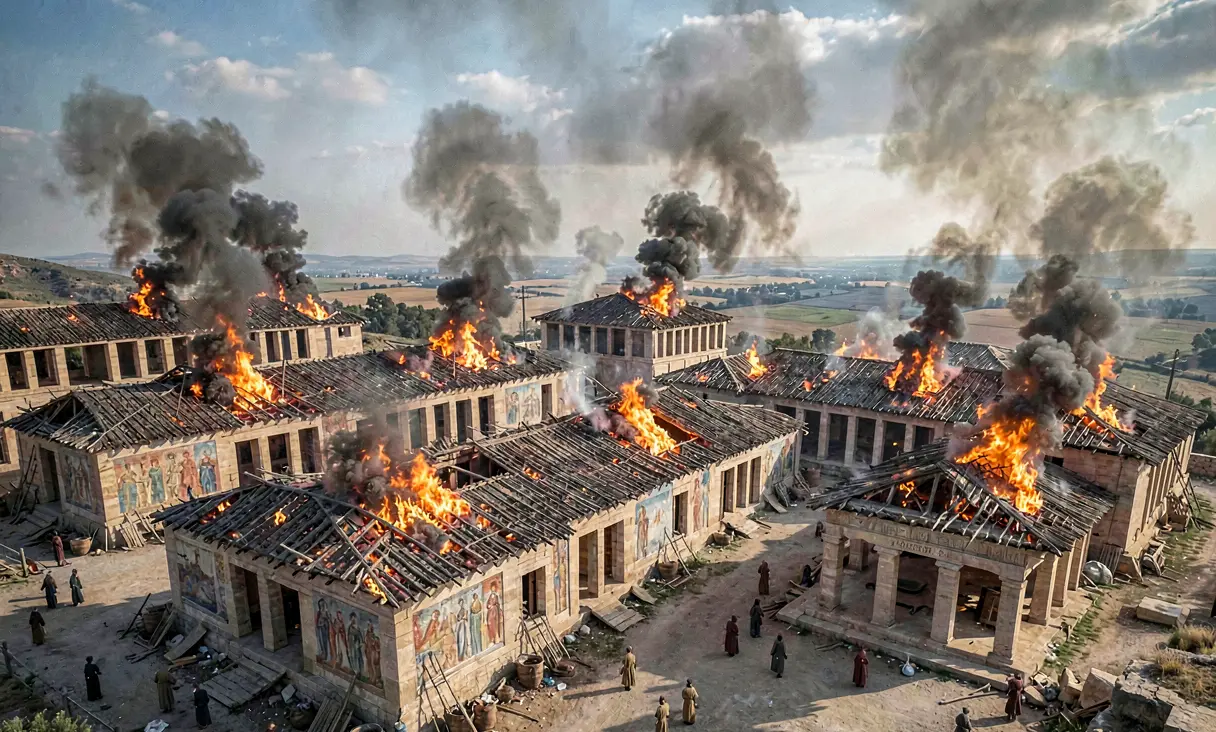
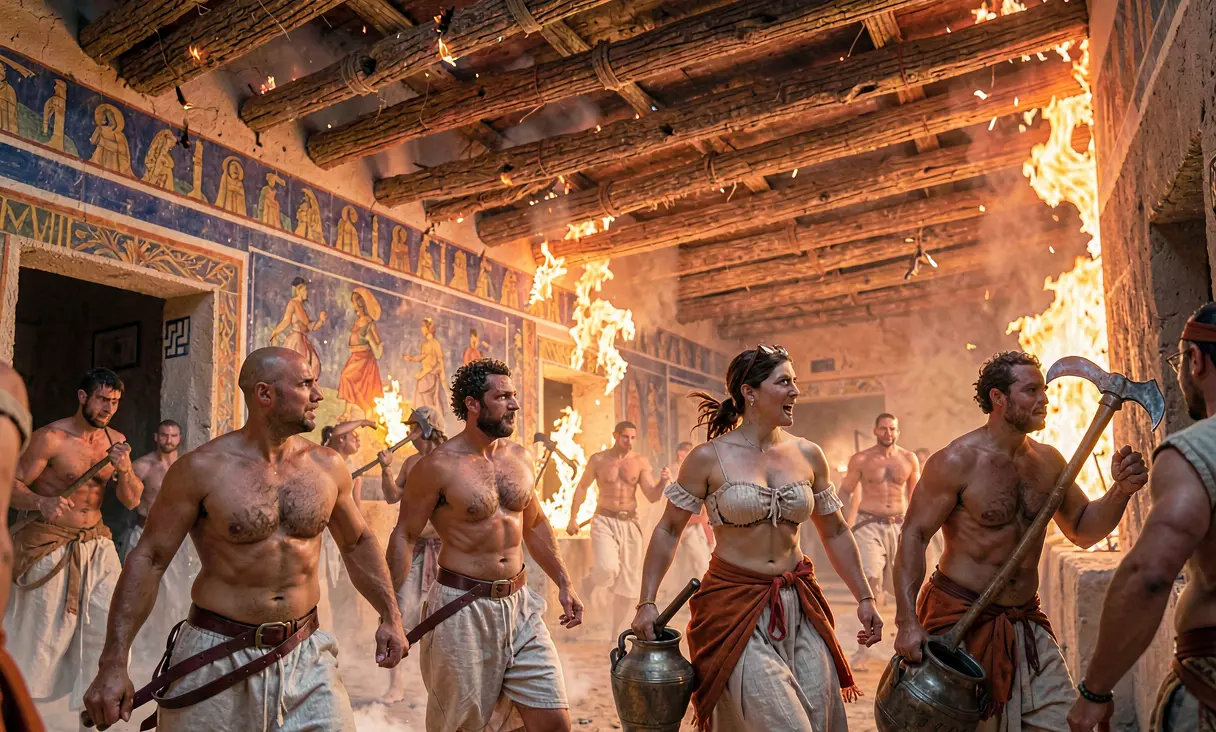
Around 1450 BCE, a sudden and catastrophic series of fires swept through Crete, systematically destroying nearly every major Minoan palace complex except for Knossos. Archaeological strata from this period reveal thick layers of ash, charred wood, and collapsed masonry at sites such as Phaistos, Malia, and Zakros, indicating that these destructions were not merely accidental but likely the result of deliberate arson or intense combat. The scale of the devastation was total; administrative archives in Linear A script were baked into pottery shards by the heat, preserving them for modern discovery while simultaneously erasing the bureaucratic continuity of the local administration. This event marked a definitive rupture in the archaeological record, separating the Neopalatial period from the subsequent era.
The Enigma of Knossos
While the rest of Crete lay in ruins, the great palace at Knossos remained standing and continued to function for several decades after 1450 BCE. Excavations by Sir Arthur Evans and subsequent scholars revealed that the upper levels of the palace were rebuilt with a distinct change in character. The administration shifted from the undeciphered Linear A script to Linear B, an early form of Mycenaean Greek. This linguistic transition provides compelling evidence that a new ruling class had seized control of Knossos, likely hailing from the mainland. Unlike the earlier Minoan rulers who emphasized religious and economic centrality, these new occupants introduced martial iconography, such as chariot scenes and weapon depictions, signaling a shift toward a warrior aristocracy.
Mycenaean Invasion or Internal Collapse?
The precise catalyst for the destruction of 1450 BCE remains one of archaeology's most enduring debates. The traditional view, championed by early excavators, posits a Mycenaean invasion from mainland Greece, citing the sudden appearance of Mycenaean pottery styles and Linear B tablets at Knossos as proof of foreign conquest. However, alternative theories suggest internal civil strife or a combination of seismic activity followed by opportunistic looting. While no definitive battle site has been found to confirm a large-scale amphibious assault, the uniformity of destruction across the island strongly implies a coordinated event rather than isolated accidents. The consensus leans toward a Mycenaean takeover that utilized existing social fractures or external vulnerabilities to dismantle Minoan hegemony.
The End of an Era and Cultural Absorption
Following the fires, the independent Minoan civilization ceased to exist as a political entity. The Mycenaean occupants at Knossos eventually abandoned the palace around 1375 BCE, possibly due to further earthquakes or shifting geopolitical tides that saw the rise of mainland centers like Mycenae and Pylos. The distinct Minoan culture did not vanish overnight but was gradually absorbed into the broader Mycenaean sphere. Local religious practices persisted in modified forms, and Minoan artistic motifs were adopted by Greek artisans, yet the political autonomy and maritime dominance that defined the Bronze Age Aegean for centuries were irrevocably lost. The island of Crete became a peripheral province within the emerging Mycenaean world system.
Legacy: From Myth to History
The destruction of the Minoan palaces serves as a pivotal turning point in European prehistory, marking the transition from the Bronze Age's first great maritime civilization to the warrior-dominated culture that would later inspire Greek mythology. The legend of King Minos and the Labyrinth is widely believed by historians to be a cultural memory of the Knossos palace under Mycenaean rule, distorted by centuries of oral tradition. Furthermore, the decipherment of Linear B in 1952 confirmed that the first written records of Greece were not Greek-speaking Minoans, but rather Mycenaean administrators ruling over a conquered land. This event fundamentally altered the trajectory of Western civilization, setting the stage for the emergence of the Classical Greek world.
The fire marks the transition from Minoan to Mycenaean dominance in the Aegean region.
Where it happened
Knossos, Crete (Greece) — see it on the interactive map →
Explore related history
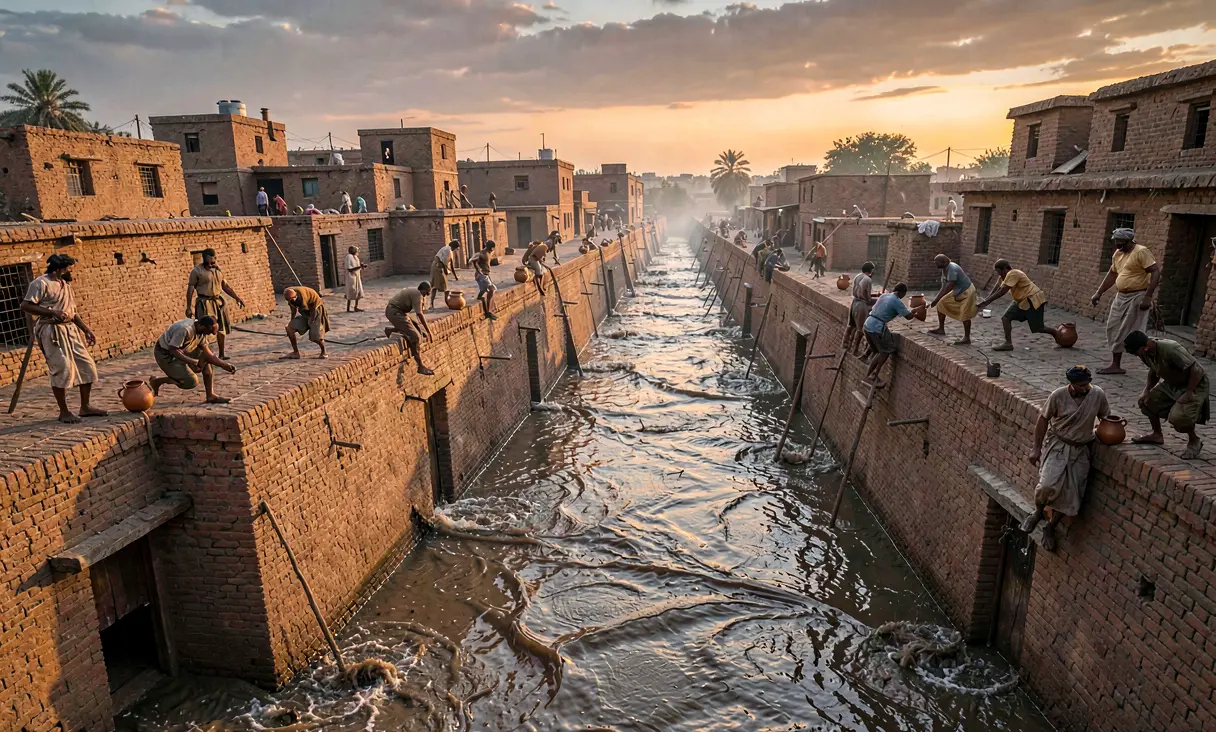 DisasterCatastrophic Flooding at Mohenjo-Daroc. 1900 BCE · Mohenjo-Daro, Sindh, PakistanDevastating floods from the Indus River repeatedly buried and destroyed layers of Mohenjo-Daro, signaling the decline of the urban phase.
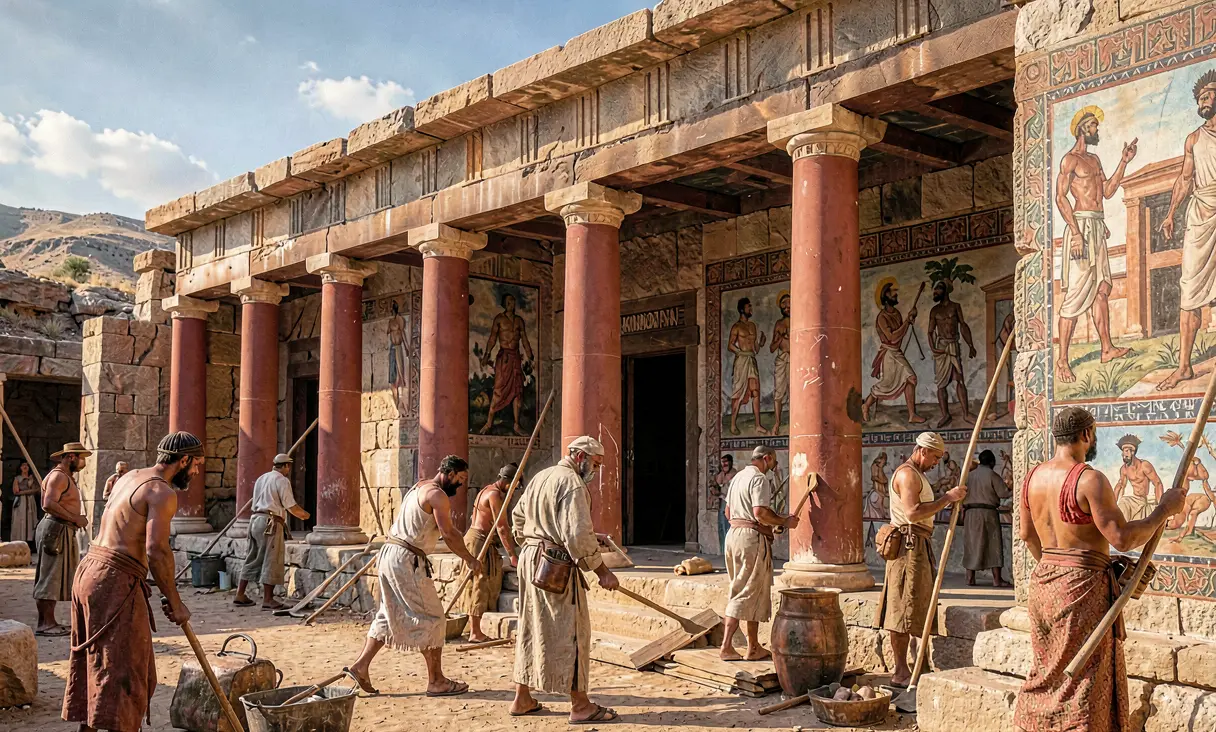 DisasterRebuilding of the Palace at Knossos after Earthquakec. 1700 BCE · Knossos, Crete (Greece)Minoans rebuild the Palace of Knossos after a massive earthquake destroys the old structure.
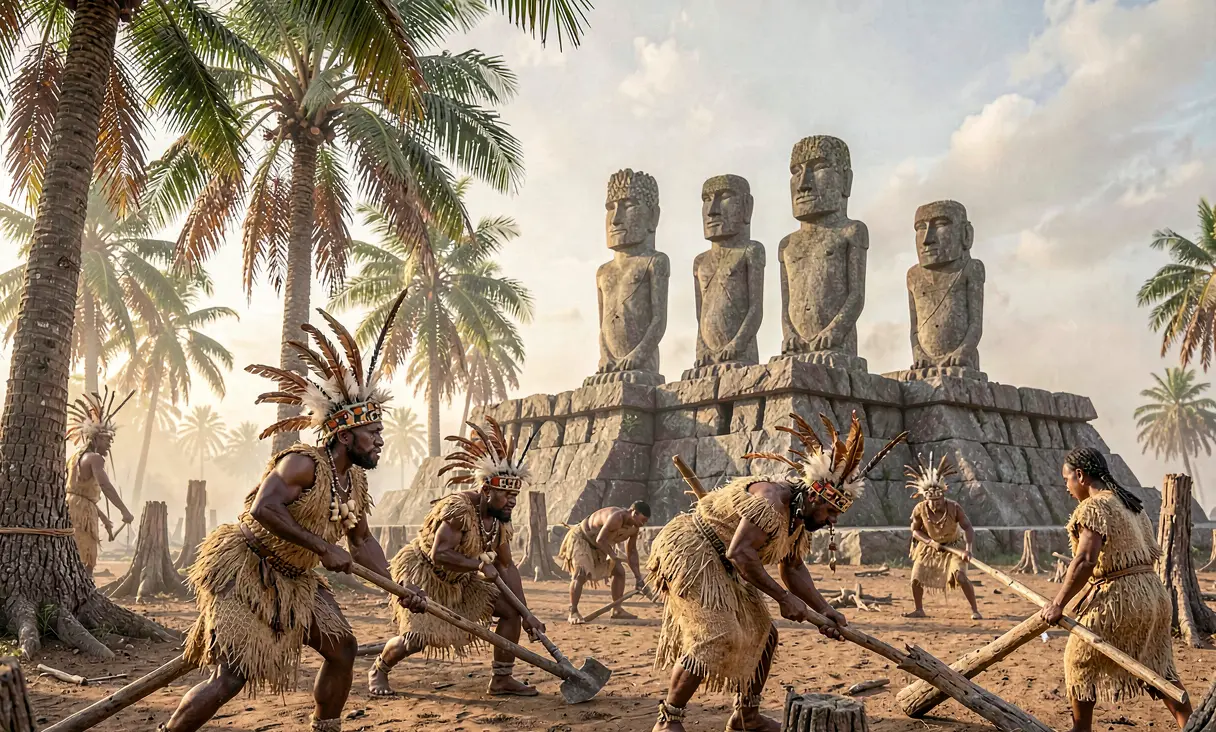 DisasterEcological Collapse and Deforestation of Rapa Nuic. 1600 CE · Rapa Nui (Easter Island), ChileOverexploitation of resources leads to deforestation and societal transformation on Rapa Nui.
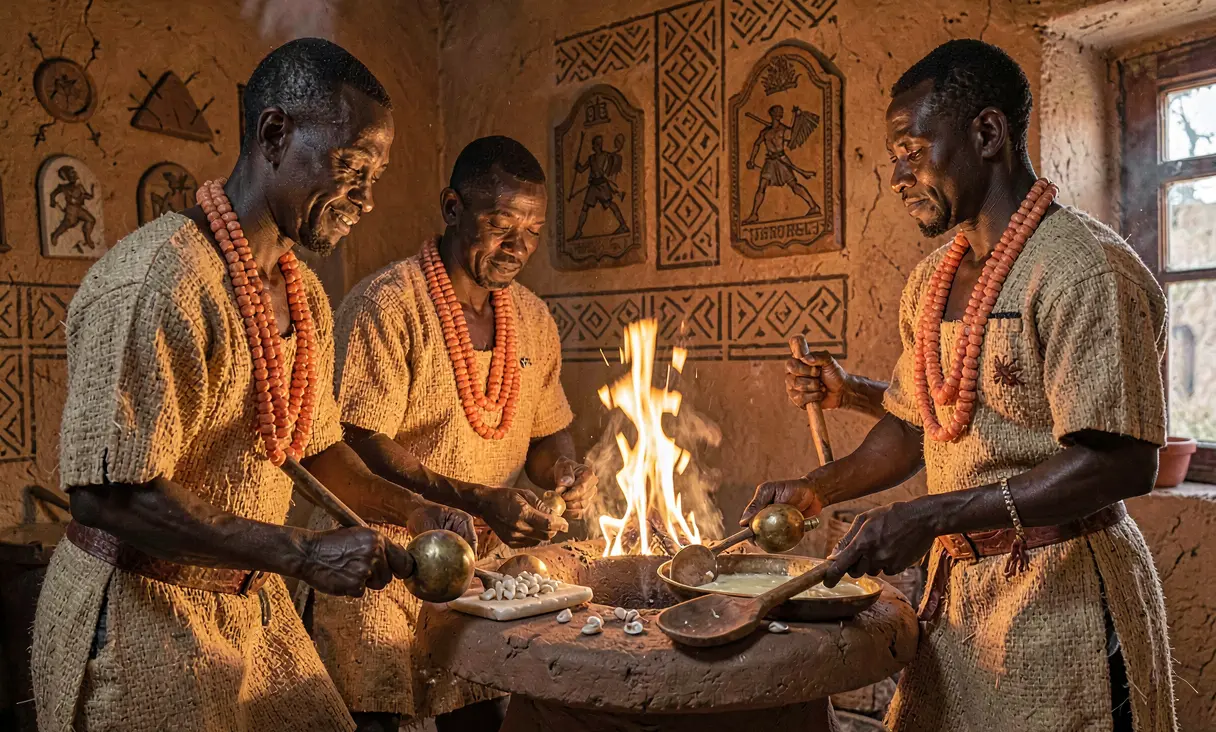 ArtCreation of the Benin Bronzes under Oba Ewuarec. 1450 CE · Benin City, NigeriaOba Ewuare commissions the famous bronze and ivory plaques documenting court life and military victories.
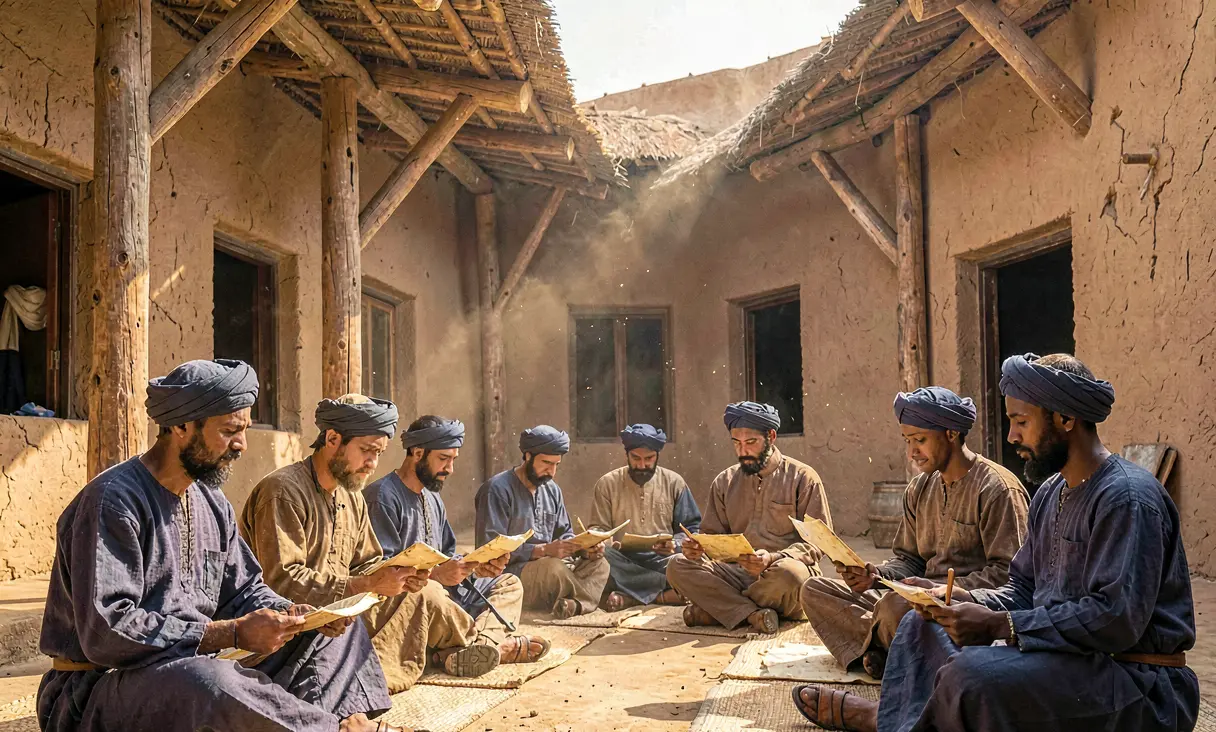 ScienceSankore Madrasah Becomes a Center of Learning in Timbuktuc. 1450 CE · Timbuktu, MaliThe Sankore Madrasah emerges as a premier university for Islamic scholarship in West Africa.
 PoliticsOba Ewuare Centralizes the Kingdom of Beninc. 1450 CE · Benin City, NigeriaOba Ewuare reorganizes the kingdom into a centralized state with a professional army and bureaucracy.
Discussion
Loading…