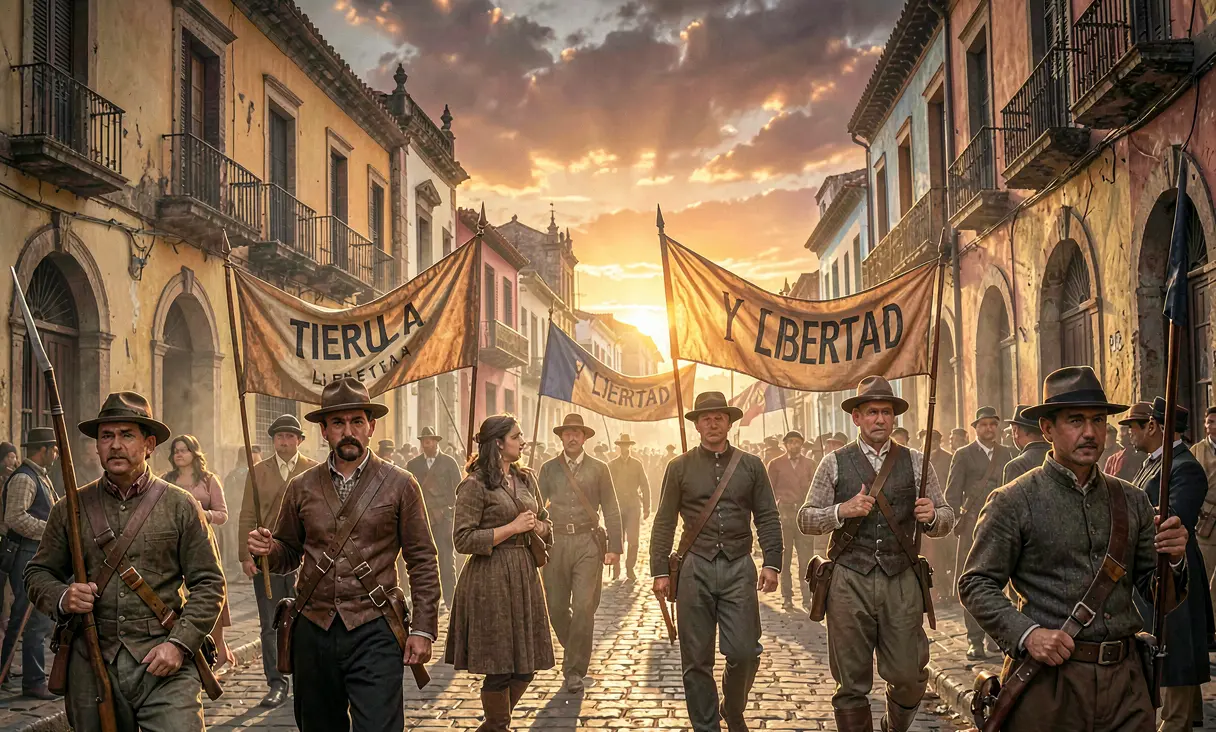
Mexican Revolution Begins
The 1910 Mexican Revolution toppled dictator Porfirio Díaz, ignited a decade-long civil war, and produced the world's first constitution guaranteeing social rights and land reform.
The Porfiriato and the Spark of Dissent
By the early 20th century, Mexico was a nation of stark contradictions under the thirty-year dictatorship of General Porfirio Díaz. While the regime modernized infrastructure and attracted foreign investment, it entrenched a rigid oligarchy that dispossessed indigenous communities of their communal lands (ejidos) and suppressed all political opposition. The 1910 presidential election served as the catalyst for rupture; Díaz, initially feigning openness to democracy in interviews with American journalist James Creelman, ultimately imprisoned his moderate rival, Francisco I. Madero. This betrayal shattered the illusion of reform from within the system, forcing Madero into exile and setting the stage for an armed insurrection that would redefine the Americas.
The Plan de San Luis Potosí
From his refuge in San Antonio, Texas, Francisco I. Madero drafted and published the Plan de San Luis Potosí on October 5, 1910, with a specific call to action dated for November 20 of that year. The document declared the recent election null and void, proclaimed himself provisional president, and famously urged the populace to 'take up arms' against the Díaz government at six o'clock in the evening on the specified date. Although Madero's initial uprising was poorly coordinated and suffered early military defeats, the Plan provided a unifying ideological framework that transcended regional grievances, transforming localized discontent into a national revolution.
Diverse Factions and the Northern Front
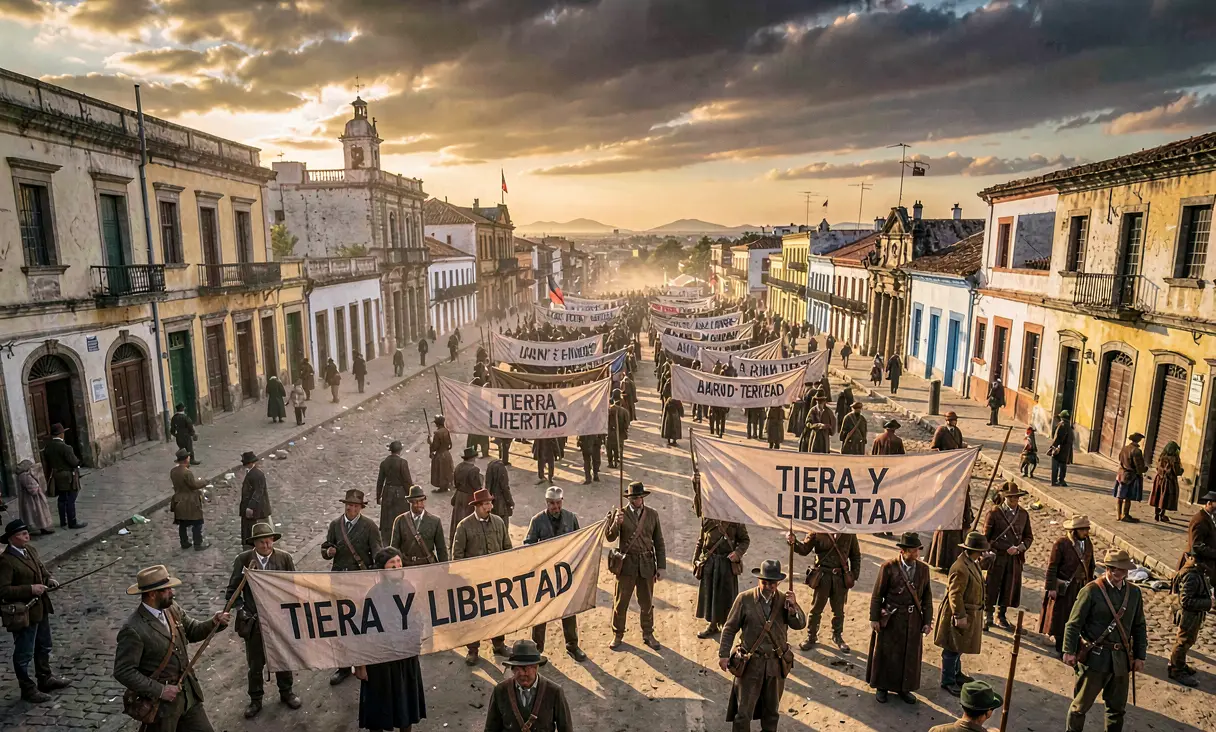
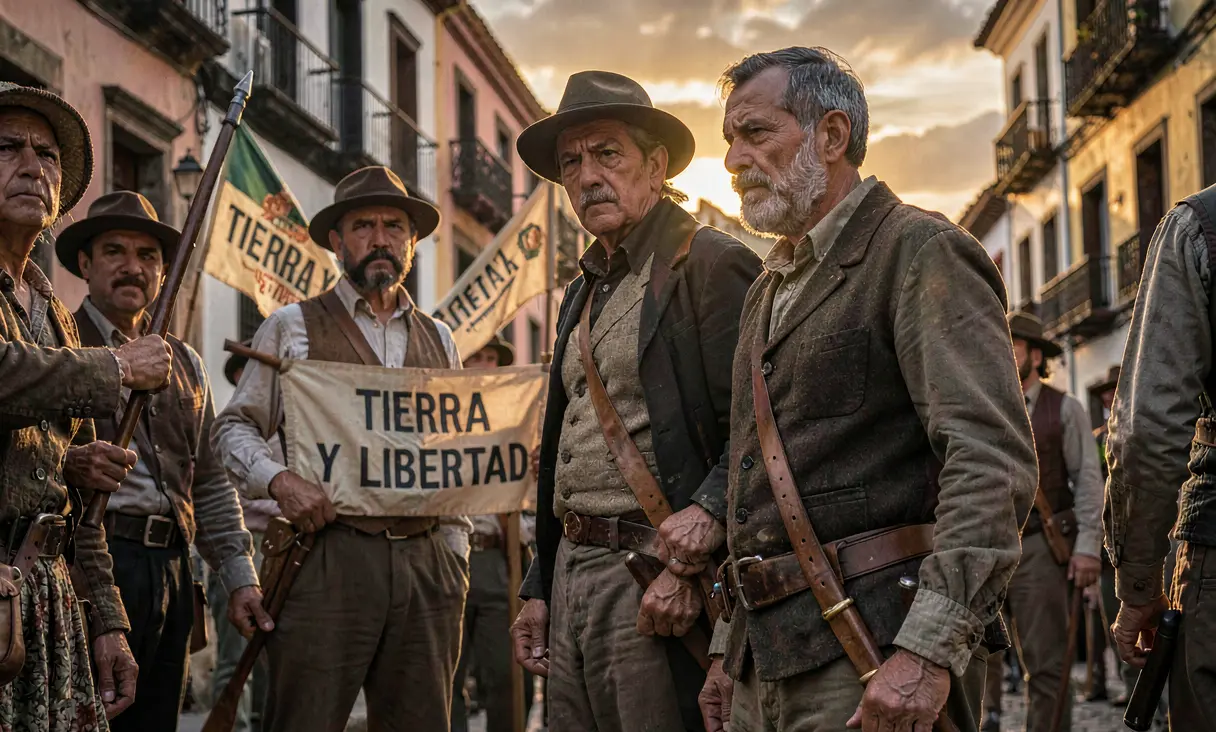
The Revolution quickly evolved from Madero's liberal bourgeois movement into a complex civil war involving disparate factions with conflicting agendas. In the rugged north, figures like Pascual Orozco and the charismatic bandit-turned-general Pancho Villa mobilized peasant and worker militias to challenge federal troops, utilizing guerrilla tactics and rapid cavalry charges. Simultaneously in the south, Emiliano Zapata refused to join Madero's government until land reform was enacted, issuing his own Plan de Ayala in 1911 which demanded the immediate restitution of stolen lands to indigenous villages. These divergent goals ensured that the conflict would persist long after Díaz's fall.
The Fall of Díaz and the Decade of Turmoil
The initial phase of the revolution achieved its primary objective by May 1911, when the Treaty of Ciudad Juárez forced Porfirio Díaz into exile in France. However, Madero's subsequent presidency proved fragile as he struggled to satisfy the radical demands of Zapata and Villa while maintaining order against conservative counter-revolutionaries. The instability culminated in the 'Ten Tragic Days' of February 1913, a coup d'état led by General Victoriano Huerta that resulted in Madero's assassination. This betrayal plunged Mexico into a fractured civil war between constitutionalists led by Venustiano Carranza and various revolutionary armies, including those of Villa and Zapata, which raged until 1920.
The 1917 Constitution and Social Transformation
The culmination of the decade-long struggle was the promulgation of the Mexican Constitution of 1917 in Querétaro. This landmark document was the first in the world to explicitly guarantee social rights, including Article 27, which established national ownership of subsoil resources and provided a legal basis for agrarian reform, and Article 123, which mandated an eight-hour workday, minimum wages, and the right to strike. The Constitution effectively dismantled the legal structures of the old Porfirian oligarchy, institutionalizing the revolutionary demands of the peasantry and laborers, and creating a framework that would guide Mexican politics for most of the 20th century.
Enduring Legacy and Global Impact
The Mexican Revolution stands as a watershed moment in Latin American history, demonstrating that popular insurrection could successfully dismantle a long-standing dictatorship and reshape national identity. It inspired subsequent revolutionary movements across the globe, from the Russian Revolution to later anti-colonial struggles in Asia and Africa, by proving that social justice could be codified into law. Domestically, it birthed the Institutional Revolutionary Party (PRI), which dominated Mexican politics for seventy years, while its cultural legacy is immortalized in the murals of Diego Rivera and the literature of authors like Mariano Azuela, cementing the Revolution as a foundational myth of modern Mexico.
The Mexican Revolution was a landmark event that established modern Mexico's political framework and influenced global concepts of social justice and land reform.
Where it happened
Mexico City, Mexico — see it on the interactive map →
Explore related history
 WarAlgerian War of Independence BeginsNovember 1, 1954 · Algiers, AlgeriaThe National Liberation Front launches coordinated attacks marking the start of the Algerian War against France.
 WarMau Mau Uprising Begins in KenyaOctober 20, 1952 · Nairobi, KenyaThe Kikuyu-led Mau Mau rebellion begins against British colonial rule and white settler land ownership.
 WarTurkish War of Independence BeginsMay 19, 1919 · Samsun, TurkeyMustafa Kemal Atatürk lands in Samsun to organize resistance against Allied occupation and the Ottoman Sultanate.
 WarEaster Rising in IrelandApril 24, 1916 · Dublin, IrelandIrish republicans launch an armed insurrection against British rule in Dublin during Easter Week.
 PoliticsKorean March First MovementMarch 1, 1919 · Seoul, Korea (under Japanese rule)Mass non-violent protests erupt across Korea demanding independence from Japanese colonial rule.
 PoliticsEgyptian Revolution of 1919March 8, 1919 · Cairo, EgyptMass protests erupt in Egypt demanding an end to British protectorate and full independence.
Discussion
Loading…