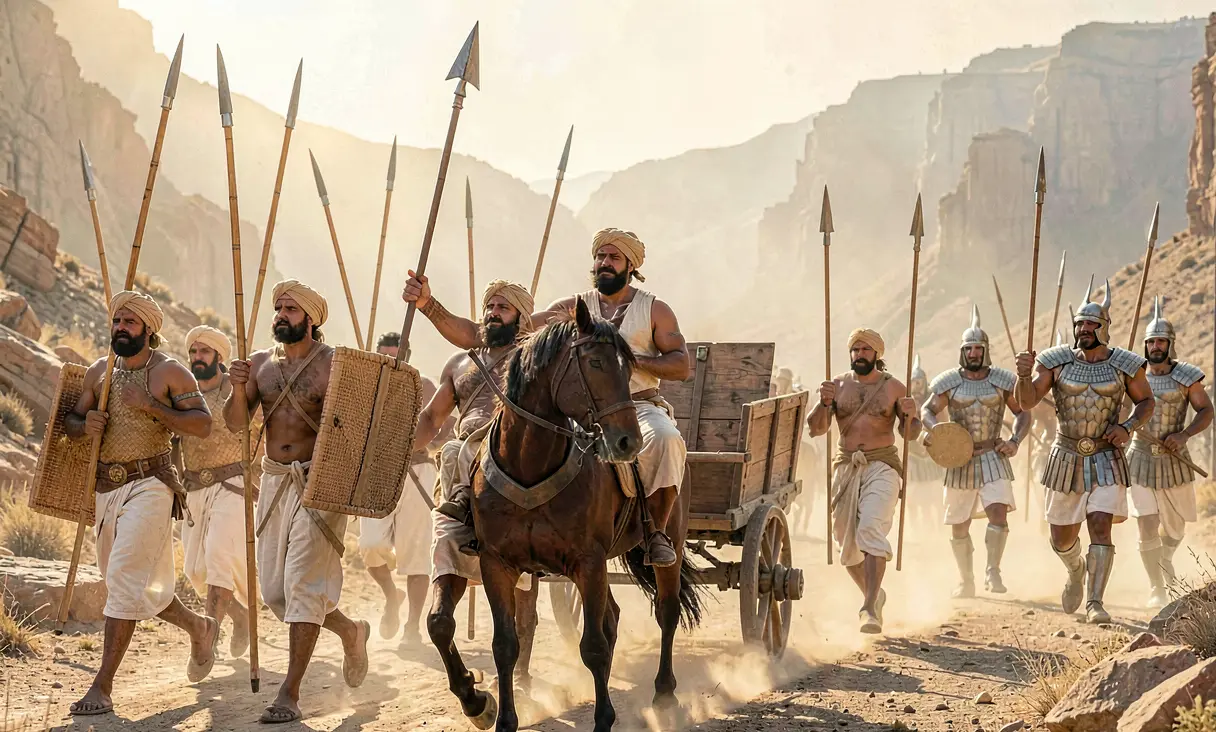
Mauryan Conquest of Gandhara
Chandragupta Maurya's victory over Seleucus I in 305 BCE secured Gandhara for India, trading 500 war elephants for territory that defined the empire's frontier and sparked a cultural synthesis shaping
The Power Vacuum of the East
Following the death of Alexander the Great in 323 BCE, his vast empire fractured into rival Hellenistic kingdoms. In the east, Seleucus I Nicator emerged as the ruler of the Macedonian satrapies stretching from Syria to the Indus River. However, while Seleucus was consolidating power in Babylon and fighting for control of Asia Minor against Antigonus Monophthalmus, a new force was rising in the Ganges Valley. Chandragupta Maurya, having overthrown the Nanda Dynasty around 321 BCE, unified much of northern India under the nascent Mauryan Empire. By 305 BCE, Chandragupta turned his attention northwest, eyeing the territories Alexander had once occupied but which were now vulnerable to local unrest and Seleucus's preoccupation with western conflicts.
The Campaign of 305 BCE
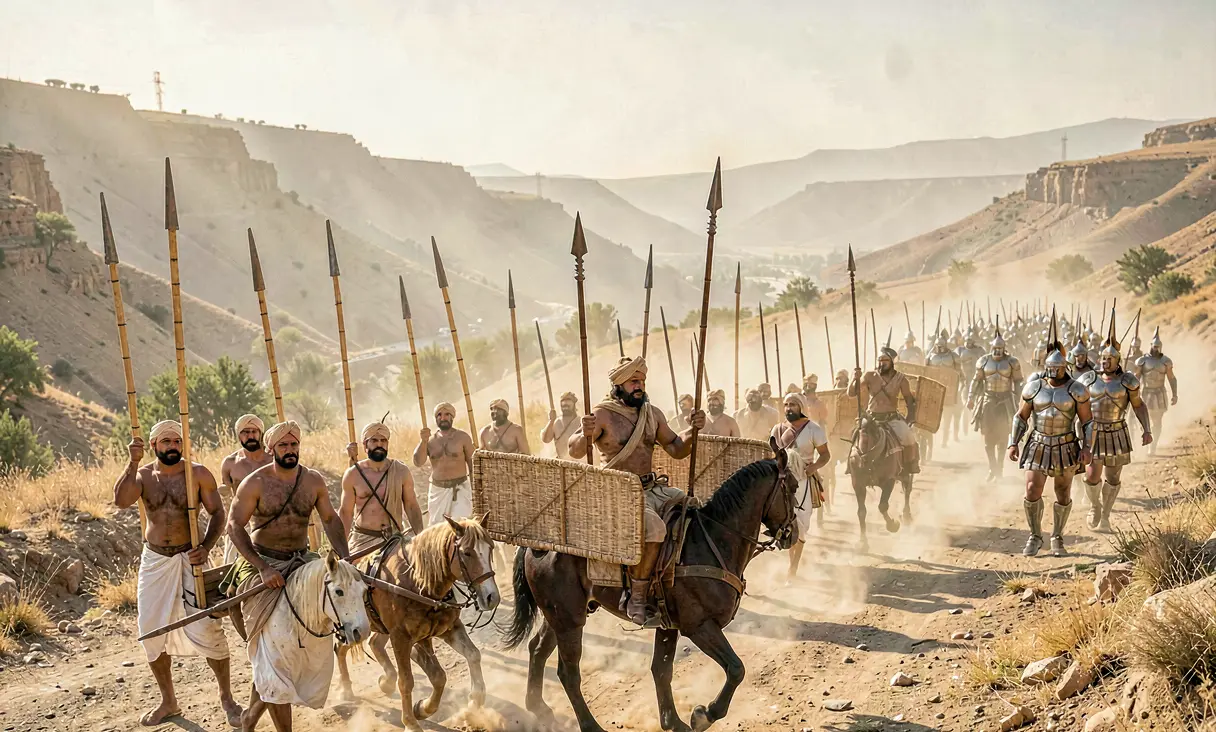
Around 305 BCE, Chandragupta Maurya launched a decisive military campaign against the Seleucid forces in the region known as Paropamisadae, which encompassed the strategic Gandhara region and its capital, Pushkalavati (modern Charsadda), as well as Arachosia and Gedrosia. The conflict was not merely a border skirmish but a full-scale war for dominance over the northwestern frontier of the Indian subcontinent. While ancient sources like Plutarch provide limited tactical details, they confirm that Chandragupta's forces, bolstered by a massive infantry and cavalry, successfully challenged Seleucus's control. The Mauryan army advanced through the Khyber Pass, securing the vital trade routes between Central Asia and India, effectively pushing the Hellenistic frontier back beyond the Hindu Kush.
Chandragupta and Seleucus: A Clash of Titans
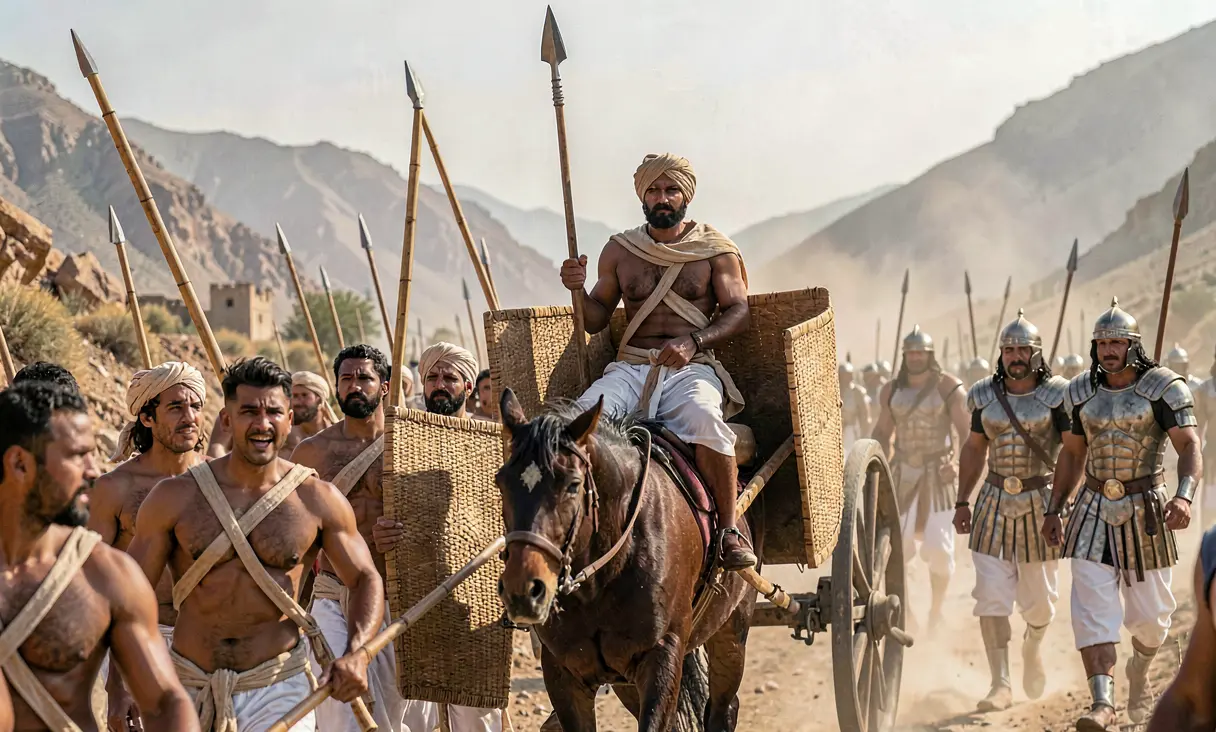
The two protagonists represented the zenith of their respective civilizations. Chandragupta Maurya was the architect of India's first pan-Indian empire, advised by the legendary statesman Kautilya (Chanakya), whose treatise, the Arthashastra, detailed sophisticated strategies for statecraft and warfare. Opposing him was Seleucus I Nicator, one of Alexander's most capable generals, a shrewd politician who would go on to found the Seleucid Empire. The confrontation was a meeting of two distinct military traditions: the Mauryan reliance on massive numbers, war elephants, and fortified cities versus the Macedonian phalanx and cavalry tactics inherited from Alexander.
The Treaty of 305 BCE
Unable to secure a decisive victory against Chandragupta's overwhelming numerical superiority and recognizing the strategic necessity of stabilizing his eastern flank, Seleucus I Nicator opted for diplomacy. The resulting treaty, concluded around 303-302 BCE following the initial hostilities of 305 BCE, was one of the most significant diplomatic agreements in ancient history. Seleucus ceded the satrapies of Arachosia (modern southern Afghanistan), Gedrosia (Balochistan), Paropamisadae (Gandhara), and parts of Aria to the Mauryan Empire. In exchange for these vast territories, which secured Chandragupta's northwestern borders, Seleucus received 500 war elephants from the Mauryas—a strategic asset that would prove pivotal in his later victory at the Battle of Ipsus in 301 BCE.
Consolidation and Cultural Integration
The acquisition of Gandhara and the surrounding regions was a transformative moment for the Mauryan Empire. It secured the empire's most vulnerable frontier against Central Asian incursions and integrated a region that had been a crossroads of cultures since the Achaemenid era. The Mauryas did not merely occupy; they administered these territories with efficiency, integrating them into a vast network of roads and trade routes that connected India to Persia and beyond. This period saw the beginning of a unique cultural synthesis where Hellenistic administrative practices and artistic motifs began to blend with indigenous Indian traditions, setting the stage for the later flourishing of Greco-Buddhist art in the region.
Legacy and Historical Significance
The Mauryan conquest of Gandhara established the first major diplomatic recognition between a unified Indian empire and a Hellenistic power, setting a precedent for future Indo-Greek interactions. The territorial gains defined the northwestern boundaries of ancient India for centuries and facilitated an unprecedented flow of ideas, goods, and religions. The 500 elephants transferred to Seleucus altered the balance of power in the Mediterranean world, directly influencing the outcome of the Wars of the Diadochi. Furthermore, this integration allowed Gandhara to evolve into a premier center of Buddhist scholarship and art, eventually giving rise to the iconic Greco-Buddhist style that would spread Buddhism along the Silk Road to China and beyond.
This victory cemented Mauryan dominance over the northwest subcontinent and facilitated the cultural synthesis that would later define Gandhara art.
Where it happened
Peshawar Valley, Gandhara, Pakistan — see it on the interactive map →
Explore related history
 WarAn Lushan Rebellion Begins755 CE · Chang'an, ChinaGeneral An Lushan revolts against Emperor Xuanzong, devastating the Tang Dynasty and population.
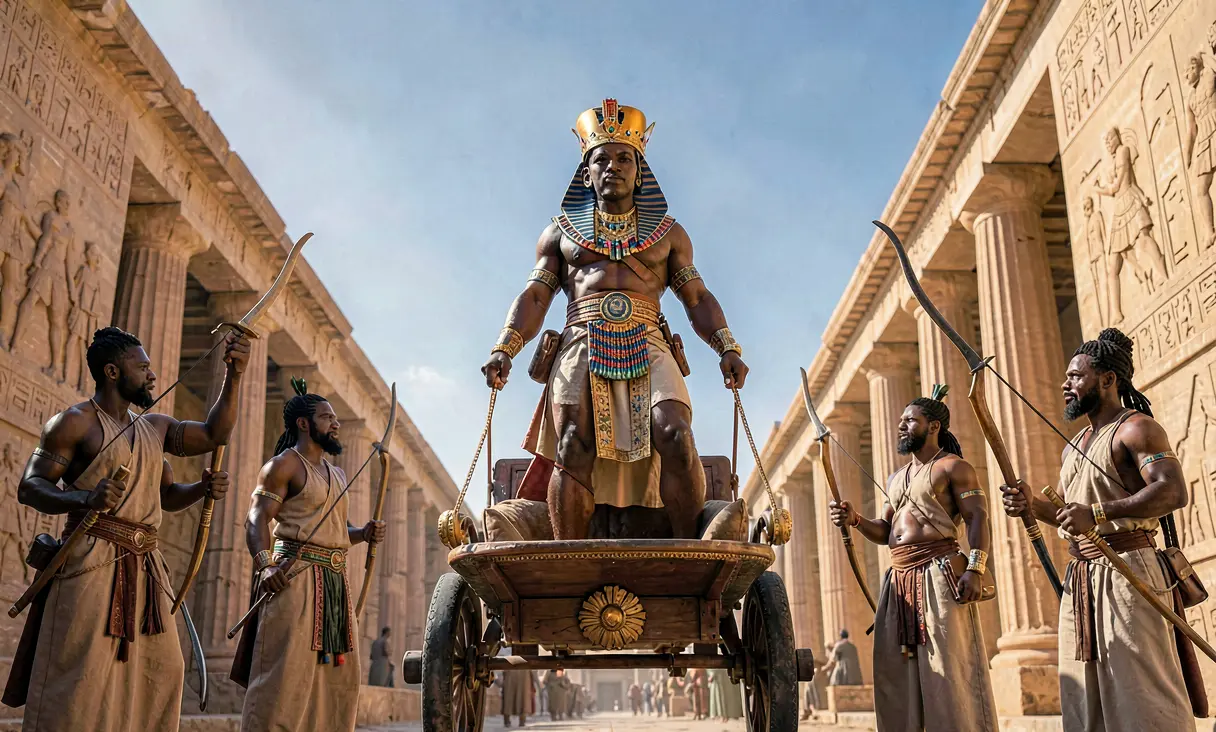 WarKushite Conquest of Egypt (25th Dynasty)c. 747 BCE · Thebes, EgyptKing Piye of Kush conquers Upper and Lower Egypt, establishing the first African-led dynasty in Egyptian history.
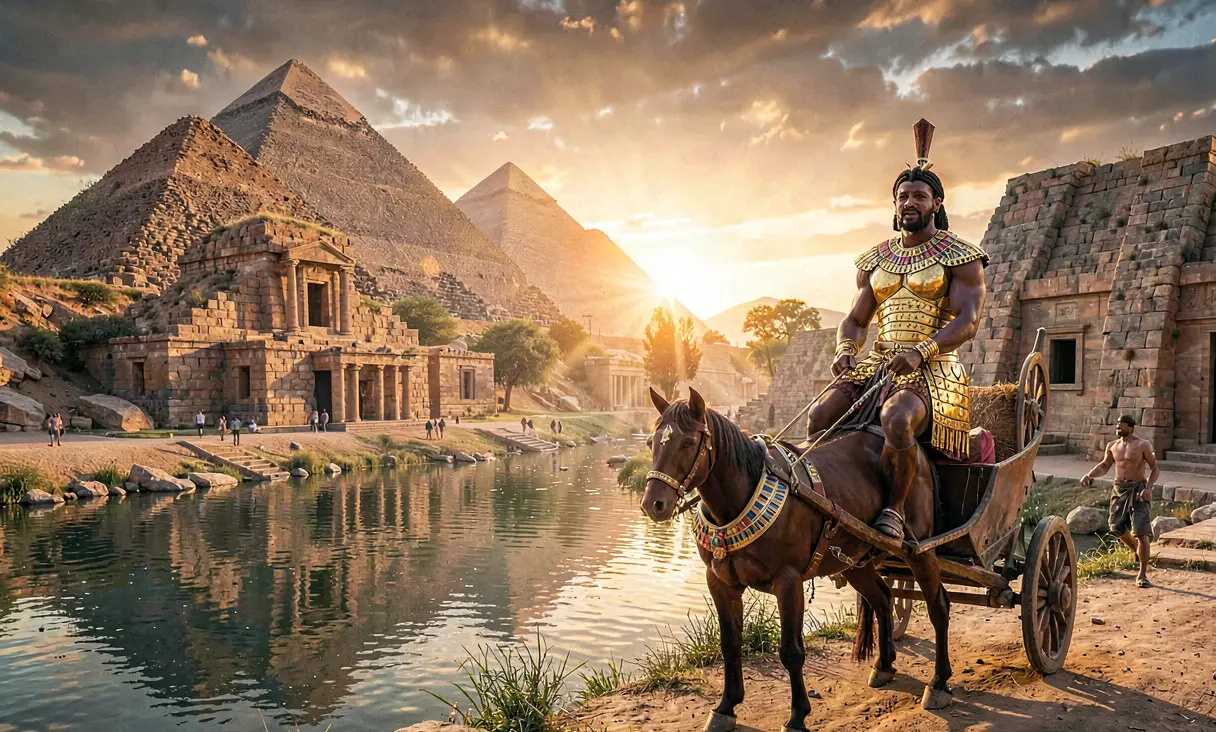 WarKushite Conquest of Egypt Establishes 25th Dynastyc. 744 BCE · Napata, Nubia (Modern Sudan)King Piye of Kush conquers Upper Egypt, establishing the 25th Dynasty and restoring traditional Egyptian religious practices.
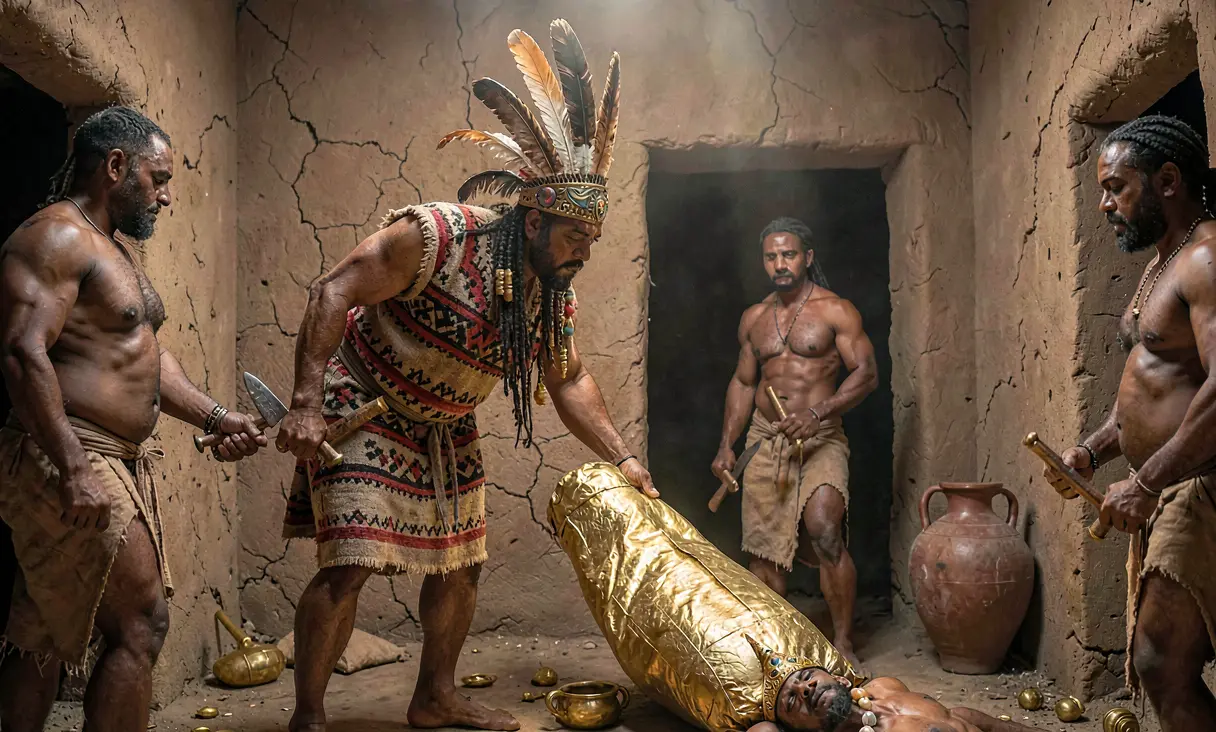 ReligionBurial of the Royal Tombs at Sipán (Later Phase)c. 300 CE · Sipán, PeruElite Moche burials continue with elaborate rituals involving human sacrifice and gold offerings.
 ExplorationPolynesian Expansion into the Society Islandsc. 300 BCE · Society Islands, French PolynesiaPolynesian voyagers colonize the Society Islands, establishing a central hub for further eastward expansion.
 TechnologyConstruction of the Aqua Appia: Rome's First Aqueduct312 BCE · Rome, ItalyAppius Claudius Caecus builds the first aqueduct to supply fresh water to Rome.
Discussion
Loading…