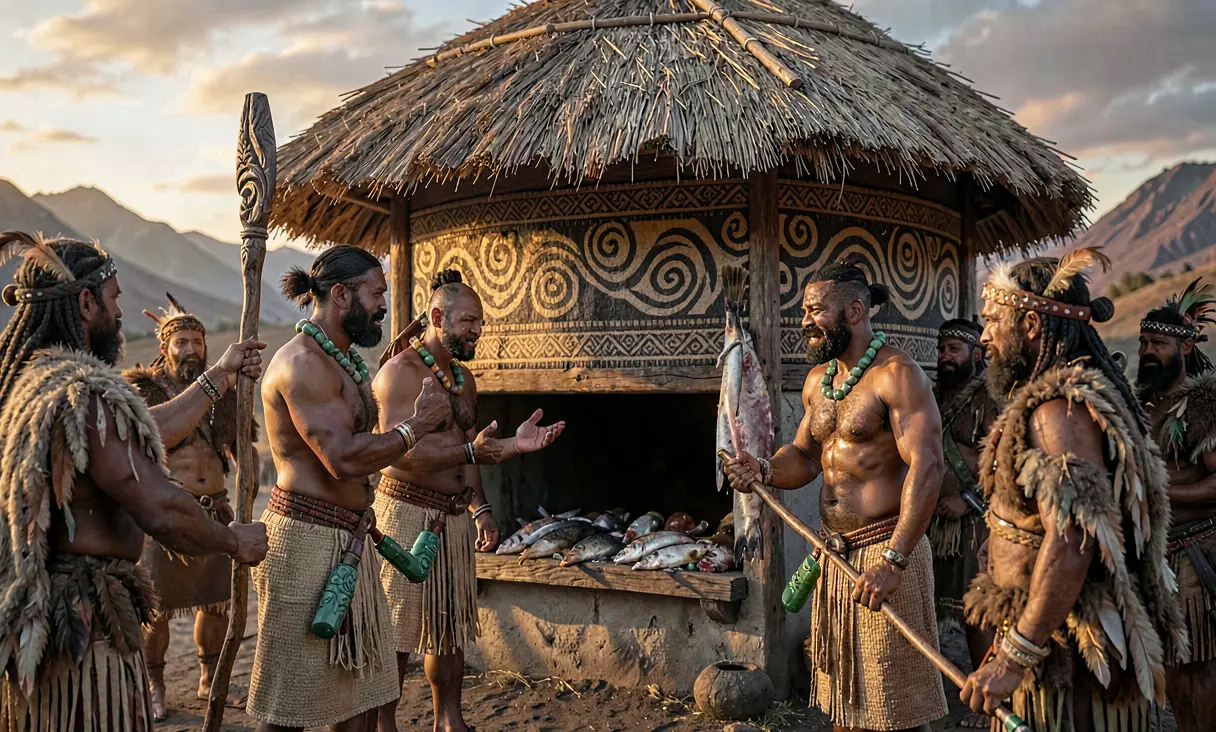
Breaking of the Tapu by High Chiefs
In c. 1400 CE, Māori high chiefs strategically violated sacred tapu rules to demonstrate supreme mana, catalyzing the rise of centralized tribal confederations in New Zealand's North Island.
Foundations of Sacred Order
In the early 15th century, Aotearoa (New Zealand) was undergoing a profound demographic and political transformation as Polynesian settlers adapted to the temperate climate of the North Island. Society was rigidly stratified under the concept of tapu, a sacred restriction that governed every aspect of life, from food consumption to land usage. This spiritual framework maintained social equilibrium by designating specific resources, such as the heads of eels or certain forest fruits, exclusively for the high-ranking rangatira (chiefs) and priests (tohunga). To violate these restrictions was not merely a social faux pas but a catastrophic breach that invited divine retribution upon the individual and their kin. The integrity of this system relied on the belief that mana—the spiritual authority and prestige—was inextricably linked to strict adherence to ancestral protocols.
The Crisis of Authority
By c. 1400 CE, rapid population growth and competition for fertile volcanic soils in regions like Waikato and Taranaki intensified inter-tribal friction. The rigid application of traditional tapu began to clash with the pragmatic needs of expanding iwi (tribes) seeking to consolidate power. Ambitious rangatira found that strict adherence to ancestral restrictions sometimes hindered their ability to feed growing populations or project strength during times of conflict. A new political calculus emerged: if a chief could seize resources reserved for lower castes without suffering spiritual calamity, it would prove his mana was so potent that the gods themselves recognized his supremacy over traditional laws.
The Strategic Breach
This era witnessed a calculated reinterpretation of sacred law, where high chiefs deliberately engaged in acts previously forbidden to assert dominance. Historical oral traditions recount instances where powerful leaders, often leading war parties from emerging confederations, consumed foods strictly reserved for commoners or entered restricted sanctuaries (wahi tapu) that were off-limits to all but the highest priests. These were not accidental transgressions but performative political acts designed to demonstrate invulnerability. By surviving these breaches without immediate spiritual consequence, a chief signaled to rivals and followers alike that his personal mana had transcended the old limitations, effectively rewriting the social contract to centralize authority under his command.
Key Figures and Regional Shifts
While specific names from this pre-literate era are often obscured by centuries of oral transmission, traditions speak of legendary figures in the Waikato region who exemplified this shift. These leaders were often described as possessing 'mana tino nui' (great mana), capable of absorbing the spiritual shock of breaking tapu and redirecting it into political capital. In the Bay of Plenty and Taranaki, similar movements saw chiefs consolidating smaller hapū (sub-tribes) into larger confederations by claiming the right to redistribute resources previously locked behind sacred barriers. These figures did not abolish tapu; rather, they positioned themselves as the sole arbiters who could safely navigate or suspend it for the benefit of their people.
Consolidation and Confedertion
The ability to selectively break tapu catalyzed the rise of more centralized tribal structures. As commoners followed leaders who demonstrated such spiritual invincibility, smaller kin groups merged into larger political entities capable of sustained warfare and resource management. This period marked a transition from loosely affiliated hapū to powerful iwi with defined territories and hierarchical leadership. The flexibility of tapu became a tool for state-building; chiefs used their perceived immunity to sacred law to command labor, levy tribute, and mobilize warriors, creating a feedback loop where political success reinforced spiritual authority.
Legacy of Spiritual Pragmatism
The breaking of tapu in the 15th century established a precedent for the dynamic nature of Māori governance that persisted through centuries of contact and colonization. It demonstrated that mana was not static but could be contested, proven, and expanded through bold action. This historical shift laid the groundwork for the complex political landscape encountered by European explorers later, where authority rested on a delicate balance of ancestral rights and current power. The event remains a critical case study in how religious systems can evolve to serve political consolidation, transforming spiritual restrictions into instruments of social mobility and state formation.
The manipulation of tapu rules was a key mechanism in the political evolution of pre-contact Māori society, facilitating the rise of powerful warlords.
Where it happened
North Island, New Zealand — see it on the interactive map →
Explore related history
 PoliticsSargon of Akkad Establishes the First Empirec. 2334 BCE · Akkad (Location uncertain, near Baghdad, Iraq)Sargon unifies Sumerian city-states to create the world's first multi-ethnic empire.
 PoliticsPromulgation of the Code of Ur-Nammuc. 2100 BCE · Ur, Southern Mesopotamia (Iraq)The earliest known surviving law code is established in the Sumerian city of Ur.
 PoliticsNelson Mandela Elected President of South AfricaApril 27, 1994 · Cape Town, South AfricaSouth Africa holds its first democratic election, ending the apartheid regime and establishing a multiracial government.
 ExplorationGreat Zimbabwe Dominates Gold Trade with Kilwac. 1400 CE · Great Zimbabwe, ZimbabweArchaeological evidence confirms extensive gold trade between Great Zimbabwe and Swahili coastal cities.
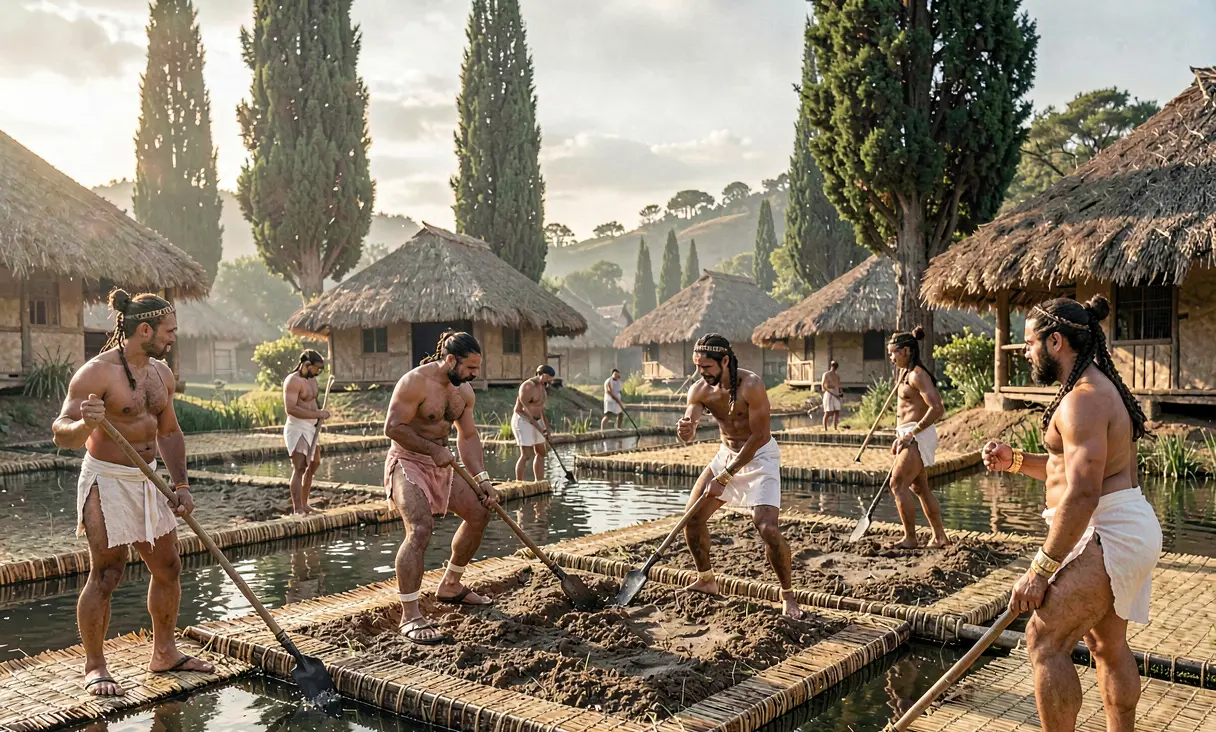 TechnologyExpansion of Chinampa Agriculture in the Valley of Mexicoc. 1400 CE · Lake Xochimilco, Mexico City, MexicoAztec engineers develop intensive floating gardens to feed a growing population.
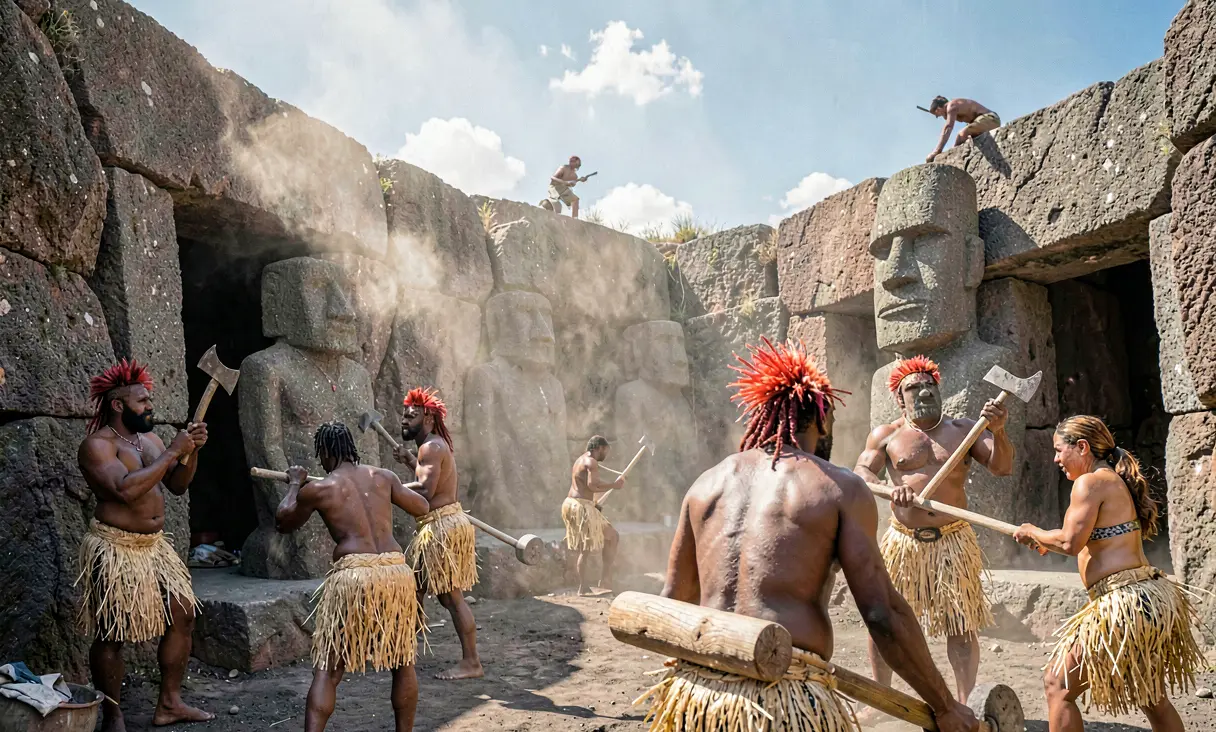 ArtMass Production of Moai Statues at Rano Rarakuc. 1400 CE · Rano Raraku Quarry, Rapa NuiThe peak period of moai carving begins at the Rano Raraku quarry under the direction of clan chiefs.
Discussion
Loading…