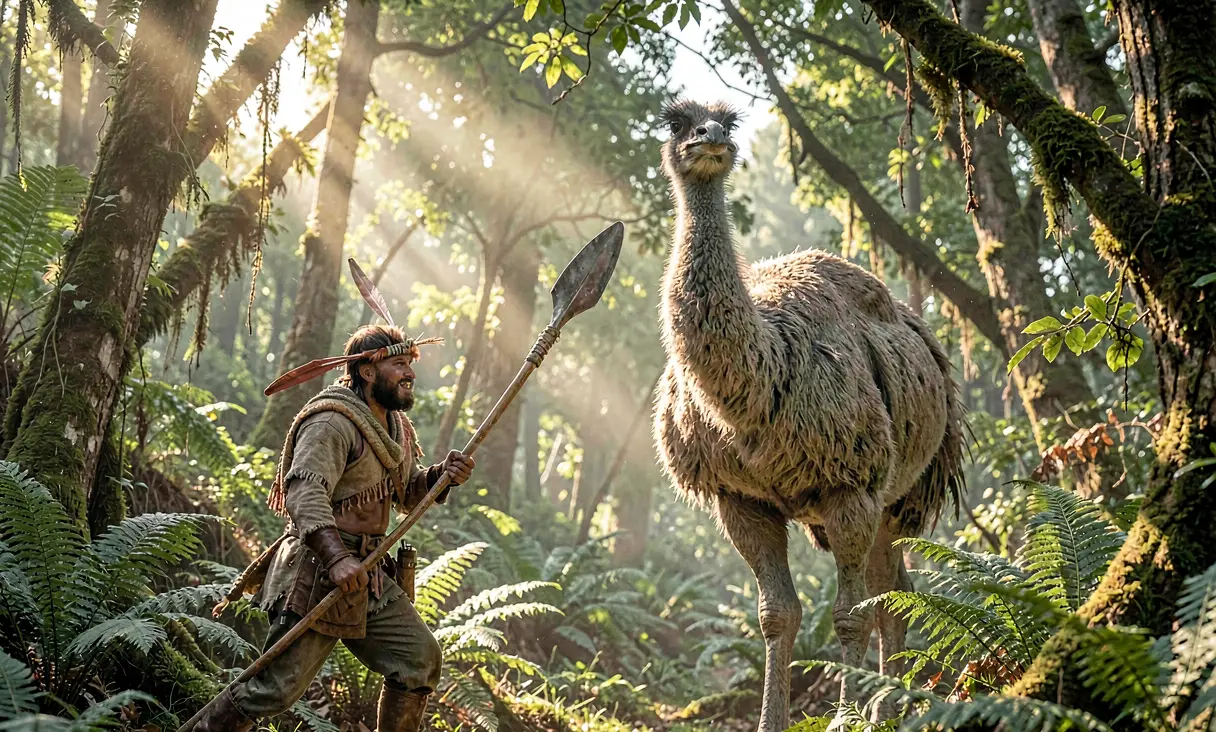
Hunting and Extinction of the Moa in New Zealand
Within two centuries of Polynesian arrival, the hunting and habitat destruction by early Māori drove all nine species of New Zealand's giant moa to total extinction, marking one of history's most rapi
An Isolated Eden
For approximately 80 million years, New Zealand remained isolated from other landmasses, fostering a unique evolutionary trajectory devoid of terrestrial mammals. In this avian-dominated ecosystem, the moa (order Dinornithiformes) evolved into nine distinct species, filling niches typically occupied by large herbivores elsewhere. Ranging from the diminutive bush moa to the colossal South Island giant moa (Dinornis robustus), which stood up to 3.6 meters tall and weighed over 250 kilograms, these flightless birds possessed no natural predators. Their evolutionary history was defined by a lack of fear response, rendering them uniquely vulnerable when humans finally arrived.
The Arrival of the Polynesians
Around 1280 CE, following centuries of voyaging across the Pacific, Polynesian explorers made landfall in New Zealand, establishing the first human settlements and becoming the ancestors of the Māori people. These early settlers encountered a landscape teeming with megafauna that had never experienced human predation. Unlike other regions where large mammals co-evolved with humans over millennia, the moa populations existed in a state of ecological naivety. The immediate availability of abundant protein sources, combined with the birds' inability to fly or flee effectively, set the stage for an unprecedented demographic collapse.
The Mechanics of Extinction
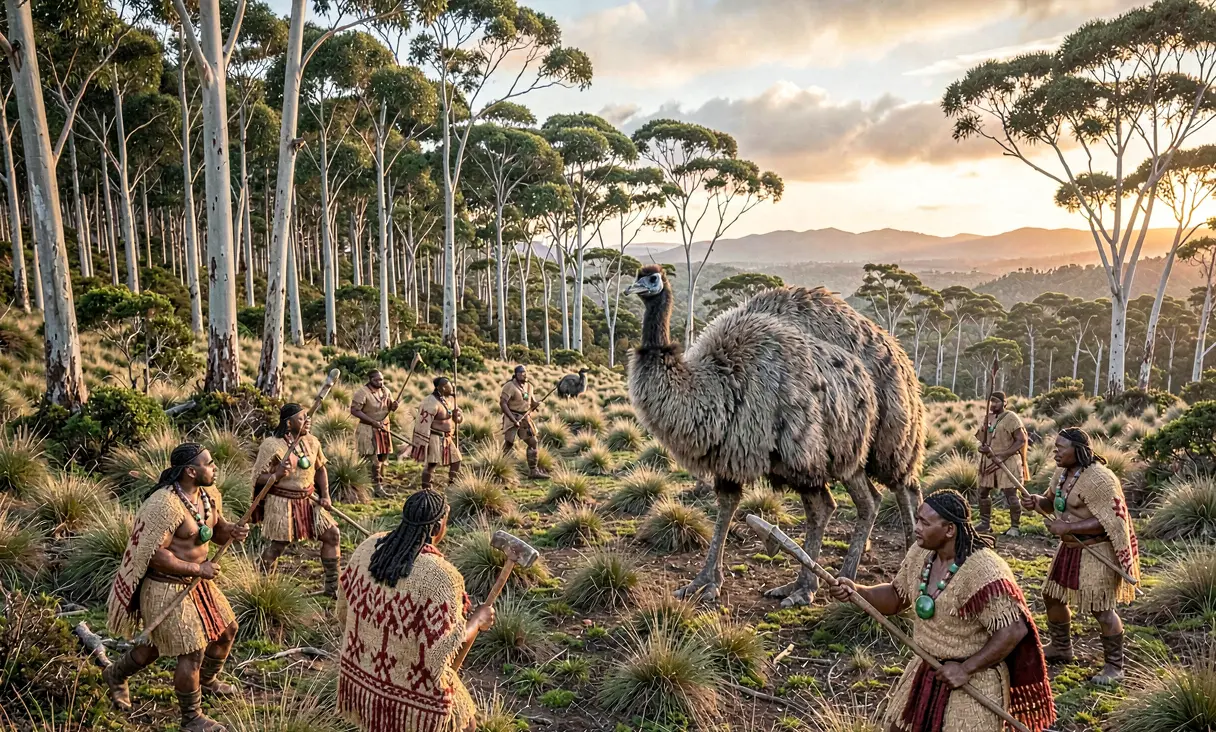
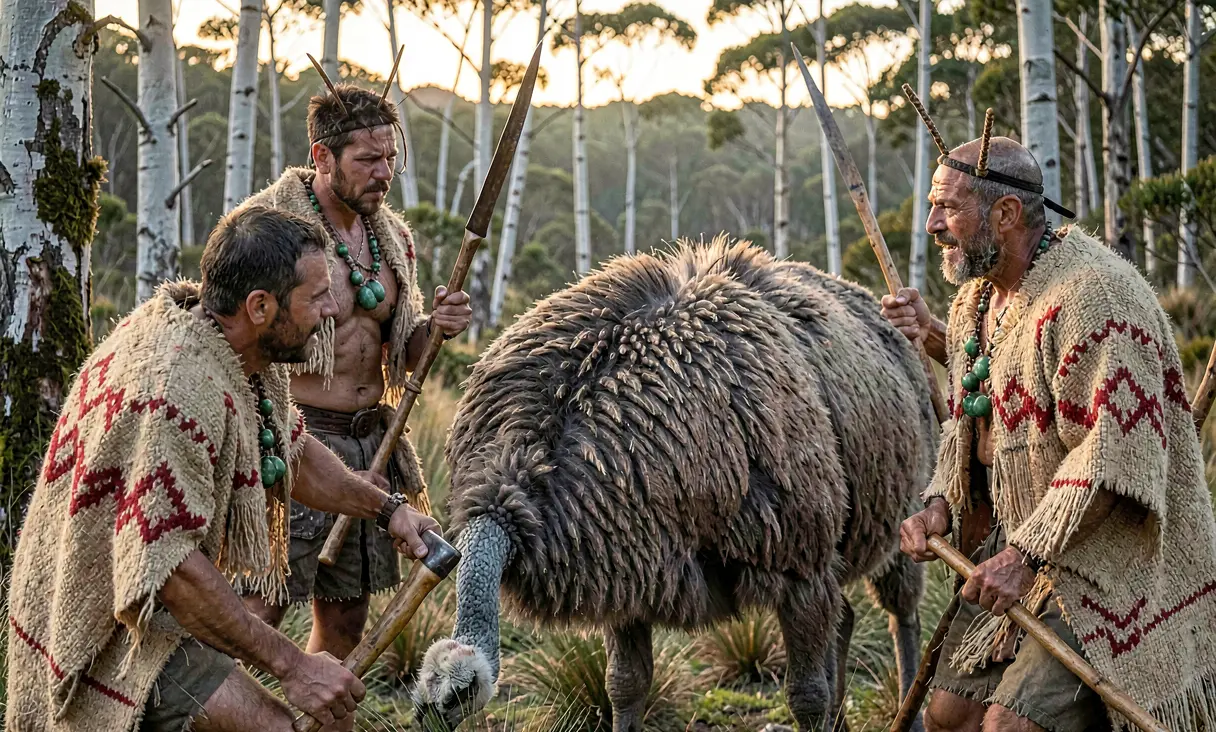
Between 1300 and 1450 CE, a rapid and systematic hunting campaign decimated moa populations across both the North and South Islands. Archaeological evidence from settlement sites such as Wairau Bar reveals massive bone middens containing millions of moa bones, indicating that these birds were not merely incidental prey but the primary food source for early Māori communities. The efficiency of the hunt was compounded by habitat modification; settlers utilized fire to clear dense forests and scrubland to create open spaces for cultivation and hunting, simultaneously destroying the moa's nesting grounds and food sources. This dual pressure of direct overexploitation and environmental alteration proved fatal.
A Rapid Collapse
The timeline of extinction was shockingly brief by geological standards. Radiocarbon dating of moa bones found in archaeological layers suggests that the majority of species were wiped out within a mere 100 to 200 years of human arrival. The South Island giant moa, despite its massive size and range, likely disappeared before 1450 CE. Unlike the slow decline seen in other megafauna extinctions linked to climate change, this was a catastrophic event driven almost entirely by anthropogenic factors. By the time European explorers arrived in the late 18th century, only oral traditions and scattered bones remained as evidence of the once-dominant avian giants.
Cultural Memory and Archaeological Record
While no written records exist from the Māori perspective during the extinction event itself, the archaeological record provides a stark narrative. Excavations at sites like Shag River Mouth in Otago show a clear stratigraphic transition where moa bones are abundant in early layers but vanish completely in later strata associated with established settlements. Oral histories (pūrākau) preserve memories of the moa, describing them as large, flightless birds that were hunted and eventually vanished, serving as cautionary tales about resource management. The sheer volume of bone fragments found—sometimes covering acres of ground—attests to the intensity of the hunting pressure that drove these species to oblivion.
Legacy of a Lost World
The extinction of the moa stands as one of the most dramatic and rapid examples of human-induced megafauna collapse in history. It fundamentally altered New Zealand's ecosystem, removing the primary grazers and seed dispersers, which subsequently changed vegetation patterns across the islands. This event serves as a critical case study in conservation biology, illustrating how quickly an isolated species can be driven to extinction when faced with a novel predator and habitat destruction. The loss of nine unique species within two centuries remains a poignant reminder of the fragility of island ecosystems and the profound impact of human expansion.
The extinction of the moa marks a pivotal ecological shift in New Zealand and demonstrates the vulnerability of isolated island species to human predation.
Where it happened
South Island, New Zealand — see it on the interactive map →
Explore related history
 DisasterCatastrophic Flooding at Mohenjo-Daroc. 1900 BCE · Mohenjo-Daro, Sindh, PakistanDevastating floods from the Indus River repeatedly buried and destroyed layers of Mohenjo-Daro, signaling the decline of the urban phase.
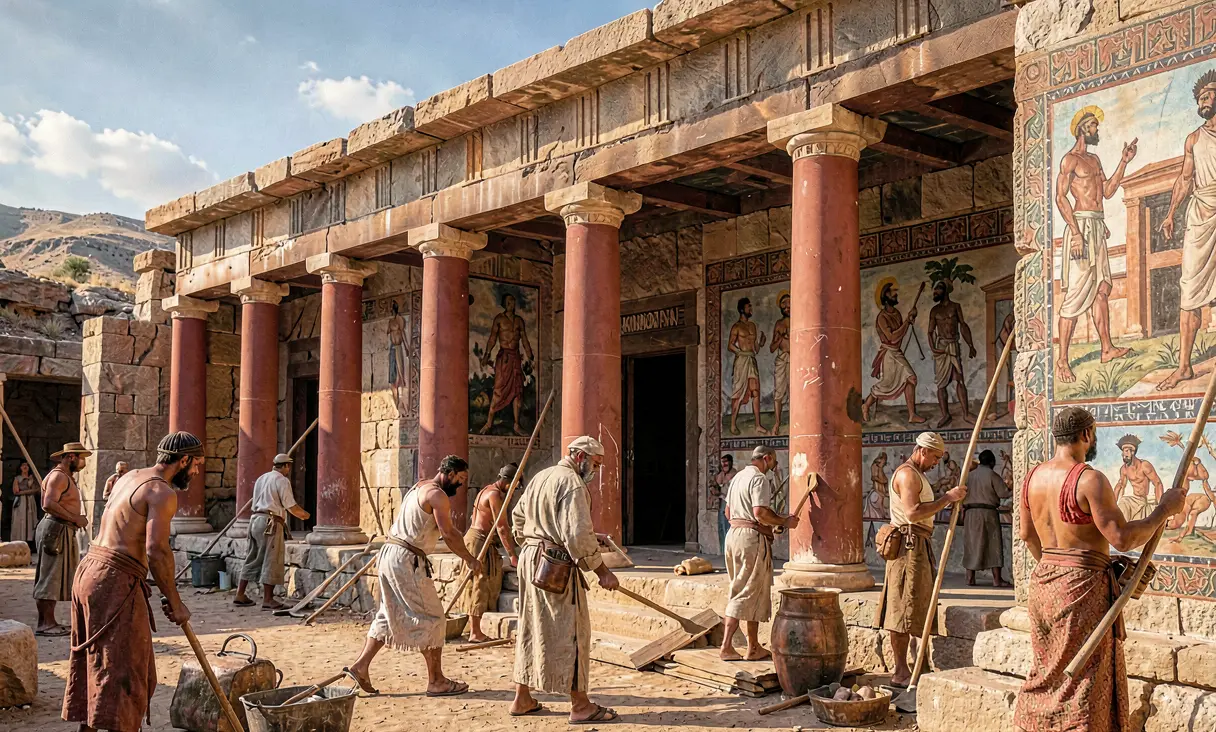 DisasterRebuilding of the Palace at Knossos after Earthquakec. 1700 BCE · Knossos, Crete (Greece)Minoans rebuild the Palace of Knossos after a massive earthquake destroys the old structure.
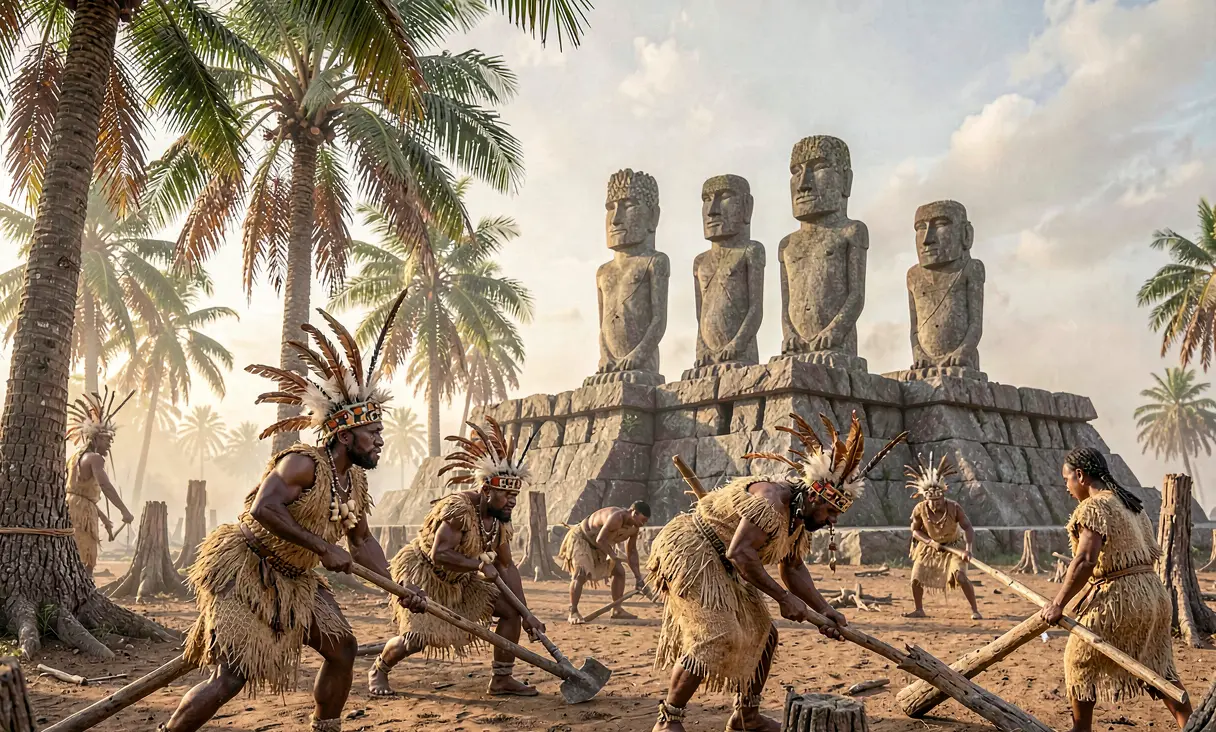 DisasterEcological Collapse and Deforestation of Rapa Nuic. 1600 CE · Rapa Nui (Easter Island), ChileOverexploitation of resources leads to deforestation and societal transformation on Rapa Nui.
 CivilizationFoundation of Lamu as a Swahili City-Statec. 1300 CE · Lamu, KenyaThe city of Lamu is founded as a major trading port connecting the African interior to the Indian Ocean.
 ArtEstablishment of Lapita Pottery Traditionc. 1300 BCE · New Britain, Papua New GuineaLapita potters develop distinctive dentate-stamped decoration techniques that define their culture.
 PoliticsRaden Wijaya Founding of Majapahit Empire1293 CE · Trowulan, Java, IndonesiaRaden Wijaya defeats the Mongol invaders and establishes the Majapahit Empire in East Java.
Discussion
Loading…