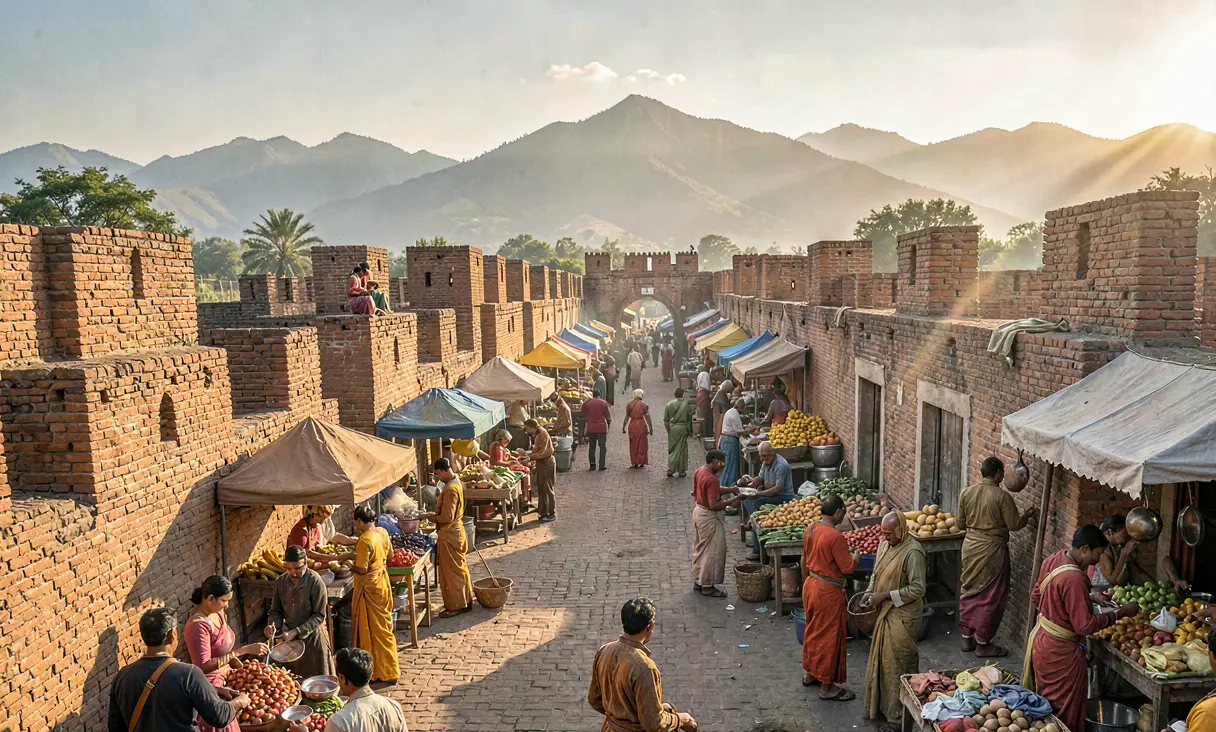
Rise of the Sixteen Mahajanapadas
The rise of the sixteen Mahajanapadas around 600 BCE catalyzed India's second urbanization, birthing the first large-scale empires and sparking a spiritual revolution that birthed Buddhism and Jainism
The Second Urbanization and Iron Age Catalyst
By the mid-6th century BCE, the Indian subcontinent underwent a profound transformation known as the 'Second Urbanization,' marking a decisive shift from the rural, pastoral society of the Vedic period to complex, stratified urban states. This metamorphosis was technologically underpinned by the widespread adoption of iron tools, which allowed for the efficient clearance of the dense forests of the Gangetic Plain. The resulting agricultural surplus supported rapid population growth and the emergence of distinct social classes, creating the economic foundation necessary for the consolidation of large territorial kingdoms.
The Emergence of the Sixteen Mahajanapadas
Around 600 BCE, political fragmentation gave way to the formation of sixteen major power centers, collectively termed the Mahajanapadas. These entities varied significantly in their governance; while powerful monarchies like Magadha, Kosala, and Avanti centralized authority under hereditary kings, others such as the Vajji confederacy (centered at Vaishali) operated as republican oligarchies or Gana-Sanghas. The most prominent among these included Anga in the east, Gandhara in the northwest, and Kashi with its capital at Varanasi, each vying for control over lucrative trade routes and fertile river valleys.
Geopolitical Rivalry and the Rise of Magadha
The period was defined by relentless interstate warfare and diplomatic maneuvering as these sixteen states competed for hegemony. The kingdom of Magadha, initially a minor power in the southern part of Bihar, began its ascent under the ambitious Haryanka dynasty, particularly King Bimbisara (r. c. 543–492 BCE). Through strategic marriages and military conquests, Bimbisara annexed neighboring Anga and established alliances with Kosala, shifting the center of political gravity from the west to the east. His son, Ajatashatru, further consolidated power by defeating the Vajji confederacy after a protracted war, utilizing new siege technologies and a standing army.
Socio-Religious Ferment and New Philosophies
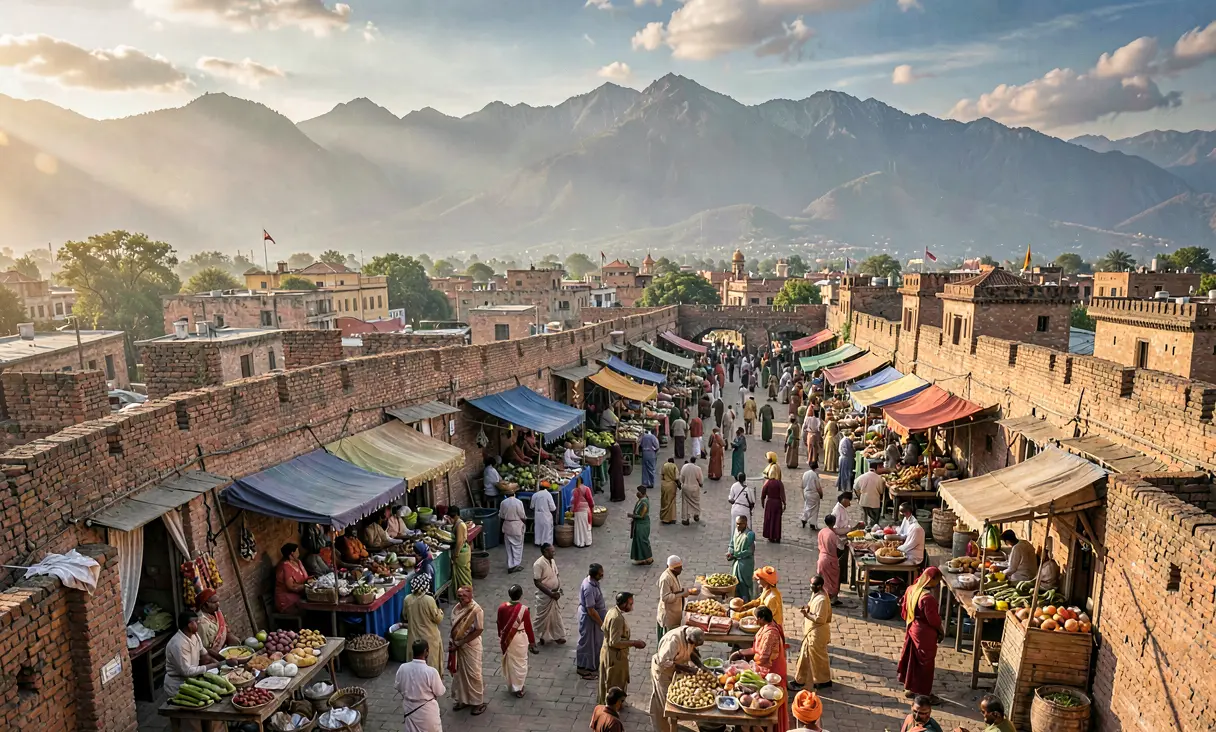
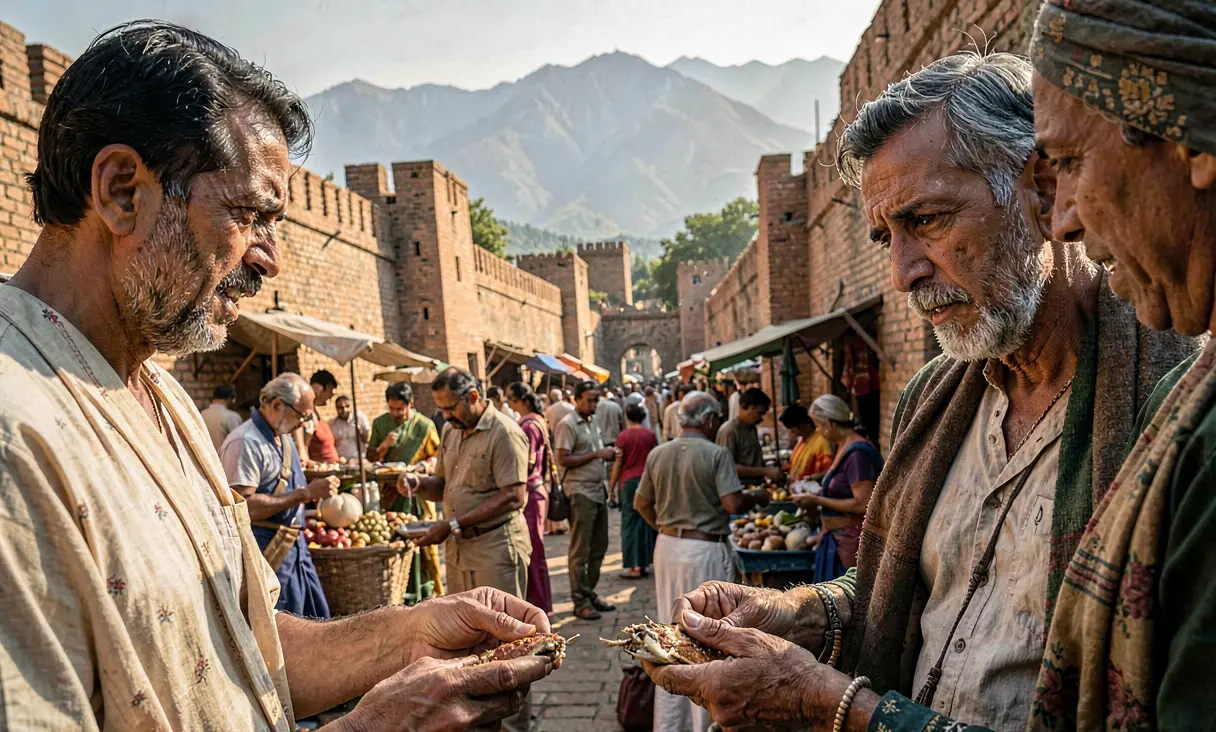
The political volatility of the Mahajanapada era coincided with a spiritual revolution that challenged the rigid ritualism of the Brahmanical orthodoxy. The rise of cities like Rajgir (Magadha) and Shravasti (Kosala) created cosmopolitan environments where merchants, artisans, and ascetics interacted freely. It was in this milieu that Siddhartha Gautama founded Buddhism and Mahavira revitalized Jainism. These new movements rejected the authority of the Vedas and the caste hierarchy, offering ethical paths to liberation that resonated with the emerging urban merchant class and disaffected lower castes.
The Consolidation of Power
By 500 BCE, the contest for dominance had narrowed significantly. The Nanda dynasty eventually overthrew the Haryankas in Magadha, expanding its territory to encompass much of northern India and establishing a massive standing army. This centralization paved the way for the subsequent Mauryan Empire. While other Mahajanapadas like Kosala and Avanti remained powerful for centuries, they were gradually absorbed or eclipsed by the relentless expansionist policies emanating from Pataliputra, the new capital of Magadha situated at the confluence of the Ganges and Son rivers.
Legacy and Historical Significance
The era of the Mahajanapadas laid the foundational architecture for Indian statecraft, bureaucracy, and urban culture. It established the precedent of large-scale territorial empires that would define Indian history for millennia. Furthermore, the intellectual ferment of this period produced the philosophical frameworks of Buddhism and Jainism, which not only shaped South Asian civilization but also spread across Asia, influencing cultures as far as China and Japan. The transition from tribal chiefdoms to imperial states during these centuries remains one of the most critical turning points in human history.
This political fragmentation and subsequent consolidation established the first major states in India, fostering urbanization and religious pluralism.
Where it happened
Gangetic Plain (modern Uttar Pradesh/India) — see it on the interactive map →
Explore related history
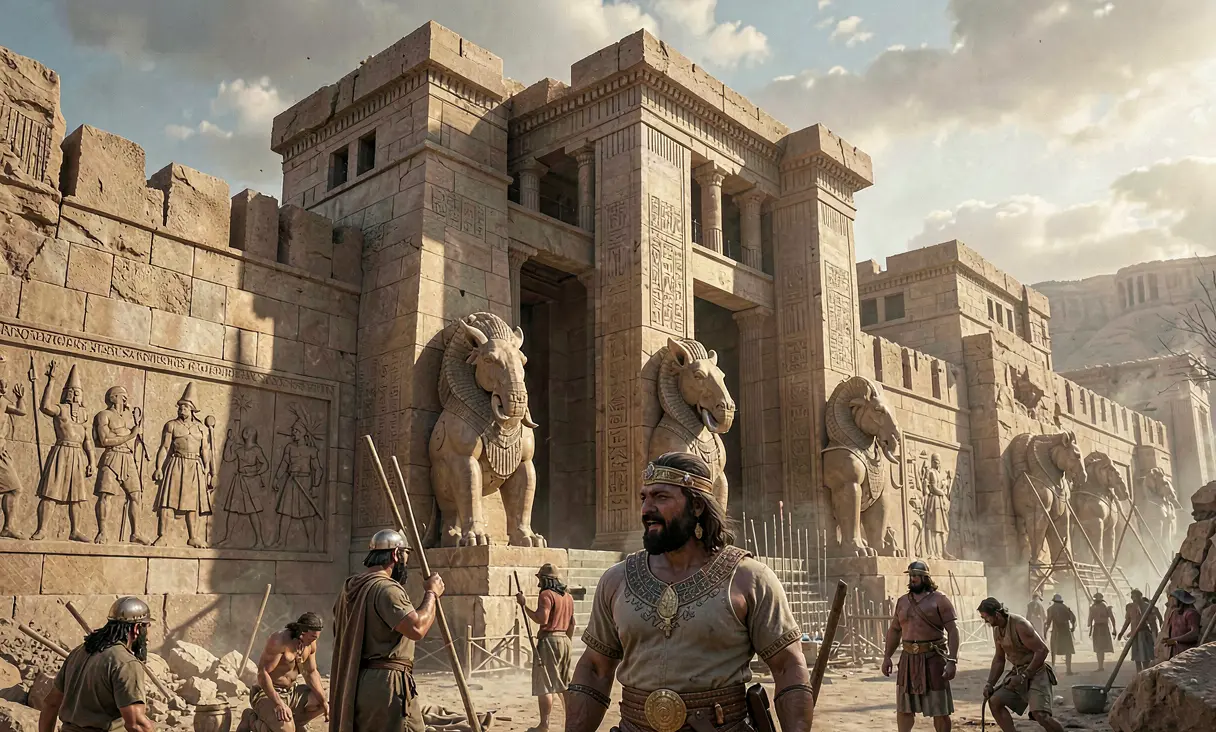 PoliticsFounding of Dur-Sharrukin by Sargon IIc. 717 BCE · Khorsabad (Dur-Sharrukin), IraqSargon II builds a new capital city to project Assyrian power and administrative control.
 PoliticsReign of Emperor Taizong and the Zhenguan Era626 CE · Chang'an, ChinaLi Shimin ascends the throne after the Xuanwu Gate Incident, ushering in a golden age of governance.
 PoliticsEmperor Wen Unifies China and Founding of Sui Dynasty581 CE · Chang'an, ChinaYang Jian usurps the Northern Zhou throne, ending centuries of division and establishing the Sui Dynasty.
 medicineRitual Bloodletting as Medical and Religious Practice in Mayac. 600 BCE · Tikal, GuatemalaMaya elites use stingray spines and obsidian for ritual bloodletting to commune with gods.
 medicineSushruta Samhita: Foundation of Indian Surgery and Anatomyc. 600 BCE · Varanasi, IndiaSushruta documents advanced surgical techniques including rhinoplasty and cataract surgery.
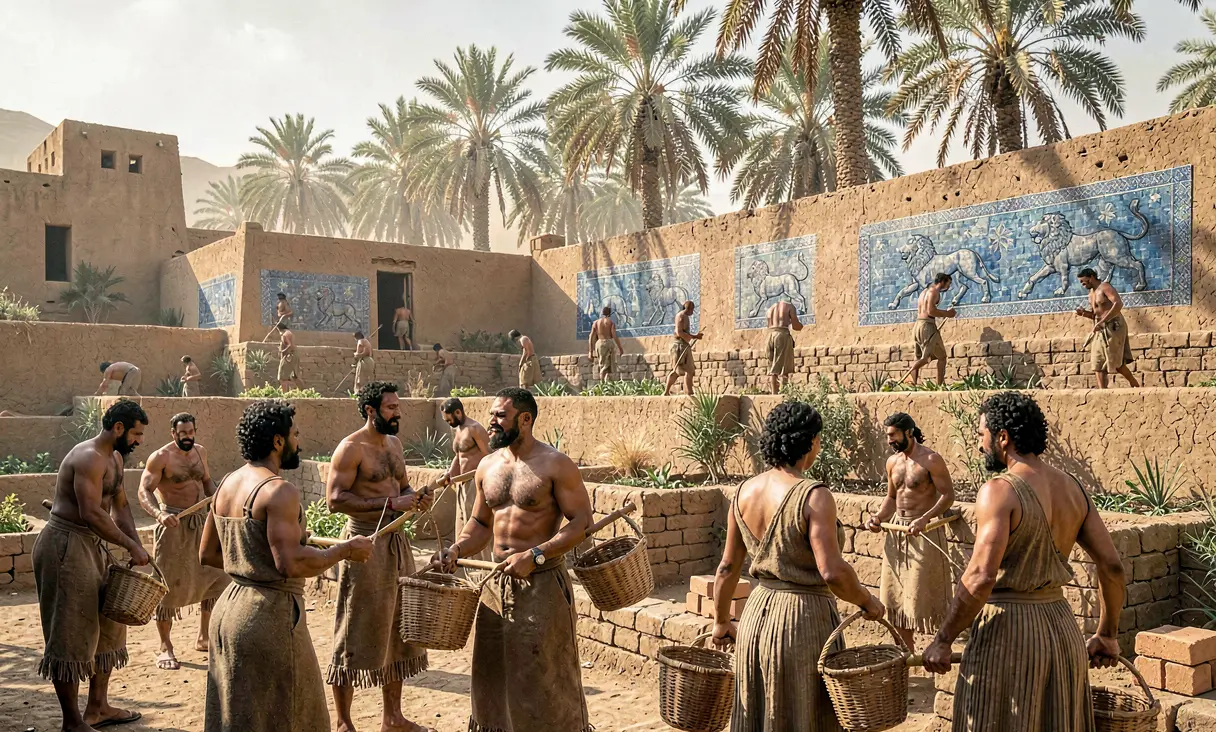 ArtConstruction of the Hanging Gardens of Babylonc. 605 BCE · Babylon, Mesopotamia (Iraq)Nebuchadnezzar II builds the legendary Hanging Gardens for his Median wife.
Discussion
Loading…